Good morning Chief,
Here are today’s key business insights curated by the SUAR Team.

Indonesia Eyes Tourist Boost Amid Thailand-Cambodia War
- The conflict between Thailand and Cambodia opens an opportunity for Indonesia to attract international tourists who may redirect their travel plans.
- Hariyadi Sukamdani, Chairman of the Indonesian Tourism Industry Association (GIPI), said the war could indirectly benefit domestic tourism, as visitors may shift their holidays to Indonesia.
- Bhima Yudhistira, Executive Director of CELIOS, noted Thailand attracts 35 million foreign tourists annually, while Cambodia records 6.2 million.
- Senior INDEF economist Tauhid Ahmad added that prolonged conflict could strengthen this opportunity, though if tensions ease quickly, tourists are likely to return.
Read more here.

Property Incentives to Boost the Economy
- To spur economic growth, the government is offering various property sector incentives, including a full VAT Subsidy (PPNDTP) and lighter down payments.
- The government will maintain the 100% VAT Subsidy for home purchases until the end of 2025, reversing earlier plans to cut it to 50% in the second half of the year.
- Beyond tax incentives, two new policies directly target low-income households and formal workers:
- Rp130 trillion Housing People’s Business Credit (KUR): For the first time, KUR funding is allocated to the property sector, previously used mainly as working capital for MSMEs.
- Joint initiative with developers: Subsidized housing developers will cover down payments for BPJS Employment participants, averaging Rp1.7 million per person.
Read more here.
Keeping Family Businesses Alive Across Generations
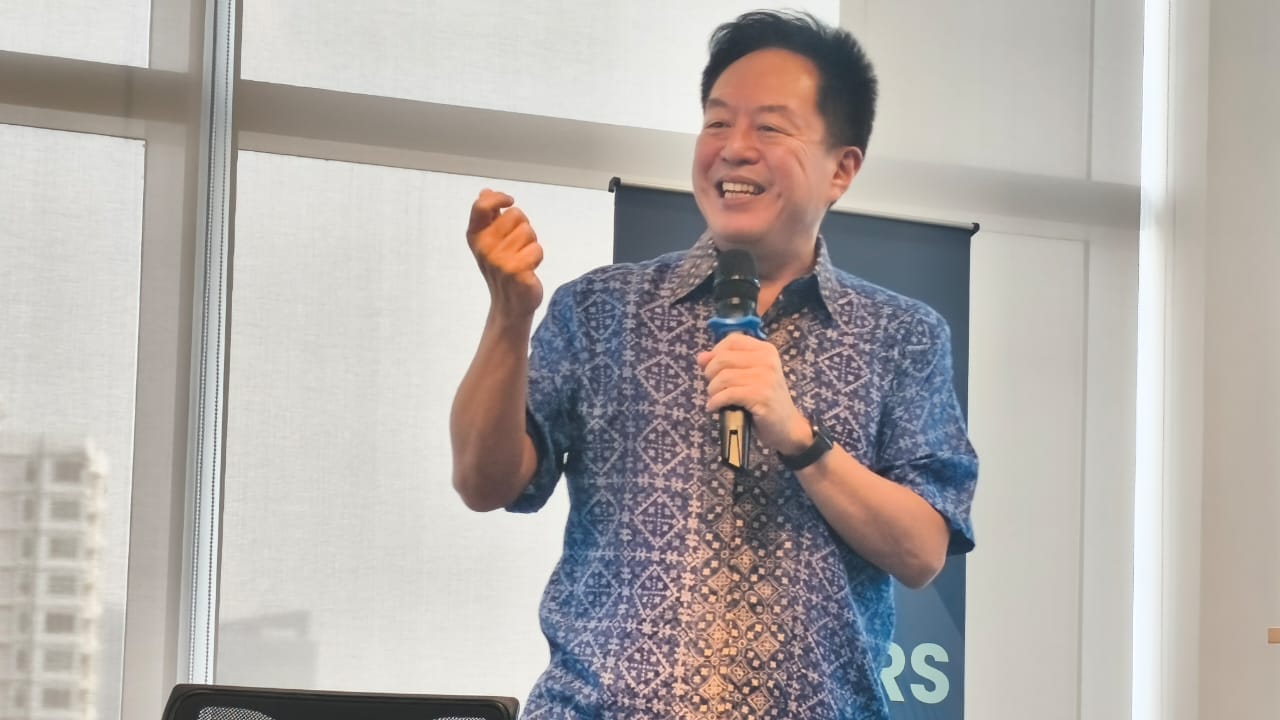
- There is no single formula for sustaining family businesses through generations. Each family faces its own challenges, history, and solutions. This is the principle upheld by Victor Hartono, a third-generation heir of the Djarum Group, which has navigated various eras and industries.
- Few know that before Djarum became one of Indonesia’s industrial giants, the family business began with peanut oil production in Rembang, Tuban, and Pati—regions known for peanut farming. The enterprise was founded by Victor’s grandparents, while he himself represents the ninth generation involved in the peanut oil trade.
Read more here.
Tariff War Escalates, Financial Stability Seen Intact
- U.S. President Donald Trump’s tariff hikes, along with geopolitical and military tensions in several countries, are seen as external risks that could shake the foundations of the global financial system, including Indonesia.
- Despite the uncertainty, the Financial System Stability Committee (KSSK) remains optimistic that Indonesia’s economic fundamentals are strong enough to withstand pressures and sustain growth through year-end.
- Finance Minister Sri Mulyani, speaking at a KSSK press conference on July 28 in Jakarta, said financial stability in Q2 2025 remained intact despite heightened global uncertainty.
- On external risks, Deni Priawan, an international economics researcher at CSIS, noted that many initially feared Trump’s protectionist “America First” tariffs would trigger inflation in the U.S., though the long-term impact remains under watch.
Read more here.

Downstreaming Developed Outside Java
- Throughout 2024, realized investment in downstreaming, both Foreign Direct Investment (PMA) and Domestic Investment (PMDN), reached Rp407.8 trillion. Four provinces that became the main locations for downstreaming projects were outside the island of Java.
- The total downstreaming investment realization of Rp407.8 trillion in 2024 was equal to 23.8% of total investment. The largest realization, worth Rp241.8 trillion (59%), was located outside Java, namely in Central Sulawesi, North Maluku, West Nusa Tenggara (NTB), and Riau. The main downstreaming commodities developed in these four provinces are quite diverse: in Central Sulawesi and North Maluku, the priority is nickel; in NTB, copper; and in Riau, the development of crude palm oil (CPO) production.
- The downstreaming development pattern appears to have shifted slightly in 2025. In the first quarter of 2025, total realized downstreaming investment reached Rp136.3 trillion, equivalent to 29.3% of total investment. However, among the five main locations, the share of downstreaming realization in provinces outside Java decreased to around 36%, amounting to Rp48.68 trillion in two provinces, namely Central Sulawesi and North Maluku. Meanwhile, significant downstreaming realization was recorded in Java, particularly in West Java, East Java, and Banten, with a total realization value of Rp31.5 trillion (23%).
Read more here.

Press Conference on Q2 2025 Investment Realization: The Ministry of Investment and Downstreaming/BKPM will hold a press conference on Q2 2025 investment realization on July 29, 2025, at the Ismael Saleh Building, Ministry office. The event will begin at 10:00 AM WIB, and media representatives wishing to cover the event are required to register via the link provided by the organizer.
The event will be attended by Minister of Investment and Downstreaming/Head of BKPM Rosan Roeslani, who will directly present the Q2 realization figures. Previously, downstream investment realization reached Rp136.3 trillion, marking a 79.82% increase from the previous quarter.
Sectors recording investment realization this year include basic metal industries, fabricated metal products (excluding machinery and equipment), transportation, warehousing and telecommunications, mining, other services, housing, and industrial office estates. In this quarterly press agenda, entrepreneurs are also required to submit LKPM (Investment Activity Reports) regularly.
Bisnis Indonesia MidYear Challenge 2025: In the run-up to its four decades, Bisnis Indonesia MidYear Challenge 2025 will be held on July 29, 2025, at Hotel Borobudur, Central Jakarta. The event will discuss government and industry efforts in identifying opportunities and strategic roles to build a resilient industry.
The forum will start at 1:00 PM, and participants must register via the form provided by the committee. The MidYear Challenge is a platform designed to bring together cross-sector stakeholders to discuss the direction of economic policy.
This year’s theme is “Mapping Opportunities Amid Global Economic Volatility,” featuring Coordinating Minister for Economic Affairs Airlangga Hartarto as the keynote speaker. The forum will allow participants to engage in effective discussions on the latest global economic issues.

“We can only create good jobs if we make smarter investments in infrastructure and do more to support small businesses, not stifle them.” — Michael Bloomberg (Enterpreneur)
Have a productive day, Chief.
SUAR Team