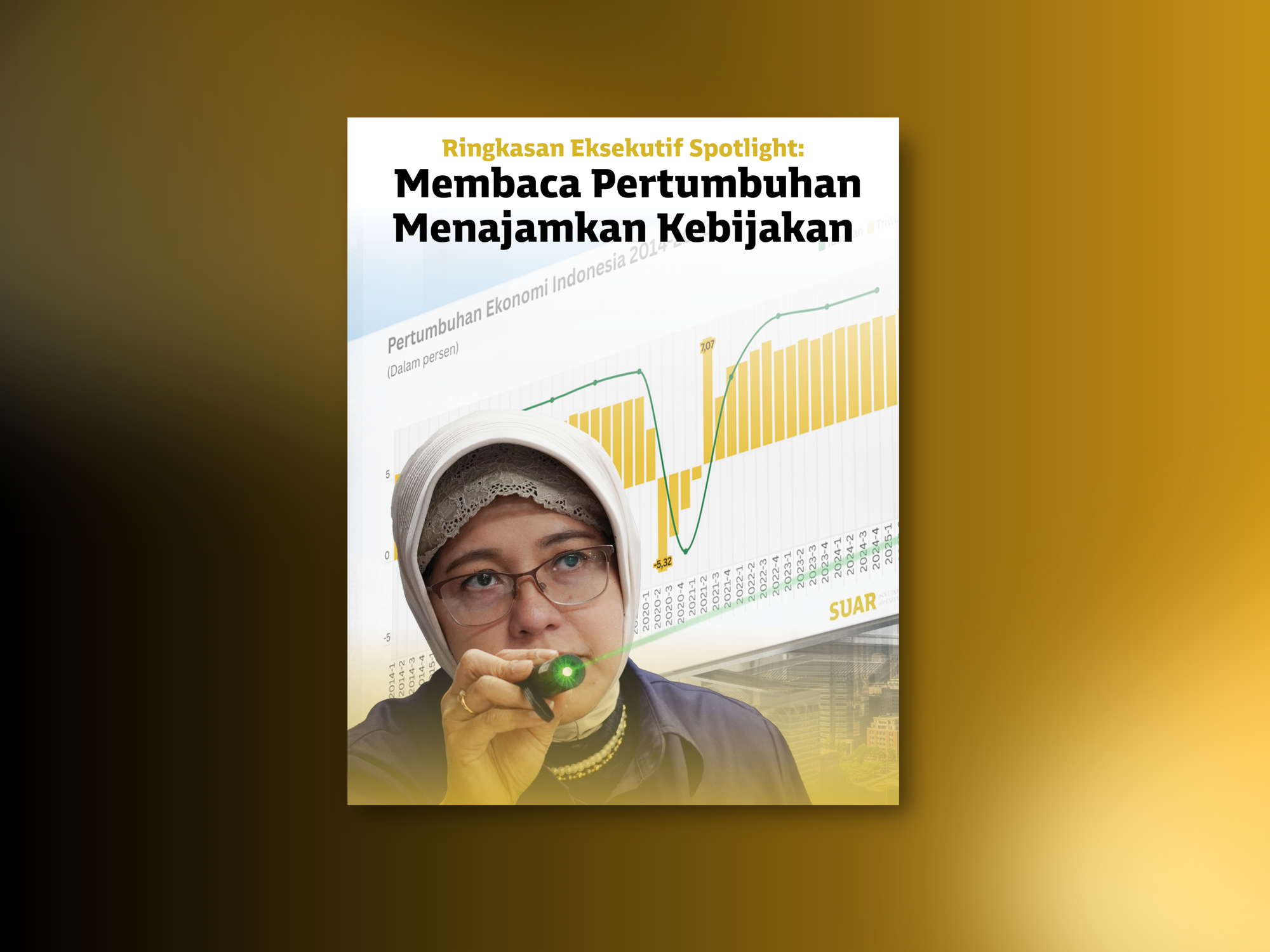
The Central Statistics Agency (BPS) noted that Indonesia's economic growth in the second quarter of 2025 grew 5.12% compared to the same period the previous year.
BPS's findings, which should be grateful for, instead triggered question marks. Many asked for clarification on the method of preparing the report on economic growth by BPS.
Read SUAR 's exclusive interview with the Head of BPS, Amalia Adininggar Widyasanti, including about the preparation of the 2025 Second Quarter Economic growth data, please click the link here.
However, data from BPS also shows that there is hope for positive economic performance in the future.
Second quarter-2025 economic growth details
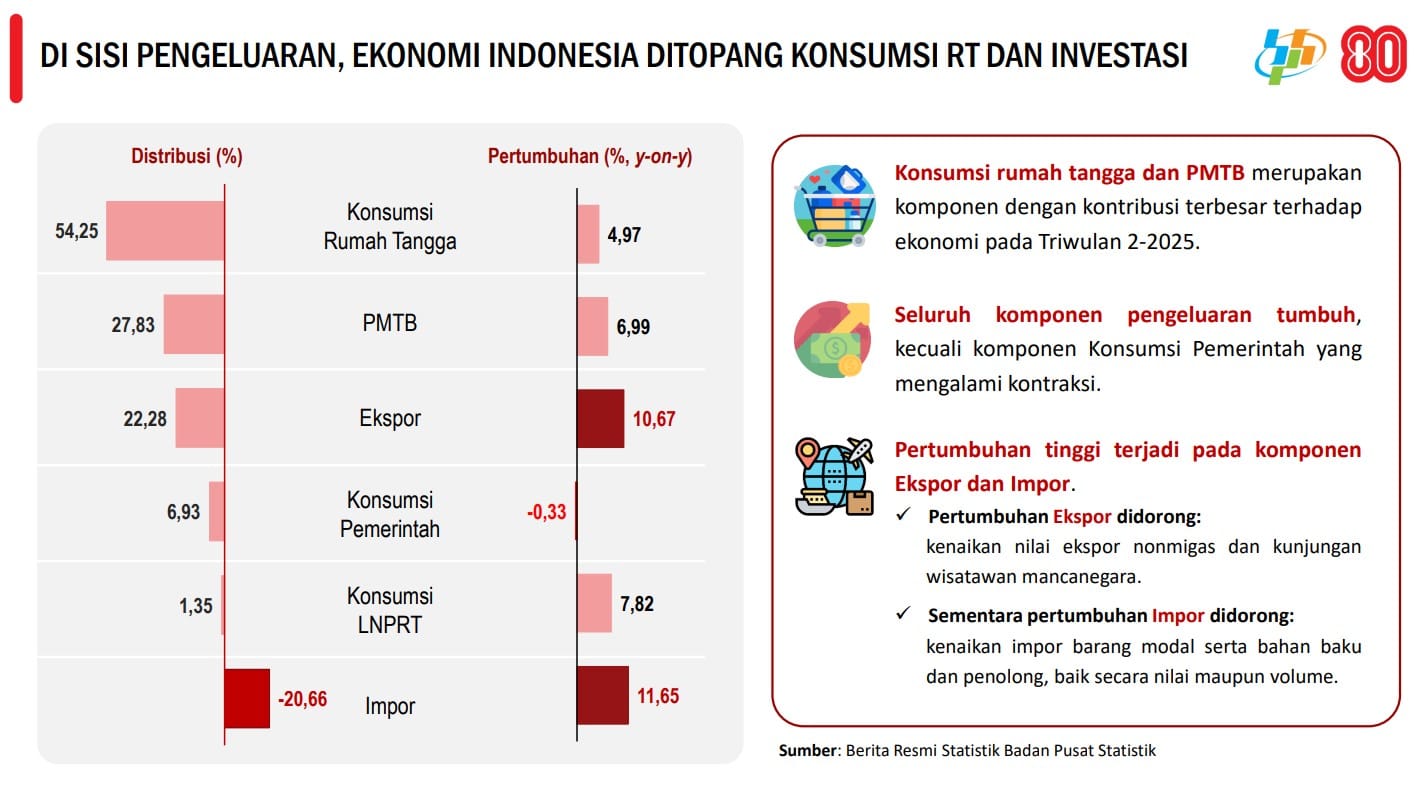
Based on BPS data, several components of economic growth in the second quarter of 2025 were:
- Household consumption: grew 4.97%.
- LNPRT consumption: grew by 7.82%.
- Investment (PMTB): grew by 6.99%.
- Exports: grew 10.6%.
- Imports: grew 11.6%.
- Government expenditure: contracted by -0.33%.
What data is used by BPS regarding the methodology for preparing the economic growth report, read the full report here.
Following the significant increase in economic growth data, in the submission of the 2026 State Budget Bill and Financial Memorandum at the Opening Plenary Meeting of the First Session Period of the House of Representatives of the Session Year 2025-2026 at the Nusantara Building, Jakarta, on Friday, August 15, 2025, the government sent a signal of optimism in designing the state expenditure budget.
The 2026 state budget architecture is designed with state spending of IDR 3,786.5 trillion, state revenue of IDR 3,147.7 trillion, and a deficit of IDR 638.8 trillion or 2.48% of GDP.
President Prabowo stated that his administration will overhaul the allocation of the state budget, so that it can be more efficient and effective to prosper the nation.
Steps will be taken, among others, to economize on state spending, and prevent budget leaks that have been costing the state a significant amount of money.
High Target State Budget 2026
- The 2026 Draft State Budget deficit is targeted at IDR639 trillion (2.48% of GDP), lower than the 2025 projection of IDR662 trillion (2.78% of GDP).
- Economic growth in 2026 is set at 5.4%; the biggest risk if it is not achieved is that state revenue misses, the deficit widens, and the government is forced to cut spending.
How the government can make efficiency and prevent leakage in the 2026 Draft State Budget, please read here.
To maintain the sustainability of economic performance, the government has also begun to simplify rules that are perceived to hinder growth, or deregulation. Recorded since the end of June 2025, the government established the policy of Deregulation of Import Policy and Ease of Doing Business.
In addition, the Ministry of Trade also issued a new ministerial regulation (Permendag) consisting of eight commodity clusters to facilitate changes, as Permendag is dynamic.
In addition, the government is currently discussing deregulation regarding the obligation of the level of domestic content (TKDN). And, forming a special TKDN Deregulation Task Force intended to discuss changing the format to be based on innovation and incentives, not just the obligation of the percentage of domestic components.
What are the deregulations that entrepreneurs want, read the review here.
Read the entire SUAR report in the following file:
Happy reading, turn on your SUAR Chief!!!