Statistics Indonesia (BPS) reported July 2025 inflation at 2.37% year on year - within this year’s target range of 1.5%–3.5% set by the Government and Bank Indonesia (BI).
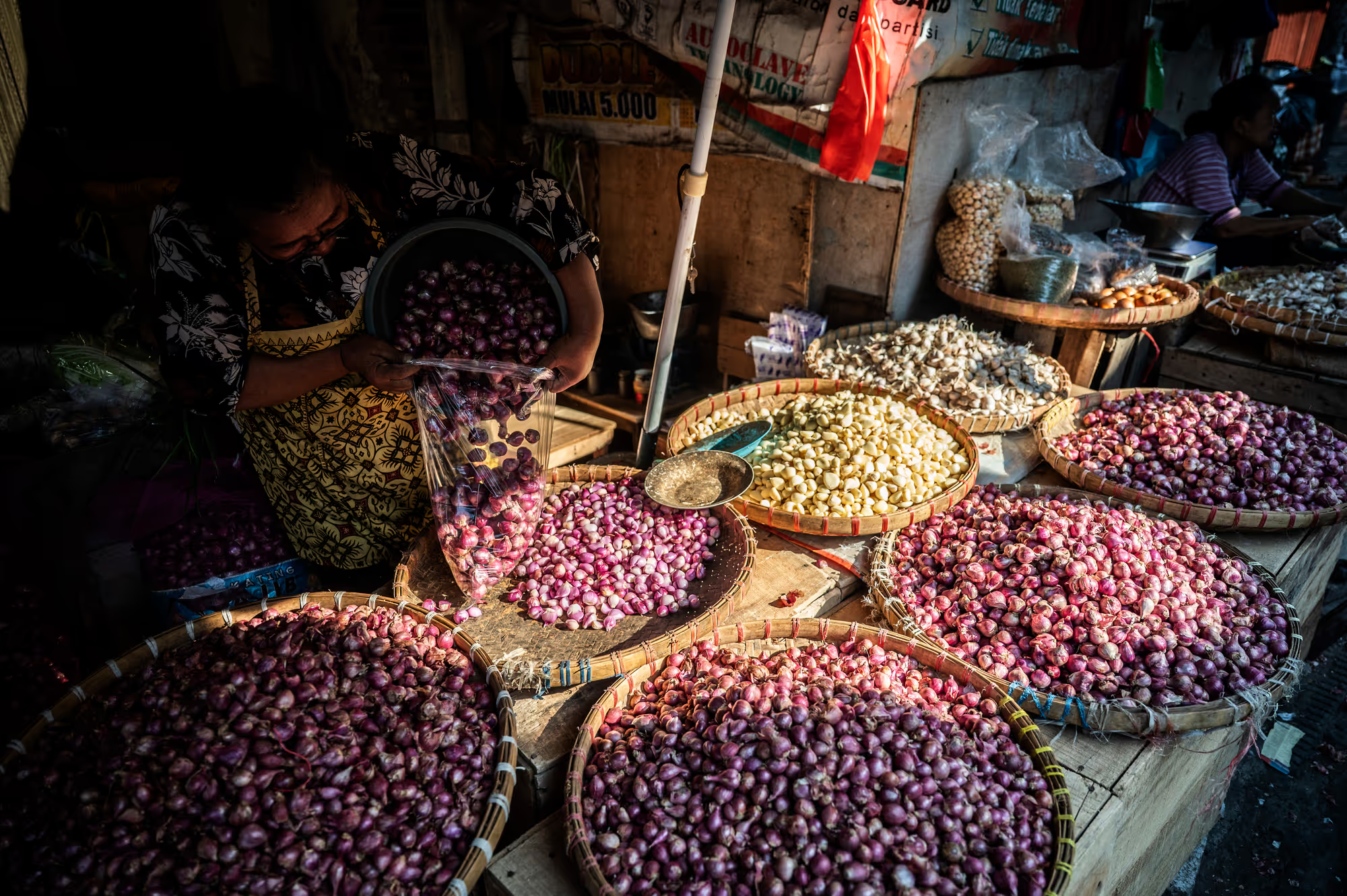
According to BPS, the main contributors to July’s annual inflation were jewelry gold (0.46 percentage points), red onions (0.18), tomatoes (0.16), rice (0.15), and water tariffs from local water companies (PAM).
In a press conference on Friday (Aug 1, 2025), BPS Deputy for Distribution and Services Statistics Pudji Ismartini said annual inflation reflected price increases across most spending groups:
- Food, beverages, and tobacco: 3.75%
- Clothing and footwear: 1.00%
- Housing, water, electricity, and household fuels: 1.65%
- Household equipment, appliances, and routine maintenance: 0.52%
- Health: 1.94%
- Transportation: 0.12%
- Recreation, sport, and culture: 1.05%
- Education: 1.95%
- Food and beverage serving services/restaurants: 1.86%
- Personal care and other services: 9.00%
The only group recording a decline was information, communication, and financial services, down 0.31%.
By location, the highest July 2025 inflation was in South Papua Province at 5.45%. The regency with the highest inflation was Toli-Toli.
The lowest inflation was in West Papua Province at 0.43%, with Karimun Regency the lowest at 0.40%.
By components, July 2025 core inflation stood at 2.32% YoY. Volatile foods inflation reached 3.82% YoY, while administered prices rose 1.34% YoY.
Bank Indonesia’s Executive Director for Communications, Ramdan Denny Prakoso, said the contained inflation reflects consistent monetary policy and strong coordination between BI and the central and regional governments through the Central and Regional Inflation Control Teams (TPIP and TPID) and the National Movement for Food Inflation Control (GNPIP) across regions.
“Looking ahead, Bank Indonesia expects inflation to remain within the 2.5% ± 1% target range in 2025 and 2026,” he said on Friday.
Economist Explains Drivers Behind July Inflation Uptick
Permata Bank Chief Economist Josua Pardede outlined the reasons behind July 2025 price increases.
“The spike in the food category was driven by supply disruptions in staples—such as rice, red onions, tomatoes, bird’s-eye chilies, and fresh fish—after harvest failures triggered by an unusually wet dry season (kemarau basah). In addition, cooking oil and ground coffee saw significant price rises reflecting higher production and distribution costs,” Josua told SUAR (Aug 2, 2025).

He added that “personal care and other services” surged largely due to higher jewelry gold prices—closely tied to safe-haven demand and swings in global bullion prices.
Looking ahead, Josua expects full-year 2025 inflation to remain within Bank Indonesia’s target range of 2.0%–2.5%. Even so, he warned that food-centric price pressures could weigh on household purchasing power, particularly among lower- and middle-income groups.
To stabilize prices and support purchasing power, Josua proposed several measures. “The government needs to improve the management of strategic food reserves through timely market interventions—such as market operations and direct assistance to vulnerable groups—especially for volatile items like rice, bird’s-eye chilies, and red onions,” he said.
He also urged active participation from businesses to strengthen supply chains and distribution, including adopting digital platforms to boost logistics efficiency, cut costs, and help steady market prices.
Retailers’ Strategies
Rising prices—reflecting pressure on purchasing power—are prompting retailers to adapt to current economic conditions. Indonesian Retailers Association (Aprindo) Chairman Solihin observes a shift in consumer behavior after major shopping periods such as Christmas–New Year and Eid al-Fitr.
According to him, the back-to-school period is pushing households to prioritize urgent spending—staple goods and school-related costs—dampening purchasing power in other sectors.
To navigate this, retailers must adjust to more price-sensitive buying patterns.
“Producers and we as retailers must respond quickly by preparing products consumers are actually looking for. What do they want? Items that meet their needs at the lowest possible price, among others. So we won’t insist on carrying one market-leading product if its price is too high,” he told SUAR (Aug 2, 2025).

Price isn’t the only issue. The ongoing shift from offline to online—omnichannel—also commands attention. Solihin notes rising online sales for fast-moving consumer goods (FMCG) such as packaged foods, beverages, personal care, and household products, though the growth lags behind other categories, particularly fashion.
Despite headwinds, Solihin remains upbeat. “At the very least, we as businesspeople must stay optimistic that household economic conditions will improve, lifting purchasing power—even if we know it’s very tough right now,” he said.