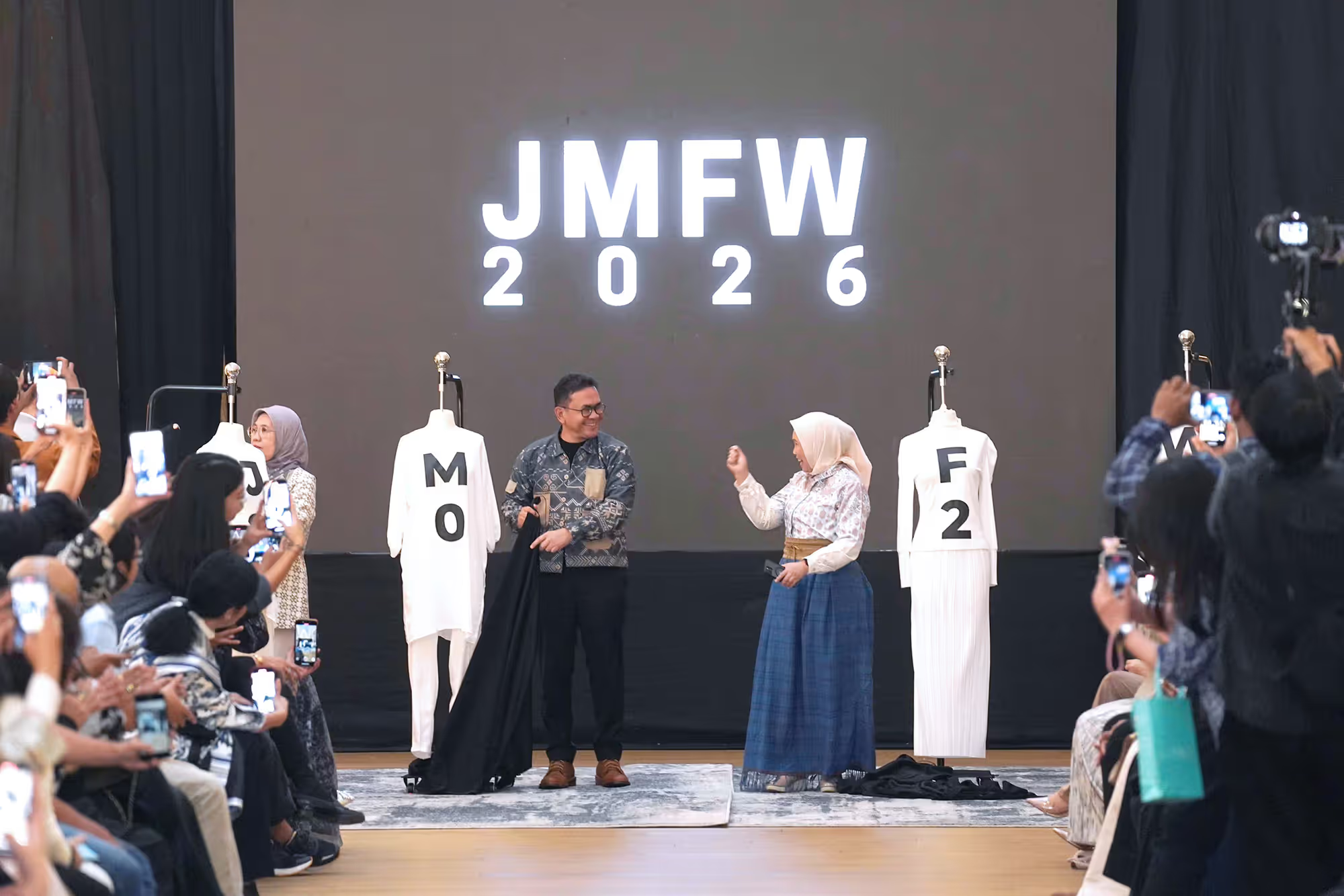
The sound of camera shutters clicked in succession as photographers lined up in front of the stage. Three models took turns strutting down the runway, showcasing Indonesian Muslim fashion designs in white with various patterns.
This time, Jakarta will once again capture the global spotlight as it hosts Jakarta Muslim Fashion Week (JMFW) 2026, with its main showcase scheduled for November 6–9, 2025 at Kartika Expo Balai Kartini, Jakarta.
An estimated 100 designers are expected to participate, presenting over 1,000 brand collections. The event aims to attract 8,000 visitors over four days.
Carrying the theme “Essential Lab,” the fashion week seeks to strengthen Indonesia’s Muslim fashion ecosystem and position the country as a global hub for Muslim fashion.
“From the lab, we can understand everything. From there, industries move — beauty, fashion, small businesses — all working together to expand both the domestic and export markets,” said Minister of Trade Budi Santoso during the official kick-off of JMFW 2026 (Aug 12).
Budi emphasized the importance of building an integrated Muslim fashion ecosystem — from textile producers to MSMEs and consumer demand — as an inseparable unit.
“We want to present a vision of where our fashion trends are headed. Ultimately, the goal is to build a sustainable fashion ecosystem,”
he added.
Beyond driving the Muslim fashion industry, JMFW is also expected to bolster related sectors such as cosmetics, accessories, and the halal lifestyle economy.
The global market potential for Muslim fashion is substantial. A recently signed Comprehensive Economic Partnership Agreement (CEPA) between Indonesia and Peru opens significant opportunities for Indonesian apparel and textiles to penetrate the Latin American market.
The main showcase will feature 12 fashion parades, trade exhibitions, talk shows, business matchmaking sessions, and an award ceremony. According to the Minister of Trade, JMFW 2026 will expand connectivity between Indonesian MSME fashion players and global markets through business matching facilitated by Indonesia’s overseas trade representatives.
As part of the halal industry, Muslim fashion benefits from Indonesia’s strong growth prospects. Data from the Halal Product Assurance Agency (BPJPH) shows that the halal economy could add US$5.1 billion (Rp72.9 trillion) annually to Indonesia’s GDP through export and investment opportunities.
Moreover, with around 230 million Muslims, Indonesia is the largest halal consumer market in the world. Between January and October 2024, the country recorded halal product exports worth US$41.42 billion (Rp673.9 trillion).
Targeting US$10 Million in Deals
Director General of National Export Development (PEN) at the Ministry of Trade, Fajarini Puntodewi said that during JMFW 2026, the government is targeting transactions worth US$10 million (approximately Rp162 billion).
Previously, JMFW 2024 recorded transactions of US$20.4 million, far surpassing its initial target of US$3 million.
“This event is always highly anticipated. Transactions will certainly take place throughout the event, and we hope to reach US$10 million,” she said.
JMFW 2026 will be preceded by pre-events such as seminars, co-branding initiatives, and facilitated pitching sessions between Muslim fashion industry players and international buyers.
Since its inaugural launch in 2021, JMFW has continued to record positive achievements. In 2024, JMFW successfully showcased more than 239 local brands presenting over 1,000 modest fashion collections.
Indonesia’s Achievement
JMFW has earned strong recognition from leading designers, including Kursien Karzai, who praised the event as a milestone in Indonesia’s ambition to become a global hub for Muslim fashion.
Kursien, the designer behind Kursien Karzai Prive, has been active in the industry since 2007. Known for collections inspired by nature and romantic themes, he described JMFW as a platform that expands opportunities for local designers and strengthens Indonesia’s position on the world stage.
“The event is truly remarkable and grand, showcasing Muslim fashion to the world stage,” he said.
He also emphasized that JMFW highlights the importance of collaboration between the government, industry players, and stakeholders to drive the growth of the Muslim fashion industry.
At JMFW 2025, Kursien presented a collection titled Ragazza, inspired by the dynamics of modern life. Derived from the Italian word meaning “woman”, Ragazza symbolizes beauty, vitality, and timeless spirit. It embodies elegance fused with comfort and a balance between a busy lifestyle and effortless style.
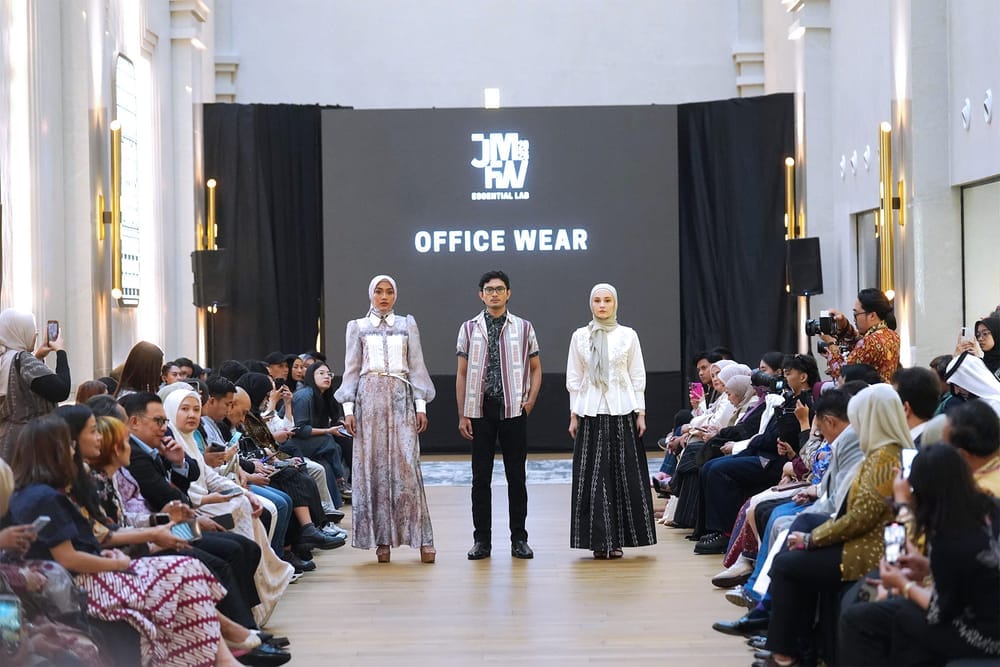
Fashion Industry Growing Rapidly
Lana Soelistianingsih, economic observer and 2023–2025 LPS Board of commissioners member, said that Indonesia’s fashion industry has been experiencing rapid growth, encompassing both Muslim and non-Muslim apparel.
The expansion of this sector has significant economic impact, such as job creation, boosting household consumption, and widening market opportunities. Moreover, a thriving fashion industry can further elevate Indonesia’s presence on the global stage—provided that products remain innovative and differentiated.
“The fashion industry has advanced considerably, with many players consistently delivering their best products,” Lana told SUAR in Jakarta (12/8).
She also emphasized the importance of government oversight and support, noting that fashion is part of the creative economy with strong potential to drive long-term growth.