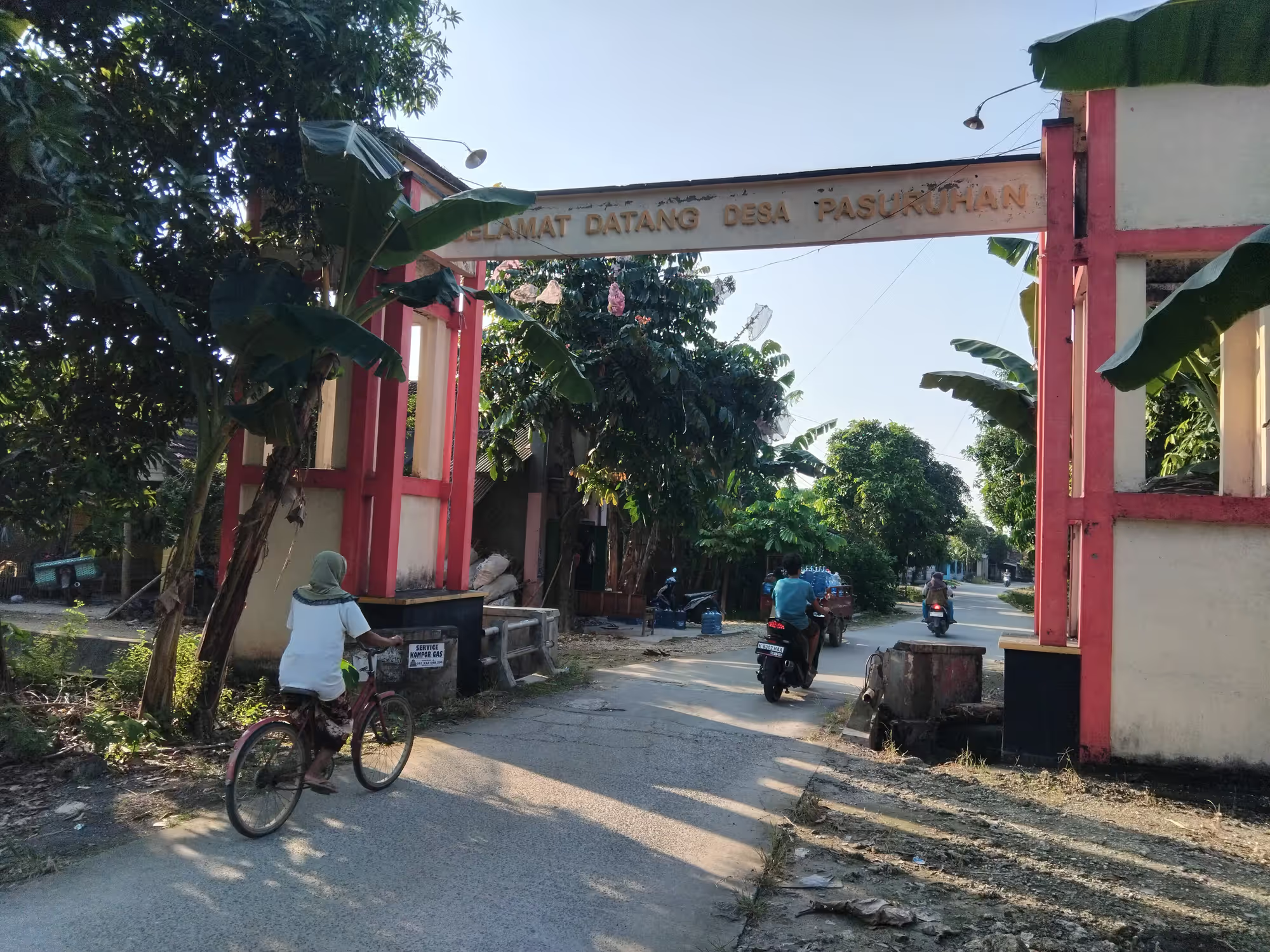
Gate of Pasuruhan Village, Kayen District, Pati Regency, Central Java, may look like many other village gates. However, upon entering the village, which is located 20 kilometers south of downtown area of Pati, a different atmosphere immediately becomes noticeable. The most striking feature is the gates at each alley. Bright red in color, these gates are tall and large, built with ceramic tiles.
As we enter the village on July 2, 2025, most of the houses look new, imposing, and garish. Many are also under construction or renovation. The highlight is the grand mosque Jami’ Baiturrohim, standing in the middle of the village, painted in
yellow-brown and complete with a minaret. “This renovation took about a year,
including support from migrant workers originating here,” said the Head of
Pasuruhan Village, Nurul Huda.
Since the early 1990s, many Pasuruhan residents have worked abroad. They have migrated to many countries like Malaysia, Hong Kong (China), Taiwan, South Korea, and Saudi Arabia. “Around 70-80 percent of Pasuruhan residents are currently or have been migrant workers,” Huda explained.
Currently, there are 901 households in Pasuruhan. The village authorities claim that Pasuruhan has the highest number of migrants in Kayen District, even in Pati
Regency. “During the election, out of 1,700 registered voters, only 800 voted,”
Huda said.
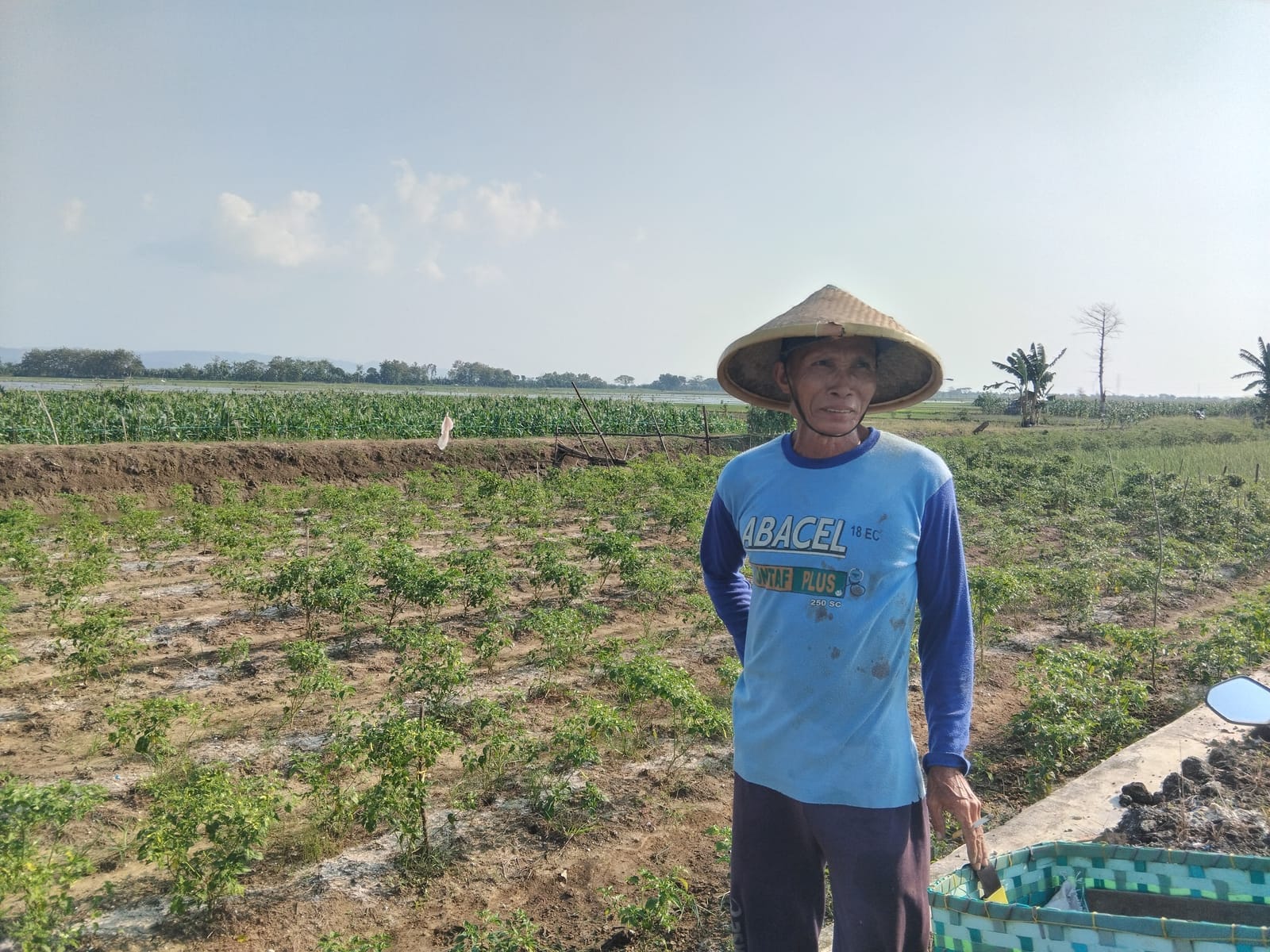
The large number of residents working abroad is likely due to the natural conditions of Pasuruhan, which has adversely affected the economy of the residents. In the 1990s, Pasuruhan frequently experienced droughts. Agricultural yields did not meet people’s expectations. At that time, some residents decided to migrate outside Java, especially to Sumatra. From that experience, some chose to expand their horizons to other countries.
One of them is 66-year-old Syafii. After working as corn farmer, he was part of the second wave of Pasuruhan residents who migrated abroad. In 1987, he first worked in palm oil plantations in Palembang, then to the Kerinci area in West Sumatra.
During those years, he mentioned the first wave of a handful of Pasuruhan natives
leaving for Malaysia. “I followed in 1990. At that time, there was a broker,” he said.
Syafii continued working abroad until 2021. He had returned several times, but decided to stop when his residence permit expired. "But I already have a souvenir: a 25-kilogram oil palm tree stomped on my head," he said with a laugh. He used the proceeds from his work to send his children to school and buy rice fields. Of his two children and three grandchildren, none followed in his footsteps as migrant workers.
Instead, the village head, Huda (43), took the path of intergenerational migrant workers. After graduating from high school in 2000, as the only and eldest son—he had one older brother, but he had died—he was expected to help his parents support his three younger sisters.
Huda then moved to Malaysia, following in his father's footsteps. For three years, he worked on oil palm plantations in Perak and Johor. After that, he continued his journey to Saudi Arabia—but in a different field. Huda became a cook in a restaurant. "I should have had the skills first, but I was reckless. When I got there, I didn't know anything. But there was training there, and we were taught. I was considered smart," said the father of three.
Huda said that Indonesians living abroad are relatively quick learners, adaptable, and diligent. This is in contrast to migrants from other countries, such as India and Bangladesh, who take a long time to learn and are less diligent. After spending three years in Saudi Arabia, Huda returned home in 2007. After several years in his village, he returned to his hometown in 2012, this time to South Korea, where he worked for four years in a battery box factory.
"After returning home, I continued playing around like this (in the village government). I actually wanted to go back (to my hometown) again. But there was encouragement from the residents to serve," said Huda, who has served as village head since 2021.
Choosing Migrating Over Farming
While droughts in the 1990s have affected the rice fields in Pasuruhan, they are now affected by flooding. When visited directly, some fields appear newly planted. Others still have muddy soil that's not yet suitable for cultivation. Still others are still flooded. In early 2025, this rice field area was hit by flooding, and the impact has yet to dry out in several plots. Last year, the flooding even affected residential areas.
This village is prone to flooding because it flows through a branch of the Pamali Juwana River. The river has become shallow, making it prone to overflowing during rainfall. Normalization efforts have been undertaken, but the results have been unsatisfactory. Furthermore, the area's landscape is also characterized by a basin.
"A harvest of 6-7 tons per hectare here is already very good. The Regent's target was only 10 tons per hectare," said Huda, referring to the statement of Pati Regent Sudewo, who was inaugurated earlier this year.
The farmers in this area are also former migrant workers. Nearly all of them have migrated abroad. "The majority of Pasuruhan residents make their living as migrant workers, not farmers," said Huda.
According to him, the main factor that keeps migrant workers working abroad is the salary. Without specifying the amount, the minimum salary in another country is 2.5 times the salary for similar work in their home country. This money is naturally sent home to support the economy. Another impact is the improvement of human resources (HR). "Parents can send their children to school, even to college. Many schools and Islamic boarding schools (Islamic boarding schools) are also being built here," he said.
Donations also flow for various social and religious activities. From religious studies, funeral funds, earth alms, the 17th August carnival, to horeg music performances, these funds are supported by migrant residents. These funds are managed collectively.
For example, Huda once initiated the Pasuruhan association in South Korea. Each person contributes 10,000 Won per month. From 20-30 migrants there, they can collect around 25 million Rupiah per year. "This is for the poor, orphans, and the elderly. It's been distributed door-to-door every year before Eid al-Fitr, and it's still going strong. It hasn't been distributed from other countries," he said.
Another factor is prestige. Take Imam Buchori, a local resident who migrated to Saudi Arabia to work in the automotive industry, for example. After high school, he was tempted to become a migrant worker after seeing the lifestyles of his colleagues. "They already have a Honda PCX motorcycle, so why are we still riding an Astrea Grand?" he said.
Huda doesn't have detailed data on migrant activity. What's clear is that he has dozens of requests for documents required to work abroad. "The turnover of remittances is enormous. There are many foreign exchange heroes here who help the country," he said.
However, Huda stated that there is no facilitation from the government or the private sector regarding migrant activities in Pasuruhan. "All departures are on their own initiative. They find their own agents, attend their own training," he said.
According to him, during the time Pasuruhan residents were migrants, no accidents happened. Residents were also not worried about their new home because they usually had relatives already there. Migrants did experience violence, but he said it wasn't much. Some were victims of fraud, but most residents remained undeterred.
"There were some who died in Saudi Arabia, but it was a long time ago. The total number of people who died from work accidents and illnesses was around 20. There were no migrants who went to Cambodia because of the lure of high salaries (in online gambling)," he said.
He said the handling of migrants has improved, especially since the administration of President Susilo Bambang Yudhoyono. "At that time, Pasuruhan residents were taken home by bus. Previously, there was a lot of talk about Indonesian migrant workers being held hostage by certain individuals in Medan," Huda added.
The current concern is the social and psychological impact on families left behind. Negative outside cultures, such as drinking alcohol, have infiltrated the village, and even spread to children. "Children left behind by their parents also don't focus on their studies. Many become naughty," he said.
Therefore, he supports empowerment programs to prevent migrants from continually wandering. In his view, successful migrants are those who are able to manage their finances, such as by establishing productive businesses. Several examples already exist, such as chicken farms or shops. "Successful migrants usually have a home and a business. If they don't have a business, they haven't succeeded. If they have a home but are unemployed, they'll end up returning to their hometown," he said.
Village Caring for Migrant Worker
In 2017, Pasuruhan, along with several other villages in Pati Regency, was targeted by the Ministry of Manpower's Village of Productive Migrants (Desmigratif) program. This program provides training to former migrants or their families so they can acquire skills, become empowered, and avoid having to travel abroad.
In 2020, Pasuruhan Village received an award from the Ministry of Manpower as a Village Caring for Indonesian Migrant Workers. The certificate, signed by Minister of Manpower Ida Fauziyah, is displayed in a cabinet behind Huda's desk. However, since becoming village head in 2021, he feels there has been no follow-up to the program in Pasuruhan.
The program was managed by the previous village government. "Actually, it used to be to prevent residents from going abroad again. There were training sessions at the village office. Welding, workshops, and the Family Welfare Movement (PKK). However, none of that had any effect. They kept going abroad. After that, it just disappeared," Huda said.
His party had proposed establishing a Vocational Training Center (BLK) in Pasuruhan. However, the request proved unsuccessful. Instead, two BLKs, specializing in computer science and sewing, were opened in neighboring villages. "It's like we're just waiting for the rain to fall," Huda said.
Eko Wahyu Anggoro, a staff member of the One-Stop Integrated Service for Overseas Worker Placement at the Pati Regency Manpower Office, explained that Desmigratif was indeed promoted by the Indonesian Ministry of Manpower from 2017 to 2021. At that time, six villages in Pati, including Pasuruhan, were targeted and supported with training and infrastructure. "This was aimed at former migrant workers and their families," said Wahyu, who directly managed the empowerment program for former migrants in villages in Pati.
However, after that period, the Desmigratif program was discontinued. Last year, the program was reintroduced, targeting two villages: Sitiluhur and Sugihrejo, with culinary training. Funding for this program, however, came not from the central government, but from the Central Java Provincial Government and the Pati Regency Government.
The program targeted villages deemed to be migrant enclaves in Pati, based on data from the Indonesian Ministry of Manpower. Pati Regency ranks fourth in Central Java in terms of the number of migrant workers—with centers in the Kayen and Sukolilo Districts. As of June of this year, approximately 1,000 Pati residents had officially registered to work abroad.
Programs Affected by Budget Cut
This year, the ex-migrant empowerment program is no longer on the agenda due to budget cut measures. "Previously, the program received assistance with equipment like computers, a dedicated room, and was long-term. But the reality is that now it's gone, the program isn't running, especially since the Desmigratif regions have shifted from the Ministry's data," said Wahyu.
This is certainly regrettable. The placement program for migrant workers, especially those with high competencies, will impact the regional economies where these migrant workers originate.
Remittance funds consistently flow into the local economy through spending on basic needs, education, and even small business investment after the migrant workers return home. In 2023, Bank Indonesia reported remittances of $14.2 billion — an amount equivalent to the entire GDP contribution from the healthcare and social work sectors.
While remittances provide immediate financial assistance, their long-term impact on sustainable economic mobility, according to research conducted by the Indonesia Business Council, shows that a 1% increase in remittances is associated with a 0.01% increase in provincial GDP (GRDP).
The potential economic benefits of remittances can be significantly enhanced by increasing the placement of Indonesian migrant workers (PMI) and upgrading workers' skills for roles requiring higher skills.
Skills upgrading is crucial because it not only increases remittances but also equips returning migrants with more valuable skills.