
The SUAR Business Universe Survey, conducted July 22 - August 7, 2025, highlights both the resilience of Indonesia’s 65.5 million micro, small, and medium enterprises (MSMEs) and the persistent challenges they face, chief among them access to credit.
Highlights:
- As many as 40% of respondents stated that MSME actors find it difficult or very difficult to access financing (credit) from banks.
- Factors making it difficult for MSMEs to obtain bank credit include lack/limited collateral, minimal information about credit, low financial literacy among MSME actors, complicated regulations/administration, unfeasible business models, and resistance from banks.
- Regulatory reform is absolutely necessary (80%).
- MSME actors need to partner with large companies to obtain bank credit (73.3%).
- Collateral diversification is needed (86.7%).
- The three key factors determining MSME growth are: ease of access to credit (financing), promotion/marketing strategies and market expansion, and good business management/operations.
Micro, small, and medium enterprises (MSMEs) in Indonesia have historically played a significant role. Given their large numbers and the persistence of their operators, MSMEs serve as a backbone of the economy and have proven resilient during times of crisis.
MSME activities have supported many families and contributed to national economic growth. The Ministry of MSMEs of the Republic of Indonesia states that, based on data from the Central Statistics Agency, the current number of MSMEs is 65.5 million units, capable of absorbing 119 million workers. This accounts for more than half of Indonesia’s labor force, which totals 153 million people. The MSME sector contributes 61.9% to the country’s gross domestic product (GDP).
Nevertheless, MSMEs still face significant challenges, including limited access to financing, low productivity, uneven digitalization, and weak market networks and partnerships.
Regarding financing access, a survey conducted by the SUAR Team among company leaders, regulators, and economic observers revealed that generally, MSME operators find it relatively easy to access financing (60%). However, 40% of respondents believe that MSME operators still face difficulties, and in some cases, find it very difficult to obtain financing.
Looking at Bank Indonesia’s data, as of June 2025, the total MSME credit disbursed reached IDR 1,506.85 trillion. This amount increased by 76% compared to ten years ago, with average annual MSME credit growth of 7.4%.
By business scale, micro enterprises received the largest share of credit at 43.43%, followed by small enterprises at 34.36% and medium enterprises at 22.21%.
Credit disbursement for micro-scale enterprises during 2017–2024 grew faster than the other two scales, averaging 18.3% per year. The highest growth occurred post-COVID-19 pandemic in 2021, reaching 57.74%.
Meanwhile, small-scale enterprise credit grew at an average of 8.98% per year during the same period. Credit for medium-scale enterprises grew more slowly and tended to decline, averaging –1.49%. Due to the pandemic, for three consecutive years (2021–2023), medium-scale enterprise credit contracted consecutively by –23.86%, –5.88%, and –4.30%.
Although the nominal distribution of MSME credit tends to increase, survey respondents noted that some MSME actors still face difficulties in accessing bank credit. The factors causing these difficulties are varied.
Most respondents stated that the main reason MSMEs struggle to obtain credit from banks is the absence or limited collateral owned by MSME actors (26.7%). Other factors include lack of information about credit (16.7%) and low financial literacy and digital skills among MSME actors (16.7%).
Complex rules or administrative procedures are also cited as reasons (13.3%), ranging from difficult requirements to long disbursement times.
Other emerging reasons include businesses being deemed unfeasible with minimal resources, as well as legal issues causing banks to withhold trust (13.3%). Additionally, some banks are overly selective or picky in granting credit and impose high interest rates (10%).
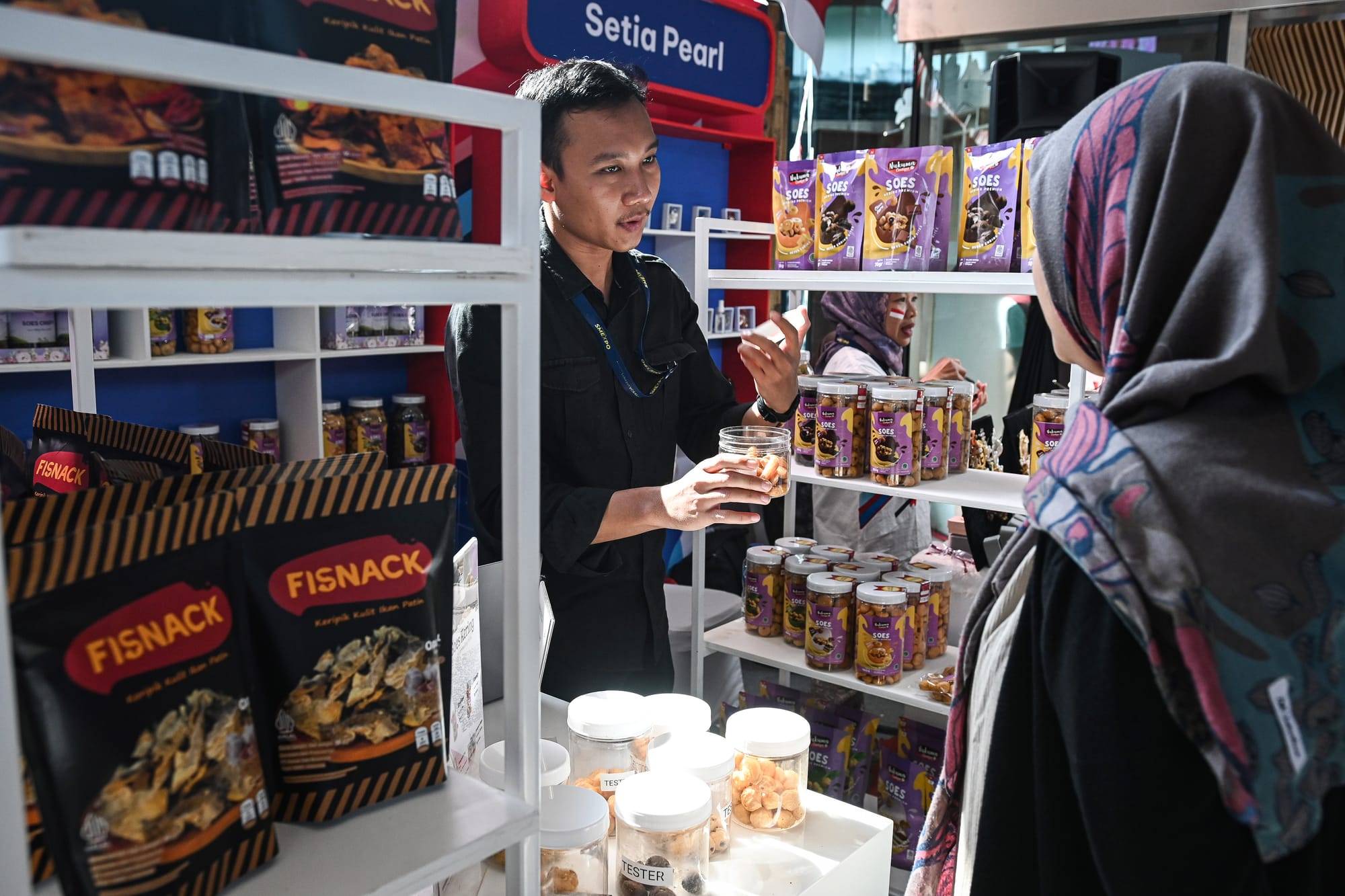
To address the limited access to financing, as a solution, the respondents agreed that regulatory reforms need to be carried out. In addition, MSME actors need to partner with large companies to make it easier to obtain bank credit. Another solution is the need to diversify collateral to facilitate MSMEs.
Regulatory Reform
The majority of respondents believe that regulatory reform needs to be carried out to make it easier for MSMEs to obtain bank credit (80%). The main reason is to simplify regulations in order to provide convenience for MSME actors in managing credit administration (41.7%).
This refers to one of the factors causing MSMEs to have difficulty accessing credit, as previously explained. The intended convenience seems to be related to the number of requirements, the length of procedures, the time required for processing, and other administrative aspects.
The next reason is that there must be policy breakthroughs that are more suitable or aligned with the actual conditions of MSMEs (33.3%). This ultimately is also related to providing ease for MSME actors.
Another reason is the view that MSMEs have great potential for the national economy; therefore, there must be affirmative support for MSMEs (16.7%). Lastly, to make MSMEs more professional entities (8.3%). As business entities, MSMEs have the potential to drive the economy, increase employment, foster entrepreneurship, and develop the creative economy.
A small portion of respondents (13.3%) believe that regulations related to MSMEs do not need to be reformed, considering that the existing regulations are already adequate. What needs to be done instead is better socialization, so that MSME actors gain a clearer understanding when they want to expand and require additional capital.
In addition, respondents also argue that for MSME development, what is needed is guidance and empowerment so that MSMEs can manage their businesses more effectively and sustainably.
Capital is not always the main factor for growth. Mapping the market and mitigating risks also need to be carried out at the early stages of building a business in order to survive and be sustainable.
MSME Partnerships
The second solution that can be implemented to help MSMEs more easily obtain credit from banks is to partner with large private companies. This opinion was expressed by 73.3% of respondents. The main reason is that private companies, especially large ones, can act as mentors or “foster parents” for MSMEs (31.8%).
This refers to the foster parent/mentorship concept that has been implemented for some time. Large companies can also serve as off-takers by purchasing MSME production outputs. The foster-parent–MSME relationship is generally based on principles of mutual need, trust, support, and benefit.
Through partnerships with large private companies, MSMEs have greater opportunities to access financing (22.7%). Large companies can act as collateral guarantors for MSMEs. Thanks to partnerships with these established companies, MSMEs also gain better access to information and markets for product promotion and business development (18.2%).
MSMEs can also become part of the supply chain of large companies or the wider industrial chain. This relationship is believed to provide better business certainty, allowing MSMEs to enhance their credibility and professionalism so that their businesses can be sustainable (13.6%).
MSMEs can become part of the supply chain of large companies or the industrial supply chain. This relationship is also believed to provide greater business certainty.
There are many success stories of large companies successfully fostering MSMEs, although sometimes this mentoring relationship is only part of corporate social responsibility (CSR). However, not all private companies are willing to mentor MSMEs.
Private companies are selective in this relationship and sometimes expect incentives from the government if they become partners for MSMEs. Such views were expressed by 9.1% of respondents.
Meanwhile, the respondents who believed that MSME players do not need to partner with private companies had their own reasons. According to them, MSMEs must be able to stand independently (42.9%).
Another reason is that the foster-parent relationship with MSMEs is feared to be difficult to succeed or sustain (28.6%). In fact, it has the potential to create new problems, such as the exploitation of MSMEs (28.6%).
Collateral Diversification
Another solution that can be pursued to make it easier for MSME players to obtain bank credit is by providing more diverse collateral alternatives to business owners—or in other words, implementing collateral diversification. The majority of respondents expressed this view (86.7%).
Collateral is a crucial requirement when applying for bank loans. Diversification of collateral is necessary to provide convenience for MSMEs, especially regarding types and financing schemes (44%).
Collateral does not always have to take the form of physical goods or assets (28%). Since MSMEs often face collateral limitations, it should be adjusted to the conditions or capabilities of the business owners (16%). This way, MSMEs are expected to have better opportunities for growth.
Property assets, motor vehicles, and machinery or production equipment are the top three types of collateral that can be pledged to banks. However, for greater flexibility, other options that can be considered as collateral include the MSME’s products or projects, invoices or bills from sales orders, and even educational certificates, which are suggested to be acceptable as guarantees at banks.
Three Factors Driving MSME Growth
Efforts to develop MSMEs are an ongoing endeavor that has been carried out for a long time. In line with the vast potential of these enterprises, building and developing MSMEs means building Indonesia’s economy.
The Business Universe Survey concluded that there are three main factors driving the growth of MSMEs.
- First, promotion strategies, marketing, and market expansion (26.7%).
- Second, ease of access to financing or ease of obtaining credit for business expansion (23.3%).
- Third, good business management carried out by MSME actors (16.7%).
In addition to the three main factors, internal factors of MSME actors themselves also play a decisive role. The mindset and mentality of individuals in building a business—starting from planning production, producing, mapping markets, distributing products, to mitigating risks—will determine whether a business can survive in the long term and expand.
Product creation and innovation also determine the extent to which a brand is accepted by the market. Not only accepted, but also sought after by the market. This is another key factor for MSME growth.
In today’s era of technology and digitalization, MSME actors must also be able to leverage technology and digital tools to increase competitiveness and grow their businesses. MSME players now need to be digitally literate.
Beyond these many factors, tax incentives are also needed, especially for MSME actors who are just starting their businesses, to survive and develop further.
On the Ministry of MSMEs’ website, six strategies are outlined for developing MSMEs. These strategies include expanding market access, enhancing the competitiveness of products and services, developing business capacity and management, and accelerating financing and investment.
Other strategies involve creating ease and opportunities for doing business as well as strengthening cross-sector coordination.
Methodology and Survey Profile
The Semesta Dunia Usaha survey was conducted from July 22 to August 7, 2025. The respondents came from the business sector, regulators, and economic observers. From the business sector, the positions of respondents varied, ranging from directors and chief executive officers to business owners. From the regulator side, respondents included regional heads and members of parliament.
The respondents in this survey were selected using purposive sampling.