
In the midst of the increasingly competitive dynamics of the Indonesian labor market, the Central Statistics Agency (BPS) announced an increase in the number of working people and a decrease in the open unemployment rate in Q3 2025. Although still dominated by informal workers, the absorption of formal labor is slowly increasing. This recent development signals an improvement in employment and the provision of worker welfare.
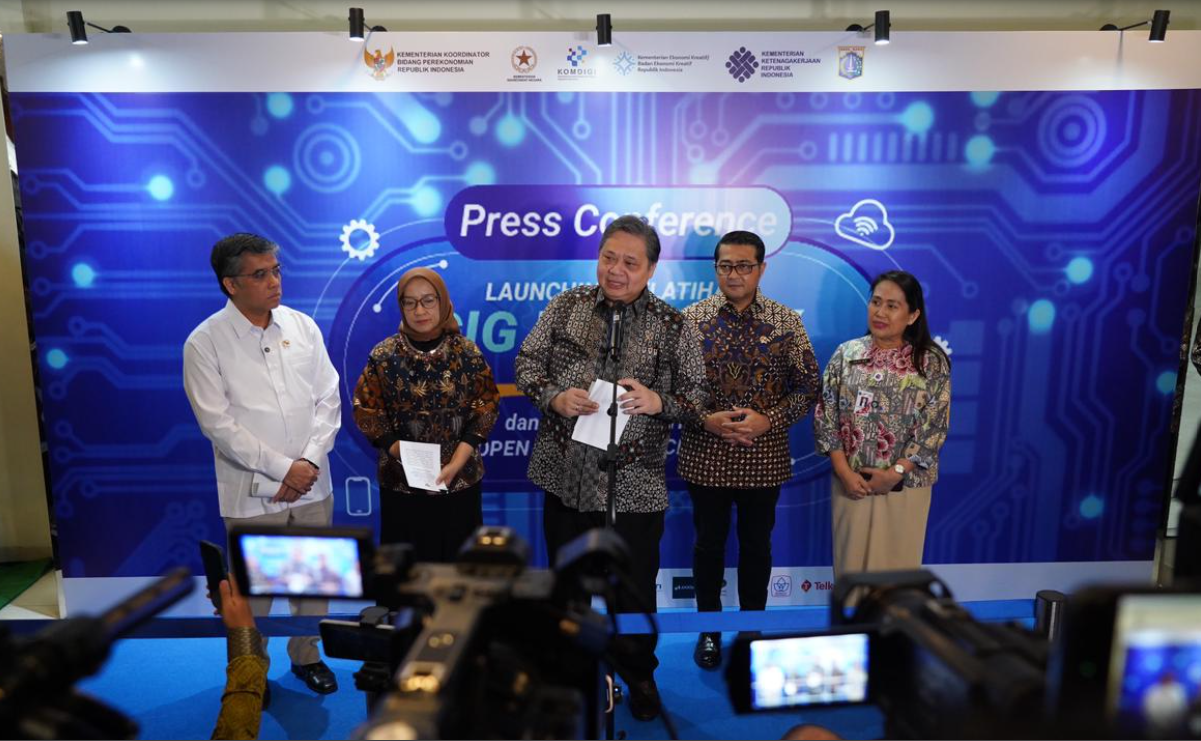
In a press conference to release the Official Statistical Gazette in Jakarta on Wednesday (4/11/2025), BPS Deputy for Balance Sheet and Statistical Analysis Mohamad Edy Mahmud revealed that of the 218.17 million working-age population in August 2024, there was a growth of 1.89 million new workers, bringing the total workforce to 154 million people.
Of these, 146.54 million people are recorded as having jobs, while 7,461,507 people who are not absorbed by the labor market are counted in the Open Unemployment Rate (TPT), with a percentage of 4.85%, and slightly lower than in August 2024, which amounted to 7,465,599 people.
"If this achievement is broken down, there was an increase of 200,000 full-time workers to 98.65 million people; 1.66 million part-time workers to 36.29 million people; and 40,000 underemployed workers to 11.6 million people," Edy said.
According to BPS records, three business fields had the highest labor absorption rate, namely agriculture which managed to absorb 0.49 million workers; accommodation and food-beverage which managed to absorb 0.42 million workers; and the manufacturing industry which managed to absorb 0.3 million workers.
In addition to these quantitative achievements, improvements in the quality of the labor market can also be seen in employment status, highest level of education, and inclusion.
With 38.74% of the population working as laborers/employees, 61.84 million or 42.20% of the total working population have the status of formal workers who are registered and have access to social security.
The number of workers in the formal sector in August 2025, which amounted to 42.2%, increased compared to February 2025, which amounted to 40.6%. The August 2025 formal sector labor absorption rate was also slightly better than August 2024, which amounted to 42.05%.
In terms of education, although workers with primary school education and below still dominate the labor market with a percentage of 34.75% of the working population, the number of workers with diploma education and above has increased to 13.06% of the working population. This increase is also a sign of the increasing need for competent and qualified human resources.
On the other hand, in terms of inclusion, the Labor Force Participation Rate (TPAK) for women increased from 56.42 million in August 2024 to 56.63 million in August 2025. In contrast, the male TPAK decreased from 84.66 million in August 2024 to 84.40 million in August 2025.
"The improvement is also reflected in the increase in average worker wages by 1.94% from Rp3,267,618 in August 2024 to Rp3,331,012 in August 2025. The highest increase occurred in the average wage of workers in the education sector by 6.72% from IDR 2,858,783 in August 2024 to IDR 3,050,755 in August 2025," Edy explained.
The industry is booming
Quantitative and qualitative improvements in the labor market as recorded by BPS reflect the readiness of the business world to absorb more labor. With improved and adaptive industrialization, the labor market will be helped, even in the face of global economic uncertainty.
Lecturer in Labor Economics at the Faculty of Economics and Business, University of Indonesia (FEB UI) Padang Wicaksono assessed that the increase in the proportion of formal workers to 42.20% and the role of the manufacturing industry as the largest source of growth are strong indicators that the capital-intensive and high value-added sectors have begun to absorb more labor.
"This situation is an indication of the ongoing structural transformation of the economy towards a more mature direction, with more quality and stable employment," Padang said when contacted. SUAR, Wednesday (5/11/2025).
On the other hand, in addition to manufacturing growth, according to Padang, the 9.91% YoY increase in exports indicates the competitiveness of domestic products in the international market. For the labor market, this is a signal that workers in the manufacturing sector have the skills to produce goods that are in demand amidst uncertain global demand.
However, Padang also highlighted the relatively small quantitative decrease in the Open Unemployment Rate (TPT), which was only 4,092 people, especially in the context of the quality of employment. He acknowledged that labor absorption has improved, but the sector that absorbs it also needs attention.
"Our focus now is not only to drastically reduce the number of unemployed, but to ensure that those who are absorbed enter the formal sector with high productivity. We are heading in that direction, along with a stronger industrialization foundation that is resilient to external shocks," Padang concluded.
Separately, Chairman of the Manpower Division of the Indonesian Employers Association (Apindo) Bob Azam believes that although it is slowly increasing, the portion of informal workers is still dominant. This is actually in line with the Indonesian economy which has not really recovered from the Covid-19 pandemic and various economic pressures.
In addition, the business world is also still waiting and seeing the conditions before deciding to expand. Labor regulations have not yet shown certainty.
"The new labor law is not yet clear. Wage regulations are also unclear," said Bob.