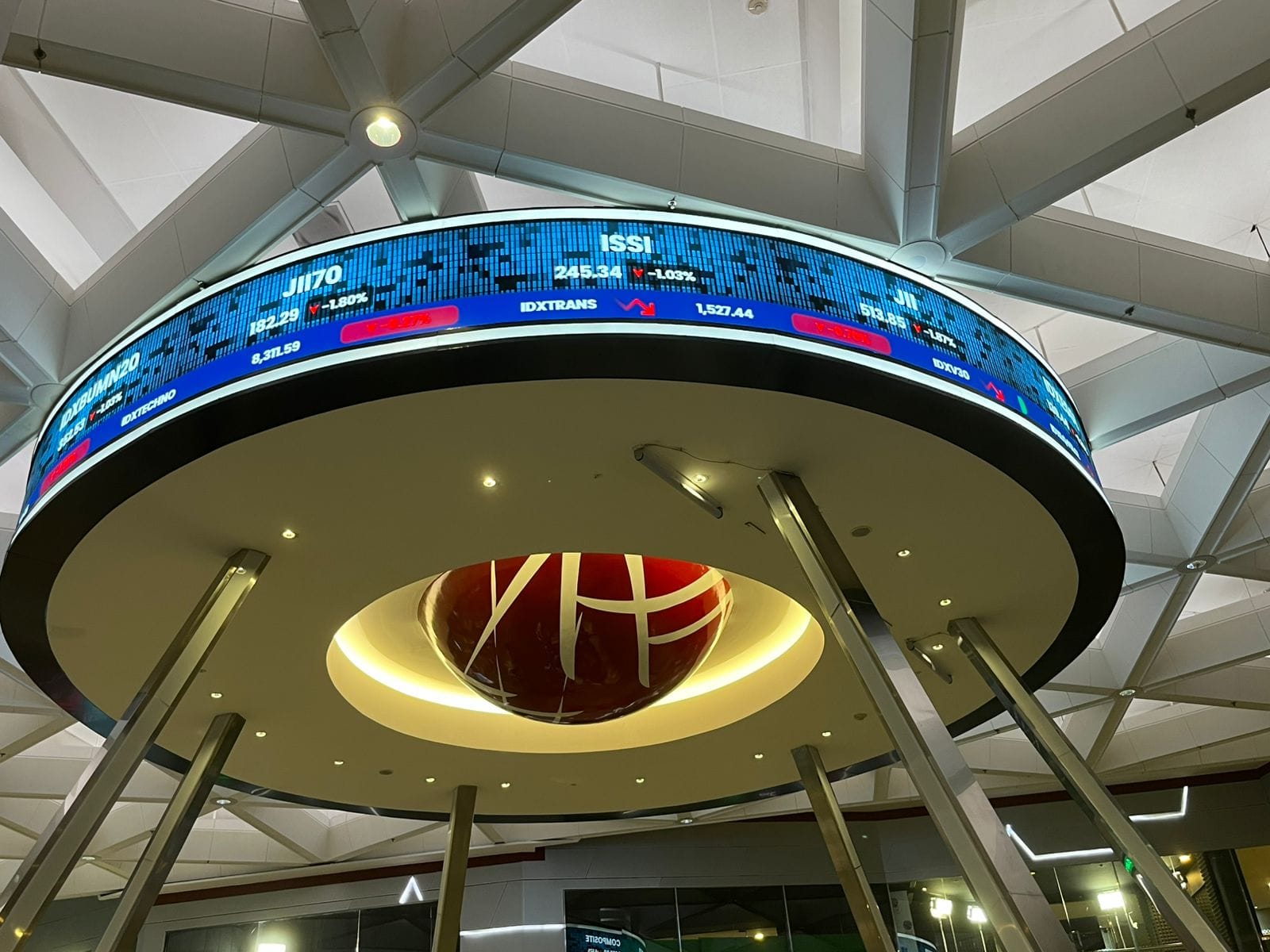
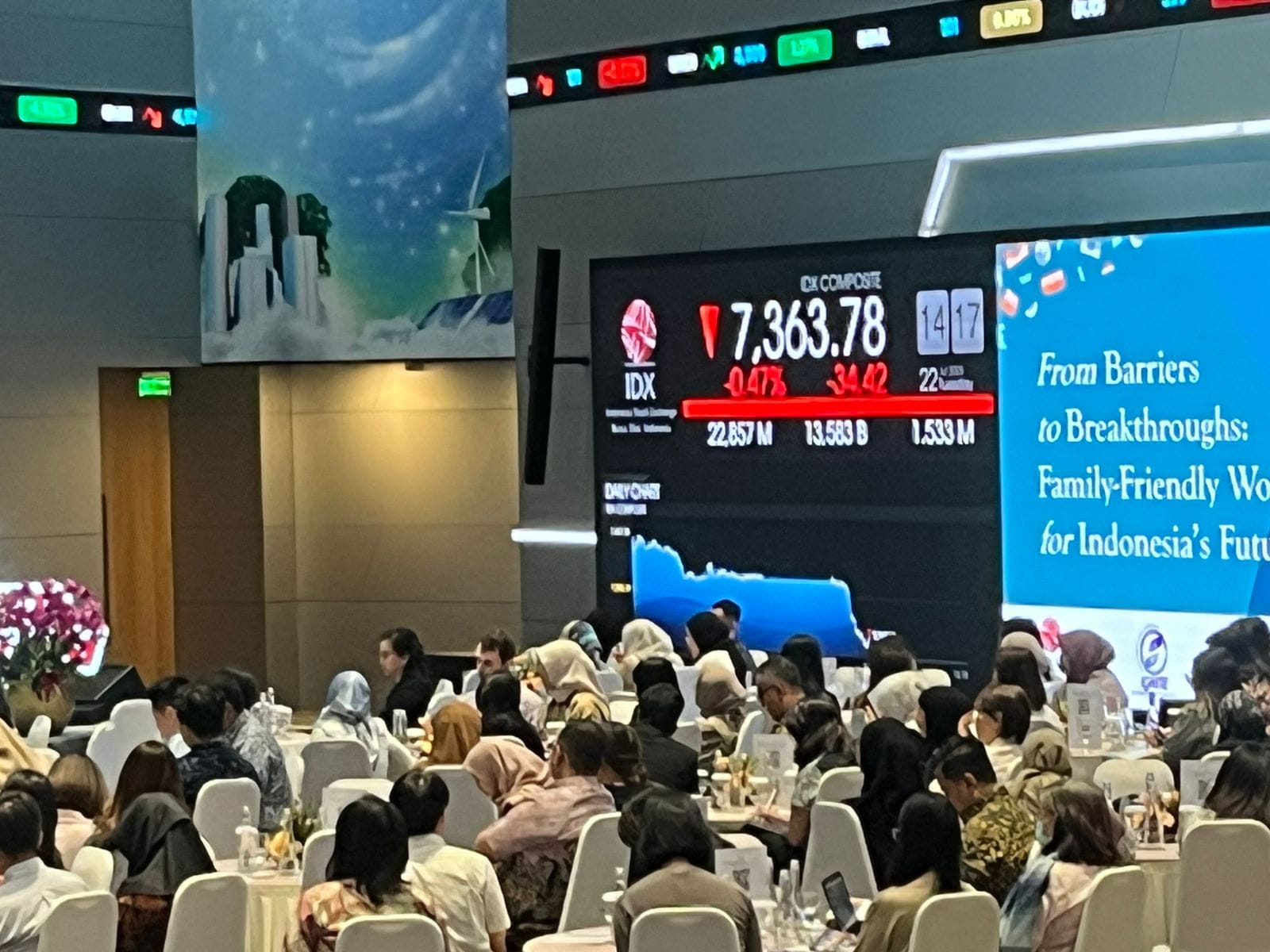
The Composite Stock Price Index (JCI) touched a 2025 record high on Monday (21/7/2025) at 7,398. Although on Tuesday (22/7/2025), JCI closed down at 7344, a number of analysts and retail investors believe JCI will continue its upward trend.
In between his work, Dion (32) opens a stock trading application on his cellphone. This private employee in the advertising sector doesn't want to miss a trading moment, especially when the capital market is soaring.
"So I can scoop up profits," he said when contacted on Tuesday (7/22/2025).
JCI did show a significant strengthening trend for 11 consecutive trading days until Monday, July 21, 2025. On that date, the JCI jumped 1.18% or 86.27 points, reaching a level of 7,398.19. This gain made JCI one of the best performing global stock indices in July.
However, on Tuesday, the JCI closed in the red zone for the first time after 11 consecutive days in the green zone, weakening by 0.72% or 53.45 points to a level of 7,334.74.
This weakening was largely due to the decline in conglomerate stocks, especially from the Prajogo Pangestu group, such as Barito Pacific (BRPT), which fell nearly 8%, and Chandra Asri Pacific (TPIA), which fell more than 5%.
Factors Driving the JCI Strengthening
According to Capital Market Observer, Budi Frensidy, the strengthening of the JCI is mainly supported by the Initial Public Offering (IPO) of conglomerate stocks. He explained that the IPOs of several conglomerate stocks that consecutively experienced auto reject up (ARA) played a significant role.
"Mainly, I think it's because of the IPOs of several conglomerate stocks, yes, which have been continuously auto reject up for more than 5 days or basically because, yes, the back up is a large conglomerate, yes," he told SUAR, (7/22/2025).
In addition, the movement of foreign investors is also an important determinant. He explained that foreign net buys will determine the stability of the JCI going forward. Although the foreign trading volume year to date may seem small, its impact on the index is enormous because their transactions are focused on large capitalization stocks (big cap).
In the property sector, he observed the expansion of large groups such as Djarum, the Prajogo Pangestu group, and Sinar Mas, which are increasingly expansive. Meanwhile, the movement of commodity stocks tends to be in line with global commodity prices.
The potential inclusion of Indonesian stocks, especially from the Prajogo Pangestu group, into global indices such as MSCI will also have a positive effect. This will attract hedge funds and foreign institutional investors, given that many foreign investors use robotic or automated trading.
"If there is a stock that is included in the index, it will be included in their portfolio on a benchmarking or indexing basis," he explained, emphasizing that this will have a positive effect on the Indonesian capital market.
Senior Technical Analyst at Mirae Asset Sekuritas Indonesia, Nafan Aji, said, "The recent increase in the JCI has tended to be driven by domestic investors, both retail and institutional. This is because foreign investors are still continuously recording net sells, which is approaching Rp60 trillion," he said, as reported by CNBC.
It was noted that foreign investors made net sales (net sell) of Rp180.30 billion across the entire stock market. This figure extends the selling trend that has been going on since the beginning of the year. Cumulatively, total net sales by foreign investors since the beginning of the year have reached Rp59.70 trillion. This continuous selling indicates a shift in sentiment or strategy from foreign investors towards the domestic stock market.
Nafan further said, "Going forward, domestic investors will still dominate the market, especially in terms of investment value."