

The Ministry of Finance has responded strongly to predictions of a slowdown in the world and regional economies released by various international institutions over the past two weeks. Publicly, the government accepts the highlights of the projection. However, Indonesia still has tactics that are not always in line with forecasts, such as spurring the power of three economic growth engines according to a predetermined plan.
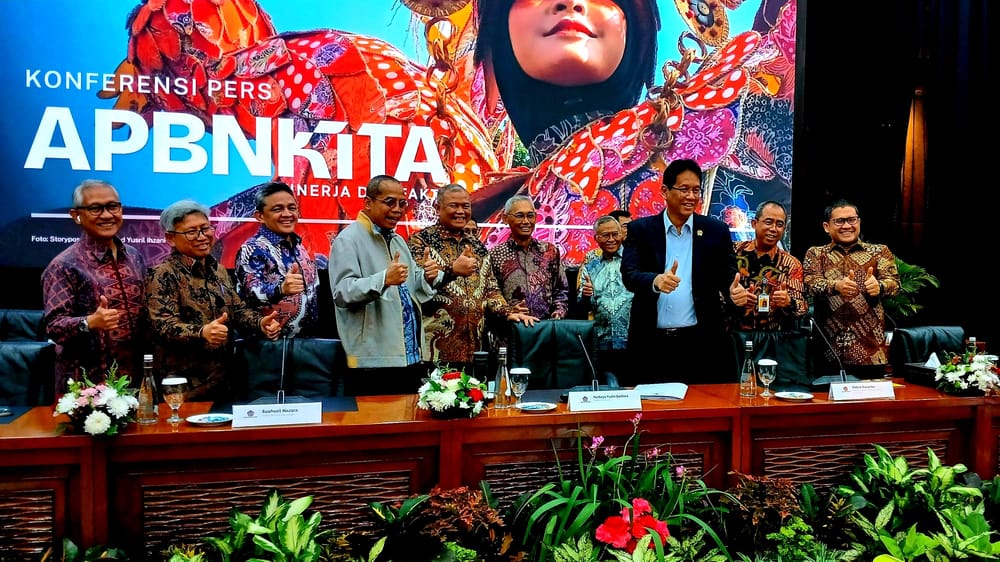
This assertion was conveyed by Director General of Economic and Fiscal Strategy Febrio Nathan Kacaribu at the opening of the Ministry of Finance 2025 Media Gathering at the headquarters of the Directorate General of Taxes, Jakarta, Thursday (9/10/2025). On that occasion, he also presented a summary of the 2026 State Budget and the growth target that the government wants to pursue in the next year.
With an economic growth target of 5.4% in 2026, the government is targeting to attract Rp7,450 trillion worth of investment next year or grow by 5.2%. In detail, private contributions are expected to contribute Rp6,200 trillion in investment; SOE investment through Danantara of Rp720 trillion; and government spending investment of Rp530 trillion.
"Minister Purbaya has directed to activate the fiscal machine, financial sector, and business climate together. Fiscal through effective spending and according to priorities; financial sector with the placement of state treasury and guarantees that we maintain; and the business climate with the deregulation and debottlenecking agenda that we continue to encourage," said Febrio.
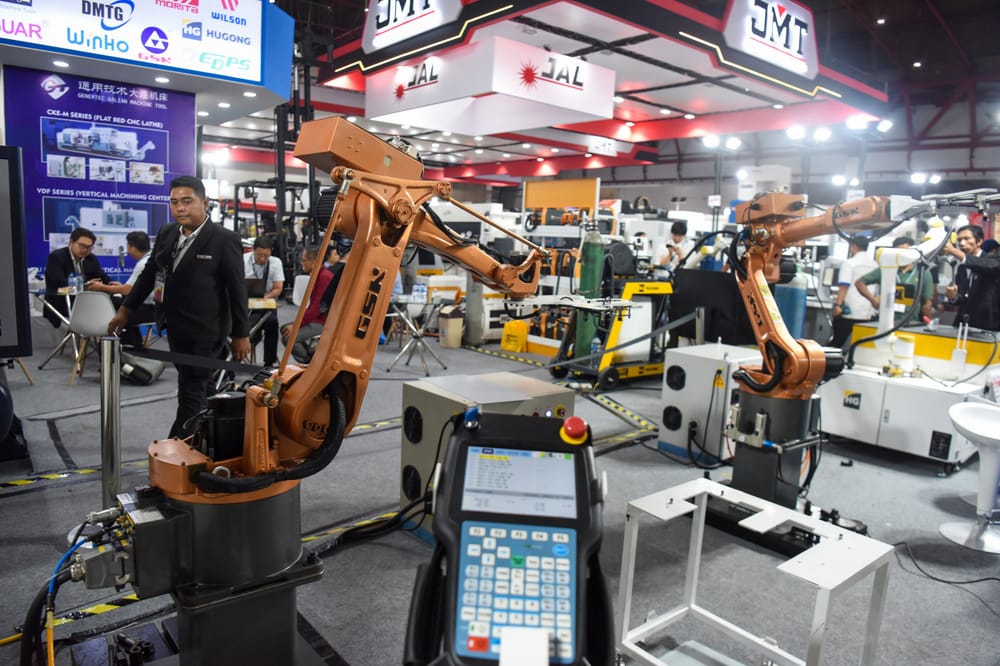
High value-added manufacturing investment is one of the main sectors targeted by the government, given the effectiveness of manufacturing in encouraging private investment, which is the foundation for the government to reduce the Incremental Capital Output Ratio (ICOR) from 6.2 this year to 5.7 next year.
To attract private investment, the government has integrated business license applications through online single submission, simplified the import process, relaxed TKDN, and automated IT services and digital dashboards for tracking the deregulation process. Labor-intensive manufacturing sectors as the target of this strategy are expected to absorb maximum labor so as to increase purchasing power and household consumption simultaneously.
On the fiscal front, the state cash placement has increased primary liquidity to 13.2% in September. Febrio reported that as of 9 October 2025, the five banks receiving the injection have realized credit for the real sector in a measured manner, with details of Bank Mandiri reaching 74%, BRI 62%, BSI 55%, BNI 50%, and BTN 19%.
The low lending rates that reduce the cost of funds of the five banks have proven to be attractive to banks, especially for Regional Development Banks (BPDs). Febrio stated that Bank Jatim, Bank Jakarta, and BJB have explicitly proposed the placement of state cash to the Ministry of Finance. However, it will still review cash management and targets that are in line with government objectives.
"If they have promised to channel credit to the housing sector, consumption, agriculture, that is what we want. Without increasing spending or increasing the deficit, the engines of growth can run simultaneously. So this is a win-win solution," said Febrio.
We remain resilient
The government's purposeful steps, according to Febrio, are the basis for Indonesia to still be able to achieve its growth target, even though international financial institutions such as the World Economic Forum (WEF), the Asian Development Bank (ADB), and the World Bank have projected that growth in the Asia Pacific region will slow to 4.5% next year.
The report by international financial institutions, which began rolling out at the end of September 2025, cited the United States' reciprocal tariff policy, China's slowing property market, and supply chain changes as causes of the slowdown. As a result, countries with growing economies in Asia Pacific are expected to be affected.
Febrio explicitly stated that the World Bank does not really understand the fiscal strategies that Indonesia has implemented to anticipate the slowdown, such as the 8+4+5 stimulus and the placement of IDR 200 trillion in funds to Himbara.
" Ourpolicy measures are different, and we are very optimistic about that. After all, the World Bank, if we look at the last few years, has always missed , but we are happy, because their attention is a sign that they are interested in investing," said Febrio.
 Benedictus Krisna Yogatama
The first echelon of the State Treasurer admitted that the government was taking the slowdown projections seriously. However, he also reminded that these international financial institutions tend to represent the interests of investors from developed countries.
"If they read a little missed, we give feedback that our policy direction remains on target. The same goes for the OECD, IMF, and ADB. They are not idle, and actually want to see the investment climate in Indonesia and behind there are investor interests that they bring," he said.
Pay attention to structural factors
The government's optimism in taking strategic steps to maintain growth has been appreciated by economists. However, structural factors in attracting investment should not be forgotten, ranging from productivity levels to law enforcement, which are highly considered by potential investors.
Development economics lecturer at the University of Indonesia's Faculty of Economics and Business (FEB UI) Rizki Nauli Siregar revealed comparative data with the Philippines and Vietnam that cause Indonesia's high value-added manufacturing investment climate to be less attractive than neighboring countries.
Rizki found that 41.2% of Indonesian exporters paid gratuities when processing exports, while only 4.6% of Philippine exporters and 29.2% of Vietnamese exporters were forced to do so.
Not only that, 97% of Indonesian exporters had to pay a stealth fee to obtain an additional electricity connection, while only 14.4% of Vietnamese exporters and 0% of Philippine exporters were subject to such a fee.
"Only 5.5% of Indonesian manufacturing companies have made product innovations in the last 3 years, lagging behind the Philippines which has 19.3% of innovator companies. As a result, Indonesia has persistently low participation in global supply chain trade," Rizki said in Jakarta, Wednesday (8/10/2025).
In line with Rizki, researcher from the Institute for Economic and Social Research (LPEM FEB UI) Teuku Riefky believes that fiscal and monetary policies should be viewed proportionally as catalysts for economic growth, while investment remains the main motor. Slow growth indicates that investment is reluctant to enter due to structural factors.
"Poor business climate, weak law enforcement, rent-seeking practices, and complex regulations have prevented significant investment in Indonesia. This must be addressed. Fiscal side policy can only play a role as far as reducing budget misallocation," he said when contacted by SUAR, Thursday (9/10/2025).
The government's agenda to invite strategic investments, according to Riefky, can be started by reconsidering the budget for populist programs and diverting it to programs that have proven to have high productivity.