
The SUAR team explored the thoughts of business leaders, regulators and economic observers through the Business World Universe Survey on the problems of Indonesian migrant workers and what the business world can do to help migrant workers get better income and welfare.
Highlights
- The government is considered unable to overcome the unemployment problem (56.7%).
- Sending workers abroad can solve the problem of unemployment (63.3%), although it is short-term.
- A small number of interviewees stated that migrant workers (PMI) do not earn a decent income abroad (10%). The rest have earned a decent income.
- Factors that influence migrant workers to earn a decent income abroad: skills and education (50%), careful preparation before departure (13.3%), and mastery of foreign languages (13.3%).
- The private sector should be involved in providing skills training for migrant workers going abroad (76.7%). The main reason is that the private sector has the capability, technology and networks to make migrant workers more competent and skilled (43.5%).
- The private sector should also be involved in channeling migrant workers (76.7%), in addition to the existing channeling agents. The main reason is that the private sector has a wide network (26.1%). However, in practice this requires regulations or systems and supervision.
Migrant workers are foreign exchange heroes for the country. Every year, not a few funds flow into the country from various parts of the world where Indonesian migrant workers have a diaspora.
However, the fate of Indonesian migrant workers is not entirely fortunate and prosperous. The skill factor is still an obstacle to getting a better job and income.
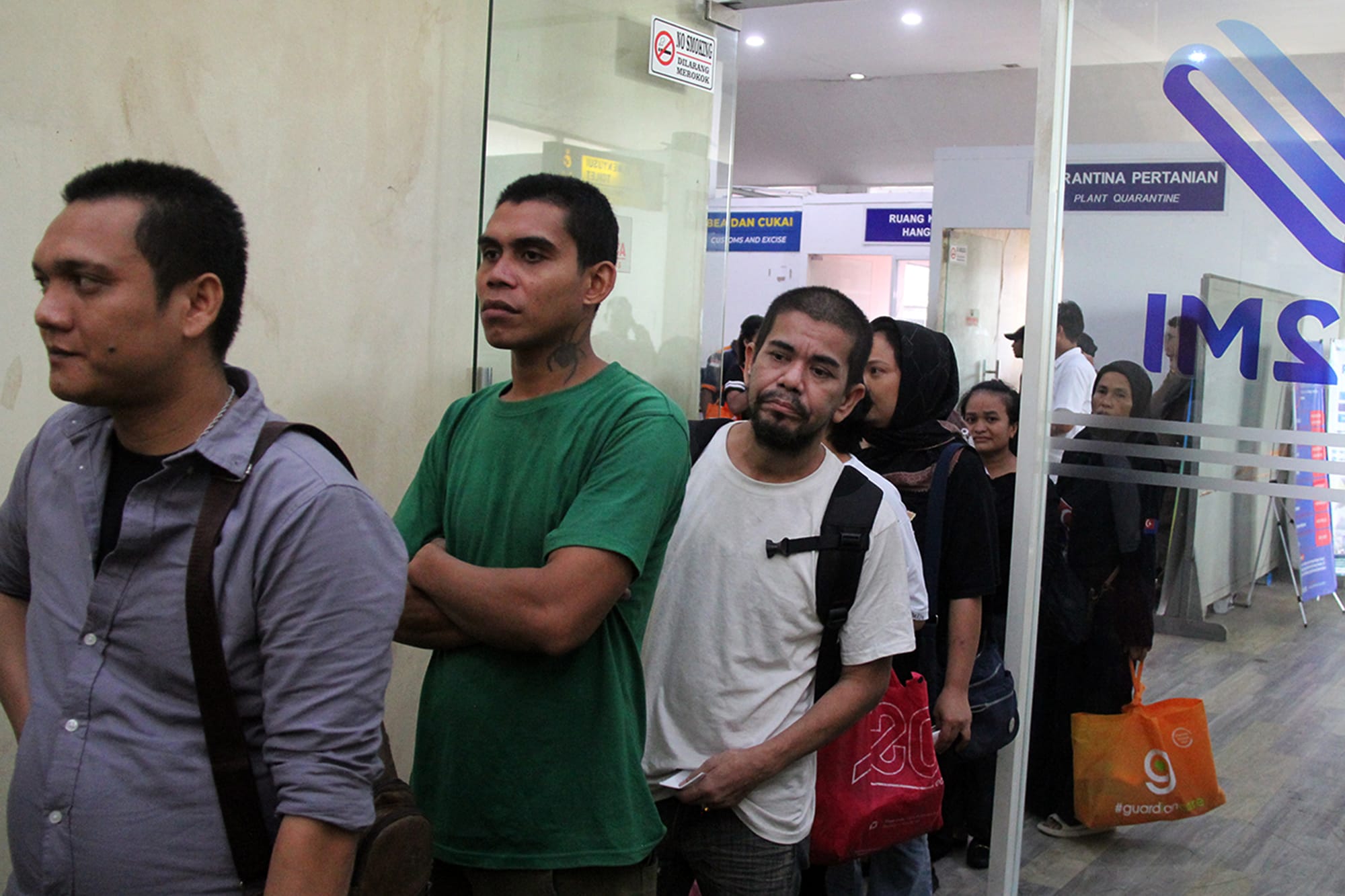
In the last decade, the number of Indonesians recorded as working as migrant workers to improve their fate is more than 200,000 people per year. Only when the Covid-19 pandemic hit (2020-2021), the number of Indonesian migrant workers (PMI) decreased dramatically.
In 2025, until July, the number of Indonesian migrant workers was 157,865. The top five migrant worker placement countries are Taiwan, Hong Kong, Malaysia, Japan, and Singapore.
From the income earned by migrant workers, families in the country are also blessed through remittances, aka money sent to families in the country. Remittances from migrant workers contribute to a country's economy. According to a World Bank report, remittances are one of the sources for income distribution, increasing purchasing power and economic growth.
In terms of consumption, remittances are used to purchase basic needs, such as food and clothing. If food needs are met, the impact will be seen in the nutritional status of the family and affect the quality of human resources.
Meanwhile, in terms of investment, the use of remittances is intended for things that are productive and long-term. For example, for house construction, purchasing assets in the form of land, rice fields, or gardens, as well as financing education and health.
Based on Bank Indonesia data, the amount of PMI remittances tends to increase, especially after the economy recovers from the pandemic. In 2024, the remittance figure was recorded as the highest, at US$15.7 billion, up 10 percent compared to the previous year. Meanwhile, in 2025, the amount of remittances until the second quarter has reached US$8.4 billion.
According to World Bank data, the amount of remittances entering Indonesia contributes around 1.1% to gross domestic product (GDP, 2024).
Employment problems
The economic motive is the main motive that drives people to decide to become migrant workers. Limited employment opportunities in the country are apush factor for people to seek work abroad rather than become unemployed. Meanwhile, the offer of better or higher wages in other countries is apull factor for people to improve their fate.
The results of the Business World Universe Survey organized by the SUAR Team a month ago showed that unemployment is still a problem in this country.
Most of the interviewees (56.7%) - comprising business leaders, regulators and economic observers - were unanimous in stating that the government has not been able to overcome the unemployment problem in our country, even though the unemployment rate according to BPS data fell to 4.76% (February 2025). Only a third of the interviewees (33.3%) said that the government has been able to overcome this employment problem.
People then see the opportunity to seek income by trying their luck in foreign countries, becoming migrant workers. Any job will be undertaken in order to improve the family economy. In fact, not a few are desperate to leave for the desired country without official documents, aka illegal entry.
With this condition, it is not surprising that the work that migrant workers do is manual labor or informal work - which sometimes makes them vulnerable to becoming victims of human trafficking.
The majority of interviewees (63.3%) were of the opinion that sending migrant workers abroad could solve the unemployment problem, especially in the short term. 26.7% of interviewees stated the opposite, that sending migrant workers would not solve the unemployment problem.
The opinion of the majority of interviewees is in line with the perception that most PMIs have earned a decent income or achieved good welfare. This opinion was expressed by 46.7% of the interviewees.
A total of 26.7% of interviewees stated that only a small proportion of migrant workers receive a decent income. Meanwhile, as many as 10% of the interviewees were of the opinion that migrant workers have not yet received a decent income. In fact, there are many stories of migrant workers whose salaries have been withheld, mistreated by their employers, and even deported.
Unskilled workers
Based on data from the Ministry of Protection of Indonesian Migrant Workers (BPMI), the five most common jobs or positions held by migrant workers are ashouse maids,caregivers,plantation workers, private sectorworkers, and domesticworkers.
In 2024, there will be 206,031 migrant workers in these five occupations or positions, or 69.3% of the total number of migrant workers placed abroad. Only a small proportion worked in the industrial/manufacturing sector (2.3%) or as construction workers (2.9%).
"According to the majority of survey respondents, the main factor that determines whether a migrant worker will earn a decent income and achieve a prosperous life is skills."
The education or skills that a migrant worker has will determine the type or position of the job. According to the majority of survey respondents, the main factors that determine whether a migrant worker will earn a decent income and achieve a prosperous life are education and skills (50%).
Next was the pre-departure preparation factor (13.3%), which included obtaining permits, fees, and skills training. Having a good command of a foreign language, especially the language of the country of work, is also a factor in securing a decent job and income (13.3%).
Unfortunately, Indonesian migrant workers are classified asunskilled workers or withlow education and skills. Referring to data from the Ministry of Protection of Indonesian Migrant Workers, the majority of migrant workers' education levels are elementary to high school (96%). The details are: 24.34% of migrant workers' education is at the elementary school level, 27.3% is at the junior high school level, and 44.36% is at the high school level.
Engage private sector for more skilled migrant workers
Efforts to overcome the problem of unemployment require joint steps involving many parties. It cannot only be expected to be resolved by the government alone. Even so in overcoming the problems that have been experienced by migrant workers.
So far, the scope of the government's presence in handling migrant workers stretches from upstream to downstream, from registering and monitoring the placement of migrant workers in various countries to assisting and providing protection for migrant workers who experience legal cases. However, various problems continue to arise.
The business world can play a big role in overcoming the problem of unemployment and migrant workers. Businesses that grow bigger will be able to absorb more labor.
"The business world with its resources can help overcome and even develop Indonesians who choose to become migrant workers in other countries."
However, where this has not been fully achieved, the business world with its resources can help develop Indonesians who choose to become migrant workers in other countries into skilled and competitive migrant workers.
The majority of interviewees agreed that the government should involve the private sector, outside of channeling agencies, in providing migrant workers with skills training before they leave for overseas. This was stated by 76.7% of respondents.
This opinion is based on the main consideration that private companies have the resources and capabilities to do so (43.5%). The resources include experts, technology, and market networks.
Private companies in Indonesia have many specialized skill areas that, if developed for prospective migrant workers, would increase the bargaining power of prospective migrant workers when working abroad. Skilled (certified) migrant workers will fill formal and high-income jobs.
The government alone in dealing with migrant workers has not been able to provide adequate skills training for prospective migrant workers. In addition, there are limited officers or networks to labor markets abroad. Thus, the government needs cooperation with the private sector.
In addition, interviewees also believed that private involvement would help ease the burden on the government in managing PMI (21.7%). There are also those who consider private involvement as a form of corporate social responsibility (CSR).
However, there were also interviewees who argued that the private sector should not be involved in providing skills training for prospective migrant workers. The reason is that it is the task of the government alone, especially the relevant ministries that have the authority and authority. Implementation will be difficult in the field due to different interests or company objectives.
In addition to providing skills training, according to the interviewees, the involvement of the private sector is also necessary in channeling migrant workers abroad (76.7%). This is mainly as a continuation for the private sector that previously provided skills training for prospective migrant workers.
One of the reasons cited was that the private sector has extensive networks and connections abroad (26.1%) that can provide job security and a better ecosystem for prospective migrant workers. Another reason was to help the government (13%).
Better collaboration with various parties, especially with private companies, in producing skilled migrant workers will improve the welfare of migrant workers and minimize unwanted cases.
As the lives of migrant workers improve, the blessings for their families back home and for the government will increase through the flow of remittances.
Methodology and resource person profiles
The Business World Universe Survey was conducted on July 22-August 7, 2025. Interviewees (respondents) were selected by purposive sampling from the business world, regulators, and economic observers. From the business world, the position of the resource persons varied, ranging from directors, managing directors, to owners. From the regulators, there are regional heads and council members.
Author: Gianie