

Who says age 60 means total retirement?
Among the hip cafes where young people hang out in Blok M, there is one unique café that employs the elderly, while many other places close their doors to them. It's a stark contrast, a place where the most famous young people in all of Jakarta are served by seniors in their 60s.
The location is also easy to find. From the entrance of the Melawai area, go about two hundred meters inward, on the left side of the road, there is a three-story green and white building with the words Uma Oma. From the outside, it looks simple, inconspicuous among its modern café neighbors.
As soon as our footsteps stepped on the tiled floor inside, the atmosphere turned softly bustling. The building is not too large, and the walls are decorated with antique plates from the '80s, reminiscent of grandma's plates at home.
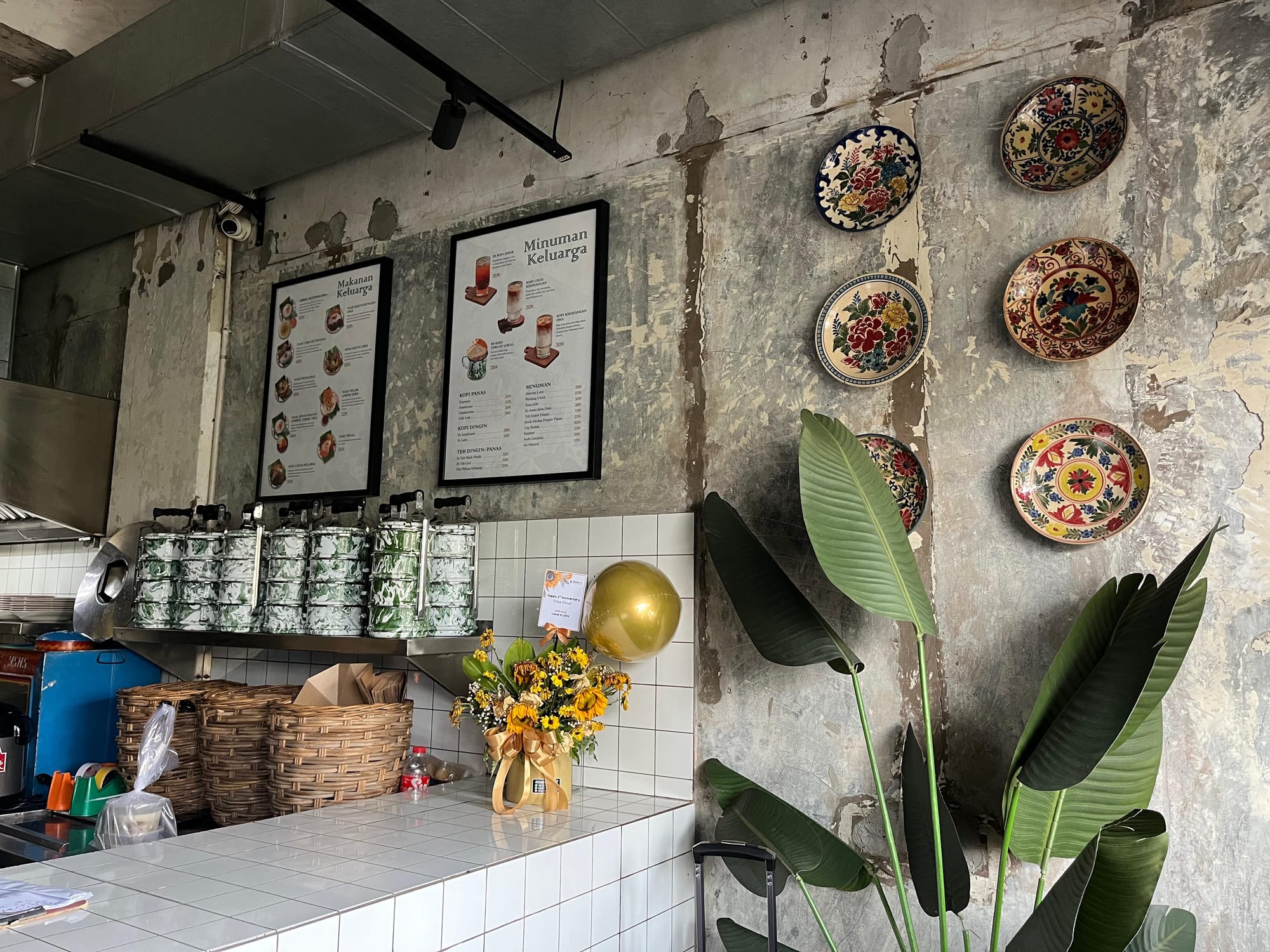
Wooden stairs, round tables, and the faintly soothing aroma of home-made spices. From behind a glass door, an old woman with a black hood and red lipstick smiled, looking friendly.
"Please queue first, oma grandchildren," said Wasinah (80) with a smile, her left hand pointing at the cashier.
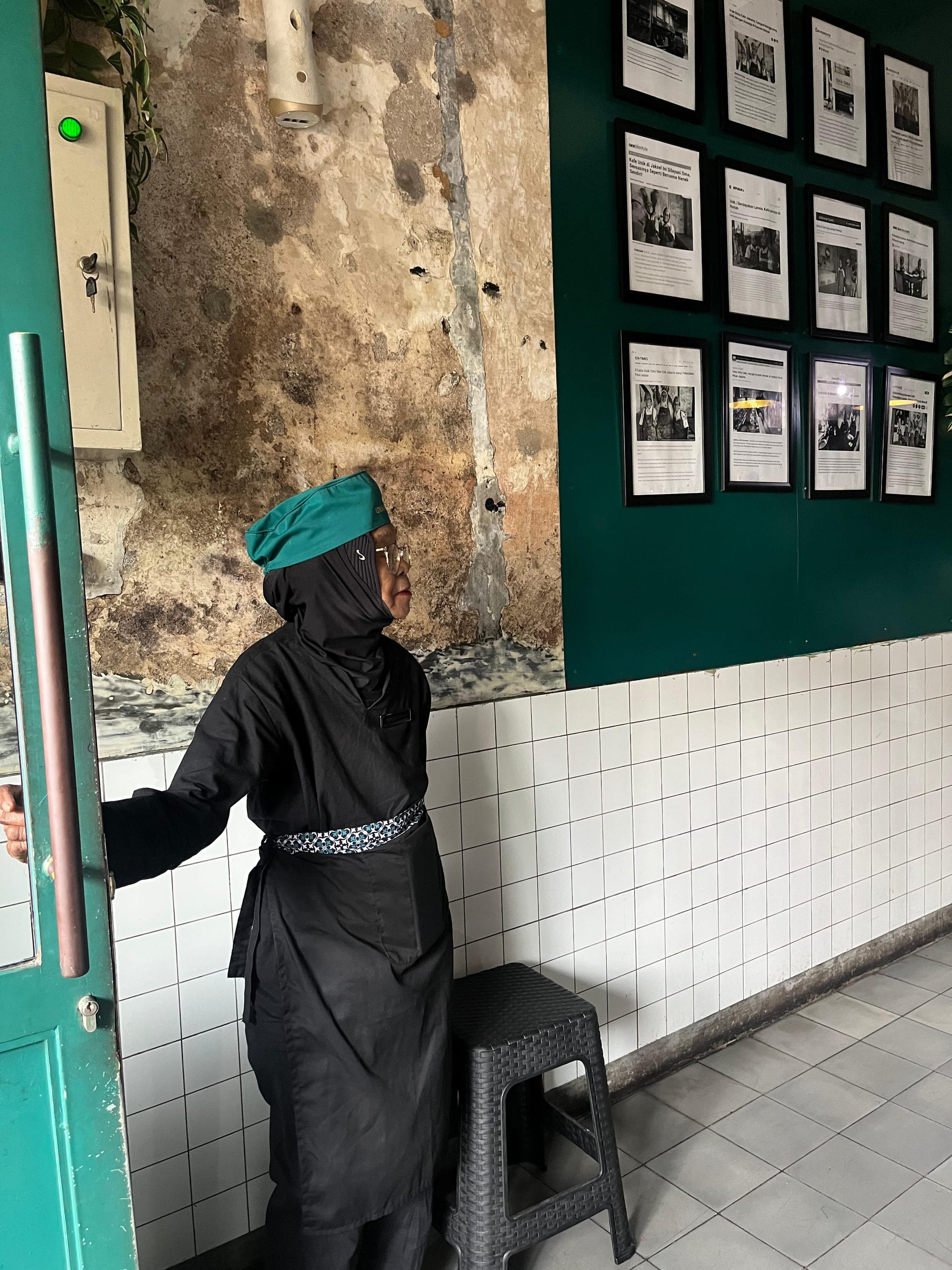
Her name is Wasinah, she is eighty years old. She stands at the door every day, the first face to greet every visitor. Her steps may no longer be as quick as they once were, but her smile is never absent.
"I love working here, son," he said quietly to the Suar journalist crew on Sunday (5/10).
"I want to have something to do, not be bored at home. I come at nine, leave at five. It feels like home, with lots of friends."
Wasinah initially said she would be assigned to the kitchen, but adjusting her capacity, she was eventually placed as a greeter or waitress. "The important thing is that I can still meet many people," she said.
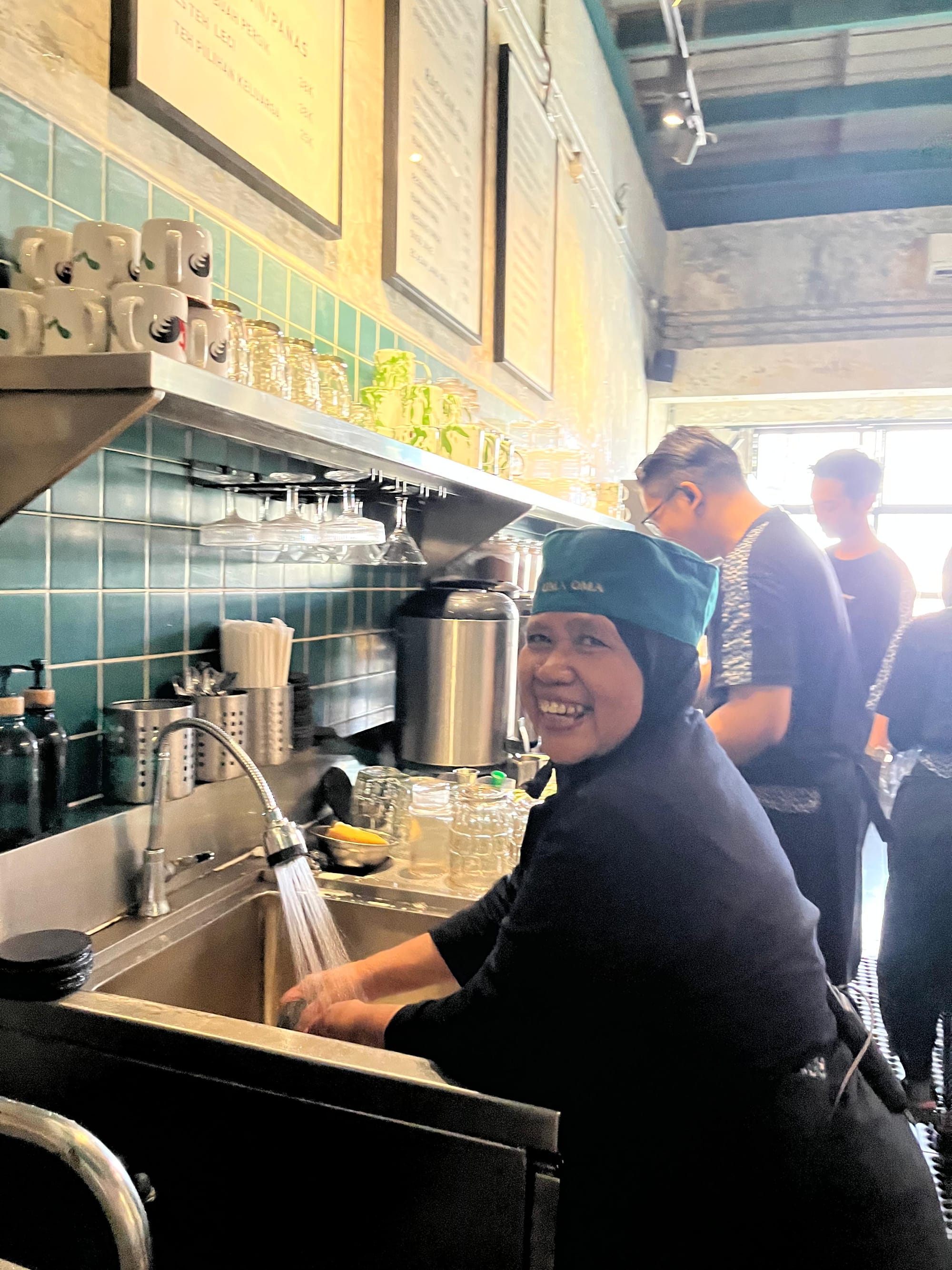
In the kitchen on the second floor, Sustiwati is busy in the corner of the small kitchen, her hands nimbly washing dishes as she talks. She leaves every morning from Ciledug by JakLingko, arriving before eight so she can help set up the cafe.
"I like it here. I have friends my own age, but the young people are nice too. I don't feel old," she says, stacking clean glasses.
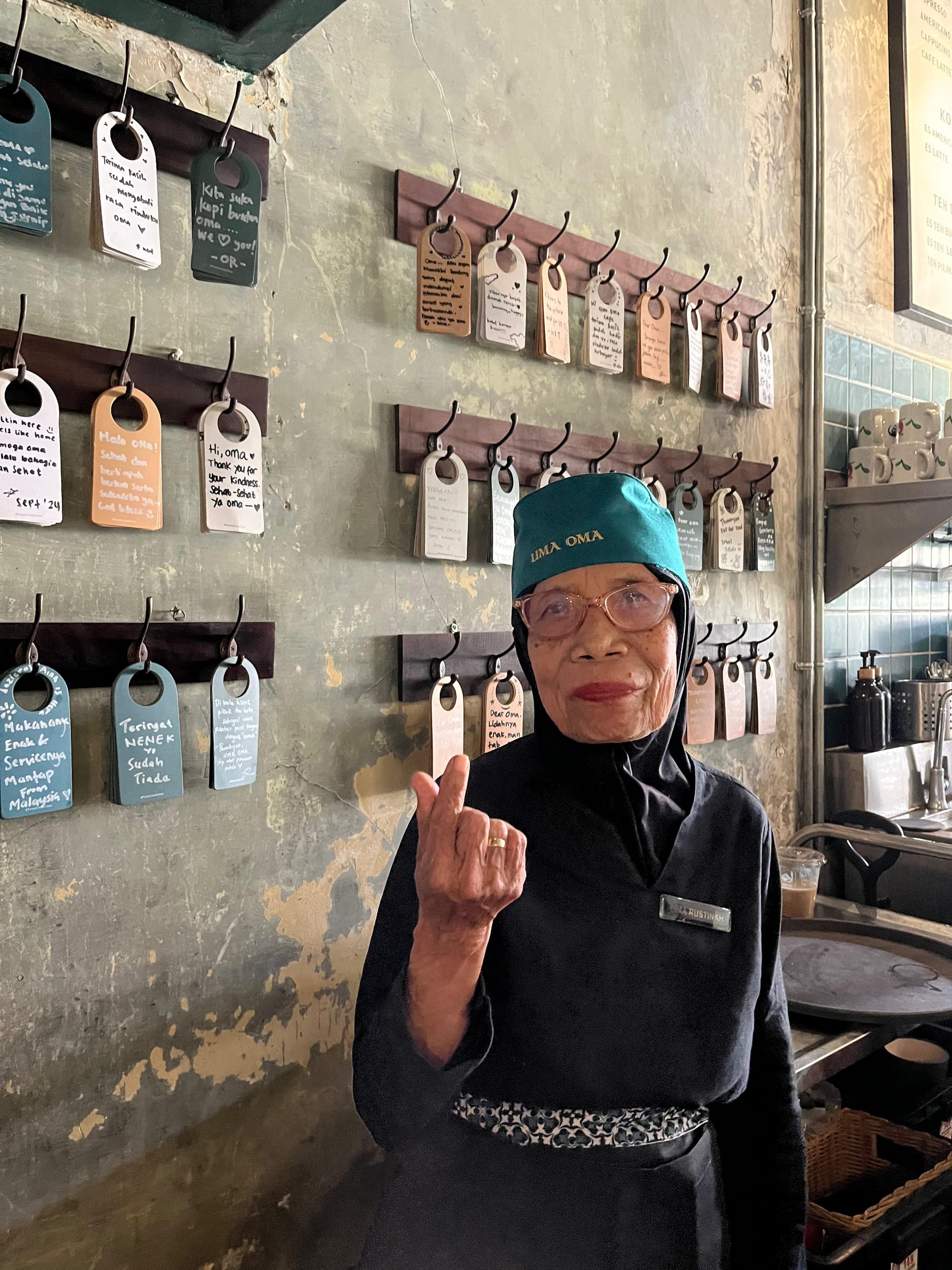
Meanwhile, on the second floor, Rustinah, who is 82 years old, has just finished clearing the customers' tables. Every morning, her son takes her to Uma Oma before going to work. "I was invited by Mr. Juna (Uma Oma's media team), whose photo is displayed on the stairs," she says, pointing to the wooden frame on the wall in front of the stairs.
"When I was invited, I was really happy. I haven't worked in a long time. I used to work in a garment factory, and I also helped with the Hajj pilgrimage. Now I can work again, even though I'm old, just to be healthy, have lots of activities."
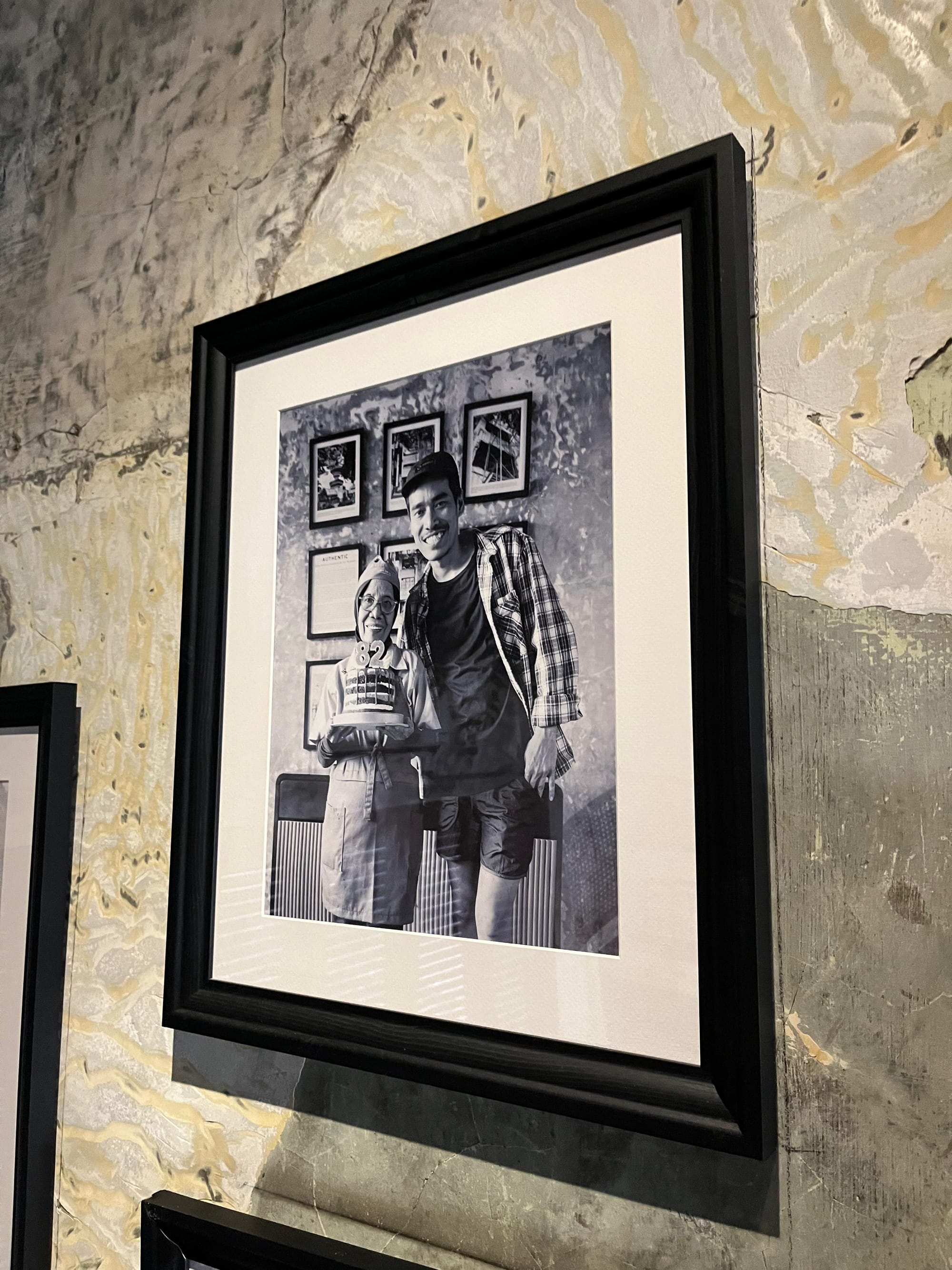
Occasionally, Rustinah stops chatting, watching the new customers arrive. "Good afternoon, what table is it for?" he says swiftly, then steps lightly to deliver the order. Afterward, he sits back down and tells stories of visitors who often come because they miss the atmosphere of home.
"Many confided in me, missing their grandmother, missing home. Some were crying, hugging me," she said. "I just said, okay, come here oma. Eat first, then your heart will calm down." At Uma Oma, age is not a limit, but a story, that work is not always about earning a living, but about finding life.
Not stopping there, Uma Oma Heritage, a new outlet from Uma Oma Cafe, plans to expand employment opportunities for the elderly. CEO and Founder of Uma Oma Cafe, Juna E. Salat, said that half of the total personnel in this new place will be filled by the elderly. Not only in terms of numbers, their roles will also be more diverse. If previously the 80-year-olds were only tasked with greeting guests, now they could be trusted to be waiters or carry out other roles according to their abilities and the needs of the restaurant.
Juna added that his team is currently looking for elderly candidates who have experience in hospitality by establishing communication with a number of relevant communities. This step is expected to open up opportunities for elderly people who still want to be active and work. He said the idea to establish Uma Oma stemmed from his experience meeting the elderly at a foundation in South Jakarta. "The elderly are often considered no longer productive, even though they can work across generations. I want to break that stigma," Juna told the media at Uma Oma Cafe Blok M's two-year anniversary event last September (28/9).
Age Considered a Limit
Many workers in Indonesia are forced to step aside from the workforce not because they have lost their skills, but because they are considered too old to "keep up" with the rhythm of the young professional world.
The latest data from the Central Statistics Agency (BPS) shows that in February 2025 the Open Unemployment Rate (TPT) for people over 60 years old reached 1.67%. Meanwhile, people over 60 years old who are still working earn an average wage of IDR 2.44 million per month.
In many sectors, especially retail and services, age limits for job applicants are still commonplace, although not always written down. Advertisements with the phrases "maximum age 30 years" or "no older than 35 years" are still easy to find. As a result, workers in their 40s and above often find it difficult to find a new job after being laid off or retiring early. "In fact, at that age their needs are even higher. They are also still able to work productively," said Nailul Huda, Director of Digital Economy at the Center of Economics and Law Studies (CELIOS).
The government tried to change this situation through the Minister of Manpower Circular Letter No. M/2/HK.04/III/2024, which encourages companies to no longer include age limits in the recruitment process. However, policies on paper do not necessarily change perceptions on the ground. In the midst of this situation, steps like those taken by Uma Oma Café feel relevant: giving space for the elderly to continue working and be appreciated, not because of pity, but because they are still capable and needed.
Government Steps to Remove Age Discrimination
In the midst of the reality of age discrimination that is still prevalent in the world of work, the government has finally taken firm steps. Minister of Manpower Yassierli issued Circular Letter (SE) Number M/6/HK.04/V/2025 concerning Prohibition of Discrimination in the Labor Recruitment Process.
This policy prohibits companies from including discriminatory requirements, including age limits, physical appearance, marital status, height, skin color, and ethnicity, unless the requirements are strictly related to the characteristics of the job. "The world of work must be a fair, inclusive space without discrimination, and provide equal opportunities for every citizen," said Yassierli in a press conference at the Ministry of Manpower (Kemnaker) Office, late May.
This regulation provides clear guidelines for businesses and opens up wider job opportunities for job seekers across ages, including people with disabilities. On the other hand, the removal of the age limit also expands the talent pool and encourages the participation of experienced groups to remain active in the workforce.
Economist Josua Pardede assesses that non-discriminatory policies like this are important to answer the structural challenges of the Indonesian workforce. "Removing the age limit expands the labor base and reduces mismatches, especially in the service and hospitality sectors that value service quality and reliability," Josua explained to Suar through a written statement, Sunday (5/10). He added, with an aging population, encouraging the participation of the elderly helps to contain the dependency ratio, maintain the tax base and social security, and enrich productivity through intergenerational knowledge transfer.
From a labor policy perspective, this step is also considered to reduce the number of productive-age unemployed. Nailul Huda, Director of Digital Economy at the Center of Economics and Law Studies (CELIOS), said the removal of the age limit is an important opportunity for those who lose their jobs in adulthood. "The age limit is very discriminatory. Many layoff victims aged 30-40 years find it difficult to get a job again, even though their life dependents are getting bigger," he said in a written statement, Sunday (5/10).
Nailul explained that the practice of age restriction is often used as a way for companies to reduce labor costs by preferring young applicants. In fact, mature workers are more experienced and capable of being good mentors. "If companies dare to combine young and senior workers, it will be easier to manage the organization," he added.
However, he also reminded that older workers still need adjustments, such as health checks and a more flexible work system to maintain productivity.
Challenges and Benefits of Building a Cross-Age Workplace
Despite its many benefits, creating an age-inclusive workplace is not without its challenges. Josua Pardede highlights the need for ergonomic adjustments, rotation of physical tasks, and periodic health checks for older workers. Another challenge arises from the digital literacy gap, which can be addressed through task-based micro-training, such as for cashier systems, ordering applications, or simple visual job aids.
A similar note came from the business community. According to Bob Azam, APINDO, although he appreciates this step, according to him, the elimination of the age limit is the main answer to the employment problem. The Chairperson of the Manpower Division of the Indonesian Employers Association (Apindo) assesses that the real problem lies in the lack of availability of jobs, not in the age requirement itself.
"The issue is not about age restrictions, but the job vacancies that must be increased," he said. Bob gave an example, a company can open only 10 positions, but receive up to a thousand applications. In such conditions, companies often set age limits as a practical way to screen applicants. "Otherwise, should the thousand or so be tested? That's a cost too," he said.
He added that for jobs that require physical fitness, the age factor still needs to be taken into account to maintain productivity and work safety. However, Bob agrees that a more inclusive workspace still needs to be created, as long as it is accompanied by the expansion of employment and skills development for workers across ages.
Moreover, the work culture also needs to adjust. "Age stereotypes can hinder optimal placement. Therefore, it is important to have anti-bias training and performance indicators that focus on output, not age," said Josua. Part-time work schemes, split shifts, oroff-peak hours assignments can be effective ways to maintain a balance between business efficiency and senior workers' welfare.
From a business perspective, the benefits are obvious. Senior workers are known to excel in accuracy, empathy and customer handling, skills that are in high demand in the service sector such as restaurants and cafes. They are best suited as greeters, cashiers, kitchen quality control, or mentors for young baristas. "Cross-age teams tend to make more mature decisions, a combination of experience and energy," says Josua.
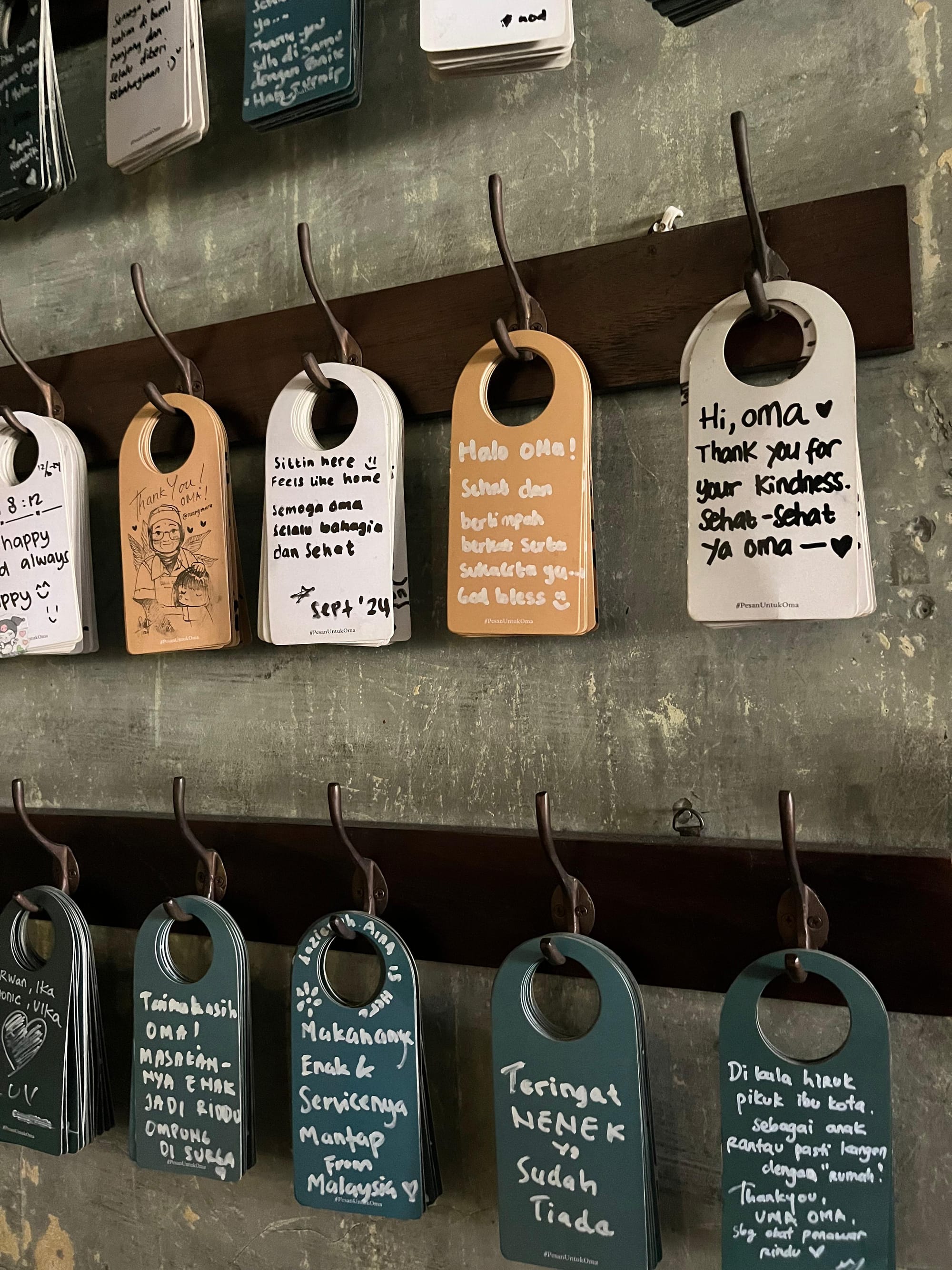
He also emphasized that practices like those at Uma Oma Café prove that inclusivity is not just a moral issue, but also a business strategy. Customers appreciate the warmth and community values reflected in the service of the omas, while the company benefits from customer loyalty and a strong brand image.
"Workplaces like Uma Oma not only provide space for the elderly to remain productive, but also give new meaning to the concept of service, more humane, warm, and respectful," Josua concluded.