
Indonesia's economic growth in the third quarter of 2025 reached 5.04% on an annualized basis (Year on Year/YoY). This achievement was lower than the economic growth in the second quarter of 2025 which amounted to 5.12% YoY.
The main growth-supporting components still come from household consumption and gross fixed capital formation (PMTB)/investment. Expectations of a slowdown in annual growth can still be prevented by utilizing the momentum and all available opportunities.
The economic achievements were announced by Deputy for Balance Sheet and Statistical Analysis of the Central Statistics Agency (BPS) Mohamad Edy Mahmud in a press conference on the release of the Official Statistical News in Jakarta, Wednesday (5/11/2025). In addition to the economic growth achievements, BPS also announced the 2025 Human Development Index and the Indonesian Employment Situation in August 2025.
"In Q3 2025, Indonesia's economic growth was in line with the seasonal pattern as in previous years which was always lower than Q2. On an annual basis, economic growth of 5.04% was higher than the third quarter of 2024 which grew by 4.95%," said Edy.
On the expenditure side, all components experienced positive growth, with household consumption being the largest contributor with the distribution to GDP reaching Rp3,220 trillion or 53.14%, growing 4.89% YoY. This was followed by the contribution of PMTB/investment which contributed Rp1,762.8 trillion or 29.09%.
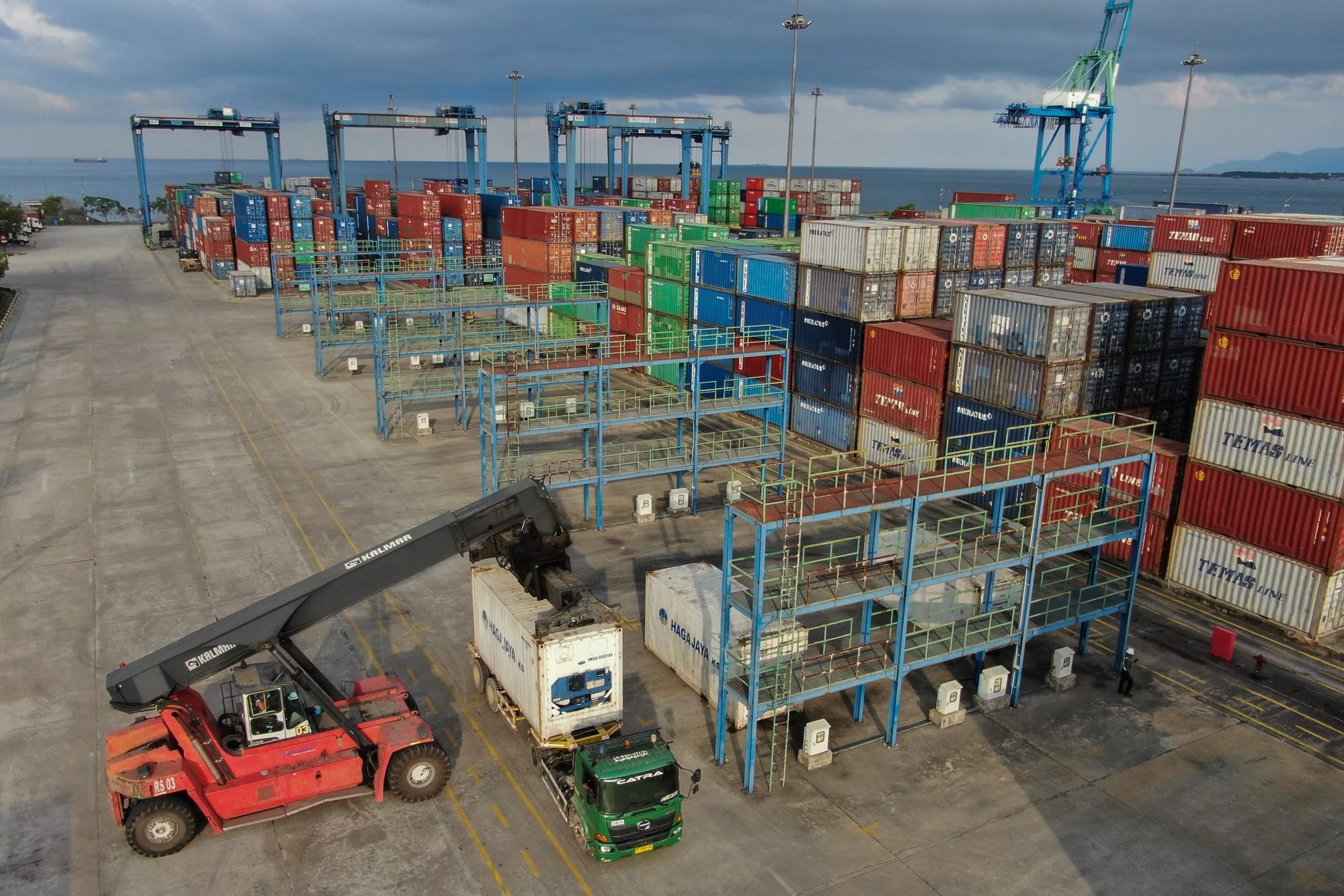
"Thus, 82.23% of GDP in Q3 2025 came from the domestic component. However, the export component continued to grow 9.91% YoY, mainly driven by the volume and value of non-oil and gas goods exports and service exports," he said.
In BPS records, the largest component of household consumption growth was transportation and communication needs which grew by 6.41% YoY, reflected in the increase in population mobility, the fuel sales index, as well as an increase in the number of rail and ship passengers.
The same thing happened to the PMTB/investment component, which was supported by the growth of the machinery and equipment subcomponent by 17.00%; the vehicle subcomponent by 6.24% due to increased domestic investment and vehicle imports; and the realization of BKPM investment by 13.89%.
"Spatially, the economy grew positively in all regions. Sulawesi recorded the highest growth of 5.84%, followed by Java Island which grew 5.17%, both above the national economic growth. Meanwhile, the Maluku and Papua regions continued to grow positively at 2.68%, despite experiencing a slowdown compared to the third quarter of the previous year," Edy concluded.
Meanwhile, on the production side, thanks to the encouragement of domestic and foreign demand, the manufacturing industry, which grew 5.54% YoY, became the largest contributor to growth, with the distribution to GDP reaching 19.15%.
This ranking was followed by the agriculture, forestry and fisheries sector which grew 4.93% YoY and contributed 14.35% to GDP; and the wholesale and retail trade sector which grew 5.49% and contributed 13.19% to GDP.
Within the manufacturing component, the food and beverage industry grew 6.49% driven by increased production of crude palm oil (CPO) and its derivatives; the base metal industry grew 18.62% in line with increased demand for iron and steel from abroad; and the chemical, pharmaceutical, and traditional medicine industries grew 11.65% to meet domestic and foreign demand.
Patience and precision
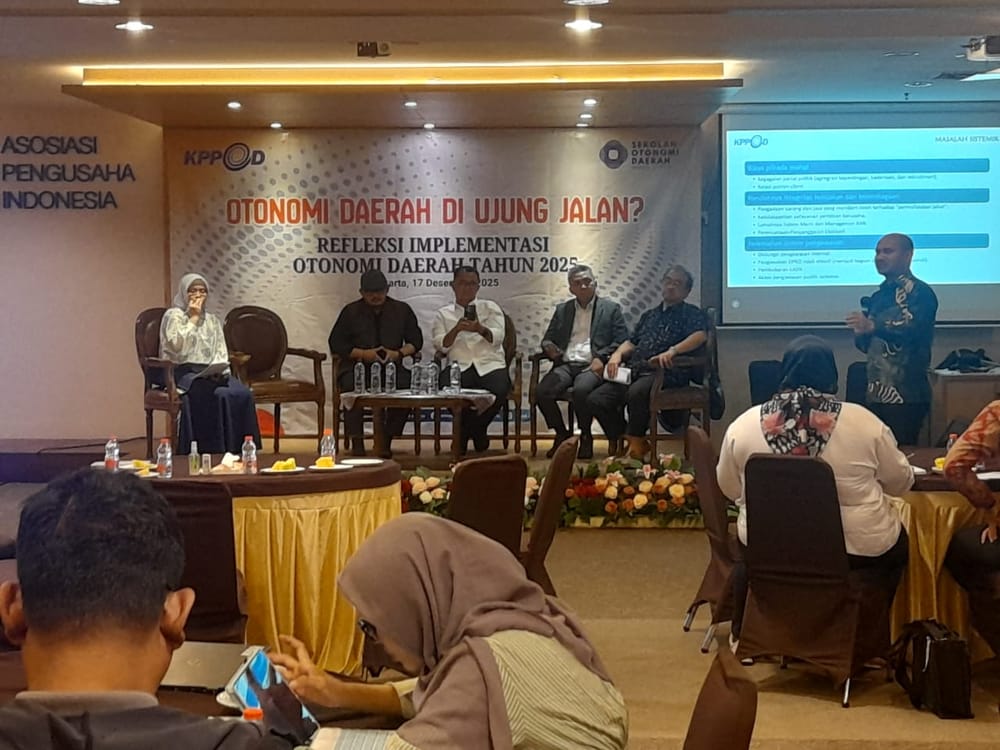
The business world appreciates the achievement of economic growth that has been able to maintain momentum to reach above 5% for two consecutive quarters. In the midst of an increasingly promising recovery momentum, the business world will maintain patience and precision, remain patient waiting for the impact, while guarding policies to be right on target.
Chairman of the Indonesian Employers Association Shinta Widjaja Kamdani revealed, with the economic landscape reflecting a more stable situation, the business world sees green shoots of recovery, with industrial activity moving through the expansion zone and investment showing a new passion with a value of Rp491 trillion, reflecting the growing confidence of business people in Indonesia's economic prospects.
"For the business world, the achievement of growth above 5% in the last two quarters is a signal that Indonesia's economic fundamentals are quite solid, even though external pressures still exist," said Shinta when contacted by SUAR, Wednesday (5/11/2025).
Foreign confidence in Indonesian products can be seen from the 9.9% export growth with a value of USD 74.39 billion, followed by the strengthening of domestic demand which only slowed slightly, from 4.97% in Q2 to 4.89% in Q3.
Shinta underlined, with the Consumer Confidence Index declining from the level of 121.7 to 115 in September indicating that although consumption is recovering, consumers still tend to be cautious. Similarly, expansionary monetary and fiscal policies that seek to maintain purchasing power while increasing production and investment capacity are beginning to show their effects.
"Currently, what is most needed is the speed of policy transmission to the real sector, so that the impact of monetary easing and fiscal stimulus is really felt on the ground," he said.
To maintain momentum while preparing for an economic leap, Shinta urged the government to prioritize business certainty with clarity of regulations, improve the efficiency of the cost of doing business which is a structural obstacle to industrial competitiveness, and strengthen people's purchasing power.
"These three are the 'trident of economic wisdom'. With this 'trident', the business world is optimistic that Indonesia will be able to maintain the momentum of recovery and will enter a stronger expansion phase next year," said Shinta.
Ready for the slowdown
The achievement of 5.04% economic growth in Q3 2025 was slightly above the consensus of economists who expected growth to slow down to 4.9-5.0%. However, despite the possibility of a continued slowdown affecting annual growth performance, there are a number of anticipations that can be made.
Head of the Department of Macroeconomics and Financial Market Research at Permata Bank, Faisal Rachman, identified two waves of normalization as the cause of weakening economic growth in Q3 2025. First, normalization after high demand from the US before the implementation of reciprocal tariffs in August 2025. Second, normalization after the seasonal increase in spending in Q2 2025.
"Indonesia's GDP growth prospects continue to be faced with several headwinds, which emphasize the importance of maintaining expansionary economic policies, especially through increased government spending, particularly in productive sectors with high multiplier effects," Faisal explained when contacted. SUAR, Wednesday (5/11/2025).
Until the end of 2025, according to Faisal, there are a number of steps that can be taken to anticipate a slowdown by considering supporting factors. First, improved labor market conditions and maintained inflation will boost household consumption.
Second, expectations of interest rate cuts that lower the cost of funds will strengthen confidence and investment prospects, and open up opportunities for business expansion. Third, the easing of trade tensions due to the openness of the US to negotiate, in addition to the government's proactive efforts to diversify trading partners and the recovery of commodity prices, will significantly support export performance.
"Overall, we expect GDP growth to be in the range of 5.0-5.1% for 2025 (compared to 5.03% in 2024). This marks an upward revision from our previous forecast, which expected GDP growth for the whole year to be slightly below 5%," he said.
However, Faisal advised businesses and the government to be prepared for the consequences of a number of uncertainty risks due to geopolitical tensions, China's slow economic recovery, and global economic stagnation that could drive risk sentiment towards emerging markets such as Indonesia.
"While there is still room for further fiscal and monetary expansion, policymakers should ensure growth and macroeconomic stability remain balanced, as the current account deficit has the potential to widen amid trade frictions and the fiscal deficit could increase under pro-growth policies," he concluded.