The year 2026 is expected to be full of challenges for city governments. Like an airplane flight, city governments are likely to experience turbulence. The root cause is none other than the decline in Regional Financial Transfer (TKD) budgets from the central government to the regions.
Citing data from the 2026 Draft State Budget (RAPBN), the amount of TKD fell by 24.66% to Rp693 trillion. In fact, in the 2025 State Budget, the TKD budget was Rp919.87 trillion.
Given the city government's high dependence on TKD, the decline in funds from the central government could potentially lead to delays in employee salary payments and a reduction in development projects.
However, like a skilled pilot facing turbulence, the city government led by the mayor must continue to do its utmost to overcome these challenges.
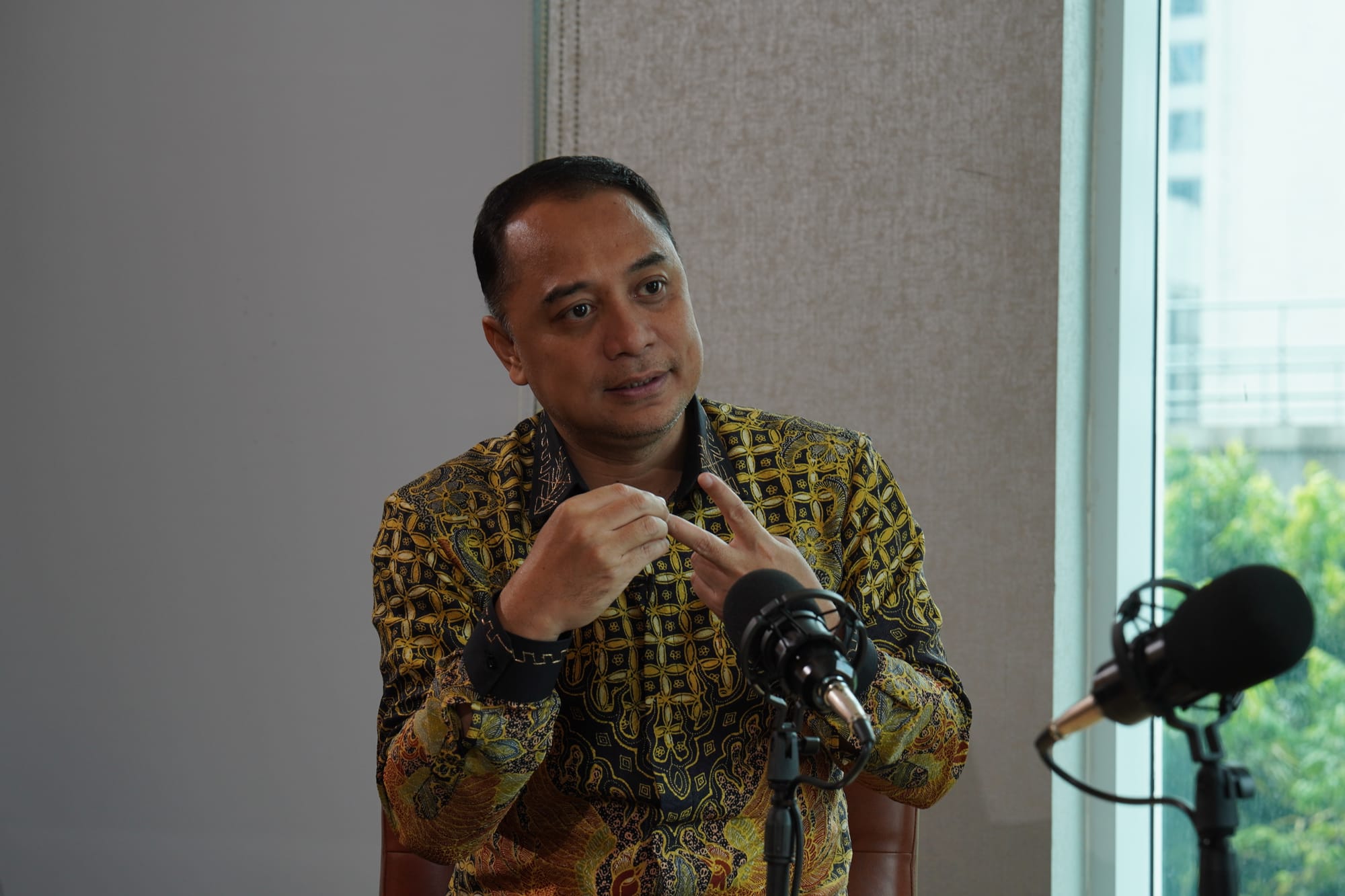
That spirit was conveyed by the Chair of the Association of Indonesian City Governments (Apeksi) 2025-2030, who is also the mayor of Surabaya, Eri Cahyadi, in a broadcast with Suar.id in Jakarta on Thursday (11/12/2025).
Instead of wallowing in disappointment and anger, Eri wanted to encourage the 98 mayors who are members of Apeksi to think creatively in order to optimize the potential of their regions so that they could generate local revenue (PAD) and reduce their dependence on TKD.
The following is an excerpt from an interview with Cak Eri, as he is affectionately known, with the founder and editor-in-chief of Suar.id, Sutta Dharmasaputra.
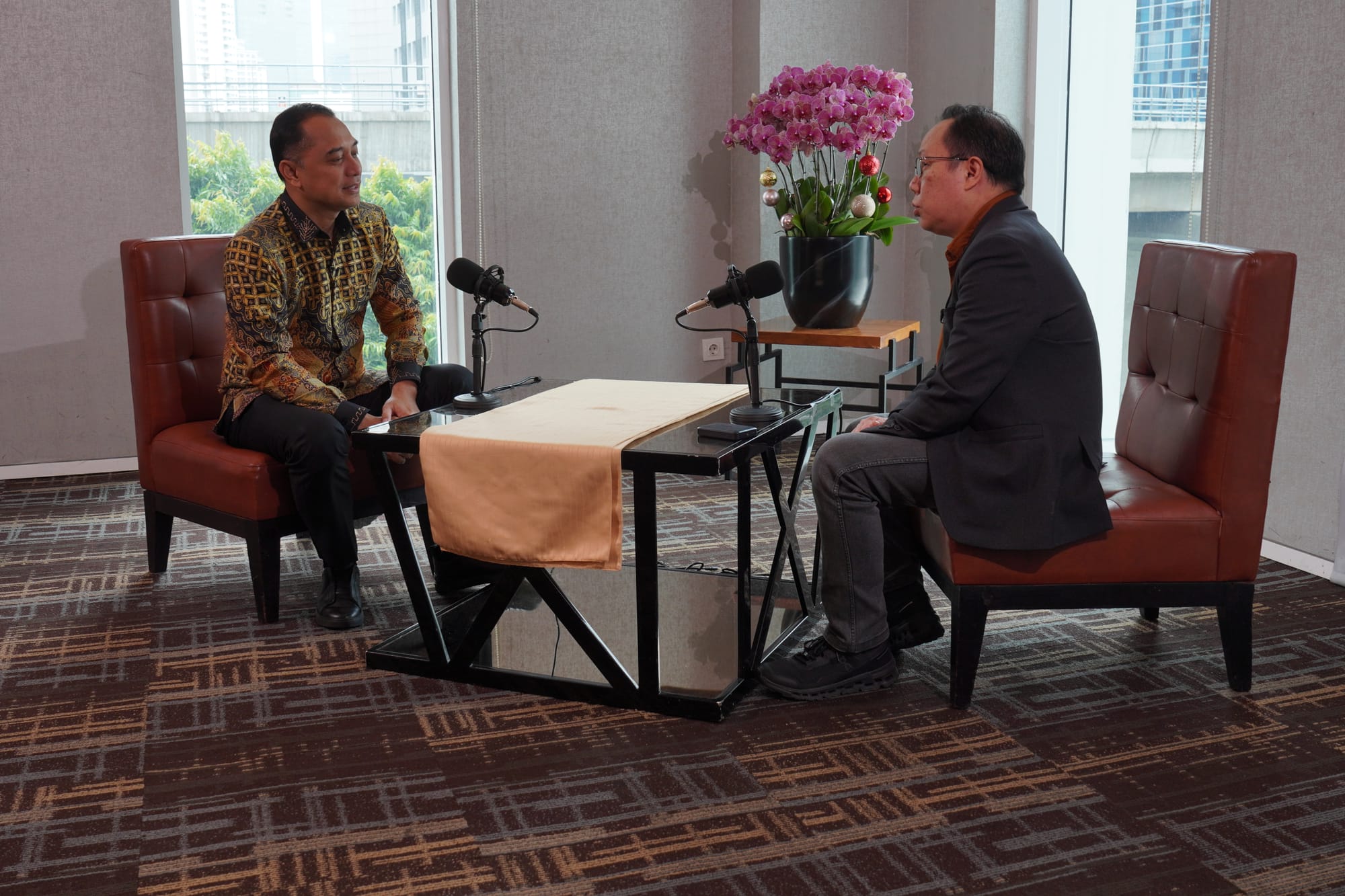
Next year is expected to be full of challenges for the city government due to the reduction in TKD from the central government. In the aviation world, this could cause turbulence. How big will the impact of this shock be on the city government?
We need to look at the fiscal structure of the local government. There are regions where local revenue accounts for only 30%, with the remaining 70% having to be met by TKD. But there are also regions that are more independent, with local revenue reaching 70% and TKD only 30%. So there are regions with strong local revenue, but there are also those that do not. For regions that still rely on TKD for up to 70% of their revenue, this can be a dilemma between paying employee salaries or implementing development programs.
What about Surabaya?
The largest portion of TKD goes to Surabaya, amounting to Rp730 billion in 2026. Our fiscal structure is approximately 75% from local revenue (PAD) and the remaining 25% from the central government (TKD). What I also want to convey is that these budget cuts from the central government are proportional. This means that regions with strong PAD are subject to larger cuts, while regions with weak PAD are not subject to any cuts at all. So, this cannot be generalized.
It's like an airplane, sir. Surabaya is a big city, so we only felt a slight shake. But other areas may have been shaken, right, sir?
This is what we do at Apeksi. We strengthen each other. At Apeksi, we create books about regional innovations. The goal is to ensure that we can survive even in these turbulent times. Why? Because mayors are elected by the people. Therefore, regardless of the circumstances, they must continue to provide the best for the people. So, we invite mayors to look at their respective strengths. Some focus on digitalization. Some focus on asset utilization. Some cities have recorded high increases in local revenue. We invite the heads of the Regional Revenue Agency (Bapenda) of those cities to be speakers so they can transfer their knowledge to other city governments. The point is, every region and every mayor has capabilities. They have something that can be leveraged.
What is the strategy in Surabaya?
Take Surabaya, for example. Even though we are also struggling (due to the decline in TKD), we have a large population. What should we do? I told my friends, let's not complain, or as the Javanese say, 'sambat'. But what can we do? We no longer maintain the parks along the roads; that is now done by corporate social responsibility (CSR) programs. Bus stops, for example, can be named after companies. Since they built them, they manage them, and their names are on them. That is what a big city like Surabaya can do. But for small cities, that is difficult to do. So, what they can do is mobilize their assets. Every region certainly has potential, whether it be natural resources or anything else. That is what can be leveraged by each city government.
The data shows that the TKD value for 2026 is the lowest in the last five years. This means that many regional heads are new to their positions and have never experienced this challenge before. Well, turbulence is sudden by nature, there is no prior warning...
Yes, it was sudden. The mayors said it was sudden, like that. Turbulence is impossible to predict; it just suddenly drops. This TKD reduction will only be finalized at the end of the year of notification. There will be a cut of a certain amount. The budget planning had already been done from May to July. The development plan and budget were certainly prepared with the assumption that there would be TKD. However, suddenly there was a cut. We had prepared the program and budget plans based on the president's vision and mission and the National Medium-Term Development Plan (RPJMN). But because of the budget cut, everything had to change.
Read also:
 Suar Team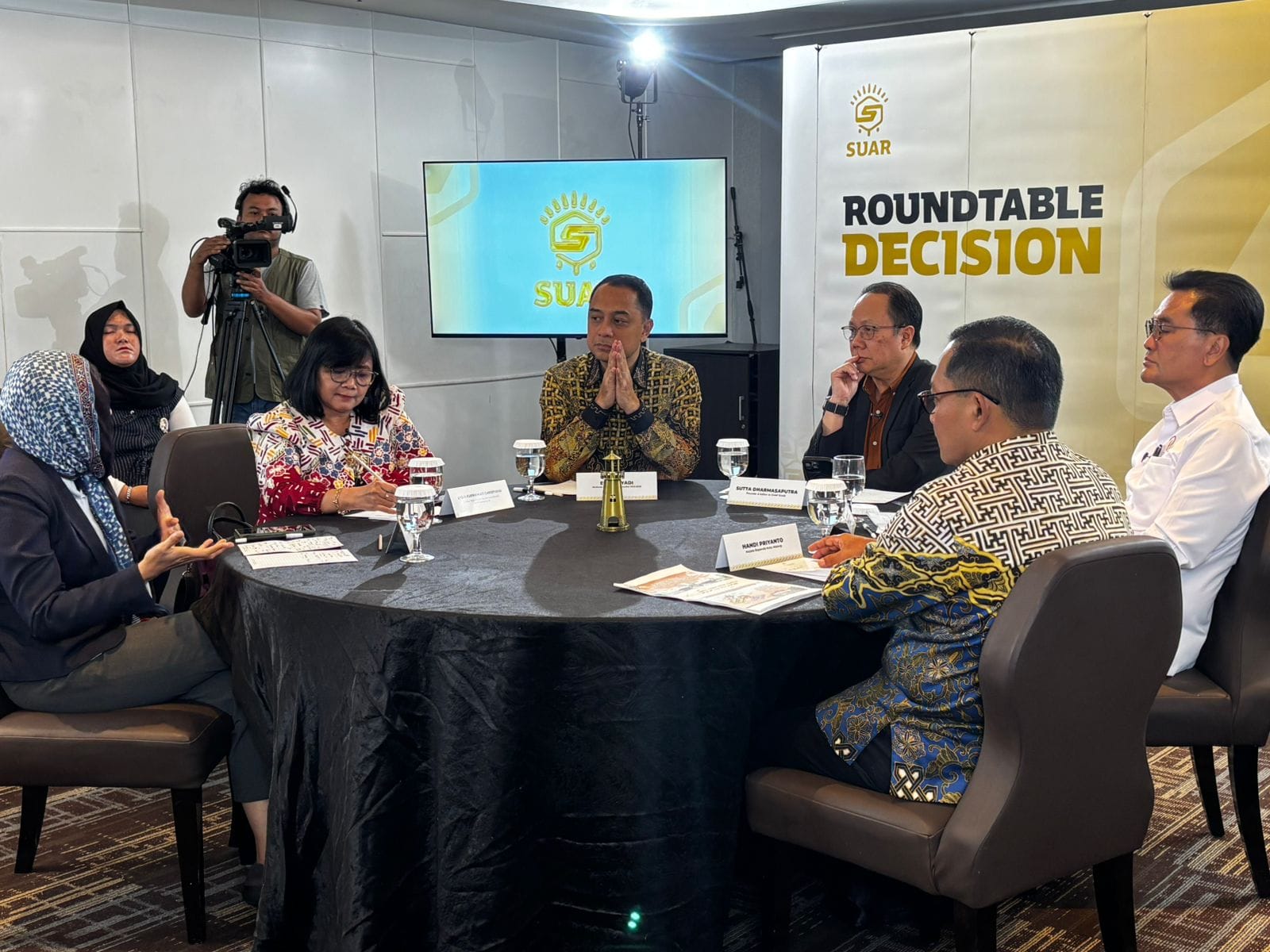
An example is a small town with transfer payments of up to 80%. They have already planned programs such as free medical treatment for the community and the construction of road infrastructure connecting two villages. Then there is the free education program. Suddenly, there is this cut, so the funds are reduced. They are then faced with choices. Should they maintain or eliminate the infrastructure development program? Or eliminate the free programs for the community? Even though the promise was related to infrastructure, for example. So, one of them will definitely be sacrificed. This is what the city government is thinking about. It's not that we are no longer aligned with the central government on poverty alleviation, but because there is no more money available. The community also wonders, why aren't all the programs being implemented? The community doesn't know that the money that goes to the local government comes from the central government. This is especially true for regions where 70-80% of the budget depends on TKD.
Data analysis shows that dozens of cities have been able to achieve local revenue above Rp1 trillion. Does this mean there is a trend toward improved fiscal management? How has local revenue been managed so far?
Yes, there are more and more cities. This is a good trend, right? But again, each city has different conditions, regional potential, and capabilities. Don't compare Surabaya with Mojokerto, for example. Or Banda Aceh with Surabaya. That's why we at Apeksi classify cities into several clusters. This is what we encourage so that they can grow together. There is knowledge transfer between regions.
Read also:
 Mukhlison Widodo
What is the recipe for increasing city revenue?
There are various ways to do this. One option is to streamline the municipal government organization, for example by merging or consolidating departments. We have found that we can carry out development with just 20 organizations, rather than needing 30. This does not mean that we are reducing the number of employees, but rather that we are carefully assessing our actual needs. We must not allow requests for additional staff if performance is not optimal and it will only burden the fiscal situation. Another way is to encourage digitization. For example, digitizing the budget. It could also be digitizing tax collection. We see that many of these cities are tourist destinations. From restaurants and hotels, for example, try to digitize parking tax collection. Tax collection from various hotel activities and others. Without digitizing tax collection and budgeting, there will definitely be leaks. With digitization, these leaks can be reduced by up to 90%. But all of this is based on the assumption of normal conditions. We all know that God is currently testing Sumatra with disasters. Of course, its fiscal strength will also be affected.
What about collaboration with the business world and various stakeholders? How strong is this collaboration in overcoming the existing turbulence?
If it were possible, it could be 100% or even 1000%. In fact, compared to what I explained earlier, this collaboration is even stronger. In Surabaya, for example, I mentioned earlier that our transfer next year will be nearly Rp800 billion. With this cooperation and mutual assistance, it can help all development to continue. In Surabaya, many entrepreneurs are involved as foster parents. Then, regarding health services at community health centers, we need many gynecologists. This is driven by universities through various programs. So, all of that can be fulfilled without the city budget. It seems easy, right? But in practice, it is difficult. The mayor is actually like the conductor of an orchestra. So, his main task is to harmonize everything to create synergy.