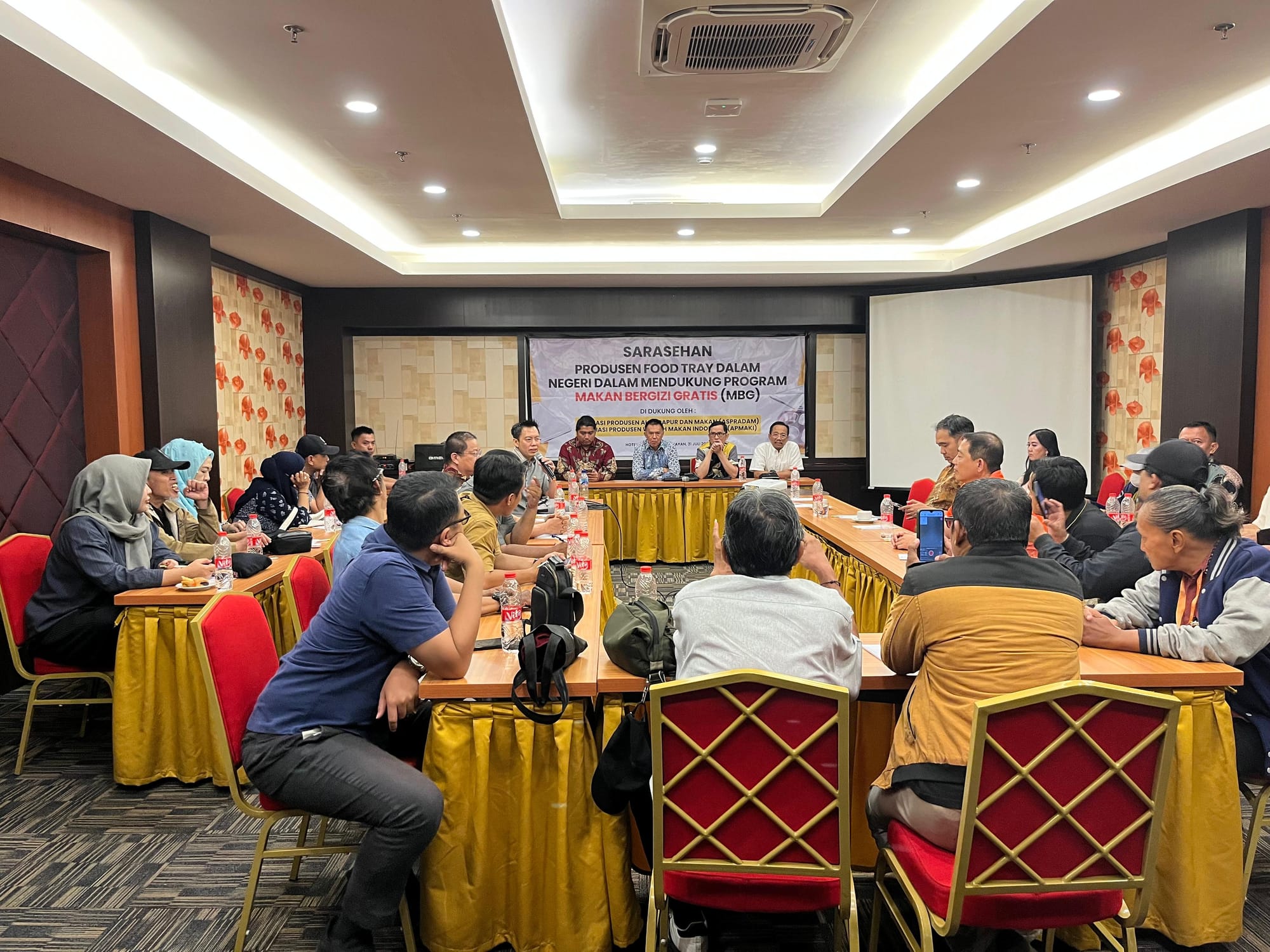
Localfood tray manufacturers who are members of the Association of Kitchen and Dining Equipment (Aspradam) and the Association of Indonesian Food Container Manufacturers (Apmaki) assert that they have more than enough production capacity to independently supply food trays in the Free Nutritious Meal (MBG) program. So, you don't have to rely on imported products.
The government's plan to import food trays to accelerate the expansion of the program, which is referred to as an ambitious project of President Prabowo Subianto's administration, has raised concerns among local entrepreneurs.
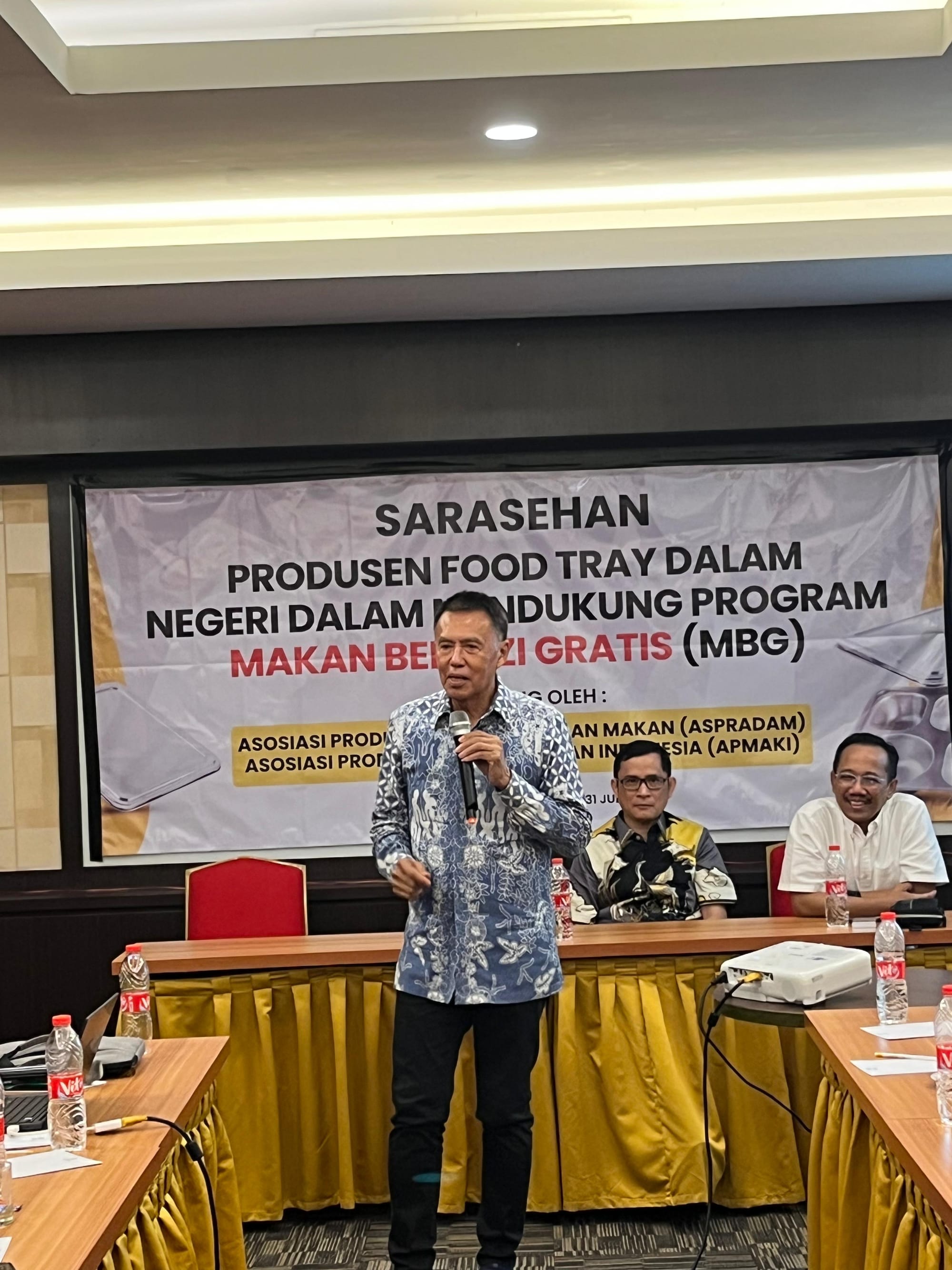
"The local industry is able to provide quality food trays without having to rely on imports," said Andi, a member of Aspradam at the Sarasehan Peran Produsen Food Tray Dalam Negeri Mendukung Makan Bergizi Gratis (MBG), Jakarta, (31/7/2025).
According to him, most industry players have spent billions on the development of factories in the country. However, manufacturers regret that there is still the practice of illegal imports and smuggling of food trays made from SS 201, which are considered unfit and endanger health if used in the long term.
Until June 2025, the domestic industry was able to produce food trays for 2,600 kitchens. In the field, Andi said, only 356 kitchens had been built by the end of July 2025.
"This clearly shows that only about 12% of the total national production capacity is absorbed," Andi said.
The possibility of importing food trays began when the National Nutrition Agency (BGN) stated that local production would not be able to meet the demand of 82.9 million beneficiaries.
According to the BGN, there are only 16 local producer companies that can only produce 2 million food trays per month. This means that in total, only 12 million food trays are sufficient.
The government through the Ministry of Trade (MOT) then issued MOT Regulation No. 22 of 2025, which is considered to loosen the importation of food trays for MBG because there is still little need for domestic production to reach the target of 82.9 million recipients in 2025.
According to the Ministry of Industry, the need for eating and drinking utensils for the MBG program is estimated at 82.9 million units, consisting of spoons, forks, and food trays.
Specifically for food trays, the provisions set to meet the standard include items made from 304 stainless steel with a thickness of 0.6 mm.
Meanwhile, the potential supply of food trays from within the country until the end of 2025 is projected to reach 15 million sets, with the current realization of 300,000 sets, while the use of imported food trays still dominates.
Shutting down local manufacturers
Alie Cendrawan, Commissioner of PT Makmur Bersama Garuda, said he was concerned that the regulation would make it easier for such goods to enter Indonesia at low cost.
"Suddenly a regulation came from the regulator, namely the ministry, which could open up all parties to import food trays so that open regulations could kill domestic investors," said Alie.
He said the national production capacity is capable of reaching 10 million units per month, exceeding the needs of MBG kitchens. Production has also met the Indonesian National Standard (SNI) 9369:2025.
In line with Alie, President Director of PT Bintang Matrix Indonesia, Robert Susanto, admitted that his company can produce 200,000 sets of containers every month.
Meanwhile, Apmaki's combined production capacity can reach 9.3 million sets of containers per month.
Robert explained that this initiative has a lot of potential in terms of employment, which in turn provides new excitement for the manufacturing sector.
"This program can revive the economy from upstream to downstream, starting from the construction of kitchens, making food trays, to providing raw materials and vegetables by UMKM. In addition, with transparent domestic transactions, this program will also increase state tax revenue," he said.
Worse, the smuggling of low-quality food trays is a real threat. According to him, many food trays claimed to be made of quality-assured 304 stainless steel are actually inappropriate. "The high manganese content, which can react with acids and potentially contaminate food, is very dangerous for the health of beneficiary children," he said.
Robert Susanto also regrets the statement claiming that domestic producers have not been able to meet the needs of food trays, even though their capabilities are very capable.
"Food tray is not something that is high technology or medium technology. So, domestic producers are very capable of producing it, especially producers like me who have long been engaged in the automotive sector related to stainless steel," he said.
In addition to the problem of importing finished products, Robert said local producers also complained about the difficulty of obtaining raw materials for food tray production. Although stainless steel raw materials come from Indonesia, the price becomes expensive after processing in the country.
"Ironically, the same materials, once exported to neighboring countries and re-imported in the form of finished products, can actually be cheaper," Robert said.
The free nutritious meal program (MBG) was first campaigned by President Prabowo Subianto in the last election, which allegedly got him elected President.
However, some experts believe that this ambitious program will burden the state budget.
The government has agreed on a budget allocation for the president's flagship program of free nutritious lunches for school children of IDR 171 trillion, up from the initial plan of IDR 71 trillion.
The program targets 82.9 million beneficiaries, including pregnant women, early childhood education students, primary and secondary school students.