
Having the largest geothermal energy potential in the world, Indonesia is taking steps to utilize these reserves as future energy. Thanks to the advantages of geothermal as a clean and renewable energy source, as well as the proven efficiency of management, the government is confident in inviting investment from within and outside the country.
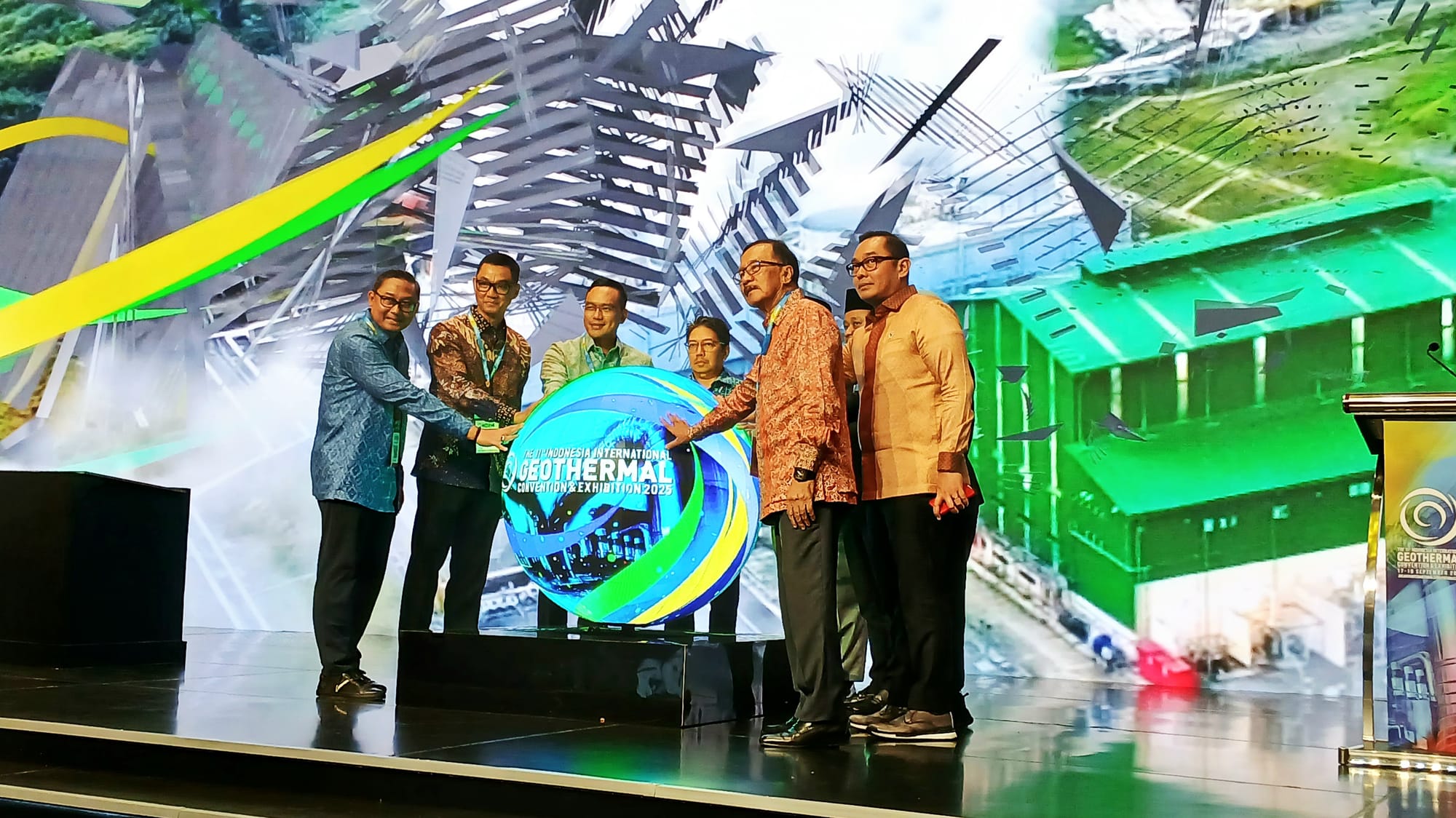
The magnitude of the potential and future plans were clearly exposed at the 11th Indonesia International Geothermal Convention and Exhibition (IIGCE) 2025. The event, organized by the Indonesian Geothermal Association with the support of the Ministry of Energy and Mineral Resources, took place at the Assembly Hall of the Jakarta Convention Center on Wednesday (17/9/2025).
Since it was first held in 2013, IIGCE has become a strategic platform to accelerate geothermal development in Indonesia. This year, attended by 1,500 participants from 22 countries, IIGCE became the largest geothermal industry stakeholder meeting forum in the world. In particular, this year's IIGCE successfully invited partners from three new countries, namely China, Taiwan and Kenya.
Chairman of the Indonesian Geothermal Association (API) Julfi Hadi said that for more than three decades, API has consistently encouraged geothermal development with a target installed geothermal power plant capacity of 4 gigawatts (GW) by 2030. API has prepared a number of steps to support the organization of this year's IIGCE.
"We found an increase in participation from service companies by 20%, the addition of new participation from three countries, as well as the initiation of a business scheme for geothermal cooperation andgreen hydrogen production as an integrated ecosystem," Julfi said during his speech.
According to Julfi, the advantages of geothermal as an energy source lie in three aspects. First, Indonesia's potential geothermal reserves reach 23.74 GW, or 40% of the world's geothermal reserves.
Second, geothermal power plants can operate reliably for 24 hours continuously without constraints and are highly efficient.
Third, geothermal has the potential to contribute non-tax state revenue (PNBP) of Rp 426.5 billion per year.
In order to maximize these advantages, the geothermal industry needs a measured analysis of drilling risks and determination of commercial operation date (COD). In addition, geothermal exploration projects must receive attractive tariffs and incentives so that they can be more competitive.
Not to forget, new technological breakthroughs and synergy with PLN for the revision of the geothermal tariff scheme to improve the economics and competitiveness of the company.
"With the roadmap for industrialization in the country, we are ready to support the government and the task force to accelerate geothermal development as indigenous resources and a strategic pillar towards energy self-sufficiency for Indonesia Emas 2045," Julfi concluded.
Expedite licenses, attract investors
Director General of New, Renewable Energy and Energy Conservation (EBTKE) of the Ministry of Energy and Mineral Resources Eniya Listiani Dewi stated that currently, Indonesia has succeeded in increasing installed capacity by 2.71 GW from the target of 5.2 GW by 2035. This achievement cannot be separated from the hard work of the Ministry of Energy and Mineral Resources to help accelerate licensing from 1.5 years to only 7 days with online single submission.
"With the RUPTL target of 5.2 GW in the next 10 years, Indonesia can become the number one geothermal producer in the world," Eniya said.
"Currently, the United States has a capacity of 3.6 GW. This means that with an additional 1 GW of capacity, we can beat the US and become a place of learning for other countries," Eniya explained.
Not only for state revenues, the benefits of geothermal production can also be an additional local revenue (PAD). Eniya stated that Minister of Energy and Mineral Resources Bahlil Lahadalia has signed a ministerial decree that allocates a production bonus of Rp 1.5 billion, continuing the flow of bonuses amounting to Rp 1 trillion that has been allocated to the regions.
"Going forward, the ESDM platform will support local industries, especially because the TKDN of the geothermal industry, components and services, is already 50%. In the field of education, we will also contribute because there are still many who do not understand the benefits of geothermal," he said.
The opportunity for Indonesia to work on geothermal production has arrived at the right time. Minister of Energy and Mineral Resources Bahlil Lahadalia in his speech at the inauguration of IIGCE revealed, when other countries are increasingly inconsistent in carrying out the mandate of the 2015 Paris Agreement on saving the earth from the climate crisis, Indonesia is trying to comply with geothermal exploration.
"There is still 90% of geothermal potential that has not been managed due to difficult financing, complicated regulations, and unfavorable investors. We are cutting regulations that hinder acceleration, in addition to organizing electricity transmission networks to the concession points," Bahlil said.
Bahlil explained that currently, a number of geothermal power plants are operating at 100% capacity. For example, Sarulla PLTP Unit 1 and Unit 2 which produce a total of 330 MW, Muara Laboh PLTP of 86 MW, Lumut Balai PLTP of 55 MW, Ijen PLTP of 34 MW, and Salak Binary PLTP which produces 16 MW. In addition, there are Kamojang PLTP, Ulu Belu PLTP, Bonjol PLTP, and exploration in Hamiding, Halmahera, North Maluku.
"You don't need to be afraid to invest. Come, bring capital, bring technology, we will serve you well. We will definitely side with our investor friends. For the price, PLN will directly prepare the market," Bahlil said to laughter from the audience.
With this ambitious target, the government is increasingly determined to set the fossil energy mix in meeting national energy needs. Of course, by still paying attention to economic aspects, so that the acceleration takes place according to plan and does not cause cost differences that can be a burden on consumers and the burden on the state.
Greater profit than loss
Not only large in quantitative size, the benefits of geothermal have been felt by workers and local residents alike. Joining the opening ceremony online, Project Manager of Lumut Balai 2 geothermal power plant Achmad Sri Fadli stated that, with 100% production capacity, the plant has operated for 3.3 million man-hours without a single incident.
The story of the benefits of PLTP for the community around the plant was conveyed by the Assistant for Economy and Development of the Regional Secretariat of Bandung Regency, Kawaludin, who also joined online. Sourced from Geo Dipa PLTP, residents around Mount Patuha, Ciwidey, Bandung Regency, West Java, utilize the heat and steam produced by PLTP to support agriculture.
"Pressurized steam from the PLTP can help preserve fish. Meanwhile, the heat can be used as a food dehydrator to dry vegetables, strawberries and tea after harvest so that they are more resistant to spoilage," Kawaludin said.
Not to forget, as a tourist village, the heat power from the PLTP is also used to build a hot spring pool that attracts tourists to Patuha.
Met by SUAR on the sidelines of the event, a teacher of the Bandung Institute of Technology's geothermal master program Nenny Miryani Saptadji assessed that geothermal development in Indonesia actually produces greater benefits than the losses that have been complained about by people who protest geothermal exploration.
As one of the energy sources that can reduce greenhouse gas emissions, geothermal governance in Indonesia is almost all operating safely and without problems. If there are shortcomings, they are the result of improper planning and monitoring from the start. Unfortunately, these shortcomings are exaggerated and more often complained about.
"If a power plant is established in a forest, not the entire forest area is cut down to establish the power plant. Only 20 square kilometers or 3%-4% of the entire forest area. Investors also understand that with the investment value of one geothermal well reaching US$ 6 million-US$ 8 million, they have a responsibility to protect the environment," Nenny explained to SUAR.
As a preventive measure to prevent such development errors, according to Nenny, ITB is one of the universities that has prepared capable and reliable human resources with the Master of Geothermal program since 2008. Education, she said, is important for successful geothermal exploration from planning, implementation, to maintenance.
"It's a shame if people don't understand and resist. Even if there are negative aspects, experienced and proven developers will overcome problems that can be prevented before they occur. They are capable because they have the idealism to realize clean energy, even though the benefits will only be felt years later," said Nenny.