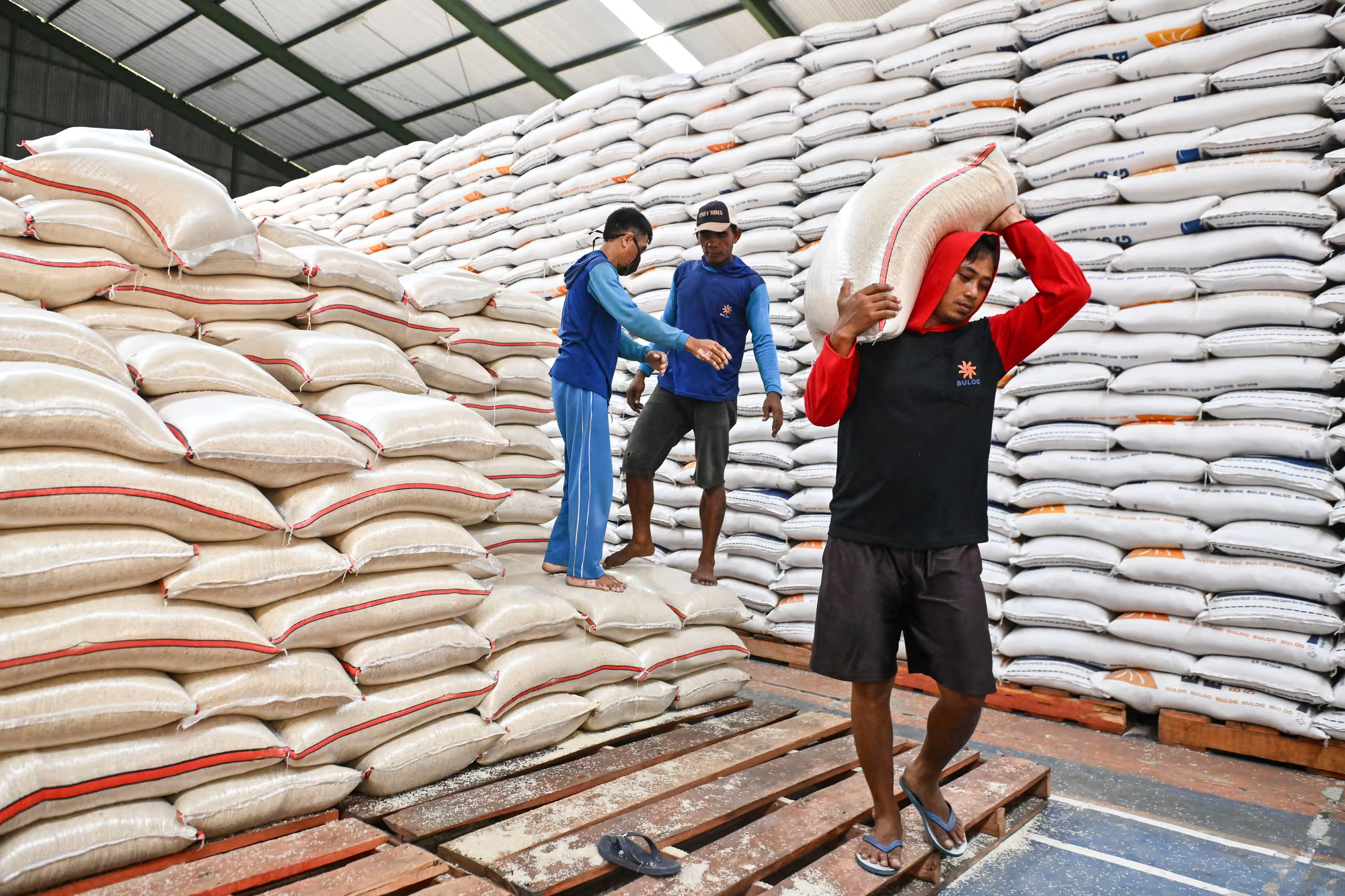
Rice, the staple food for most Indonesians, has once again moved to the center of government policy as rising prices threaten to stoke inflation and social unrest.
To stabilize supplies, state logistics agency Perum Bulog on July 18 launched the Affordable Food Movement (GPM) for SPHP rice (Stabilization of Food Supply and Prices). The program, mandated by the National Food Agency (Bapanas), aims to secure both availability and affordability of rice across the archipelago.
Statistics Indonesia (BPS) reported July 2025 inflation at 2.37%, with rice alone contributing 0.15 percentage points, the single largest driver of consumer prices.
Mokhamad Suyamto, Bulog’s Director of Operations and Public Services, said the agency had coordinated with the National Police, agreeing to work together on strengthening food security and stabilizing rice prices through the GPM for SPHP rice to keep inflation in check.
“This synergy is a force multiplier for expanding SPHP rice distribution, ensuring it truly reaches those who need it,” Suyamto told SUAR on Aug. 10.
The program will run through December 2025, with a nationwide distribution target of 1.3 million tons. Purchases are capped at 10 kilograms per consumer to ensure broader access.
SPHP rice prices sold under the GPM will follow the highest retail price (HET) set for each region: Rp 12,500/kg for Java, Lampung, South Sumatra, Bali, NTB, and Sulawesi; Rp 13,100/kg for Sumatra (except Lampung and South Sumatra), NTT, and Kalimantan; and Rp 13,500/kg for Maluku and Papua.
“With stronger synergy between Bulog and Polri, this movement is expected to become a new milestone in strengthening the national food security system,” Suyamto said.
Must Involve the Private Sector
IPB University agriculture observer Dwi Andreas said the SPHP Rice GPM is necessary at this time, given that rice prices in various regions have become unreasonable and are no longer aligned with the HET (highest retail price).
He urged Perum Bulog and Polri to remain truly consistent in implementing the program and to involve the private sector in oversight.
“It’s the private sector that has networks reaching markets and even narrow alleys—so it would be best to bring them in,” he told SUAR, Sunday (August 10, 2025).
At present, private players such as rice millers are increasingly anxious. Many have shut down their operations due to pressure from the Food Task Force. In fact, the private sector and the government should build a harmonious relationship—rather than distrusting one another.
Dwi emphasized that the strength of the national food system will come from integration between government and the private sector, not policy alone.
Align HET Price Cap with HPP
Chairman of the Indonesian Rice Millers and Entrepreneurs Association (Perpadi) Sutarto Alimoeso said a continuing concern among rice businesses is the mismatch between the highest retail price (HET) and the government purchase price (HPP).
He urged the government to adjust market HET for rice in line with increases in HPP for paddy at the farm level.
“In essence, HET must be aligned with developments in HPP so that neither consumers nor farmers are disadvantaged,” he said.