Visualization, analysis and interpretation of current data relevant to economic, policy and business issues.
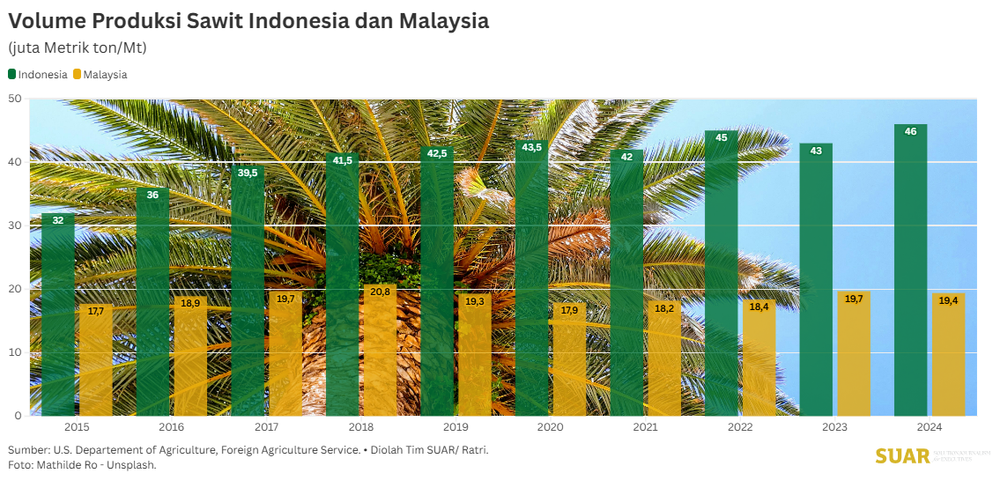
The competition between Indonesia and Malaysia as the world's king of palm oil producers is getting tighter after Malaysia received recognition from the European Union for its MSPO palm oil products. Malaysia will find it easier to expand into the Blue Continent market.
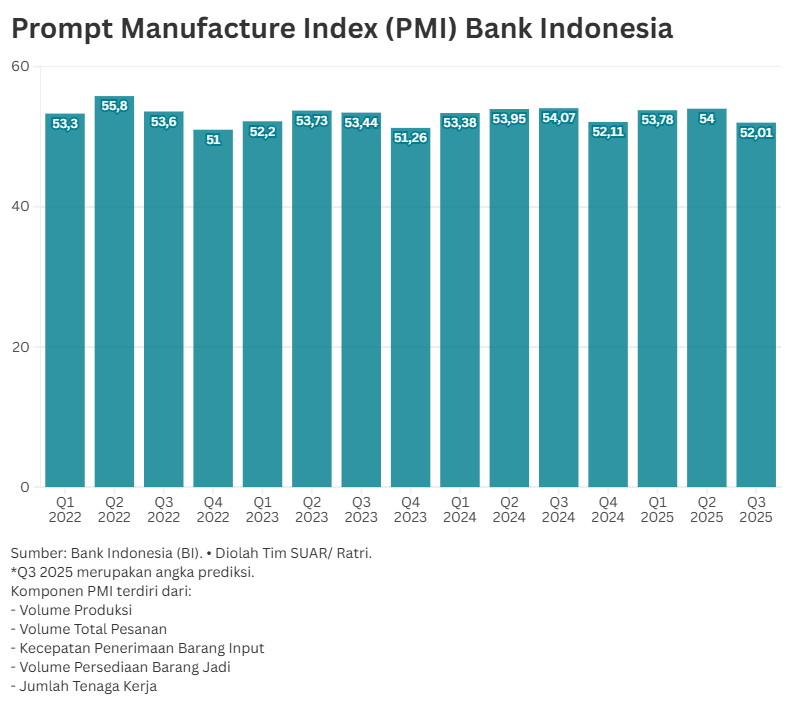
Amid the sluggishness of Indonesia's manufacturing industry in the past decade, the food and beverage industry has grown rapidly. This industry also absorbs more labor.
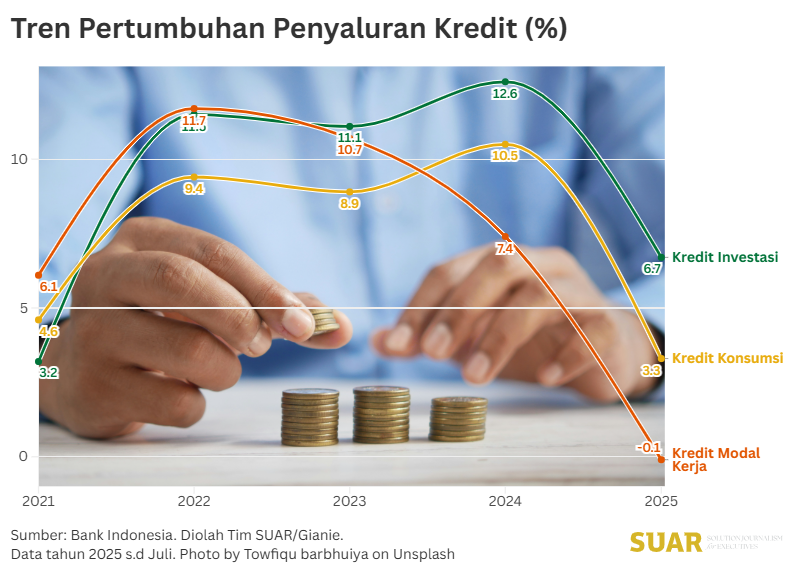
The Rp 200 trillion fund placed by the government in five state banks is expected to boost lending, especially productive loans. Throughout this year, lending has only grown 2.7%. For the business community, this policy provides an opportunity for expansion.
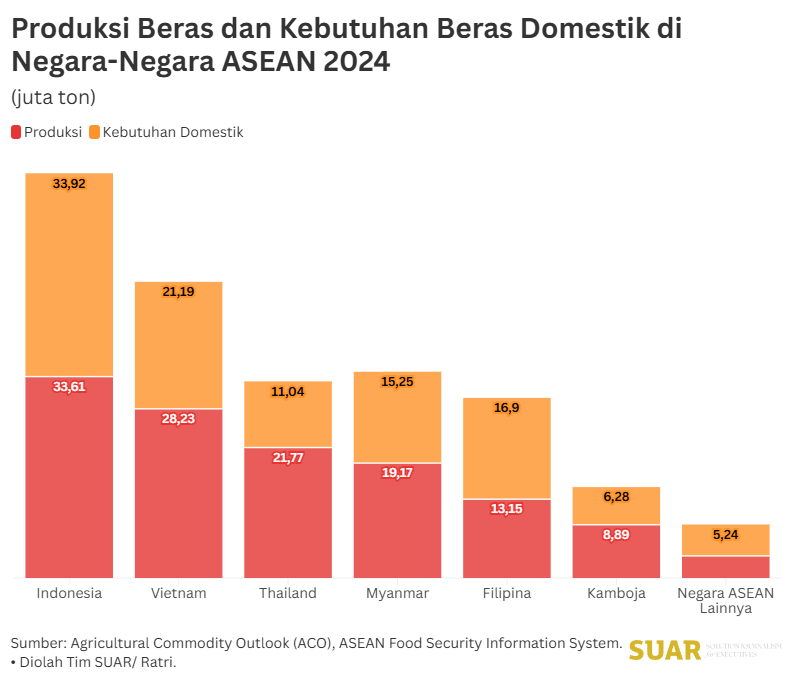
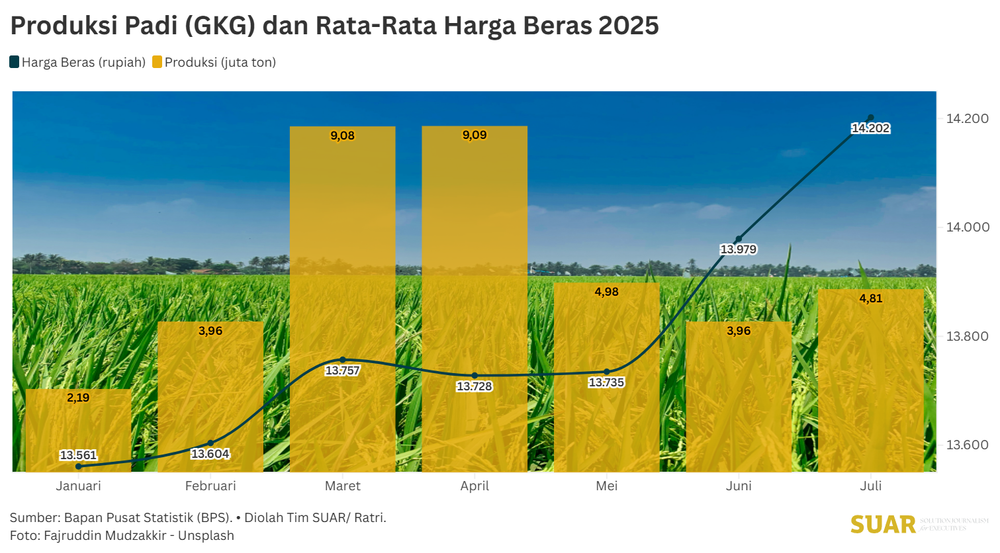
Although Indonesia's rice production is not yet fully self-sufficient, the trend of rice production is increasing. Food self-sufficiency is just one step away.
The latest Central Bureau of Statistics (BPS) report released in early September stated that the national rice harvest in July increased. This increase is a reinforcement for food security and an opportunity to stabilize rice prices.
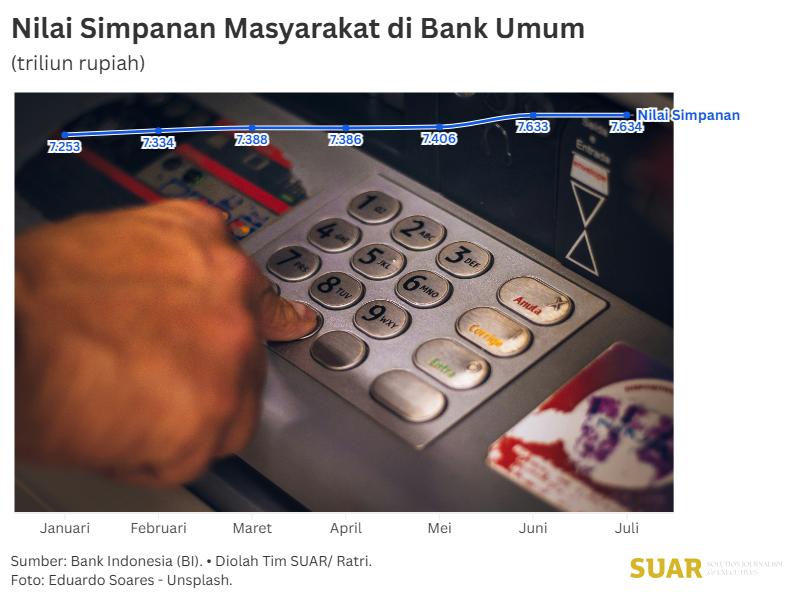
In the midst of a situation of declining purchasing power, Bank Indonesia data shows that the amount of public deposits in banks in 2025 tended to increase during the January-July period. This increase was supported by the growing ability of the upper class and corporations to save.
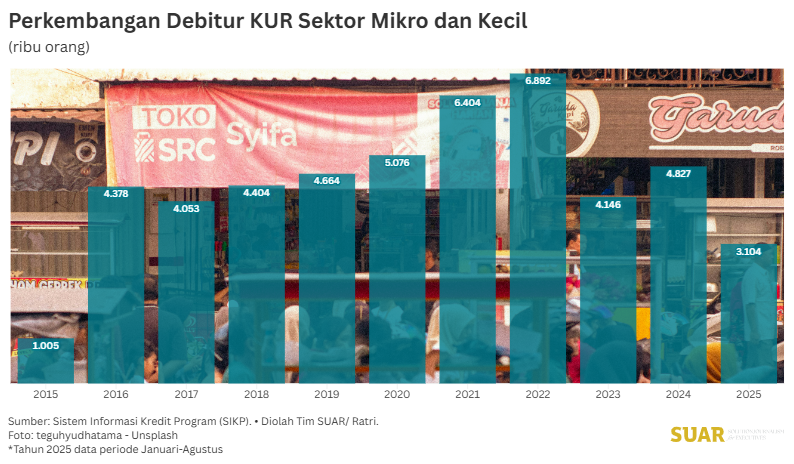
As the driving force of the national economy, micro, small and medium enterprisesUMKM) need real government support. As of August 2025, the government has disbursed People's Business Credit (KUR) almost 60% of the target.
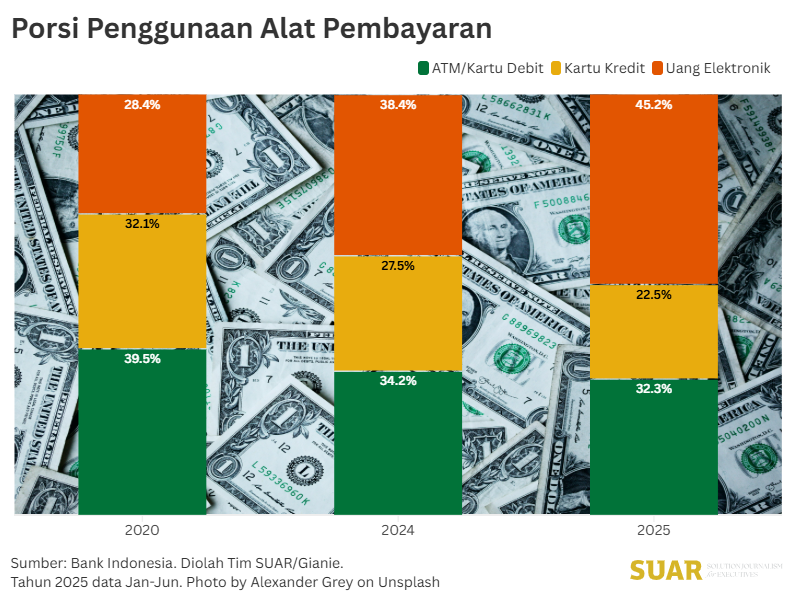
The value of shopping transactions in Indonesia continues to increase every year. In 2024, the nominal value was more than Rp 1,500 trillion or around 7 percent of the Gross Domestic Product. Until the first half of this year, the value of shopping transactions was already 62 percent of last year's nominal.
Realizing investment in Indonesia requires a lot of capital as seen from the high ICOR indicator. To achieve economic growth of 6.3% in 2026, massive investment of IDR 8,297.8 trillion is required.
Ahead of the implementation of the United States' reciprocal tariffs on Indonesia as of August 1, 2025, BPS data shows an increase in Indonesia's non-oil and gas exports to the US in July 2025 of nearly 16%.
Despite the social turmoil and some fluctuating economic indicators, Indonesia's economic fundamentals are still strong. Nevertheless, the government needs to be cautious and respond wisely to any socio-political dynamics that occur.
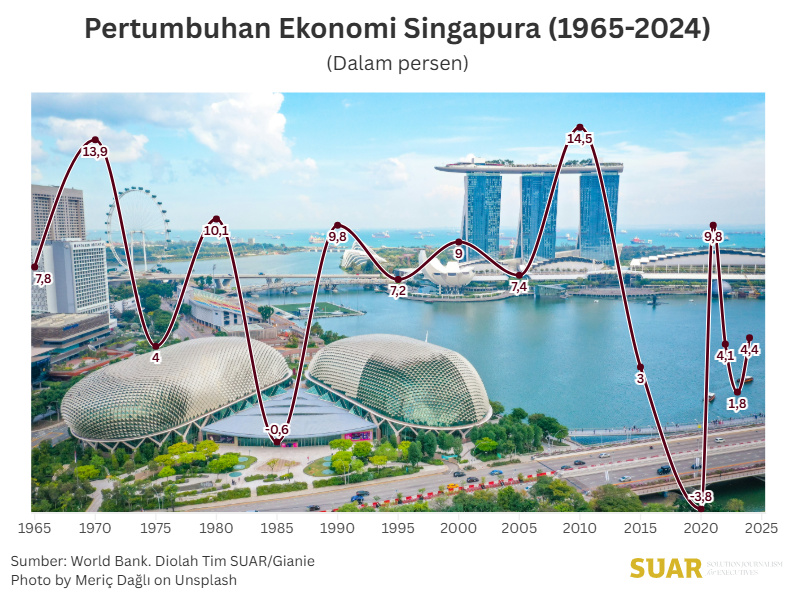
The progress of a country is not determined by its natural resources, but by its competent human resources. Singapore has proven this thesis. Coupled with strengthening the three-pillar cooperation trust: government - business - civil society.
Showing 12 out of 112 total posts
Stay updated with our collection of the best stories.