
As many as 87% of Indonesian micro, small and medium enterprisesUMKM) experienced an increase in trade volume with Europe, with the Netherlands, Germany and France listed as the top three destination markets for Indonesian UMKM , according to a FedEx survey.
This shows the Blue continent's growing role in Asia following the implementation of the Indonesia-European Union Comprehensive Economic Partnership Agreement (IEU-CEPA).
A survey by Federal Express Corporation (FedEx), the world's largest express transportation company, reported that among 100 Indonesian UMKM surveyed, 87% reported an increase in trade volume with Europe.
This increase was mainly driven by strong consumer demand (58%), competitive pricing (51%), and a targeted export strategy (44%).
"These findings confirm that Europe remains a strategic market that offers significant growth opportunities for Indonesian businesses," said the Fedex report released on Friday (21/11/2025).
Market opportunities can be seen in the expanding customer base, as 42% of UMKM have at least a quarter of their customers in European countries.
In addition, 88% of businesses see their trade prospects improving and 67% plan to start or expand exports to the region in the next one to two years.
Factors driving the increase in exports include strong European consumer demand, competitive product prices, and the expansion of export operations by UMKM players.
"The research also shows that 49% of UMKM have made digital transformation a top priority to support increased trade. In addition to the traditional route to the Netherlands, some businesses are beginning to see growth potential in Turkey," according to the report.
Despite the opportunities, structural barriers remain a significant challenge for Indonesian UMKM . The research noted that 98% of businesses are affected by global logistics disruptions and regulatory changes that affect smooth delivery.
In addition, 64% of UMKM cited import tariffs as the biggest obstacle when entering the European market as it affects margins and price competitiveness.
Other findings show that UMKM need supporting solutions in order to capture export opportunities more strongly.
38% of businesses are looking for more efficient logistics solutions, while 37% need supply chain management technology and market intelligence to navigate the complexities of European trade.
The research also shows that 57% of UMKM consider sustainability aspects in choosing logistics services, signaling the need for capacity building and policy support to face the demands of the international market.
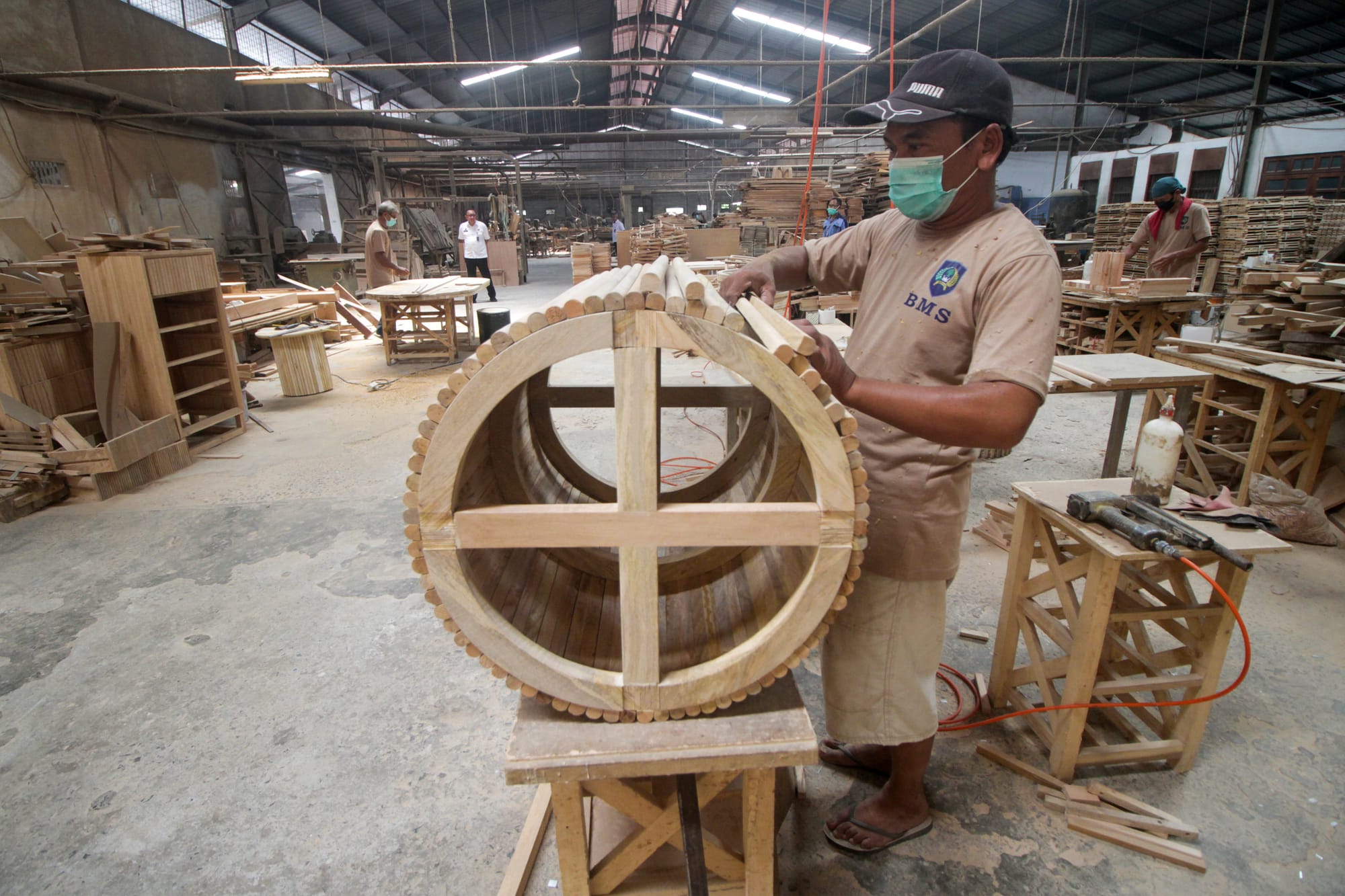
Featured furniture
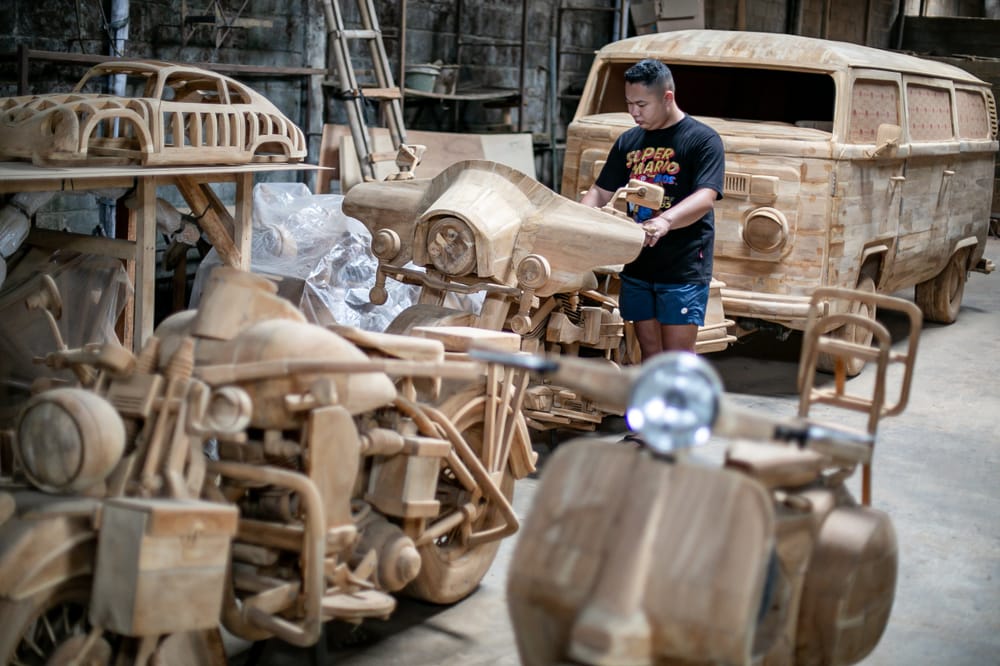
Chairperson of the Indonesian Micro, Small and Medium Enterprises Industry Association (Akumandiri) Hermawati Setyorinny confirmed FedEx's research findings about UMKM exports to Europe increasing, especially in the Netherlands, Germany and France. Micro and small businesses do see the European market as more potential than the US for certain products such as furniture.
She also emphasized that buyers in Europe tend to retain trustworthy suppliers as long as quality and punctuality are maintained. Hermawati explained that this loyalty makes the business relationship stable from year to year.
"If they already trust one supplier, they usually stick with them," he says.
Hermawati acknowledged the complexity of logistics and regulations as shown by FedEx research, which noted that 98% of UMKM were affected by logistical disruptions. Additional documents, restrictions on raw materials, and quota rules for destination countries, she said, are classified as the main obstacles for exporters.
This condition makes some UMKM have to look for alternative shipping routes through third countries.
Regarding import tariffs, Hermawati explained that changes in the cost of raw materials in the country often disturb UMKM players who are bound by long-term contracts with foreign buyers.
He assessed that the uncertainty of costs and procedures can erode margins and affect smooth production. The impact of global trade policies, according to him, can also affect downstream chains such as raw material producers and labor.
Hermawati believes that UMKM can penetrate the European market if they are serious about developing and understand how to market their products to international buyers. She suggested that UMKM players utilize global trading platforms, improve skills in compiling product specifications, strengthen production capacity, and choose a secure payment system. According to her, such technical capabilities are an important foundation before entering foreign markets.
"I hope the government will simplify export procedures, increase education on export requirements, and improve the quality of business human resources. Policies that are not layered are very important. The government also needs to provide market access, for example by inviting overseas buyers for business exploration so that UMKM can expand their markets," he said.
Meanwhile, Secretary General of the Indonesian UMKM Association (Akumindo), Edy Misero, emphasized that UMKM export opportunities can only be optimized if the government is more active in opening access to foreign markets.
Indonesian trade representatives abroad, he said, should not only record trade data, but also identify products of interest to destination countries and convey market needs to UMKM players. According to him, consistent assistance is needed so that businesses can enter the global market faster.
Edy assessed that the readiness of UMKM players is an important factor so that export opportunities are not missed, starting from the ability to meet product demand to maintaining quality that can compete abroad. According to him, UMKM must be able to prepare products with good standards so that the market responds positively. "How can we do it if we prepare the requested products well, with the best quality," he said.
Cooperation and barriers
Economic researcher at the Center of Reform on Economics (CORE) Indonesia, Yusuf Rendy Manilet, assessed that the optimism of 88% of Indonesian UMKM towards trade with Europe is related to the momentum of the trade agreement being finalized by the government with the European Union.
Agreements such as the EU-CEPA can open up space for small businesses to test non-traditional markets. Yusuf sees this kind of policy encouragement as one of the reasons why UMKM see Europe's prospects as quite open.
However, Yusuf cautioned that the findings in the FedEx research need to be read with caution as the survey only covered 100 UMKM, a number that is too small to describe the national condition.
This is because, according to him, many UMKM still face fundamental obstacles such as funding and certification when they want to penetrate the export market. "Let alone the European market, UMKM still face classic difficulties to export," he said.
Yusuf also highlighted that the barriers to UMKM do not stop at import tariffs as written in the research, because non-tariff barriers are even heavier and much larger in number.
The European market imposes technical requirements, sustainability standards, ESG certification and quarantine conditions that must be met before goods can enter. Meeting many of these requirements is a major challenge, especially for small-scale exporters.
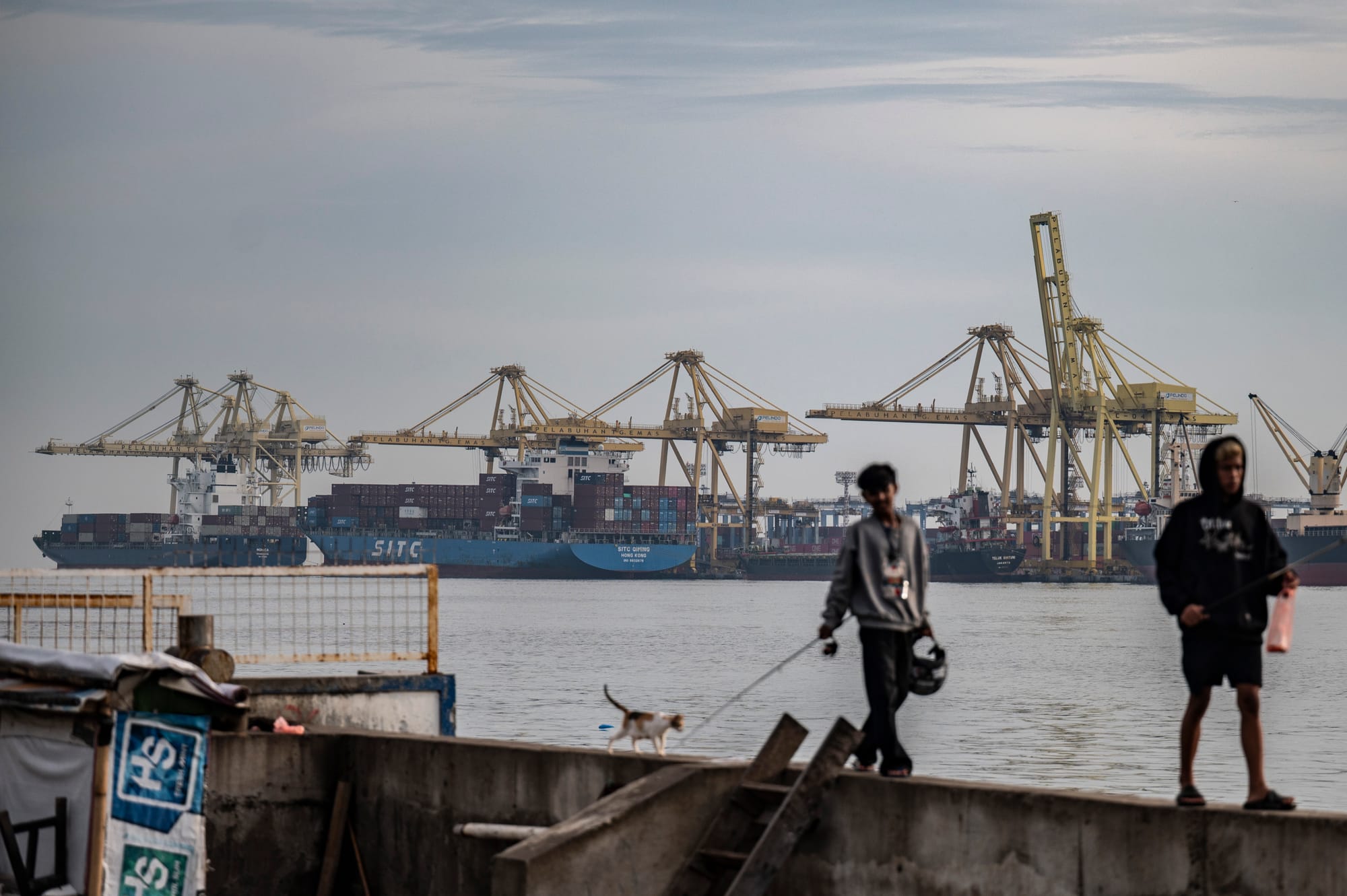
Logistics cost pressures are considered to reduce the competitiveness of UMKM, especially when global energy prices fluctuate and port facilities in the country are uneven. Yusuf explained that rising fuel costs can directly impact shipping costs, while businesses from, for example, eastern Indonesia have to bear additional costs due to the absence of direct export routes.
"If there is an increase, it will also affect the shipping costs that exporters have to find overseas," he said.
Yusuf sees that market expansion opportunities can arise from cultural and religious affinities that influence demand, such as in the trade relationship with Turkey. He believes that a similar approach can be applied to other countries with comparable market characteristics, provided that it is accompanied by more accurate market mapping.
"Market intelligence provided by the government uses data or analysis from Indonesian representatives in destination countries," he said.