

Security and order disturbances triggered by demonstrations that led to anarchist acts, from Thursday to Sunday morning (August 28-31, 2025) had destabilized the capital's economy. All stakeholders need to work together to make the situation more conducive so that economic activity can stretch again.
There is something different in several shopping centers in Jakarta. This morning before noon, Sunday (31/8/2025), Plaza Senayan in South Jakarta looked relatively quiet. There were no crowds of visitors at the various tenants there, or just came to enjoy the weekend.
The security guard at the mall entrance confirmed that there were several tenants who were not selling today. "Because of the demo and looting," he said.
The jewelry store, Mondial Jewelry, chose to open later and close earlier. "The last few days we closed early. Yesterday we closed at 8pm. Friday at 4pm," said an employee.
Mondial usually closes at the same time as the mall's operating hours end. This decision comes directly from Mondial's management and is implemented in almost all of their branches in Jakarta.
The luxury jewelry brand decided not to display its catalog in its storefront since last Friday. This policy is valid for an undetermined period of time. The storefront that used to sparkle with diamond-clad mannequins now looks empty, leaving only a plain bust display without jewelry.
"The management has also instructed that all catalogs be kept tightly in the safe after each tenant finishes operating," said one of the employees.
Empress Jewellery, located right next door to Mondial, also took a similar step. Until this afternoon, the store's glass doors were still tightly closed with chains and padlocks, leaving the bust display standing empty without a single piece of jewelry.
Not only jewelry brands , fashion brands are also taking anticipatory steps. Yesterday, the Fendi brand in Plaza Senayan also closed early and secured its entire catalog. "Today seems normal, but we are waiting for instructions from management," said an employee of the Italian brand .
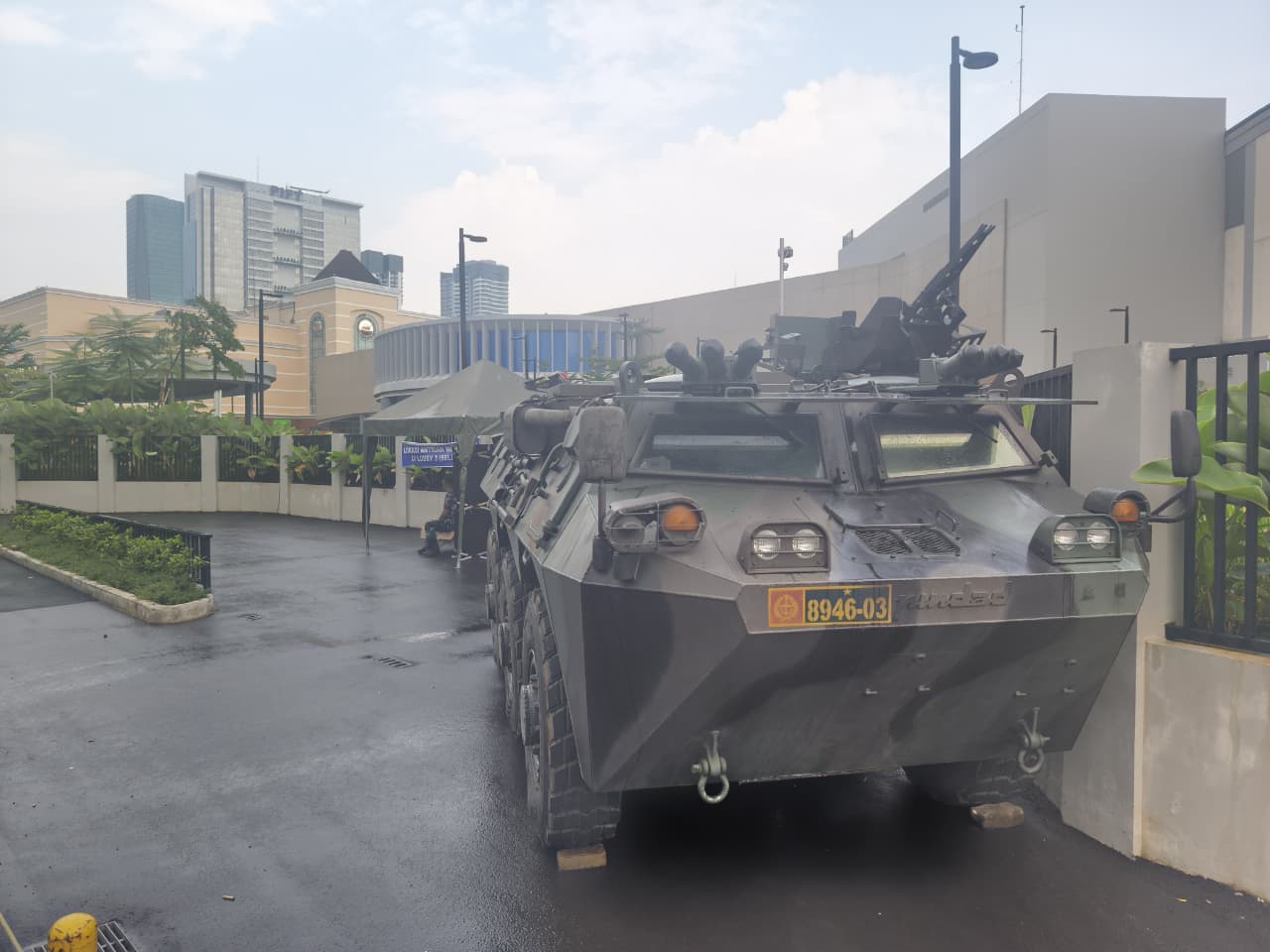
Moving 12 kilometers to the west, the authorities conducted extra security at Puri Mall Indah. Several members of the Army were seen standing guard next to the entrance gate of the Puri mall. They came with Panser Anoa combat vehicles (ranpur).
"We have been standing guard here since yesterday at 10pm," said a soldier. He said he would continue to stand guard until further orders were given. Security at Puri Mall was carried out because it is located in the economic center of West Jakarta.
Visits to shopping centers in the path of demonstrations have decreased significantly. However, Chairman of the Indonesian Shopping Center Management Association (APPBI) Alphonzus Widjaja said that malls located far from the action point were actually more crowded than usual.
According to him, shopping centers as public facilities must continue to operate to serve the community, but with a commitment to always prioritize safety factors. He emphasized that the presence of the authorities in malls is necessary so that people can fulfill their needs safely.
Alphonzus added that each mall is currently asked to implement a situational policy. Operating hours can be adjusted according to conditions in the field, even temporary closures are possible if the situation is not conducive. He said that so far there have been no reports of asset damage, but potential sales at around 100 APPBI member malls in Jakarta could be reduced by up to Rp 500 billion per day.
APPBI, he said, hopes that all parties can exercise restraint so that the atmosphere remains peaceful and the government immediately provides security support to ensure a smooth supply chain.
Chairman of the Indonesian Retailers & Shopping Center Tenants Association (Hippindo) Budihardjo Iduansjah expressed his appreciation to the protesters who did not loot the mall.
"We see that the demonstrators this time have indeed improved the quality of democracy," he said. He also gave appreciation to the authorities who were considered to have worked hard to maintain security.
According to him, retail businesses in demonstration-prone zones such as Plaza Senayan and Sarinah that choose to close early are decisions to reduce risk.
Budihardjo said that the retail sector did experience a decline due to the crowd, but the impact did not lead to a reduction in stock. He emphasized that the solution for business actors is to keep opening stores while relying on online channels and ojol services that have become an important part of the retail ecosystem since the pandemic.
"The instruction is to stay open, trust the government, trust the security," said Budihardjo.
"The instruction is to stay open, trust the government, trust the security," said Budihardjo.
He added that transactions in the city center were down, but in buffer areas such as Serpong, Cibubur, and Bintaro, they have increased sharply in the last two days.
Distracted travel
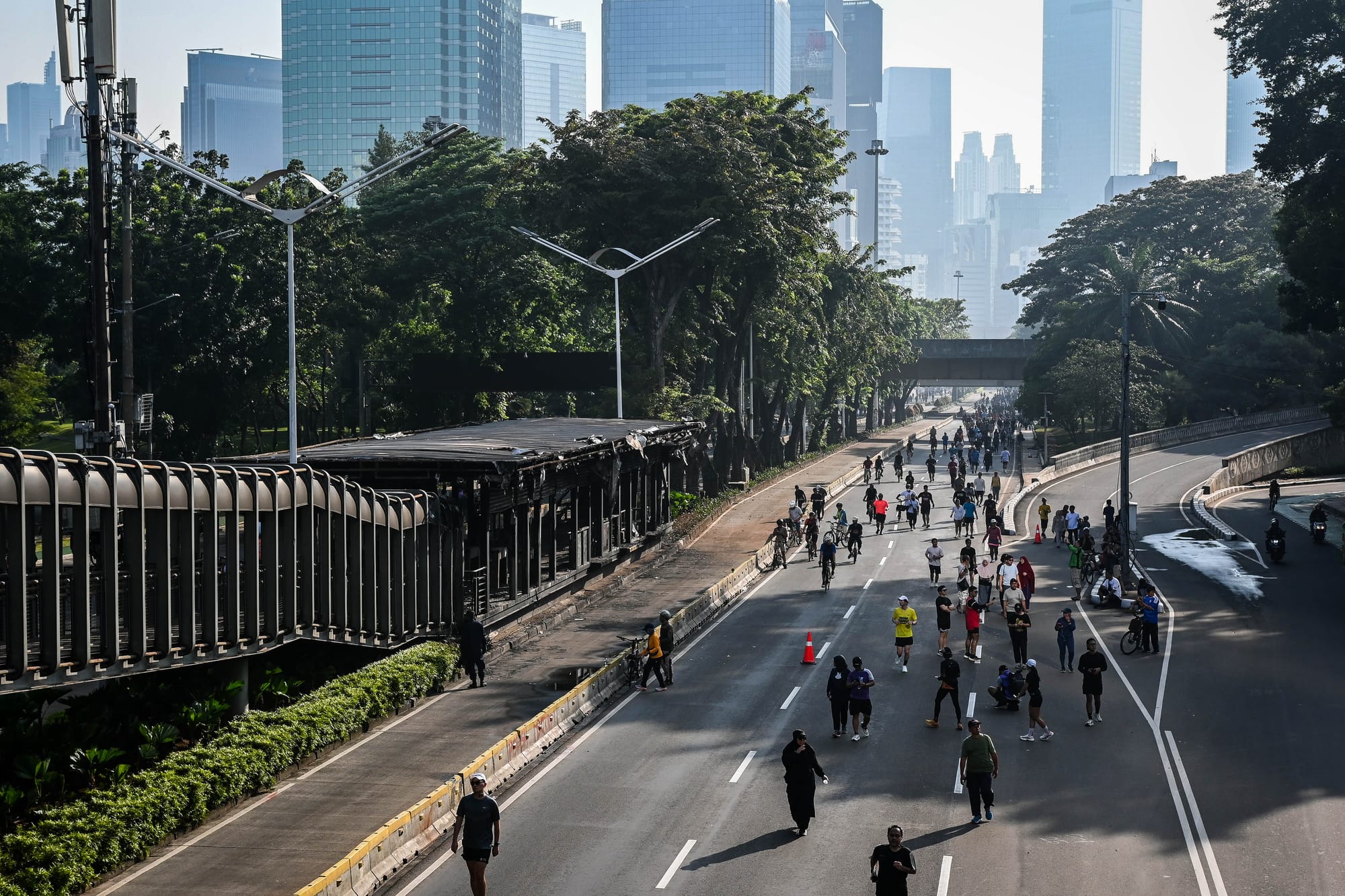
Not only shopping centers were affected, but the demonstration also disrupted the distribution of goods and the travel of residents. One of them was triggered by the burning of the Pejompongan Toll Gate (GT) which was burned during the action in Jakarta on Friday (29/8/2025).
At that time, a number of toll gates in Jakarta were temporarily closed for security reasons, especially in the Cawang-Tomang-Pluit area which is a vital route for vehicle flow.
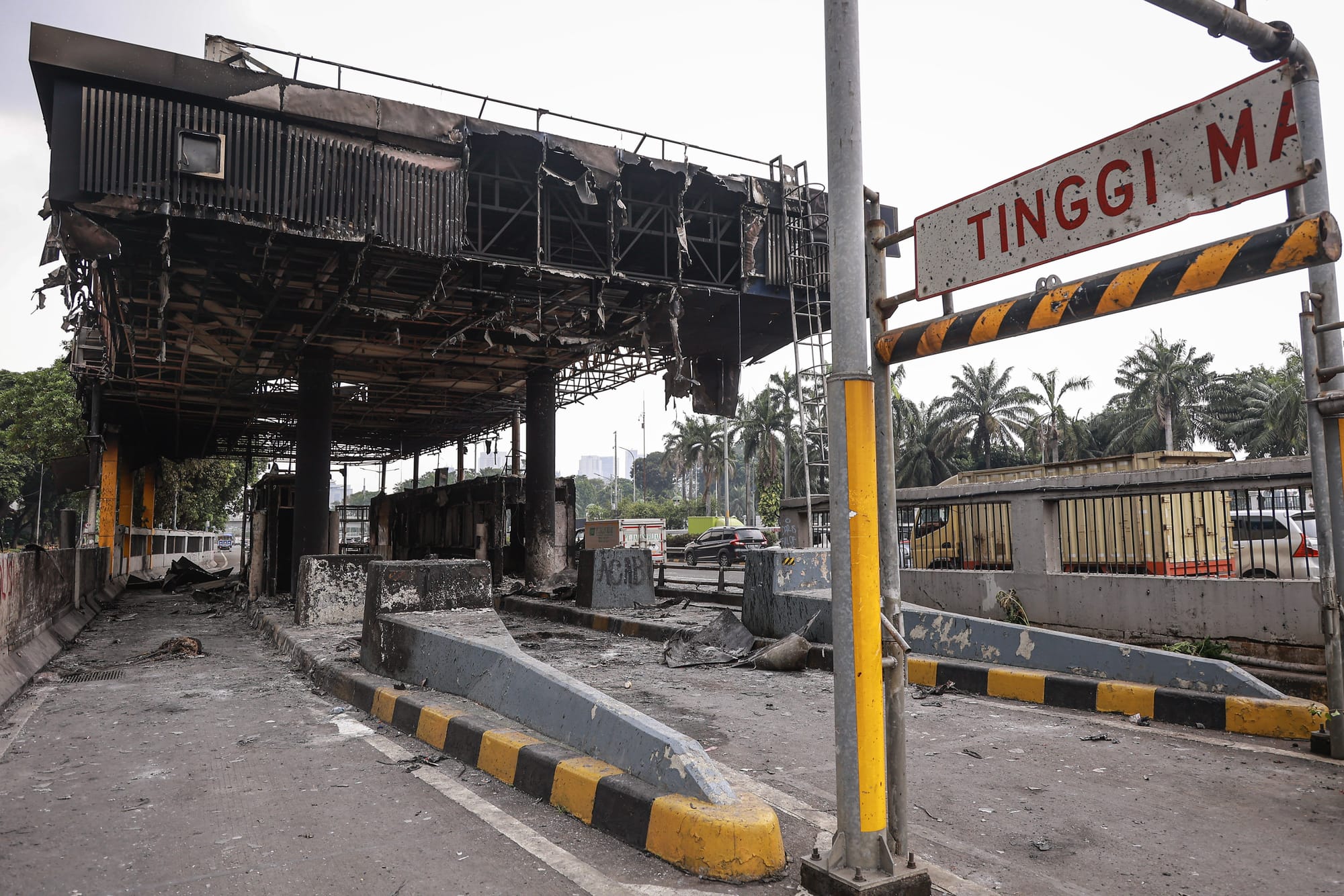
Jasa Marga President Director Rivan Achmad Purwantono apologized to all road users for the disruption of the service at that time. "We apologize profusely to toll road users for the disruption of services and the temporary closure of seven GTs on the Cawang-Tomang-Pluit Toll Road due to the demonstrations that have occurred since Friday," said Rivan," he said through a press statement, Sunday (31/8/2025).
He explained that his party focused on repairing and accelerating the recovery of transaction services to toll road users manually with the help of mobile reader officers. Currently the maintenance team in the field continues to repair, clean up the remaining combustion with priority repairs to transaction services so that services at the GT can be carried out immediately.
As of Sunday night, Jasa Marga informed that of the seven affected GTs, currently the Senayan GT towards Grogol and Semanggi 1 GT towards Cawang have been operated with the help of mobile reader officers and can be passed by road users. As for other GTs that have not yet operated, currently they are still in the stage of preparing transaction equipment while looking at the condition and situation of the arterial road.
Kyatmaja Lookman, Director of PT Lookman Djaja Logistik, admitted that he had to adjust the rhythm of goods distribution due to security factors. He understands demonstrations as part of democratic freedom. However, he emphasized, when destruction of public facilities occurs, the impact can be very broad.
Kyatmaja understands demonstrations as part of democratic freedom. However, he emphasized, when destruction of public facilities occurs, the impact can be very broad.
"In challenging economic conditions like now, the business world will tend to 'wait and see' until the situation is conducive again. Automatically, the volume of goods shipped will also decrease. That is what makes the wheels of the economy can be hampered," he told SUAR in a written statement, Sunday afternoon (31/8/2025).
According to Kyatmaja, the distribution of goods will eventually slow down. Logistics companies must consider the security in the field before releasing the delivery fleet. "If there is a point that is prone to conflict, it is better to postpone it. Mutual security must be a priority," he said.
He added that the biggest challenge at the moment is uncertainty. Many companies, he said, choose to temporarily close operations until conditions stabilize. "If the security situation can quickly return to normal, the economy can certainly move again soon," Kyatmaja emphasized.
Secretary-General of the Indonesian Nickel Industry Forum (FINI) Mellysa Tanoyo said that the current demonstrations have made Jakarta unconducive. The roads are closed, we want to go everywhere, we are afraid of demonstrations, we are afraid of riots. Mobility is disrupted.
Vehicles and transportation such as online motorcycle taxis or online taxis are limited. Banking operations are also not optimal. "The above conditions have made the performance of the head office not optimal, unable to fully support factory activities," he said.
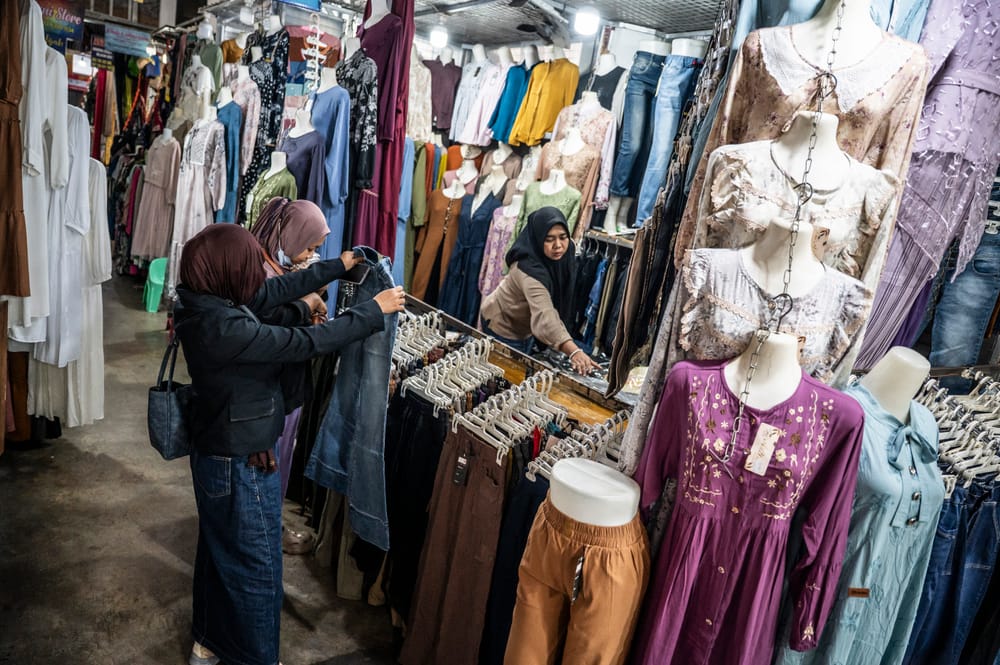
Chairperson of the DKI Jakarta Chamber of Commerce and Industry (Kadin) Diana Dewi sees this turmoil as an outburst of social emotions triggered by economic inequality. According to her, many businesses have not yet recovered, especially the service and trade sectors, especially culinary, have been the hardest hit.
"The UMKM sector has decreased by up to 80 percent," she said. Diana emphasized that the casualties among ojol drivers have also increased public emotions, while on the other hand their income has also decreased because people's purchasing power is sluggish.
Diana thinks the government's response so far has been quite good, although she hopes that the steps taken are really wise. According to her, the government needs to provide awareness that disorderly action is not the right way out, while listening to the complaints voiced.
He also emphasized the importance of solutive policies that fit the needs, including the implementation of cheap markets in certain areas. In his view, this can help defuse the situation and keep the economy running.
JCI was down
From the trading floor, the Composite Stock Price Index (JCI) had fallen. At the close of trading on Friday (29/8/2025), JCI had dropped 121.59 points or 1.53% at 7,830. Whereas in Thursday trading (28/8/2025), JCI had risen so that it broke through the psychological level of 8,000 even though later trading that day closed at 7,968.
Despite the JCI plummeting by more than 2% due to nationwide demonstrations, PT Indo Premier Sekuritas (IPOT) sees a golden opportunity amidst the storm. With foreign inflow still reaching Rp1.3 trillion last week, the leading securities firm identifies sectors that will benefit from the political uncertainty.
"Although last Friday there was still a large inflow of foreign funds in the JCI, it does not rule out the possibility that they will reverse direction due to the effects of domestic political uncertainty," said Equity Analyst PT Indo Premier Sekuritas (IPOT), David Kurniawan, in his statement, Sunday (31/8/2025).
In terms of sentiment, David said that globally, global fund flows slowed down and investors turned out to be cautious regarding the independence of the US central bank, The Federal Reserve (The Fed), after President Trump attempted to fire a Fed governor. As a result, inflows into global equity funds fell.
In addition, spot gold prices surged to around US$3,448.5 per troy ounce, recording an all-time high.Political uncertainties, such as Trump's attempted replacement of Fed Governors, prompted investors to seek refuge in gold.
Meanwhile domestically, there was a slight uptick in consumer confidence sentiment, where the July consumer confidence index rose to 118.1 from 117.8 in June. The expectations sub-index showed improvement driven by expectations of increased income and job opportunities.
Speaking about the market potential on September 1-5, 2025, David emphasized that market participants will focus on key sentiments, namely protests and market turmoil.
"Student and worker demonstrations on DPR salaries, education funds, and school meal programs led to a decline in the JCI by more than 2% and a weakening of the Rupiah by almost 1%. Bank Indonesia and stock exchange supervisors need to step in to stabilize," he said.
He also projected JCI to tend to weaken in the coming week as the market will focus on the dynamics of demonstrations and authority statements, including steps by Bank Indonesia (BI) and the Indonesia Stock Exchange (IDX) and/or the Financial Services Authority (OJK), so as not to cause panic in the financial markets. Traders and investors should also keep an eye on JCI's important support level of 7700-7800.
Maintain security and order stability
The slowdown in economic activity due to demonstrations is considered a logical consequence that is difficult to avoid. However, according to economists, the government needs to immediately respond to the demands of the people so that the escalation does not become more widespread.
"The government needs to seriously and earnestly answer 'their demands and aspirations' for social stability, because it is an important foundation for the sustainability of economic stability," Deni Friawan, Researcher at the Economics Department of the Center for Strategic and International Studies (CSIS) told SUAR (31/8).
He explained that the impact of this social turmoil could spread to various components of the gross domestic product (GDP). Public consumption tends to decline due to a disturbed sense of security, investment is hampered because business actors hold back expansion, while banks can reduce lending for fear of increasing non-performing loan ratios (NPLs). Exports and imports are also potentially depressed due to logistical disruptions and production uncertainty.
"In short, economic growth will clearly slow down. Even if the demonstrations are uncontrolled and last for a long time, there is a risk of growth going into the negative zone, layoffs increasing, and the situation could transform into a multidimensional crisis," he warned.
According to him, the key to a solution lies in restoring public trust in the government and the DPR. He emphasized that concrete steps must be taken immediately, starting from taking action against officers who were found guilty of the death of ojol rider Affan Kurniawan, removing members of the DPR who are considered not showing empathy, to reviewing the budget policy for official allowances.
Eko Listiyanto, an economist from the Institute for Development of Economics and Finance (Indef), expressed a similar view. According to him, domestic security instability not only impacts the real sector, but also directly affects investor perceptions through the capital market and the Rupiah exchange rate.
"If only the handling of demonstrations is not brutal, usually the capital market and money market are relatively calm because investors understand Indonesia as a democracy. Unfortunately, the escalation of chaos this time actually made the JCI and rupiah depressed," Eko explained to SUAR (31/8).
Deni from CSIS emphasized the importance of apparatus proportionality. "Firmness is necessary, but it must remain measured. At the end of the day, it's the people themselves, not external enemies or threats," he said.
He added that the weakening in the financial markets will ultimately hamper business activities that are waiting for the situation to return to safety. Economic growth in the third quarter is also at risk of slowing down significantly. In fact, if conditions are not conducive, daily economic activities, such as malls, markets, exhibitions, and the tourism sector, could come to a halt.
"If it drags on, the potential for recession and crisis is inevitable. Of course we do not expect this," he said.
As a solution, Eko emphasized the importance of humane and non-repressive handling, along with concrete steps to increase budget alignments to the lower and middle classes. At the same time, both the cabinet and the DPR need to improve their performance and restore public confidence. This was emphasized by Eko and Deni.
"The main problem is the crisis of confidence. Without the restoration of trust, any economic policy will not be effective," Deni said.
In a press conference on Sunday night, Jakarta Police Chief Inspector General Asep Edi Suhaeri urged the public to remain calm and not worry. He invited all elements of society to maintain conduciveness.
On Sunday night, a joint police and TNI patrol team was seen patrolling the capital's protocol roads such as Jalan Sudirman-Thamrin and Jalan Gatot Subroto. In Jakarta's buffer zones such as South Tangerang, patrols were also seen on protocol roads.