
On Tuesday (16/12), a number of experts proposed several comprehensive strategies to ensure that the energy transition does not hinder economic growth. Some of the strategies proposed include expanding financing and preparing human resources.
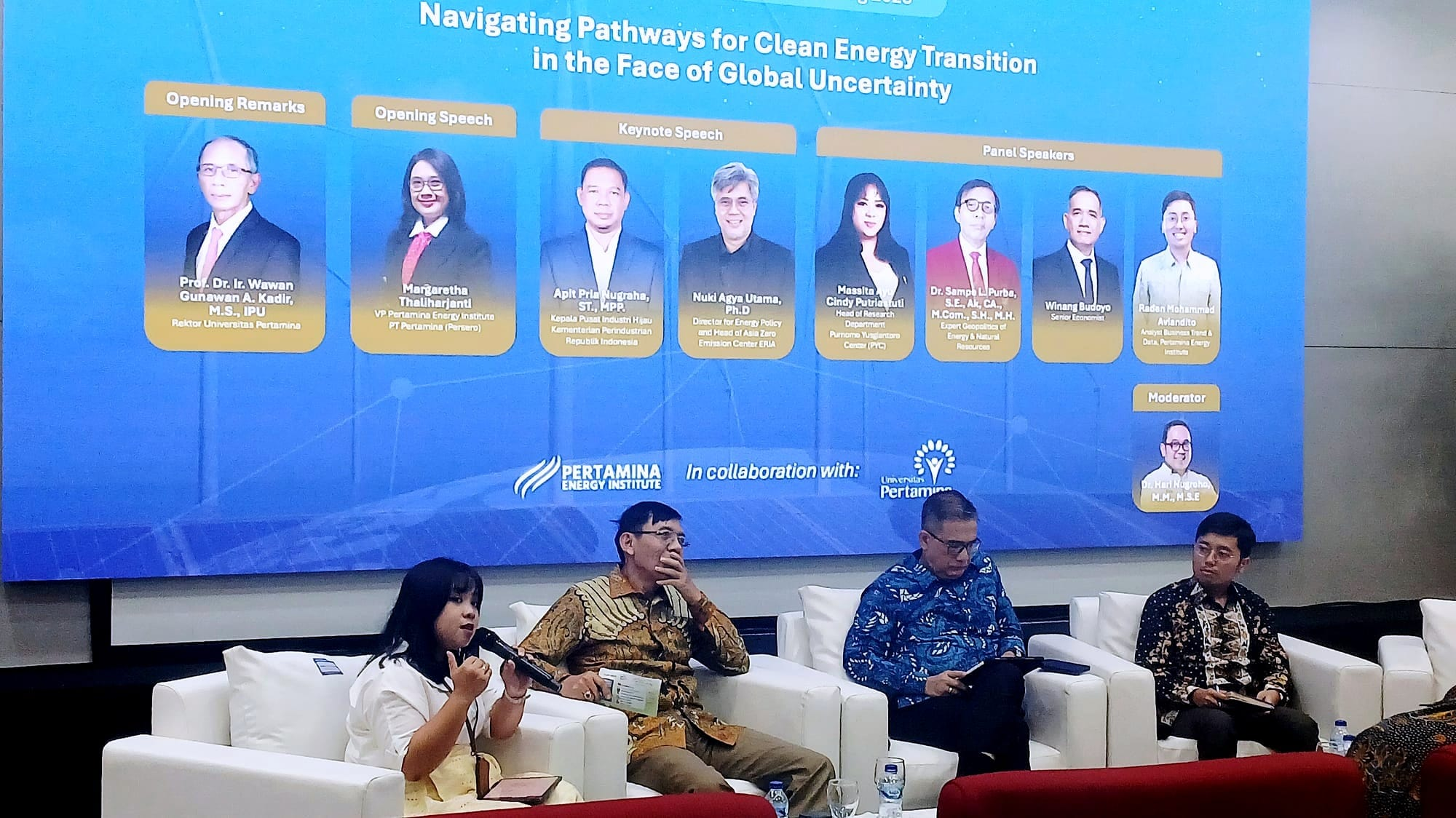
Senior economist at Bank Tabungan Negara Winang Budoyo stated that bilateral financing cooperation with countries that have been relatively successful in implementing energy transition, such as Germany, the Netherlands, and Poland.
"Europe can now be not only a source of funding, but also a source of information on energy transition governance. This bilateral financing can balance the composition of funding, which currently still comes 55% from domestic investment," said Winang at the 2nd Pertamina Energy Dialogue in Jakarta on Tuesday (12/16/2025).
Although the potential for bilateral financing is wide open, Winang emphasized a number of aspects that need to be addressed in Indonesia's renewable energy ecosystem, ranging from increasing the certainty of external energy tariffs, strengthening public financing, and increasing transmission capacity. The strengthening of this ecosystem aims to make project financing more bankable.
"The energy transition policy needs to reorganize the cost-based tariff scheme, accelerate the reform of power purchase agreements, increase public funding for the geothermal and solar power sectors, and ensure the acceleration of transmission network development so that project risks can be reduced," he said.
Sharing Winang's view, Head of Research at the Purnomo Yusgiantoro Center Massita Ayu Cindy Putriastuti emphasized that the availability of skilled human resources is also crucial to the success of the energy transition, in addition to capital and technology. Human resources play a role in ensuring that the transition does not stop at decarbonization, but is followed through until renewable energy becomes the backbone of all energy generation.
"The Ministry of Energy and Mineral Resources needs to create an occupation map that charts the transition workforce needs at each level, in collaboration with PLN, Pertamina, and the Ministry of Industry. This roadmap will be used by universities to adjust their materials so that students can learn the competencies that are urgently needed during the transition," said Ayu.
So far, the financing solution offered by the Ministry of Industry is the Industrial Decarbonization and Competitiveness Fund ( IDCF) mechanism as aggregate funding.
Head of the Green Industry Center at the Ministry of Industry, Apit Pria Nugraha, assesses that even though the Ministry of Industry's priority decarbonization strategy has been established through a very clear roadmap, project financing remains one of the biggest challenges that needs to be solved.
Through this program, the Ministry of Industry assists industries in making initial investments for decarbonization actions such as technology transfer, automation, machinery replacement, fuel substitution, comprehensive audits, and greenhouse gas emission verification and validation. Donors from partner countries, the World Bank, and philanthropic organizations are the sources of IDCF, which has so far been managed by the Ministry of Industry.
"Beyond financing, IDCF will ensure that the terms and conditions of decarbonization projects at every level are the same, so that the execution process will be faster. This funding is expected to help reduce the cost of capital and make decarbonization more bankable," Apit concluded.
Five priority strategies
Apit explained that the keywords for green industry in Law No. 3 of 2014 on Industry are efficiency and added value, not just compliance with regulations. As the implementing ministry, the Ministry of Industry translates these keywords into three pillars in the Green Industry Roadmap.
- Fiscal policies and market instruments developed in collaboration with the Financial Services Authority to provide innovative financing and competitive Carbon Economic Value mechanisms;
- Low-carbon energy and material supply infrastructure to develop low-emission industrial technologies that remain feasible;
- Standardization policies for industry remission targets, as well as ensuring that low-carbon products that meet environmental standards remain competitive in their respective markets.
"We treat this roadmap as a living document, so there must be a corrective course every two years. This roadmap will be effective if the industrial emissions reporting mechanism is strengthened. This is important because the industry always demands certainty about how much carbon emissions will be reduced, when the deadline is, and what methods will be used," explained Apit.
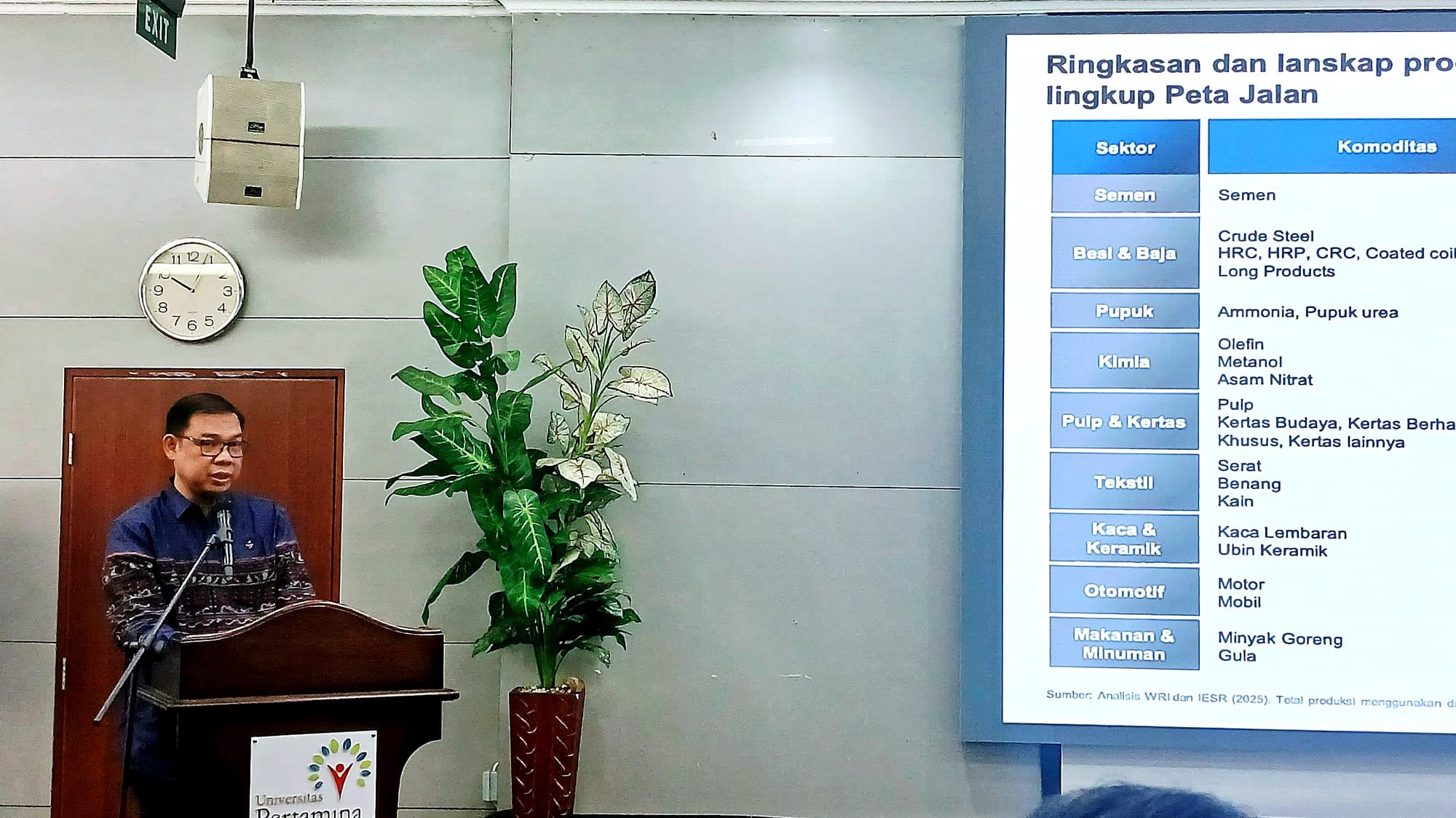
Based on the three pillars above, the government firmly believes that the decarbonization agenda should not hinder growth. However, the government also reminds industry players that pursuing growth without decarbonization could potentially double costs in the future. As a solution, the Ministry of Industry is currently focusing on implementing five priority decarbonization strategies.
- First, energy and material efficiency through the reuse of residual heat.
- Second, fuel and material substitution by switching to biofuels and hydrogen.
- Third, updating low-carbon production processes by promoting the replacement of BF-BOF machines with DRI-EAF.
- Fourth, electrification and low-carbon power generation using solar and geothermal energy for industry.
- Fifth, carbon capture, utilization, and storage through a number of reforestation projects.
The Ministry of Industry implemented these five strategies by making the circular economy the backbone of their implementation.
"With the regulations stipulated in Government Regulation No. 29 of 2018 concerning Industrial Empowerment, we are integrating incentives into the TKDN scheme, so that the greener an industry is, the higher its TKDN value. Going forward, derisking measures such as this will become a policy package that includes government facilities, carbon economy value, and green loans," he said.
No longer an option
Vice President of Pertamina Energy Institute (PEI) Margaretha Thaliharjanti said that the urgency of transition for energy security has become increasingly inevitable, especially amid regional conflicts that have caused fluctuations in global oil and coal prices.
As a think tank for PT Pertamina (Persero), PEI has currently mapped out nine major themes in energy transition, including energy security, national transition policy, ESG certification, clean energy economics and financing, and the modernization of fiscal policy, which is still dependent on oil and gas revenues.
"Hopefully, we want to see energy transition not just as an option, but as a strategy that is ready to be implemented to strengthen energy independence and economic competitiveness," said Margaretha when opening the event.
Currently, the government and energy companies still face a number of challenges in implementing the transition, ranging from uneven storage infrastructure, relatively difficult financing, and carbon capture, utilization, and storage ( CCUS) practices that have very marginal economic value, making it difficult to convince banks.
"Despite these challenges, there are still opportunities. Clean energy such as solar power is becoming cheaper. Indonesia is also capable of finding benchmarks from other countries in creatinga compliance-based carbonmarket. To that end, we want to work together with all stakeholders as the beginning of the long-term transformation that we continue to strive for," he explained.