
The government's commitment to improve ease of doing business to attract investment in Indonesia continues to be developed in a number of ways, including by taking integrated measures to reduce energy costs, which have been a complaint of entrepreneurs. Optimizing downstream solar cell opportunities and increasing the renewable energy mix are two of the strategies.
The assertion was made by Deputy Minister of Investment and Downstreaming/Deputy Head of the Investment Coordinating Board (BKPM) Todotua Pasaribu in the discussion "Sarasehan 100 Indonesian Economists" organized by the Institute for Development of Economics and Finance (INDEF) in Jakarta, Tuesday (28/10/2025). As the 10th annual forum, the gathering serves as a synergy event for the government, academics, and the business world to contribute to economic development in Indonesia.
Todotua explained that with the inclusion of downstream as one of the Asta Cita pillars, for the first time the government included downstream as a nomenclature in the government. This significance marks the government's full attention to the impact of downstreaming on the economic growth target of 8% and investment realization reaching IDR 13,032.8 trillion by 2029.
"Downstreaming is encouraged because we no longer allow the export of raw materials, especially for 28 strategic commodities. However, to get there, the challenges are significant. Yes, we have extraordinary natural resources with very complete variations, but whether this downstream is competitive, sustainable, and has an environmental impact, that is the problem," said Todotua.
The former Bomba Group CEO revealed that one of the challenges of downstreaming is the need for greater energy supply and consolidation of energy volumes to process raw materials and increase their added value.
He pointed out that processing raw bauxite into alumina requires 250 MW of electrical energy. However, to process alumina into aluminum requires four times the energy up to 1,000 MW or 1 GW. Currently, with industrial electricity tariffs reaching USD 0.99 per kWh, the need is clearly very burdensome for investors interested in investing in the processing industry.
"Then we have to find competitive energy sources. Currently, when shifting directs us to work on green energy sources, our industry has not implemented it because the price is still expensive. Our entry into downstream is a strategy to regulate our energy needs as well," he said.
One of the opportunities to reduce energy costs, according to Todotua, is to optimize the downstreaming of solar panels, which are currently successfully produced up to 60% domestically. The availability of the main raw materials for solar panels consisting of silica, bauxite, copper and tin allows Indonesia to process them independently.
In detail, for a solar panel with a capacity of 3.4 kilowatt peak (kWp) or 3,400 kWh per year, 63.73 kilograms of solar cells made from a mixture of tin, silica and copper; 15 kilograms of thin film of silica; 691.2 kilograms of float glass of tin; 51 kilograms of frame adhesive of silica; and 180 kilograms of aluminum are required.
"The availability of these materials allows us to make solar cells that contribute to reducing the price of the final panel. Whether this will be 100 percent environmentally friendly is yet to be seen. That nickel downstream, into batteries, for example, still uses coal because the price reaches the limit of production efficiency per battery, 5-6 cents per kWh," Todotua explained.
Going forward, the green energy-based downstream trajectory has become a focus that the government will pursue all-out. By reducing material costs, green energy sources can be competitive enough to support the energy needs of high value-added manufacturing industries that will create jobs.
"This all takes time. The President has determined and will do everything strategically and seriously. We continue to improve fiscal strategy, deregulation, upskilling, and strategic supply chains and it is still ongoing," he said.
Biodiesel and waste-to-energy
Complementing Todotua's explanation, Minister of Energy and Mineral Resources (ESDM) Bahlil Lahadalia revealed that high energy costs cannot be separated from the growing gap between energy production capacity and domestic consumption needs. As a result, the government has to find ways to meet consumption needs.
According to Bahlil, to meet consumption needs, the government's current strategy is directed at increasing the lifting volume from existing old wells, asking Cooperation Contractors (K3S) who have submitted a Plan of Development (POD) to run immediately, and conducting massive exploration in 75 basins.
"In addition, we are also increasing biodiesel and ethanol made from corn, sugarcane and cassava. It is not true that there are discussions from parties here and there that say ethanol is not good, because a number of countries have used it, even Brazil has marketed 100 percent bioethanol fuel," Bahlil explained.
The decision to increase the renewable energy mix as one of the risky steps to reduce industrial energy costs, according to Bahlil, is a manifestation of Indonesia's commitment to the 2015 Paris Agreement. In fact, the renewable energy supply chain is relatively more expensive than fossil energy and requires large-scale investment.
"We need a strategy to immediately calculate what if for industry, we use 80-100 GW of solar panels? The tariff can be reduced to USD 0.3 per kWh. If this is economical, then the government will encourage the use of most solar panels in industrial areas. I cannot say the final decision now," he said.
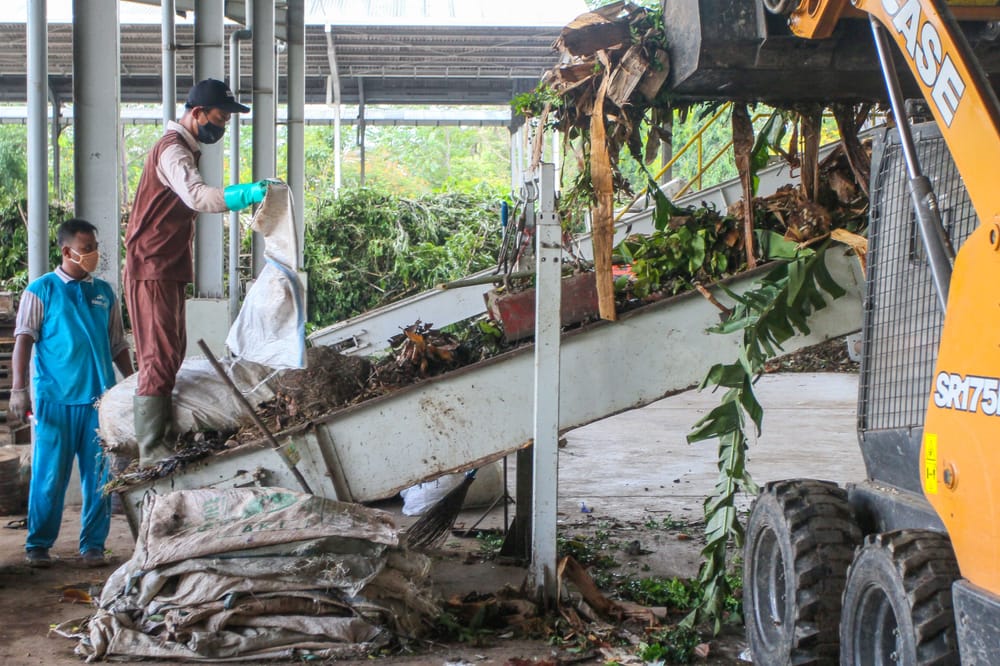
One of the tips to increase the renewable energy mix to reduce energy costs is the management of waste into electrical energy (PSEL), the construction of which is prepared in 33 locations with licenses that have been completed. The ten priority PSEL locations chosen by the government are located in Bali, Yogyakarta, Greater Bogor, Semarang, Medan, Jakarta, Tangerang, Bekasi City, Bekasi Regency, and Greater Bandung.
"We are preparing massive regulations. The selling price of electricity, which was previously USD 12.5 cents per kWh, is now USD 20 cents. From this practice, we will formulate bureaucratic reforms in the energy sector to realize good products without too expensive prices," Bahlil concluded.
Holistic
Research by the Purnomo Yusgiantoro Center (2024) assesses that the downstream strategy pursued by the government to reduce energy costs is recognized as appropriate and effective for the Indonesian context. However, increased demand and price fluctuations must also be considered as competitiveness factors, given that the downstream mineral resources industry is also growing.
"Technological innovation plays an important role in improving efficiency and sustainability in the downstream industry. Research and development of new technologies is key to maintaining competitiveness, followed by strict legal regulations to maintain environmental sustainability and community welfare," the study states.
Read also:
 Benedictus Krisna Yogatama
In addition to reducing energy costs, downstream energy sources also have the potential to create positive trickle-down effects by increasing the added value of the supply chain and creating new jobs. This requires the cooperation of the government, industry and communities in policy development, project implementation and distribution of economic benefits.
"Taking into account the PESTEL analysis and the trickle-down effect, it is important for the government and industry stakeholders to adopt a holistic, sustainable, and inclusive approach in the development of the mineral and coal downstream industry in Indonesia," the study concludes.