The Indonesian government is racing to establish tens of thousands of state-backed Merah Putih Cooperatives across villages and urban wards. Armed with billions of rupiah in capital and cross-institutional support, they are billed as a new locomotive for rural and grassroots economies.
Yet the top-down rollout raises a pressing question: will these cooperatives truly empower citizens, or crowd out the very small businesses they claim to support?
Pramodhana Ekaputra still remembers the WhatsApp message he received from the Melawai subdistrict office in mid-June. The message asked him to serve as a board member of the Merah Putih Cooperative. Within 24 hours, Pram agreed and took on the role of treasurer.
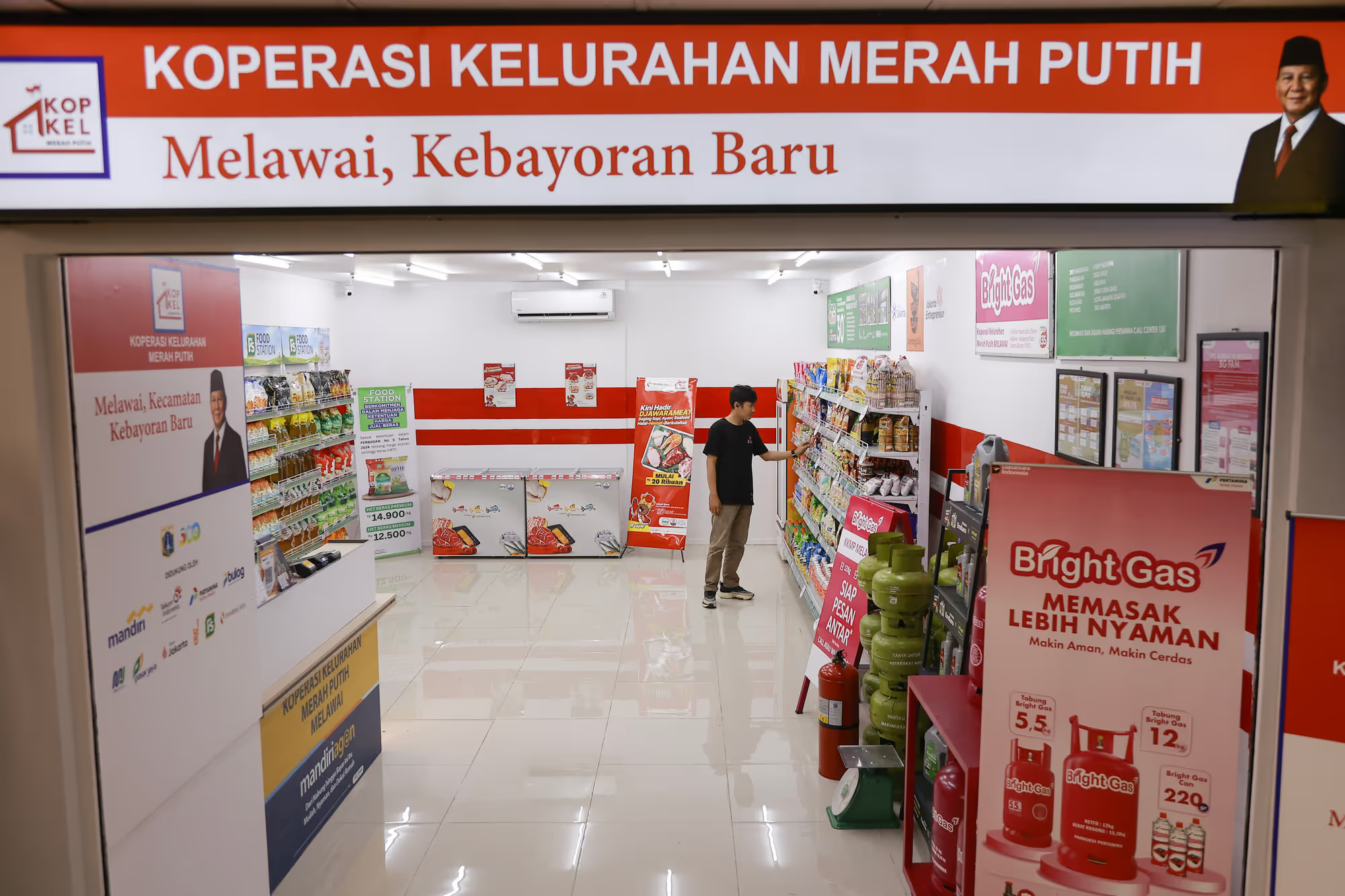
By late June, Pram and several Melawai residents appointed to manage the cooperative gathered. According to Pram, the subdistrict officials directly guided which business line the cooperative should pursue—namely, a grocery outlet selling staple goods such as rice, cooking oil, and sugar.
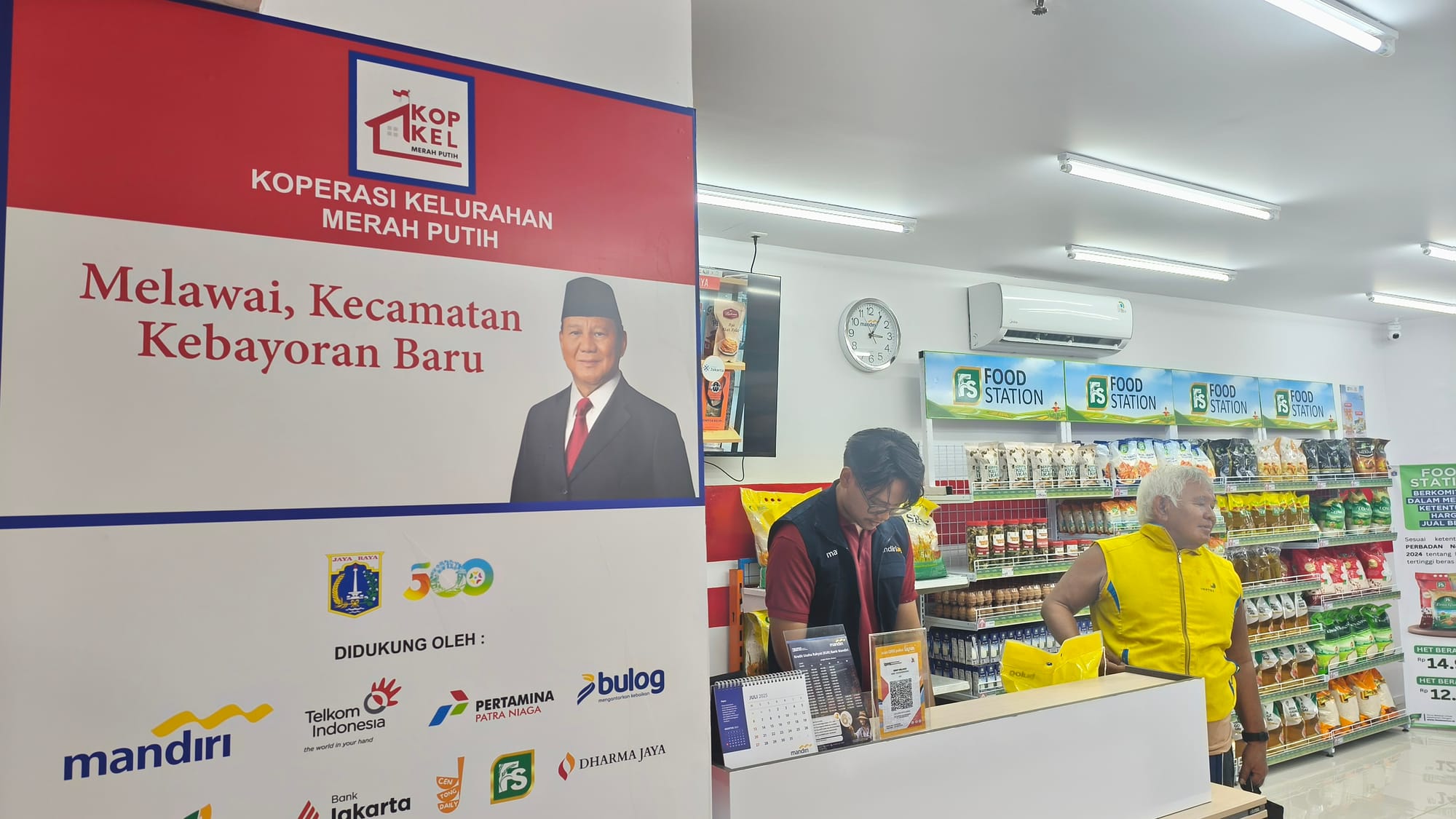
For three weeks, the cooperative’s management team worked hand-in-hand to build the shop, which was eventually set up in the Blok M area of South Jakarta. The rapid construction was possible thanks to resources provided by Jakarta’s state-owned and region-owned enterprises, with full involvement from the Jakarta provincial government.
“Because this is a central government program, there’s direct instruction from above, so everyone works together,” Pram told SUAR at the Merah Putih Cooperative in Melawai on Thursday, July 24, 2025.
Inside the cooperative store, the main hub of the Merah Putih Melawai Cooperative, rows of staple goods line the shelves. To the left are bags of rice and sugar. At the center, a refrigerator stores beef and chicken.
On another side, snacks and drinks are displayed, while LPG gas cylinders sit at the front.
Logos of supporting institutions are also on display: Bank Mandiri, Telkom Indonesia, Pertamina, Bulog, MRT Jakarta, Pasar Jaya, Bank Jakarta, Food Station, and Dharma Jaya. Pram said Bank Mandiri played a central role in constructing the cooperative building, while other institutions contributed products, such as Food Station and Bulog, which supplied rice.
The choice of Melawai as the location, Pram explained, was deliberate. Blok M is considered a central activity hub for residents, who frequent Blok M Square and Blok M Hub for shopping and leisure.
“We saw it as a segmented middle-class market, so Blok M was chosen,” he said.
Targeting MSME Players
Even so, the Melawai cooperative aims to cater primarily to micro, small, and medium enterprises (MSMEs). Pram noted that many small vendors, particularly food sellers, operate in Blok M—ranging from full meals to snacks. The cooperative is expected to become their go-to source for supplies.
“We want to support MSMEs. Prices will be competitive,” he said.
The strategy aligns with the cooperative’s location at the ground floor of Blok M Hub, where culinary vendors operate just 200 meters away, in a bustling food court.
Yet, when SUAR asked several vendors, they admitted they knew little about the cooperative. From the beginning, they said, no information was shared about its establishment.
“There was no socialization (about the Merah Putih Melawai cooperative). Even in our vendor group chats, there’s no info,” said one vendor.
When asked if they would buy cooking supplies from the cooperative, vendors were hesitant. For rice, for example, they had long relied on wholesalers in Blok M or nearby Pasar Minggu.
Prices there, they said, were already affordable. “If it’s cheaper, we’d be happy to buy (from the cooperative). If it’s more expensive, then it’s difficult,” said one vendor, who declined to be named.
“If it’s cheaper, we’d be happy to buy,” said one vendor.
For vendors, the cooperative could be attractive if it offered the same services as their current suppliers—such as delivery at any time and flexible payment options. “The question is, can the cooperative do that?” one vendor asked.
Some vendors were also skeptical about the cooperative’s name, citing past experiences with failed savings-and-loan cooperatives in Blok M, where management allegedly ran off with members’ contributions.
“We don’t want to go through that again,” one vendor said.
Pram admitted that the cooperative has yet to carry out outreach or finalize its concept. For now, only the management team is active, with no formal members.
“We hope to begin socialization with MSMEs soon. We’ll have a meeting at the end of this month,” he said.
Backed by Cross-Institutional Synergy
In Hambalang Village, Bogor, another Merah Putih Cooperative is being hailed as a model for West Java. When SUAR visited, rows of kiosks stood ready. On the far left were stacks of LPG cylinders, next to them sacks of fertilizer.
Other stalls offered food staples, while the far-right kiosks were occupied by BRI Link and Pos Indonesia, providing financial transactions and logistics services.
According to Saepul Rizal, secretary of the Hambalang cooperative, everything available there was the result of cross-institutional cooperation. Pertamina supplied LPG, Pupuk Indonesia provided fertilizer, Bulog delivered rice, while Bank BRI and Pos Indonesia handled services.
“This is the most complete cooperative so far. We’re considered a pilot model,” Rizal told SUAR on Friday, July 25.

The commodities offered, he explained, were chosen to align with the cooperative’s mission: to be the community’s main source for daily needs. “We see village residents as the primary consumers,” Rizal said.
In Hambalang, most villagers are cassava farmers. Urea fertilizer, vital for their production, is now available at the cooperative—priced slightly below market rates.
“We have many farmers here. We need to support them,” he said.
For those selling groceries, the cooperative’s kiosk provides affordable supplies since all goods come directly from first-hand sources. “With fewer supply chains, prices are more affordable compared to agents,” Rizal explained.
The cooperative, located not far from President Prabowo Subianto’s residence, also hosts a health clinic. Staffed by a doctor and a midwife from the local health center, it provides general medical services at rates lower than typical private clinics.
“All units of the cooperative are meant for public benefit. Prices are adjusted accordingly,” Rizal said. “Small margins, but if the volume is high, it’s still profitable.”
Speaking of revenue, since its launch on July 21, the cooperative’s gross income has surpassed Rp 15 million. Every commodity has contributed to sales—farmers buying fertilizer, residents purchasing LPG gas, and rice. “We never expected it would turn out this way,” said Rizal.
However, not all villagers are aware of the cooperative’s presence. Some farmers living near the site said they didn’t know fertilizer was being sold there.
They also doubted whether the prices would actually be cheaper than those offered by their long-time suppliers. Cassava farmers, for instance, have depended for years on fertilizer sourced from outside Hambalang. “The price is Rp 120,000 per kilo. So, how much can the cooperative offer?” one farmer asked.
These farmers remain hesitant to shift their purchases to the cooperative. They worry that relying solely on the cooperative would mean losing their allocation from traditional agents. The main issue, they say, is uncertainty about the cooperative’s sustainability. “Can this cooperative last long?” one farmer wondered.
According to Saepul Rizal, prices at the Hambalang cooperative could be even lower if purchased by members. That is why he encourages villagers—especially farmers and small businesses—to join. “We can reduce prices by up to 10 percent from the normal rate for members,” he said.
A Tool for the People’s Struggle
On July 21, 2025, President of the Republic of Indonesia, Prabowo Subianto, officially launched the Village/Urban Ward Merah Putih Cooperatives (KDMP) in Bentangan Village, Wonosari District, Klaten Regency, Central Java. The inauguration marked the start of a national movement to strengthen village economies through cooperatives based on mutual cooperation and self-reliance.
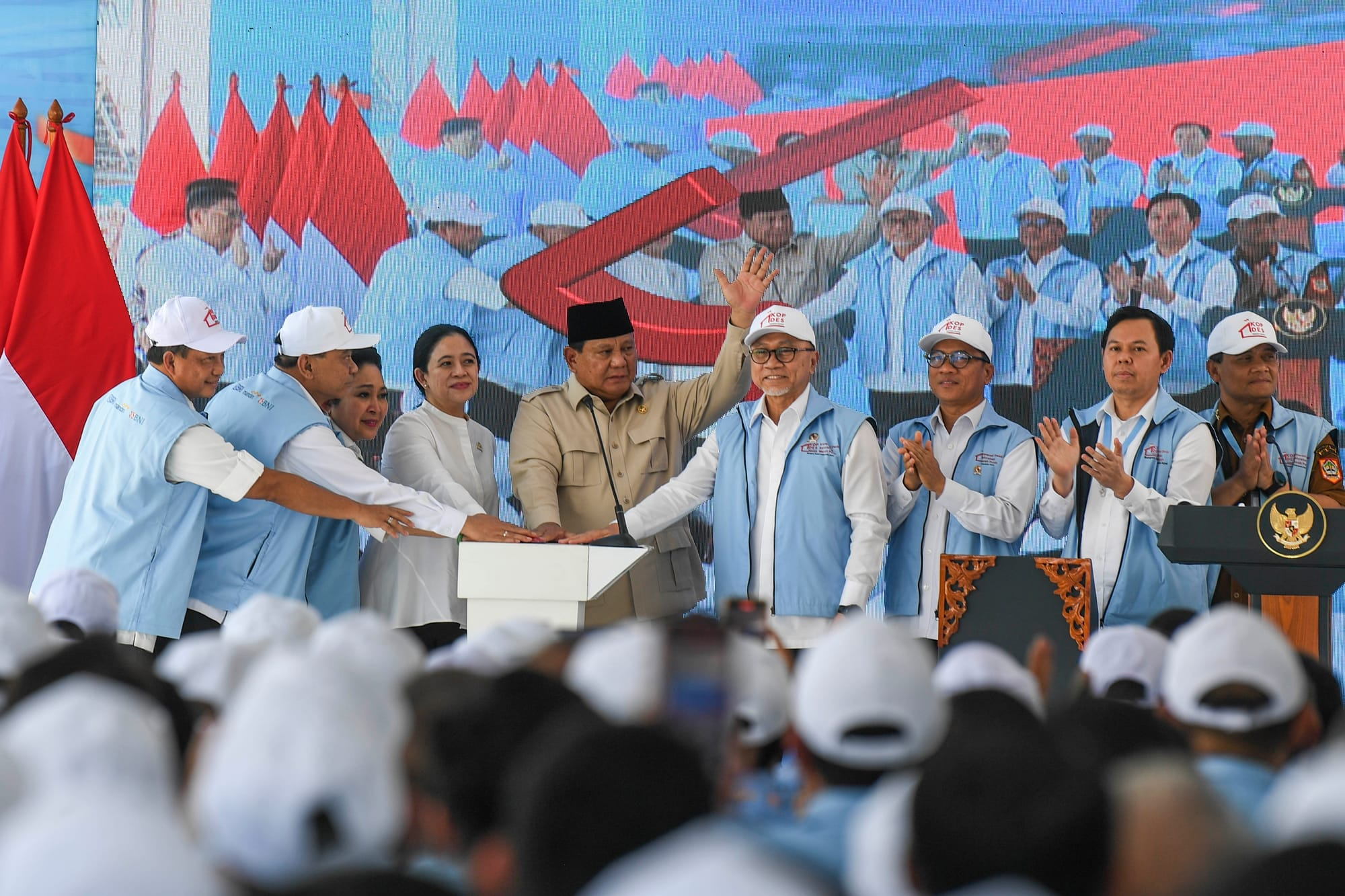
Prabowo emphasized that cooperatives are a tool for the “small people” to become stronger and economically sovereign. The Merah Putih cooperative initiative is designed to empower rural and urban ward economies, improve farmers’ exchange value, suppress local inflation, expand financial inclusion, and create productive jobs in villages.
The cooperatives are expected to cut off exploitative distribution chains and provide solutions against fraudulent practices that have long harmed farmers. Each cooperative is envisioned to adopt a “7-in-1” business model, combining grocery outlets, village pharmacies, health clinics, savings and loans units, cold storage, logistics services, and cooperative offices.
State-owned enterprises such as Pos Indonesia and Bank BRI are also supporting operations. BRI, for instance, is integrating its AgenBRILink services into the cooperatives to facilitate rural financial transactions.
Backed by regulations, national and local budgets, and inter-ministerial collaboration, the Merah Putih Cooperatives are projected to become the locomotive of a people’s economy—sustainable, fair, and inclusive.
President Prabowo hailed the launch as a historic day in the struggle toward true economic independence. “A cooperative is a tool to unite the small into the big, the weak into the strong,” he declared.
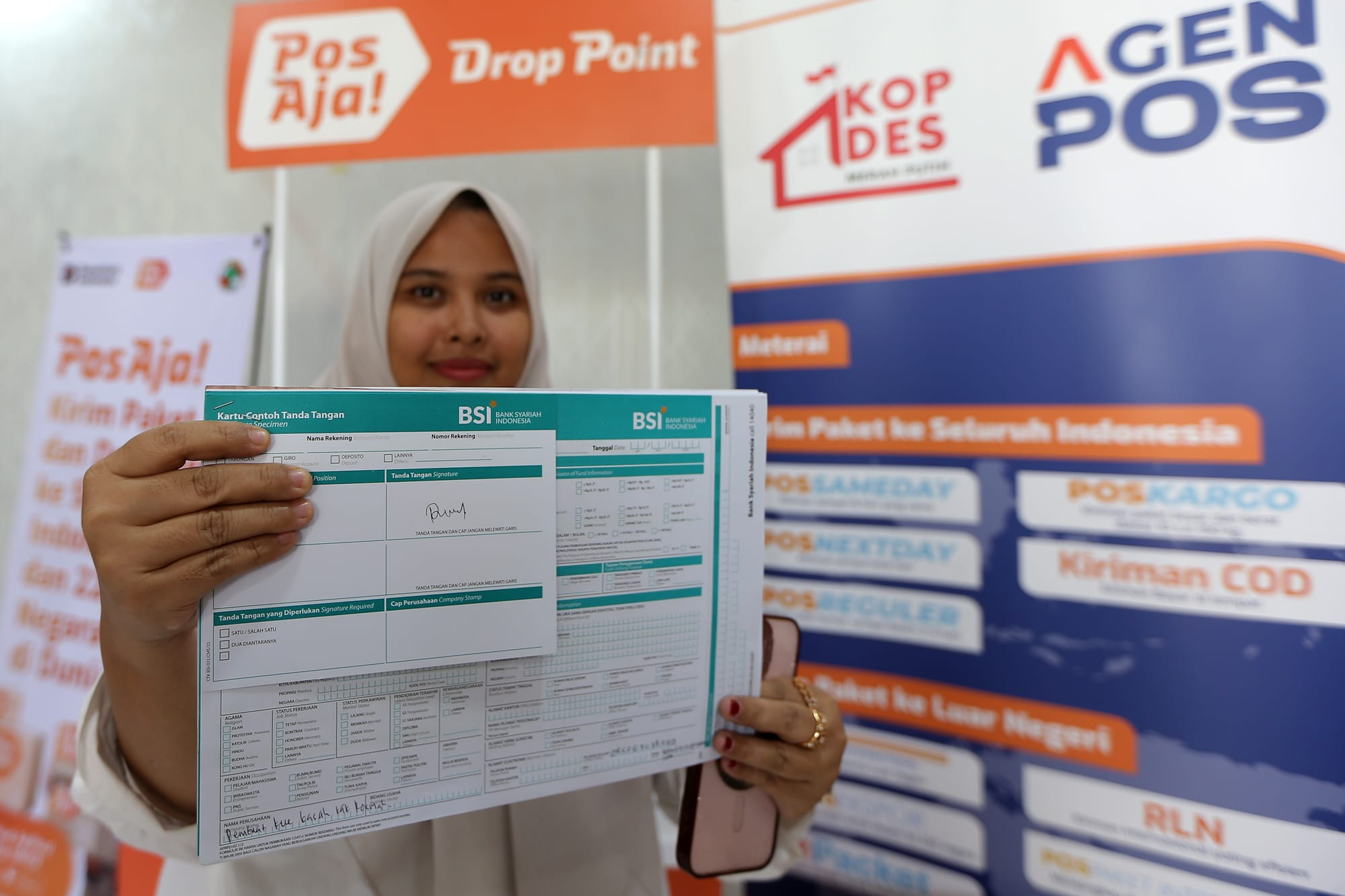
Cooperatives Minister Budi Arie Setiadi explained that these cooperatives are established at the village level, with ownership and membership drawn from villagers themselves. All citizens are entitled to oversee their management. He stressed that the model aims to guarantee economic certainty across remote regions, especially by stabilizing prices and cutting off exploitative middlemen.
“What’s the middleman’s weapon? Money. That’s why we provide initial capital, so their weapon can be countered,” Budi said.
According to him, the government intends to break overly long supply chains. “As the president said, we want to eliminate economic vampires,” he added.
Critical Voices
Despite government optimism, critics have raised concerns. Bhima Yudhistira, Director of the Center of Economic and Law Studies (CELIOS), issued a sharp warning that the Merah Putih Cooperatives may harm rather than help local businesses.
“This cooperative isn’t creating new entrepreneurs. Instead, it substitutes existing small businesses in the villages,” Bhima argued.
He pointed out that micro businesses such as food stalls, LPG vendors, and village pharmacies are at risk of being sidelined, potentially leading to unemployment instead of job creation. Conflict between cooperative managers and long-standing MSMEs, he warned, is highly likely.
Bhima also criticized the lack of adequate training and technical preparation prior to the mass rollout. “Are the Merah Putih cooperatives really ready? Can they run professionally?” he asked.
Financing sources are another concern. Bhima cautioned against the reliance on government-owned banks (Himbara) for loans, especially if village funds are used as collateral. “This risks disrupting existing village fund programs,” he said.
For Bhima, the approach contradicts the cooperative spirit, which traditionally emerges from grassroots participation. He described the government’s top-down strategy as forced and unnatural.
“The capital should come from members’ contributions. Here, it’s being spoon-fed from the center,” he said.
He cited successful international examples—such as Singapore’s NTUC and Denmark’s cooperatives—that grew from citizen initiatives, not government directives. “Governments there only support cooperatives that already exist. They don’t cut corners like this,” he said.
Regarding the government’s claim that the program will create jobs, Bhima instead questioned how many local entrepreneurs would lose their income.
He argued that the approach is not a solution but rather a form of hijacking community businesses. “The government always says it will create jobs, but how many will actually become unemployed because their businesses are taken over by the Merah Putih cooperatives?” he said.
Bhima also raised doubts about the government’s promised digitalization. In his view, technology does not automatically boost productivity if infrastructure and human resources are not ready. “Before talking about digitalization, the readiness of human resources must be addressed first,” he noted.
He pointed out that many villages still lack internet access, making the push for digitalization seem forced. As an example, he cited the procurement of Chromebooks that proved ineffective due to the absence of internet connections. The government’s digitalization narrative, he argued, does not align with realities on the ground.
Bhima further warned that the presence of the Merah Putih cooperatives could create unhealthy competition with existing Village-Owned Enterprises (Bumdes). “The Bumdes that already exist may now be disrupted because of the Merah Putih cooperatives,” he said. In fact, according to him, the two entities are competing for the same roles and resources within villages.
He noted that both Kopdes and Bumdes target the same markets and involve the same village apparatus. This overlap, he said, will inevitably spark friction—what he called “institutional cannibalism.”
Bhima added that villagers may be forced to change professions or compelled to join the cooperative system because their independent businesses can no longer survive. “That is not job creation. That is substitution, not complementarity,” he stressed.
For Bhima, the greatest impact of this top-down approach is the stifling of community creativity. A healthy cooperative, he explained, should grow from citizens’ initiatives and needs. “The mindset of the Merah Putih cooperative managers is simply to wait for aid or programs from the central government,” he said.
The Need to Foster Local Participation
Bhima highlighted the success of the Sidogiri Islamic Boarding School Cooperative, which now has assets worth trillions of rupiah after growing from the grassroots. According to him, Sidogiri proves the importance of local participation and creativity. In contrast, the Merah Putih cooperatives merely “wait for the ball” from the central government.
If the program is to continue, Bhima argued, loan ceilings must be limited. “If this program has already been launched, then the loan ceiling should not exceed Rp 15 million per cooperative,” he said. Such limits, he added, are necessary to conduct pilot trials and prevent systemic risks to the financial sector.
Meanwhile, Trioksa Siahaan, Head of Research at the Indonesian Banking Development Institute, said the involvement of state-owned banks (Himbara) in supporting the Merah Putih cooperatives could benefit the banking sector itself. “I think Himbara banks will see this as a financing opportunity, especially since it has become a government program,” Trioksa told Suar on Thursday.
Still, he cautioned that non-performing loan (NPL) ratios in the cooperative sector remain high. According to a recent study by Pefindo, NPLs are around 8.5 percent. “Because NPL levels in the cooperative sector are also high, banks will need to be cautious, ensuring that credit facilities are managed with proper risk mitigation, so financing can proceed with measurable and acceptable risks,” he explained.
On profitability, Trioksa said returns from cooperative financing are still higher than the potential credit risks.
“There is still potential return as long as financing is well-targeted and contributes to developing cooperative-based enterprises, particularly in rural areas,” he noted.
“Financing feasibility must still be assessed under bank policies and SOPs to ensure credit quality remains sound,” he added.
Banking policy analyst Andry Asmoro agreed, saying that banking intervention in financing rural cooperatives could provide added value. “What banks see is the ecosystem that can be created by these village cooperatives in the future. Villages have enormous potential that could form the foundation for bottom-up growth and economic upgrading. This presents a real business opportunity for banks,” Andry told SUAR.
Mukhlison, Harits Arrazie, Rohman Wibowo