

The government has launched another economic stimulus in the form of the People's Welfare Social Cash Transfer (BLTS Kesra) and an internship program for university graduates. Targeting the segment of the community that has never received it at all and new graduates, this Rp30 trillion stimulus is expected to boost purchasing power in the fourth quarter of 2025.
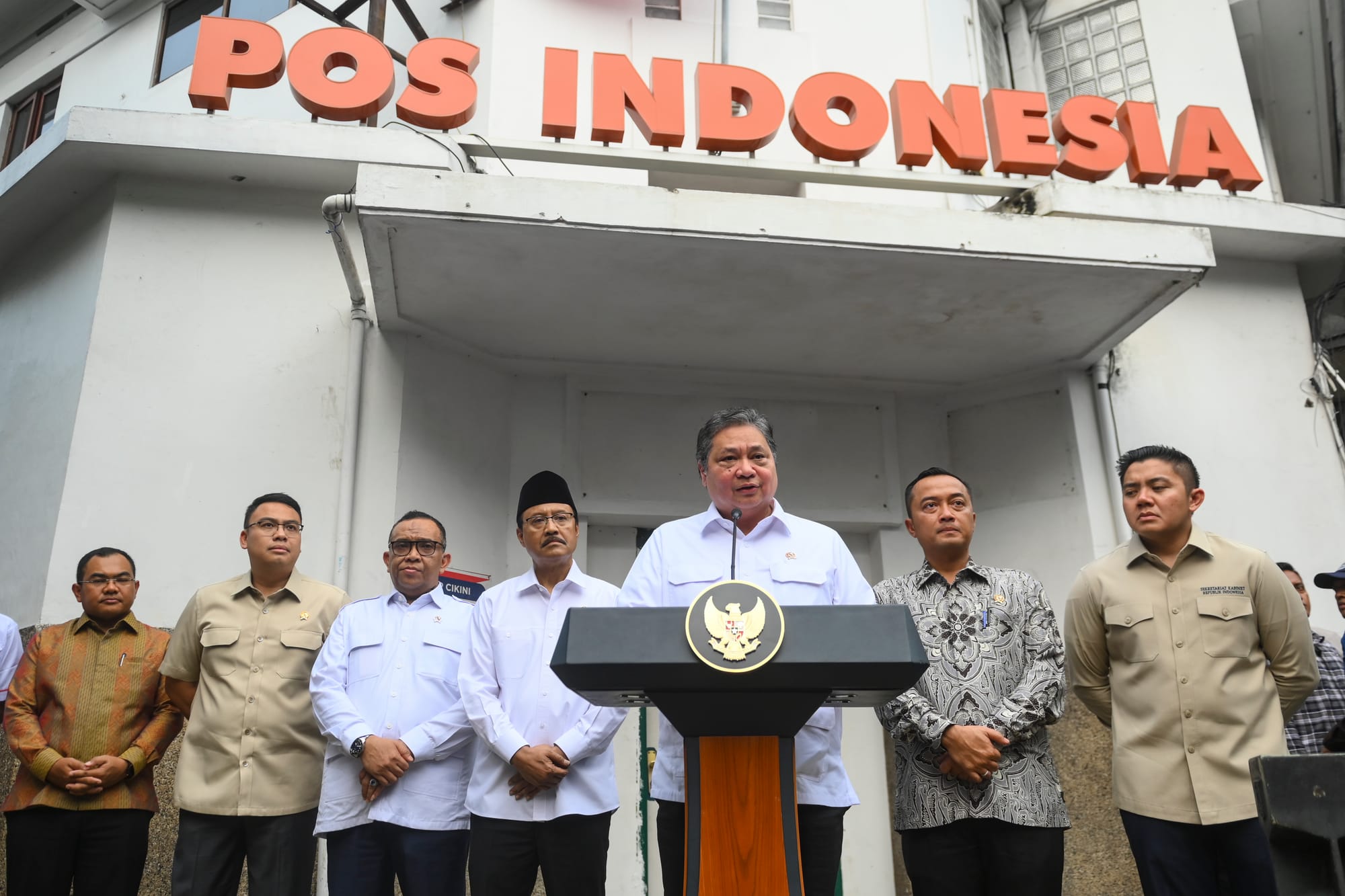
The launch was carried out by Coordinating Minister for the Economy Airlangga Hartarto, accompanied by a number of Red and White Cabinet officials at the Cikini Post Office, Jakarta, Friday (17/10/2025). Minister of Social Affairs Saifullah Yusuf, Minister of State Secretary Prasetyo Hadi, Cabinet Secretary Teddy Indra Wijaya, Deputy Minister of Manpower Afriansyah Noor, and Head of Government Communication Agency Angga Raka Prabowo also accompanied Airlangga on the occasion.
Airlangga stated that the additional BLTS is intended for 35,046,783 beneficiary families, which is expected to reach 140 million recipients with the assumption that one recipient family consists of a father, mother, and two children.
Of these recipients, 18.3 million beneficiaries will receive assistance through Himbara, while 17.2 million recipients through PT Pos Indonesia starting Monday, October 20, 2025.
"Today it will be handed over to 50 people who have never received assistance before. They are categorized in deciles 1-4 based on the National Socio-Economic Single Data, and this additional BLT is in addition to the regular BLT distributed by the Ministry of Social Affairs to 20.88 million beneficiaries every month through the Family Hope Program," Airlangga said.
Complementing Airlangga's statement, Minister of State Secretary Prasetyo Hadi stated that this program is part of the government's efforts to find a way out of the problem of youth unemployment that occurs because work experience is a common requirement to be able to obtain permanent employment.
"If we don't have a breakthrough, younger siblings who are looking for work will not get it and continue to struggle because of the experience requirement. If the job is good, they can also continue to work at the company," Prasetyo said.
For the government, this is not just a work program. It is an economic stimulus as well as a political labor strategy: curbing unemployment, maintaining purchasing power, and accelerating Gen Z's transition to the industrial world.
Salaried internship
The government officially launched the College Graduate Internship Program (Paid Internship) as part of the fourth quarter economic stimulus package 2025. The program is designed not just to provide pocket money, but to open new avenues for young graduates to be better prepared for the formal workforce.
Airlangga Hartarto said that as of mid-October, 1,666 companies had opened 26,181 vacancies, with more than 156 thousand registered applicants.
"The aim is to provide work experience for new graduates, both in the business world, industry, and BUMN. This is to encourage the creation of productive jobs in various sectors," said Airlangga.
The program will run in two batches. The first wave started on October 20 with 20,000 participants, while the second wave is scheduled for next month with an additional 80,000 participants.
Each participant will receive a monthly allowance according to regional standards and social security such as job loss insurance and death insurance (JKM). In addition to experience, apprentices receive a monthly allowance equivalent to the district/city allowance, as well as JKM contributions, without deducting the allowance provided by the government.
"And it does not cut the allowance given by the government," Airlangga added.
Targeting a total of 100,000 participants by the end of 2025, Airlangga said this initiative was a directive from Indonesian President Prabowo Subianto to accelerate the absorption of labor while strengthening the competitiveness of university graduates in the industrial world.
"The aim is to provide work experience for new graduates, fresh graduates, both in the business world, industry, and BUMN, including government agencies and Bank Indonesia," he explained.
Not only the private sector, various universities are also involved in preparing prospective apprentices as well as designing a work curriculum that is in line with industry needs. Among them, the University of Indonesia (UI), Jakarta State University (UNJ), and Pancasila University have declared their participation.
Economically, this step is expected to maintain people's purchasing power amidst a slowdown in domestic consumption. Together with the additional BLT program for 35 million families, the government is targeting a chain effect that strengthens household consumption, especially from the young.
Airlangga hopes that this cross-sector collaboration can trigger the birth of more productive jobs and help young graduates adapt more quickly to the formal workforce.
Voice of the business world
For the business world, this policy is not new, but a continuation of a long effort to bridge the skill gap between campus and industry, which has been running on two different tracks.
Chairman of the Manpower Division of the Indonesian Employers Association (APINDO) Bob Azam, assessed that this program is good because it has been initiated by APINDO since 2016, but it is often unsustainable.
Bob Azam gave an example of an independent apprenticeship that had been carried out in the Nadiem era, although it did need improvement. "The problem in Indonesia is that changing ministers, changing policies. So it's not complete," he told Suar, Sunday (19/10/2025).
Similarly, Shinta Widjaja Kamdani, Chairperson of APINDO views this program as a positive step that should be appreciated. "Apprenticeships help fresh graduates build practical work experience and understand industrial culture," she said in a written statement to Suar, Sunday (19/10/2025).
From a business perspective, companies also benefit from being able to assess workforce potential early on and build a more efficient talent pipeline.
"The short-term effect is that the pocket money and internship activities can also increase the purchasing power of participants and support the economy," Shinta said, explaining the macro effect.
During the six-month apprenticeship, companies can assess participants' technical abilities, work ethic, and suitability to the needs of the organization. "Fairness and relevance are key so that the participants who enter really match the needs of the industry," he said.
However, Shinta emphasized the importance of transparency and protection of participants. According to her, the selection of participants must be competency-based and non-discriminatory. The business world is ready to ensure that apprenticeships run according to the rules, with work safety standards and adequate mentoring. That way, apprenticeships do not turn into a new form of exploitation of young labor.
Even so, APINDO realizes that apprenticeship programs are not the sole solution to the unemployment problem. Apprenticeships are more appropriately viewed as a transitional phase that helps young graduates better prepare to enter the formal job market.
"Nevertheless, the creation of formal employment on a broad scale still requires more fundamental policy support, including the strengthening of the labor-intensive industrial sector," Shinta added.
Going forward, sustainability is key. For businesses, the success of this program is not only measured by how many apprentices, but how many are eventually absorbed into permanent employees. The government is also expected to provide further support in the form of additional training, competency certification, or job placement facilitation.
"Hopefully, apprenticeships do not stop at temporary status, but become an entry point to formal employment," said Shinta.
Read also:
 Gianie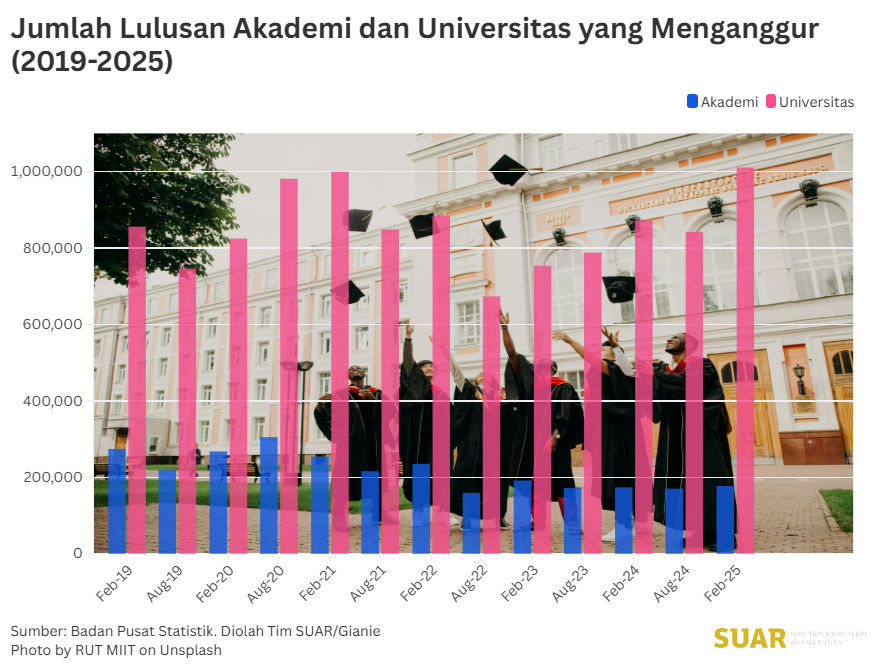
As a strategic partner of the government, APINDO is actively committed to the preparation of technical guidelines, verification of company readiness, and supervision of implementation in the field. Close collaboration between the business world, educational institutions, and the government is believed to be the key to the success of this program.
"If carried out consistently, apprenticeship can be an important instrument to improve the quality of human resources and strengthen Indonesia's economic competitiveness in a sustainable manner," he concluded.
Economist's note
From an economic perspective, this paid internship program has a double potential: reducing youth unemployment while maintaining middle-class consumption.
Economist from the Center of Economic and Law Studies (CELIOS) Nailul Huda said that giving an allowance of IDR 3.3 million per month for six months could be a game changer for Gen Z who have not yet worked.
"This program is able to boost the income of the young middle class who are unemployed. The impact is positive on purchasing power," he told Suar, Sunday (19/10).
According to Huda, the program's advantage lies in its partnership model with direct companies. "With assistance from the government, companies are less likely to bear the cost of internships, so the scale of the program can be expanded," he explained. He considers this approach more effective than certified training, which is often not connected to the real needs of the working world.
However, he also gave signs. "The problem is the sustainability of the job after the internship is over. Is there a guarantee that they will continue working or are companies just looking for new, cheaper interns?" he said. He is worried that some large companies will use this program as a means of fulfilling quotas without a commitment to recruitment.
Huda also highlighted the aspect of fairness. According to him, the government needs to clarify the position of SMK graduates in this scheme. "In fact, the highest unemployment comes from vocational schools that are prepared to work immediately. So they should also be given space," he said.
He reminded the government to be careful in determining the criteria for beneficiary companies, so as not to only benefit large companies close to the center of power.
Even so, Huda still sees an optimistic opportunity. If the government is able to ensure fair company selection, transparent evaluation mechanisms, and well-targeted incentives, then this program could become a new model of stimulus distribution that directly grows labor productivity.
"It's not just about internships, but how to create a fair and sustainable work ecosystem," he concluded.
Read also:
 Tria Dianti
On the other hand, Eko Listiyanto, INDEF economist agrees with Shinta APINDO's view. He believes that the paid apprenticeship program is not yet a structural solution to unemployment. Based on INDEF's records, the number of unemployed graduates is still around one million people. With a target of 100,000 participants, this program has not fully addressed the challenges of the labor market, especially because it is only temporary.
"After the apprenticeship, the participants still have to enter the job market," said Eko. "On the positive side, this policy can help reduce the gap between education and industry needs. But the government's efforts should be greater on increasing real job opportunities."
According to him, the paid internship policy is more appropriately viewed as a short-term solution, providing young graduates with temporary income, work experience, and additional skills that can improve their chances in the workforce. But without the creation of new jobs, this policy will not adequately address the root causes of unemployment.
"Apprenticeship programs can be complementary," Eko continues, "but the government's main obligation remains to create sustainable formal employment."
Even so, Huda still sees an optimistic opportunity. If the government is able to ensure fair company selection, transparent evaluation mechanisms, and targeted incentives, then this program could become a new model of stimulus distribution that directly grows labor productivity. "This is not just about internships, but how to create a fair and sustainable work ecosystem," he concluded.