
In the midst of tight budget efficiency, the government has once again poured ammunition to maintain people's purchasing power and boost economic growth. The economic stimulus package for the fourth quarter of 2025, which was prepared at the direct direction of President Prabowo Subianto, is labeled "8+4".
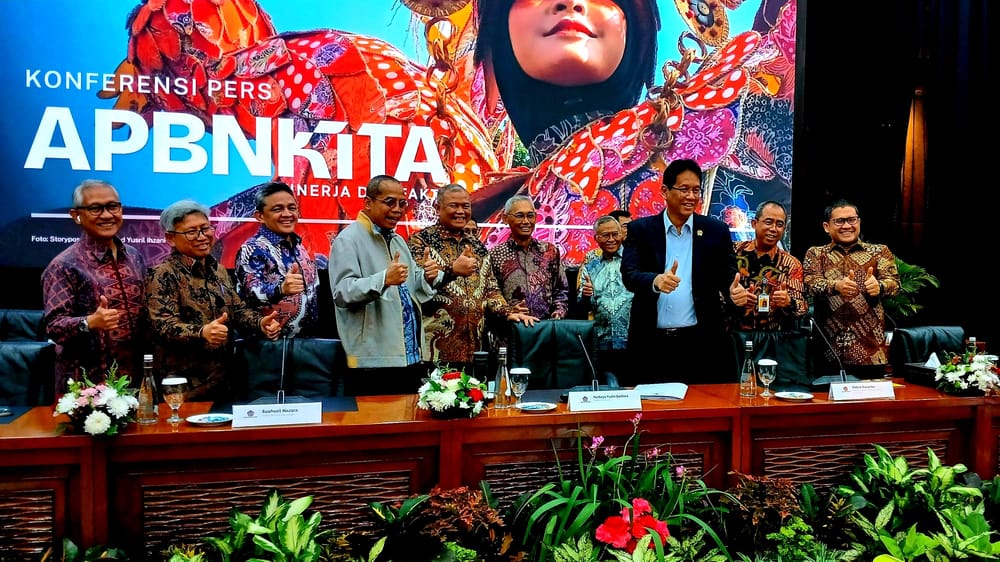
The hope is that this stimulus package will support and accelerate the economy until the end of the year. "The total program is 8 plus 4. So 8 plus 4, yes," said Airlangga Hartanto, Coordinating Minister for Economic Affairs, at the launch of the stimulus package in Jakarta, Friday (12/9/2025).
In a press conference after the first meeting with Finance Minister Purbaya Yudhi Sadewa, Airlangga emphasized that this incentive scheme is being finalized with related ministries.
"This time we discussed it with the Minister of Finance so that the program has prepared a budget post," said Airlangga.
Purbaya added that the government has prepared fiscal space with a budget reallocation strategy. "The budget post can be shifted. We will see which ones are not absorbed until the end of the year, we will shift them to programs that are better prepared," he said.
Contents of the policy package
On paper, the stimulus package designed by the government this time is quite ambitious. The stimulus this time targets a fairly broad spectrum: from student interns, formal workers, to gig workers such as online motorcycle taxi drivers. There are at least six programs that have been revealed by Airlangga:
Although reluctant to mention the exact figures, Airlangga ensured that the budget for all of these programs is available. "Until the end of the year, we will push for everything," he said, as if to dismiss doubts about the country's fiscal capacity.
Fiscal cushion and long-term test
From an expert perspective, Jahen Fachrul Rezki, an economic expert from the Institute for Economic and Community Research at the Faculty of Economics and Business, University of Indonesia (LPEM FEB UI), assesses this stimulus package in terms of fiscal sustainability, the strategy of using unabsorbed funds to finance urgent programs is common.
"As long as it is for the interests and needs of the community and addresses economic problems, I don't think it is a problem," he told SUAR, Friday (14/09) through a written statement.
However, Jahen cautioned that assistance should be clearly differentiated between short-term and long-term. Food aid, for example, is important to maintain household consumption in difficult times. But the government must also ensure that people are not forever dependent on subsidies.
"Indicators that can be seen include household consumption, Consumer Confidence Index, PMI(purchasing managers' index), and credit growth for business activities," he said.
This means that Jahen hopes that this stimulus is not just a matter of covering a temporary lack of purchasing power, but also ensuring a stronger long-term economic foundation.
Need something more fundamental
From an entrepreneur's perspective, Hariyadi Sukamdani, President Director of PT Hotel Sahid Jaya International, believes that the incentives provided by the government - ranging from Income Tax 21 borne by the government (DTP) to food aid - do provide breathing space. Especially, for employees in the hotel, restaurant and cafe (horeka) sector who have recently been under pressure due to the pandemic and declining purchasing power.
According to him, this policy has a direct impact on people's purchasing power because employees can take home a fuller income.
"Usually their salaries are deducted by Income Tax 21, but now it is borne by the government. So they receive the full salary, no deductions. The impact is felt directly in the pockets of workers," he explained.
However, he emphasized that the benefits are felt more at the individual level than the business sector. For the horeka business itself, the impact is still indirect. Hariyadi hopes that the increased purchasing power among employees can be turned into demand for goods and services, which in turn will help drive businesses in related sectors.
"When it comes to the business, the effect is more indirect. What is felt directly is the employees. But if people's purchasing power rises, of course there is a chance that demand will also increase," he said.
Hariyadi added that central fiscal-based stimulus such as Income Tax 21 DTP is indeed limited in scope. More concrete incentives for businesses come from regional tax relaxation, such as hotel and restaurant tax cuts of up to 50 percent. According to him, this policy immediately eases the burden on the company's cash flow, which is struggling to maintain business continuity after economic pressure.
"The central tax is macro in nature. But if it's local taxes, for example discounts for hotels, restaurants, or entertainment, the impact can be directly felt by the company," he said.
He also encouraged the central government to coordinate with local governments, so that the stimulus can be balanced between worker protection and business sustainability.
Furthermore, he believes that the government needs to be bolder in taking structural measures that are truly capable of encouraging demand growth and job creation. Short-term stimulus, such as social assistance, does help people for a moment, but does not have a significant multiplier effect on the economy.
Hariyadi assessed that the government needs to be bolder in taking structural measures that can really encourage demand growth and job creation.
"Social assistance is disposable. Once consumed, it's gone. There is no multiplier effect. But if credit is channeled to the real sector, businesses can grow, absorb labor, and the effect is much wider," he said.
Hariyadi even made a comparison with the transformation of Dubai, which in a few decades was able to transform itself from a "bird of sand" into a global business and tourism center with the courage to build thesupply side through infrastructure, airports, and airlines. He thinks Indonesia needs to take similar lessons.
"Dubai used to have a population of only 800,000. Now it is mostly inhabited by expatriates because they dare to build the supply side. Indonesia with a population of this size should be more advanced. But our economic policies are sometimes too cautious, lots of theory, few breakthroughs," he quipped.
He also highlighted policy inconsistencies, such as in the monetary sector. When the government encourages lending so that the real sector moves, Bank Indonesia tightens interest rates on the grounds of maintaining stability. This condition, according to him, actually makes it more difficult for businesses to access financing.
"Nowadays, getting credit is not easy. The banking situation is very tight. If on the one hand the government encourages credit, but on the other hand monetary is tightened, it is contradictory. Finally, the economy is dragging," Hariyadi said.
With this depressing situation, he believes that government measures must immediately shift from populist policies to fundamental and sustainable policies. Stimulation in the real sector, improving access to credit, and investment that produces a multiplier effect must be prioritized.
"If only Income Tax 21 DTP, yes, the impact is limited. The important thing is that the real sectors can grow, creating jobs. That's how the economy moves," he said.
Stimulus: patch or foundation?
For the business world, especially the labor-intensive manufacturing sector, the digitization of licensing services through OSS (Online Single Submission) is still an unfinished homework.
Although he welcomes the stimulus package, Deputy Chairman of the Indonesian Employers Association (Apindo), Sanny Iskandar, believes that the efficiency of the OSS will determine the future direction of Indonesia's investment, whether new factories can be set up immediately or expansion plans continue to be postponed.
"Improvements to the OSS will be particularly meaningful for the labor-intensive manufacturing industry, as the sector is most sensitive to licensing time and costs," said Sanny Iskandar.
So far, the uncertainty of the licensing process has often made investors hesitant, even choosing to invest in other countries.
According to him, if OSS is really improved, simpler, more transparent, and integrated between ministries as well as between the center and regions, the impact can be felt immediately: labor recruitment starts faster, supply chains run more efficiently, and UMKM are easier to develop their businesses.
But OSS is not the only test. The 8+4 program stimulus package initiated by the government is also considered by Apindo to be effective if it targets the root of the problem. "Economic stimulus will be effective if it is directed to address the fundamental problems of the business world, not just providing momentary incentives," Sanny told SUAR, Sunday (14/9/2025).
According to him, three urgent things need to be addressed: consistent regulatory certainty, cutting logistics and energy costs, and simplifying licensing. Without structural reforms, the stimulus will only be a temporary patch.
"But if the government has the courage to make fundamental reforms, the 8+4 stimulus package can be a momentum to strengthen industrial competitiveness, encourage manufacturing expansion, and create new jobs," he said.
Sanny concluded that for businesses, the success of the OSS stimulus and digitization is not merely about maintaining short-term growth. More than that, it is a big bet: whether Indonesia is able to build a solid foundation for economic sustainability.
Criticism from field workers
Although the government insists that the stimulus package touches freelancers, voices from the field show different urgent needs. Through a written statement, Chairperson of the Indonesian Transportation Workers Union (SPAI), Lily Pujiati, assessed that social protection for platform workers is still half-hearted.
According to her, the government's plan to only bear 50% of BPJS Ketenagakerjaan contributions is not enough. "Social protection must include health insurance, work accident insurance, old age insurance, pension insurance, death insurance, and job loss insurance," Lily told SUAR, Sunday (9/14/2025).
More fundamentally, Lily said, is the certainty of worker status. So far, application companies such as Gojek, Grab, Maxim, and ShopeeFood have argued that they are "partners", so they are not obliged to fulfill workers' rights. "The pretext of partner status is used to avoid obligations. Even though the Ministry of Human Rights has emphasized, it is a form of violation," she said.
SPAI urges President Prabowo to issue a presidential regulation protecting platform workers. Indonesia, said Lily, should follow the example of Singapore and Malaysia, which have passed special regulations for gig workers. "We want decent working conditions and humane wages," she said.