
Sports tourism is a travel agenda that combines sports and tourism activities, where a person travels to a country to participate in or simply watch sporting events such as marathons, soccer, and races.
In Indonesia, sports tourism has enormous potential by combining the country's natural wealth with a variety of exciting sporting events.
One event in Indonesia that has proven successful in attracting foreign tourists and boosting the economy is the Mandalika MotoGP, which has been held in Central Lombok, West Nusa Tenggara, since 2022. The event was developed by InJourney, making it a tourist attraction.
Injourney CEO Maya Watono said that in the future, the tourism sector could become a driving force for the national economy, especially if supported by the presence of sports tourism.
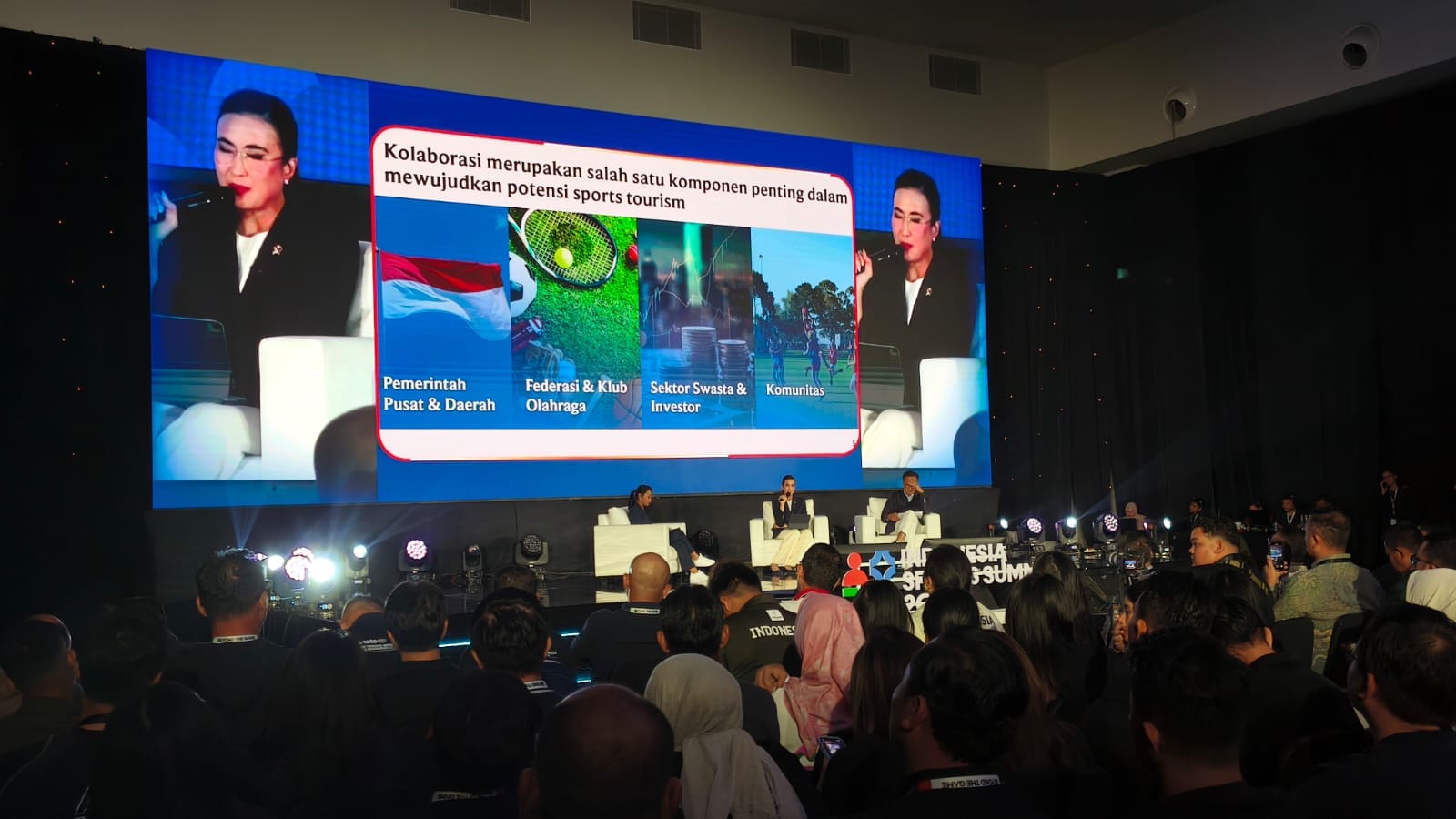
"With sports events like this, it can boost the actual GDP from 4% to 6% and create a tremendous number of jobs," said Maya during the Main Forum of the Indonesia Sport Summit 2025 at Indonesia Arena, Jakarta, Sunday (7/12/2025).
Maya also revealed that the tourism sector, boosted by sports tourism, could create as many as 30 million jobs by 2029.
In one year, InJourney organized 540 sporting events that are sure to attract foreign tourists. Examples of events that successfully attracted thousands to hundreds of visitors include the F1 Powerboat & Aquabike Championship, Pocari Sweat The Run With A View, Borobudur Marathon, and MotoGP Mandalika Series.
MotoGP Mandalika was the most successful in terms of total visitors among the four major events . The sports event was visited by 140,324 visitors and generated an economic impact of Rp4.96 trillion.
"We don't see this as just an event, but also as a catalyst for destination development," he explained.
In addition to MotoGP Mandalika, Borobudur Marathon is also an example of the success of sports events in Indonesia in terms of boosting regional and national economic growth.
" In Magelang Regency, where Borobudur is located, in Borobudur Village, since we carried out the transformation, there has been a significant increase and turnover in the economy and economic growth year-on-year in Magelang Regency, increasing by almost 10% , which is higher than the national average," said Maya.
Indonesia, with its cultural diversity and abundant natural resources, needs to utilize these assets as unique values that other countries do not have when it comes to organizing sporting events. By utilizing these assets, the opportunities for sustainable sports tourism will become even greater, rather than relying solely on international events such as MotoGP that are brought to Indonesia.
All relevant parties need to work together to explore the unique potential offered by Indonesia's nature and its people, so that this uniqueness can be transformed into an international-standard event .
"Of the 540 events, perhaps only a handful are international events that we bring in, while the rest are locally created IP, and this will be sustainable. We have to look at the uniqueness, the targeting, the positioning, the segmentation, between the mass market and special interests," he concluded.
On the same occasion, COO of Danantara Indonesia Donny Oskaria said that there is currently a fundamental change in how people view tourism. According to him, there are several international events that Indonesia needs to respond to in order to drive the economy, ranging from exhibitions, global forums, music concerts , to sports.
"Of all these things, sports have become an extraordinary magnet. Sports tourism is no longer just a private event aimed at boosting the local economy, but has become a national policy in today's world," said Donny.
MotoGP Mandalika is said to have had a significant impact on the economy, for example, hotel occupancy on Lombok Island increased by up to 93% during the race period, and it contributed Rp312 billion to the regional economy in West Nusa Tenggara.
However, Donny highlighted the importance of sustainability in organizing these sporting events. He also explained several models that Indonesia could implement in organizing these international events, so that all relevant parties could work together to promote sports tourism as an economic driver.
"Generally, overseas sports events that require expensive license fees are funded by the state. This happens in Singapore and other countries, where everything is funded by the state because the license fees are high and it is actually the state that benefits from these events , which have many economic multiplier effects ," he said.
There is also a hybrid event organizing model, in which the state intervenes in matters that are large and important, while the private sector acts as the organizer, partners, sponsors , and so on. There is also an organizing model that is carried out purely by the private sector.
"A major event cannot be viewed outside the perspective of the country; ultimately, we will lose the competition. This means that the four pillars must be part of a country's economic growth policy," he said.
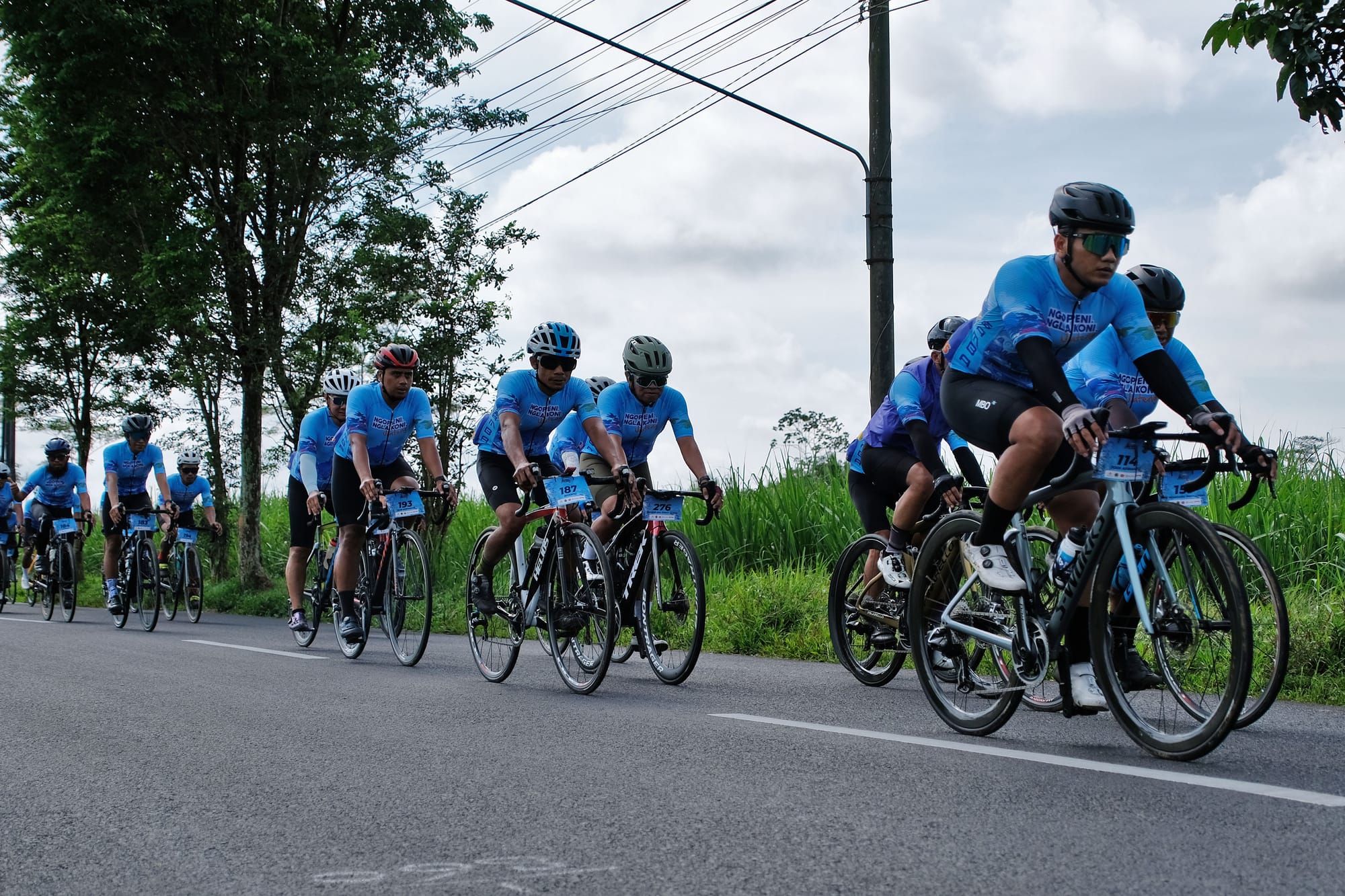
On the one hand, the Indonesian government, through the Ministry of Tourism, the Ministry of Youth and Sports, and other relevant ministries and institutions, is also actively promoting and developing sports tourism as a strategy for economic growth and promoting regional uniqueness.
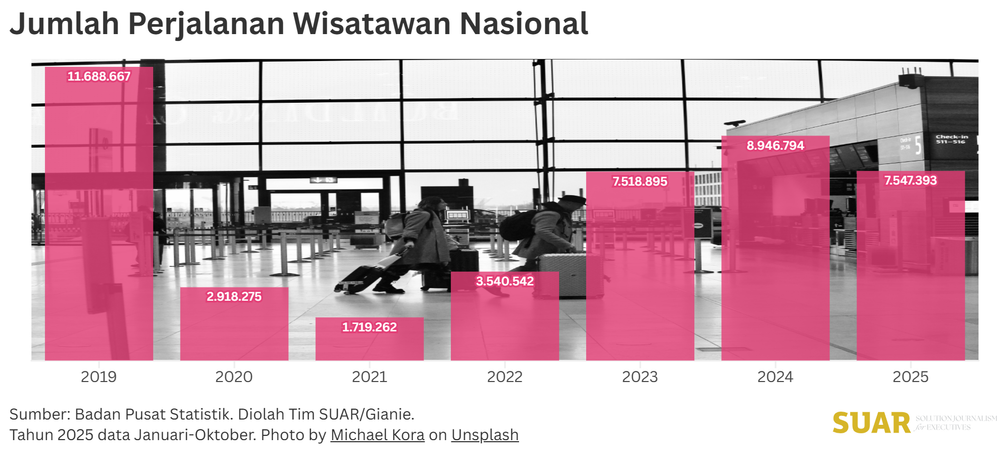
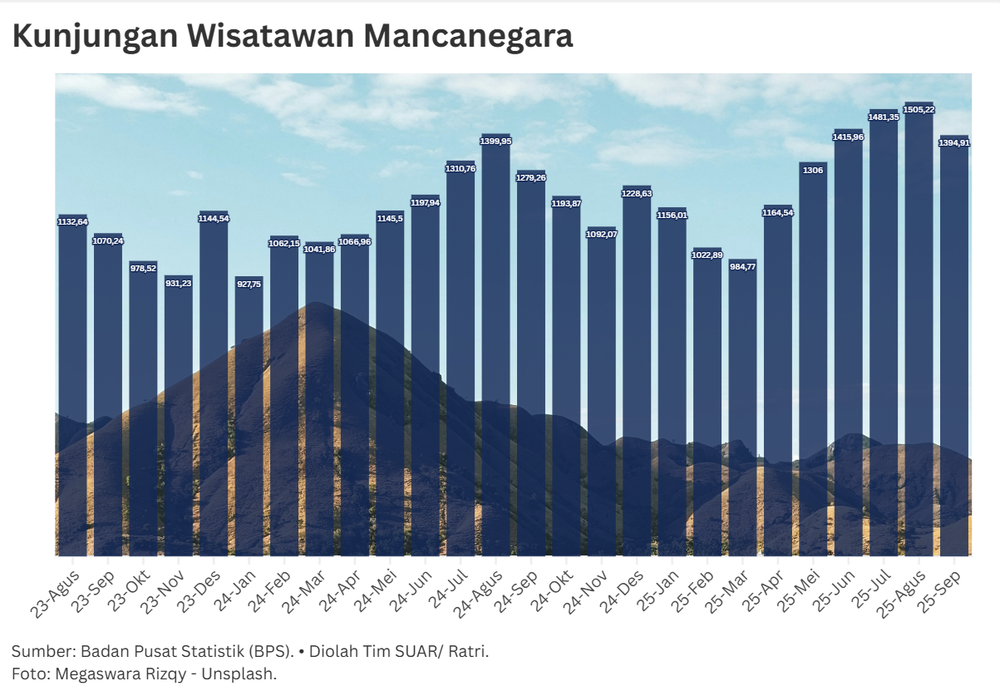
Minister of Tourism Widiyanti Putri said that the national tourism sector continues to show strong growth momentum. By the end of 2025, the number of tourists is projected to increase by 18.89% for domestic tourists and 10.13% for foreign tourists compared to last year. In the national tourism ecosystem, there are many themes and unique aspects that can be developed.
"And one of the most promising areas is sports tourism. Globally, sports have proven to be a very effective magnet for tourism. An Expedia survey found that 44% of travelers are willing to travel abroad to attend sporting events they want to see," said Widiyanti.
The Expedia survey (2025) entitled New Study: How to Win Big with Sport Tourism also mentions that these sports tourists are known as high spenders, with an average expenditure of USD 1,500 per visit.
"That is why Indonesia must move quickly and strategically to take advantage of our sports tourism potential," he continued.
Of all the various sports available, soccer has the most potential to be quickly developed into a sports tourism destination. Moreover, Indonesians' love for this sport is also very high.
"We see successful examples from various countries of soccer-based destinations. Anfield Stadium in Liverpool, for example, has opened stadium tours, a museum, and various other experiences. The results are impressive, with nearly 400,000 visits in 2024, becoming one of the top 10% of global destinations on TripAdvisor and being named the UK's Best Landmark," said Widiyanti.
Currently, the government is also working to transform sports facilities into tourist attractions. Indonesia itself has iconic sports facilities scattered across a number of regions, such as the Harapan Bangsa Stadium in Aceh, the Andi Mattalatta Stadium in Makassar, the Sriwedari Stadium in Solo, and the Gelora Bandung Lautan Api Stadium.
"The Gelora Bandung Lautan Api Stadium in Bandung is being developed into a world-class sports tourism destination through discussions between the Bandung City Government, the West Java Regional Representative Council, and the World Bank," he explained.
Sports events or sports destinations that are packaged in a more attractive way can also become tourist magnets that attract more tourists. One important component in realizing the potential of sports tourism is collaboration between parties.
"Indonesia has a great opportunity to make sports tourism a new economic engine," he concluded.
Meanwhile, Endarman, a sports tourism researcher and academic from the University of Jambi, suggested that Indonesia could leverage its natural and cultural wealth as unique selling points to attract foreign tourists.
"We believe that adventure and nature are suitable for sports tourism, given Indonesia's rich natural and cultural resources. Therefore, we may be able to promote green sports tourism for Indonesia," said Endarman.