
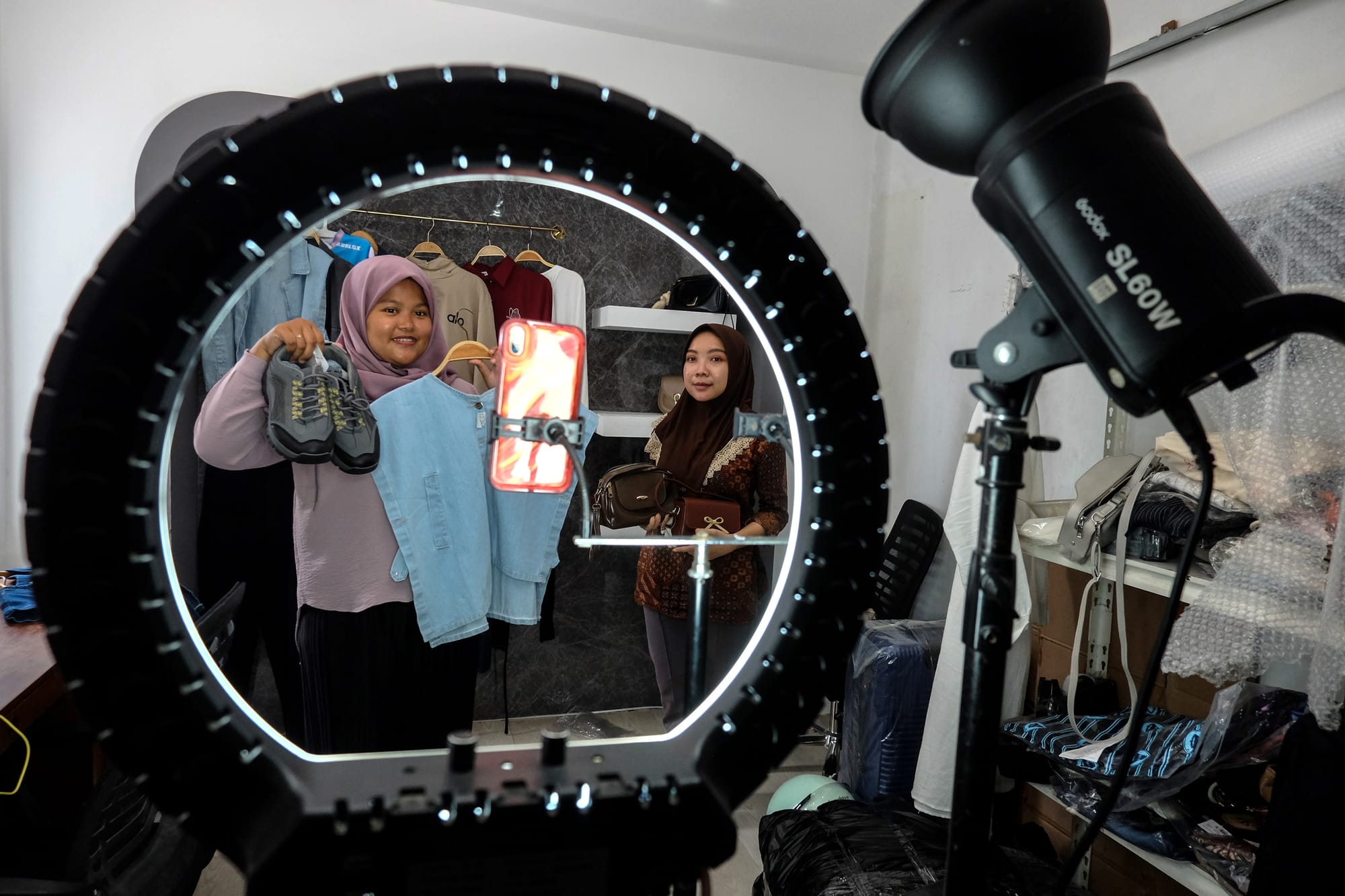
Social commerce is an online buying and selling model that combines social media with e-commerce activities, allowing consumers to view products, interact with sellers, and ultimately make purchases. The consumer shopping experience becomes more personalized and integrated with interactive features such as posting, live streaming, and recommendations from friends or influencers.
In Indonesia, social commerce is very popular. Micro, small, and medium enterprises (UMKM) and even large brands can take advantage of the enormous opportunities offered by social commerce because the costs are lower, interaction with consumers is created, and products can be promoted more quickly through social media content.
In a report titled 2025 Global Insights: How Consumers and Marketers Use Walled Gardens by DoubleVerify, which conducted an in-depth survey of 22,000 consumers and 1,970 global marketers, including Indonesia, it was found that 52% of Indonesian consumers predominantly shop through social commerce.
Theodorus Caniggia, Senior Enterprise Sales Director at DoubleVerify Indonesia, said that Indonesians are a mobile-first society who use devices such as smartphones to carry out their daily digital activities, one of which is shopping.
"Indonesia is a unique mobile-first and social-first market, where walled gardens are the main drivers of the digital economy," said Theodorus in a written statement on Thursday (12/11/2025).
Social media in Indonesia has become a significant transaction channel for consumers. As many as 52% of Indonesian consumers admit to having made purchases on social commerce in the last 12 months, while the average consumer value in the Asia Pacific region is only 40%.
Of the total number of consumers in Indonesia, 38% conduct research before making a purchase, with social media being one of their main research tools. They rely on online reviews ( 64%) and video reviews ( 55%) when searching for information. Social media adoption is also very high, as seen in the survey, with the most frequently used platforms on a weekly basis being YouTube (90%), Instagram (78%), and Facebook (72%).
According to Inventure Managing Partner Yuswohady, businesses can utilize social commerce to market and sell their products. This is because selling on social media is considered more natural without having to resort to hard selling to consumers.
"Social commerce is like selling at a social gathering; it's organic, right? The sales aren't like sales that use promotions or other methods, but rather through the closeness of the people there. With the emergence of social commerce, I think conventional commerce is becoming less relevant, because in social commerce, the community is already established, and the engagementis already established," said Yuswohady on Sunday (12/14/2025).
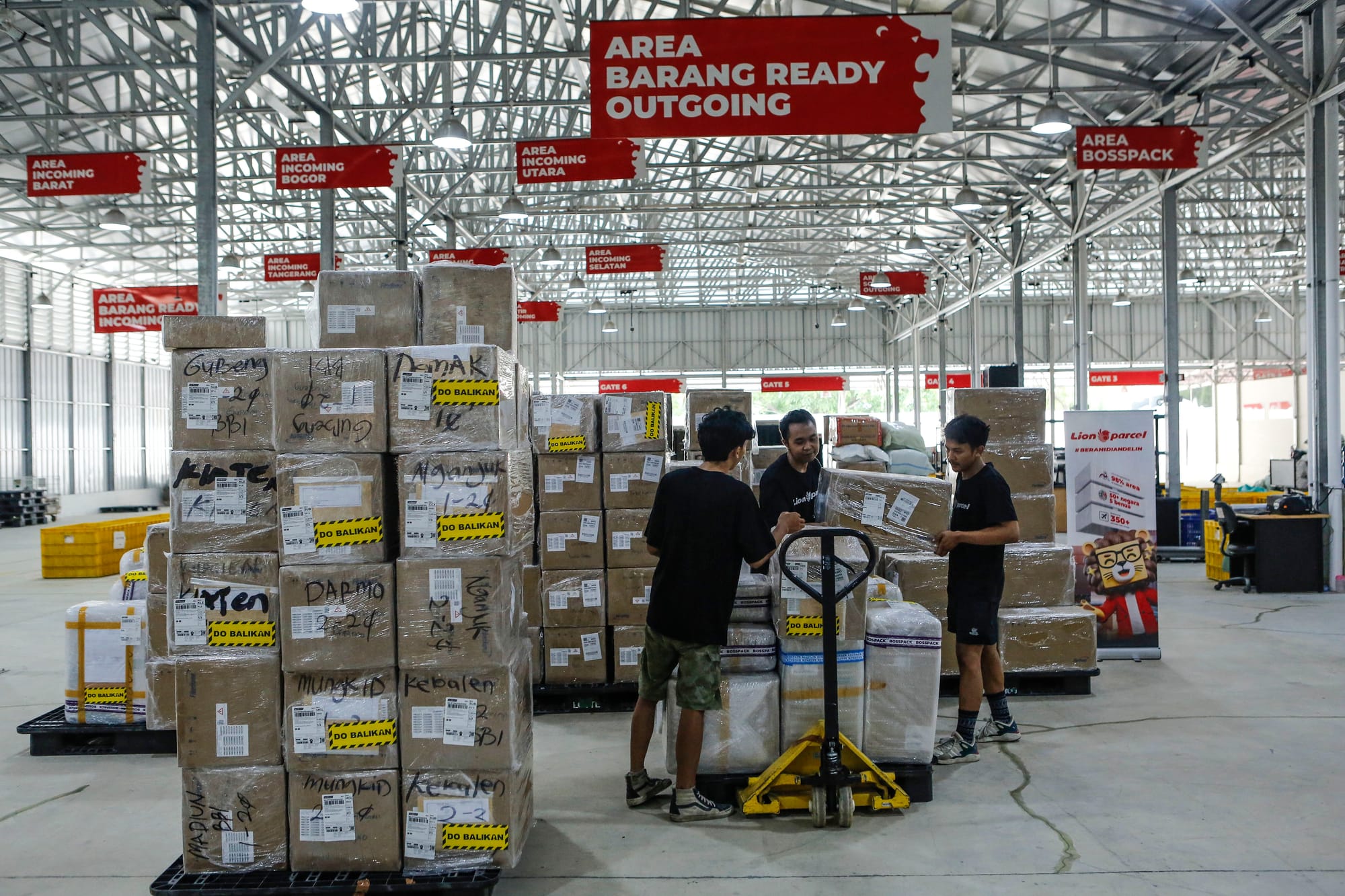
Moreover, many e-commerce businesses are currently feeling burdened by high administrative costs, prompting them to seek other sales channels, one of the most important being social media.
Shopping offline or online has its own advantages and disadvantages. Online shopping offers convenience, a wide variety of products, and comfort for consumers. Meanwhile, when shopping offline, consumers get the opportunity to try out products firsthand and ensure their quality before making a purchase.
Both of these things are considered to complement each other in terms of what is known as the customer journey. One example is that consumers can first conduct research or compare one product with another online, then make the transaction offline.
"People are starting to migrate from offline to online. But eventually there will be a balance where people will use online for a specific step in the purchasing process ," he explained.
Read also:
 Benedictus Krisna Yogatama
Not only UMKM, but companies with well-known brands have also begun to shift to social commerce to market their products more effectively. He explained that social commerce was initially started by small businesses that did not have large capital, so they used social media to advertise without having to spend money on advertising.
"I think it's inevitable that marketing will increasingly be done online, especially through social commerce, because it's highly effective," he said.
The report from DoubleVerify also states that 63% of consumers in Indonesia who make purchases on social commerce admit to being influenced by influencers on social media, ranging from macro influencers who have 100,000 to 1 million followers to mega influencers who have more than 1 million followers on their social media accounts.
In response to these findings, Founder & Chair of MCorp Hermawan Kartajaya believes that advertisers are now starting to utilize influencers who have even fewer followers than that number, because they already have their own communities that can then be used to market a product.
"Now social commerce is shifting again. In the past, people used big influencers , but now they use small ones. It's not influencers with millions of followers who charge a lot, but people with only 500 to 1,000 followers who have a good community. That's community branding, so we make the brand famous in that community," said Hermawan on Sunday (12/14/2025).
Read also:
 Tria Dianti
Business owners are also required to quickly transform their technology and adapt so they don't fall behind in the competition. Hermawan explained that there are a number of mistakes made by entrepreneurs in utilizing social commerce to market their products.
Social media platforms such as YouTube, Facebook, Instagram, and others have different characteristics and segmentations, so marketing a product cannot be done in a one-size-fits-all manner.
"Then when entering social media and live streaming sales, he did not choose the right host whose personality was different from his brand. Then, there was no clear positioning, because marketing is about positioning differentiation branding, so it cannot be ignored," he continued.
Meanwhile, Director of the Digital Economy Center of Economic and Law Studies (Celios) Nailul Huda highlighted the importance of regulations governing social commerce in protecting consumers and business actors to create fairness in the digital economy ecosystem.
The Indonesian government also issued regulations related to Electronic System Trading (PMSE) in 2020, and social commerce was included in the scope of PMSE in Minister of Trade Regulation No. 31 of 2023.
"When the regulations related to PMSE were issued, I already pointed out the potential for transactions to shift from e-commerce to social commerce. By moving to social commerce, these sellers do not have to pay increasingly high administrative fees, but they already have loyal buyers," said Huda on Sunday (12/14/2025).
Through regulations governing marketplaces and social commerce, business competition can become fairer and healthier.
"This is understandable because even though it is widely used, consumer protection in social commerce is also lacking. Sales in social commerce are based solely on the buyer's trust in the seller," he continued.