

The property industry is a business that requires long-term planning. Therefore, the regulations made also need to be long-term oriented. However, according to the former Director-General of Housing at the Ministry of Public Works and Public Housing (PUPR), who now serves as a Principal Expert Building and Settlement Area Manager, Ministry of Public Works (PU), government policies in this sector often appear suddenly and are not formulated in a long-term framework.
According to him, the world of housing cannot be treated like a government project waiting for the availability of the state budget. "This business is a long-term investment," he said. For developers, investment starts from land acquisition, financing, to mapping out potential buyers.
Sudden fluctuations, such as interest rates, regulations, and new discourses, can disrupt the entire cycle. He gave an example, when the government launched the 'free house' discourse at the end of 2024, many prospective buyers stopped the credit process. "People who wanted to take out loans canceled them all, waiting for free houses. That's counterproductive, developers are screaming," he said.
This is the importance of a strategic plan (renstra). This document is not just a plan, but a compass for the government, the market and businesses. Facing the limitations of the state budget, human resources, and control capacity, Iwan said the government must focus on three main roles.
First as a regulator by creating rules that facilitate licensing, investment, and access to housing. "Good regulations make the market confident," he said.
The government also needs to take on the role of facilitator. This role includes technical assistance, interest subsidies, tax breaks, government guarantees for certain projects, and incentives for low-income groups.
In addition, the government needs to involve non-state parties, such as corporate CSR, zakat institutions, and even mass organizations, to help finance people's homes.
The government in this sector can also be an operator. This role is taken if the state has to intervene directly, for example building low-cost flats for the bottom decile of society.
Last but not least, the government in this sector can also be an operator. This role is taken if the state must intervene directly, for example building low-cost flats for the lowest decile communities, special houses for disaster victims, or housing for residents affected by national projects.
But the role of operators is expensive and limited by budget. "That's where the role of facilitation becomes more important," Iwan said.
Challenges do not only come from the demand side
From a developer's point of view, the challenge in providing subsidized houses is not only about purchasing power and mortgage disbursement, but also the overlapping regulations in the land and spatial sectors.
According to Bambang Ekajaya, Vice Chairman of the Central Executive Board of Real Estate Indonesia, the concept of balanced housing, which requires developers to provide a combination of simple, medium, and luxury houses in one area, is almost impossible to implement by developers of subsidized houses.
Limited land prices make this model unrealistic. "Balanced housing is rather difficult to realize, especially regarding subsidized houses or the Housing Financing Liquidity Facility (FLPP). Expansion must be to the periphery because land prices are impossible to reach when near medium or luxury houses," he said.
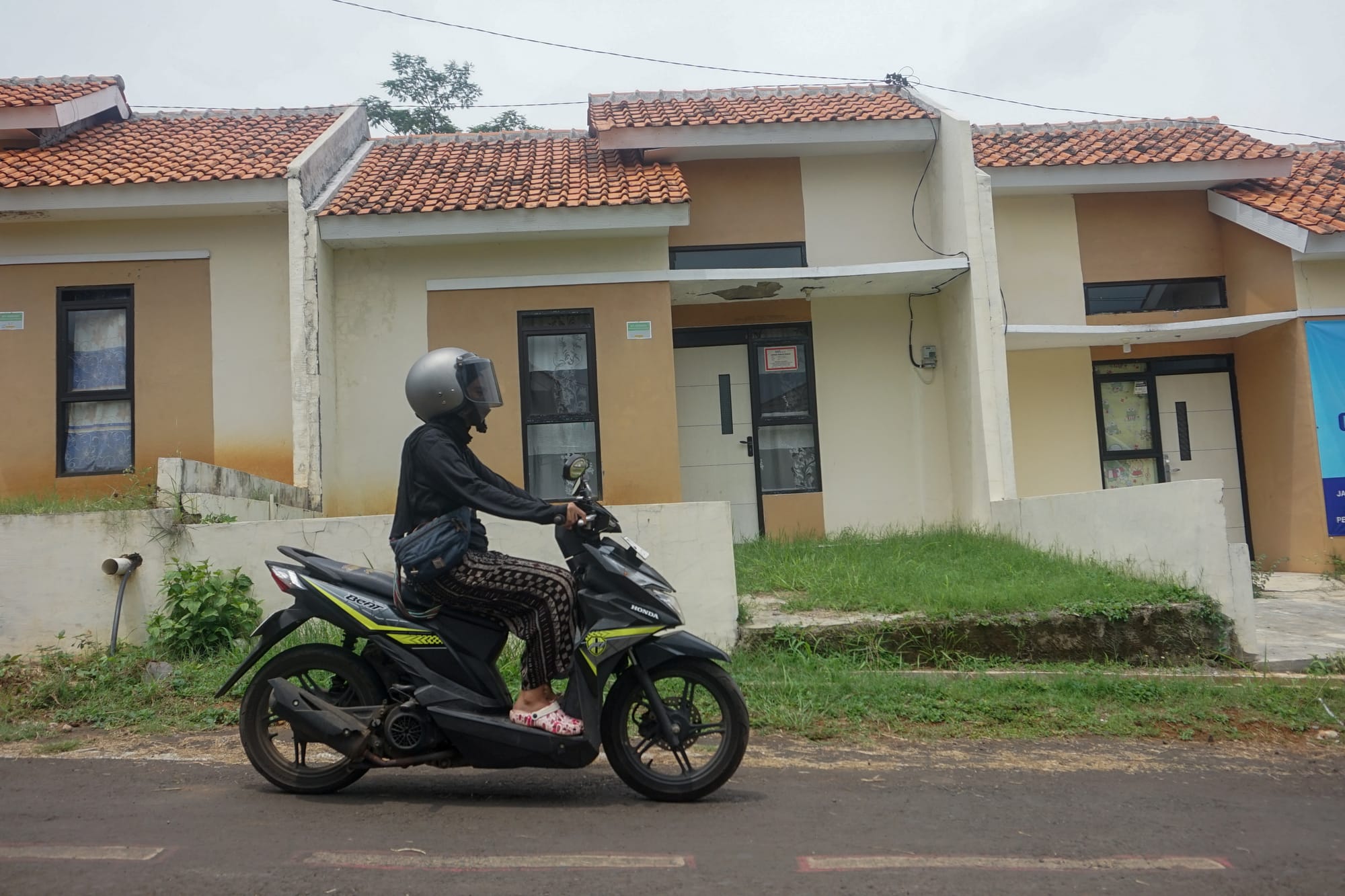
He emphasized that what is most needed now is not the imposition of balanced occupancy, but appreciation for business actors who build subsidized houses. They are the ones who have been fulfilling the basic needs of low-income people (MBR). "What is important is that the government gives appreciation to the developers of subsidized houses, so that people who do not have a house can be fulfilled," he added.
But the problems do not stop there. Many developers are now trapped by changes in area designations, especially related to Protected Rice Fields (LSD). Bambang explained that a number of developers have acquired land according to the RTRW, even obtained permits, built units, and marketed housing. But suddenly the land is classified as LSD, so the process of transferring names and other legalities stagnates at the land office.
"When the land was acquired, it was originally for conversion. But after it was built, the obstacle was that it was plotted to be protected rice fields. Balik Namanya has not been able to run," he said.
Therefore, he hopes that the central government can reorganize regulations more fairly. Developers, according to him, actually increase land productivity by turning unproductive areas into settlements that provide jobs. But with changing regulations, developers seem to be placed as the second party in development policy. "We are still positioned as second-class, even though we are the ones who are struggling, sweating, consolidating to build subsidized houses," he said.
He emphasized that the situation of subsidized housing developers is directly related to the economic growth of the people. The labor recruited is mostly not certified workers, but local people who can be mobilized and trained. This MBR housing development activity, according to him, is one of the important pathways to reduce poverty while providing tax revenue for the state.
Bambang emphasized that the sustainability of FLPP houses must be maintained because this sector directly touches the most basic needs of the community and drives the local economy. "We ask for a solution that is not detrimental, and can build harmony so that this sustainable development continues," he said.
Bambang also highlighted the potential for not achieving the FLPP scheme housing development target. Because until November 2025, development achievements were still stuck below 200 thousand units from the total quota of 350 thousand houses. "We have entered November 2025, the end of the year is only one month away. Our realization has not reached 200 thousand," he said. This condition, according to him, shows the need for acceleration and collaboration between stakeholders.
However, this acceleration is difficult to realize because classic obstacles continue to recur in the field, ranging from licensing to mortgage distribution. Even though the central government has repeatedly expressed a commitment to make things easier. "The other side of the obstacle is the conditions in the field. Stakeholders have not responded quickly and well. The licensing situation is still like the past," said Bambang.
The biggest difficulty arises from the banking sector. He explained that the process should have been simplified but instead became longer. "Instead of reducing the requirements, banks have increased the number of stages from three to 18. This certainly makes it difficult," he explained.
This condition makes people more apathetic, because the reality on the ground is not in line with the policies announced by the central government. "There is no synchronization between the central policy and the realization in the regions," he continued.
Bambang emphasized that the issue of housing fulfillment should not be seen as a mere administrative matter. He reminded that the right to housing is guaranteed by the Constitution. "Housing is based on Article 28H Paragraph 1 of the 1945 Constitution. The need for housing is the responsibility of the state," he said.
He also highlighted the importance of prioritizing MBR and people who really need houses as part of the improvements. "Those who need subsidized houses the most are our people, the original Indonesian people," Bambang said.
The need for policy consistency
Bambang believes that the government needs to be more serious in ensuring consistent policies from the center to the regions. According to him, the recipients of subsidized mortgages are the group most responsible for payment commitments. "Those who have subsidized housing loans will not run away abroad. This house is the foundation and hope of his family," he explained.
In fact, home assets that continue to rise in value will strengthen their motivation to maintain payments. "They will be as committed as possible to carry out their obligations as the realization of their loans," he added.
With development stagnation and administrative bottlenecks piling up, Bambang asked the government again to strengthen regulatory synchronization and accelerate the licensing process and mortgage distribution. He hopes that the subsidized housing program should be made easier, not more difficult.
Bambang also believes that one of the most fundamental problems is the mortgage distribution process by implementing banks, especially within Himbara. At the central level, banks often say that subsidized mortgages are expanded and made easier.
However, the realization in the branches is very different. "Realization at the regional level is not made easier according to the central direction, but instead the selection is added, the requirements are added," said Bambang. As a result, many potential customers became apathetic and chose to postpone their home purchase.
This condition is exacerbated by the phenomenon of rampant online lending (pinjol). People who need quick funds are sometimes trapped by pinjol and then stumble when applying for a mortgage. According to Bambang, the existence of pinjol, which has not been neatly organized in the field, has further reduced people's optimism. He emphasized, "the government wants to straighten out the existence of pinjol, while in the field it is not straight. This is a problem."
On the other hand, developers must face rising construction costs and cash flow constraints due to slow mortgage approvals. The role of developers is not only to provide houses, but also to create jobs and drive the local economy. If the mortgage is smooth, the developer absorbs labor, rotates the economy of the surrounding warung business, and provides tax revenue for the region. But when lending goes bad, the entire economic chain is blocked.
"Developers can always provide bargaining power when people have difficulty finding work," said Bambang. In addition, economic stretching also arises from the activities of UMKM around housing, such as street stalls, food traders, and building service providers. All of this will grow if the absorption of mortgages runs normally.
Bambang also reminded that the contribution of the housing sector to state and local revenues is not small. Income tax, VAT, BPHTB, and PNBP are attached to every housing transaction. When mortgage disbursement is hampered, government revenues also decline.
Seeing these conditions, Bambang emphasized consistent policies between levels of government. He hopes that the central government will not only issue policies, but ensure that their implementation is strictly adhered to down to the bank branch level.
This synchronization is important so that people are again optimistic about buying a house and developers can maintain business sustainability. "If the financial circulation is stagnant, of course it will become an obstacle to local economic growth," he said.
Machines that are not working optimally
Member of the Housing and Settlement Research Group of the Bandung Institute of Technology (ITB) Mohammad Jehansyah Siregar believes that the current property ecosystem is on the side of poor quality and relies too much on speculation. The housing sector, which dominates the national property market, has veered too far away from its original purpose, fulfilling residential needs, and is busier serving investment flows.
Jehansyah believes that the main engine of settlement development is also not working as it should. The government's housing program, especially through the Ministry of Housing and Settlement Areas, is considered too hostage to subsidy schemes such as FLPP. "FLPP is a finance ministry program. The Ministry of PKP should strengthen the settlement system: structuring slums, improving riverbanks, providing ready-to-build areas, and controlling urban development," he said.
This lack of integrated settlement system development leads to supply issues. The supply of upper-middle income housing remains abundant, but the needs of the lower-middle income group are neglected. On the other hand, many people still live on riverbanks or are forced to live far from their workplaces because there are no affordable housing options near activity centers.
This housing gap has widespread consequences. In addition to widening the social divide, it triggers environmental stress and encourages the growth of slums. The property slowdown also has a domino effect on the construction industry, building materials, and the financial services sector. "If left unchecked, the risk could spread to macroprudential stability," said Jehansyah.
He emphasized that the solution is not just to increase incentives or subsidies, but to improve the foundation of the housing and settlement sector. The government, according to him, needs to re-position the public sector as the main driver of urban planning, infrastructure integration, and new area development.
Citizen empowerment, for example through community-based self-help housing bodies, is also an important element to ensure inclusive development.
Jehansyah refers to the practice of developed countries that maximize the role of SOEs and BUMDs in providing large-scale ready-to-build areas. The model opens up space for small developers, cooperatives, and local associations to get involved, creating a more equitable and just ecosystem. "If the foundation is strong and the ecosystem is healthy, the property sector will never die," he said.
Dian Amalia