
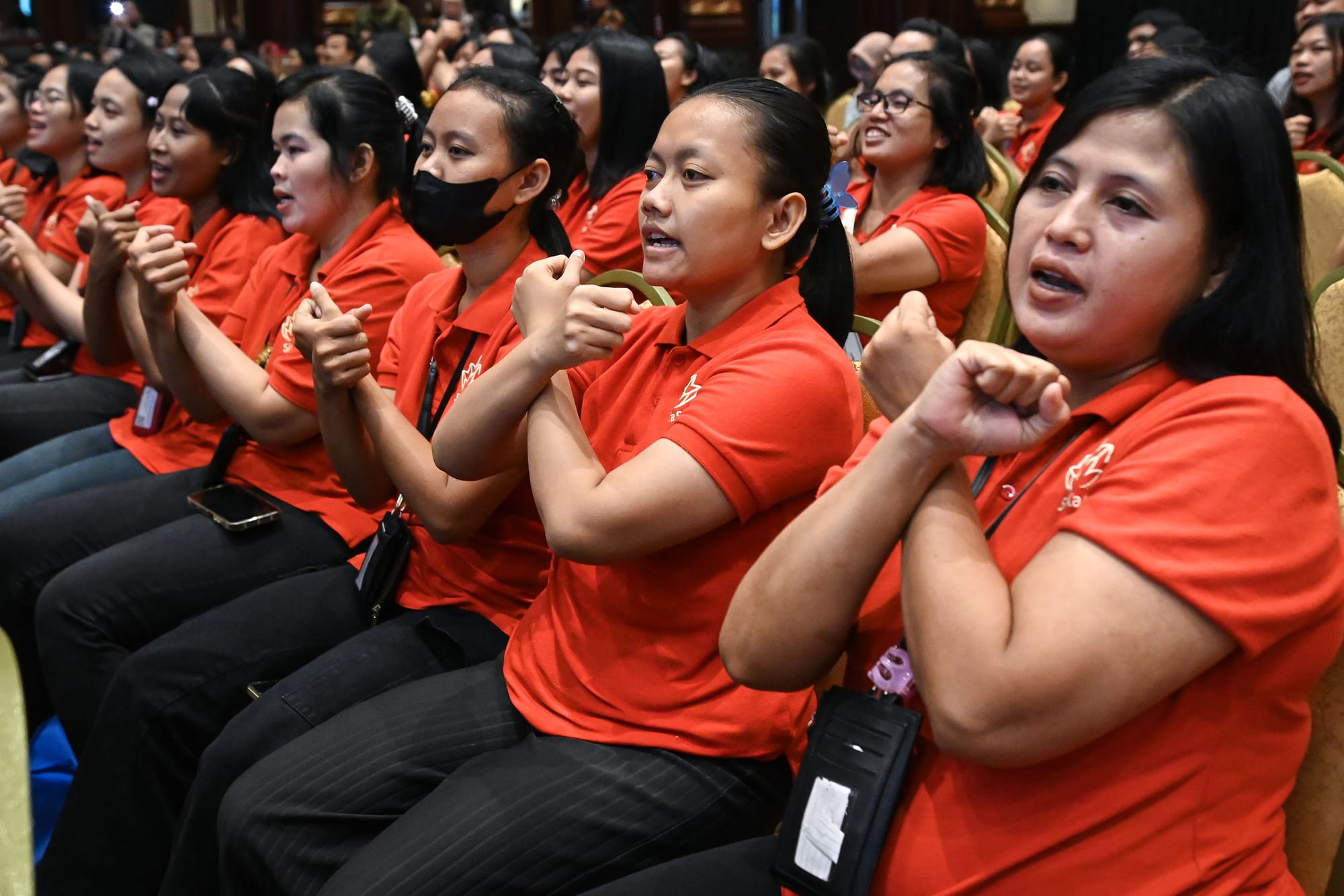
Amidst a shortage of domestic job vacancies, there is a huge demand forcaregiver labor from Singapore. It is no wonder that vocational training institutions (LPK) are now busy providing language provisions, work skills training, and cultural insights into prospective destination countries, so that prospective migrant workers are ready to become qualified caregiver workers.
Cica, an employee of PT Assalam Karya Manunggal, said that training is the main capital that Indonesian migrant workers must do before they work abroad. Understandably, some countries set the standardization of migrant workers according to their needs. Hence, workers must be given training so that they are not surprised.
Examples of training that the training institution teaches to workers are the language and culture of the destination country, communication training and adaptation in the work and social environment. For job skills, the training is in accordance with the job to be undertaken, for example, domestic assistants, factory operators, or other sectors.
"We also inform them about regulations and laws as well as all information regarding the rights and obligations of migrant workers in the destination country," Cica told SUAR in Jakarta (27/9/2025).
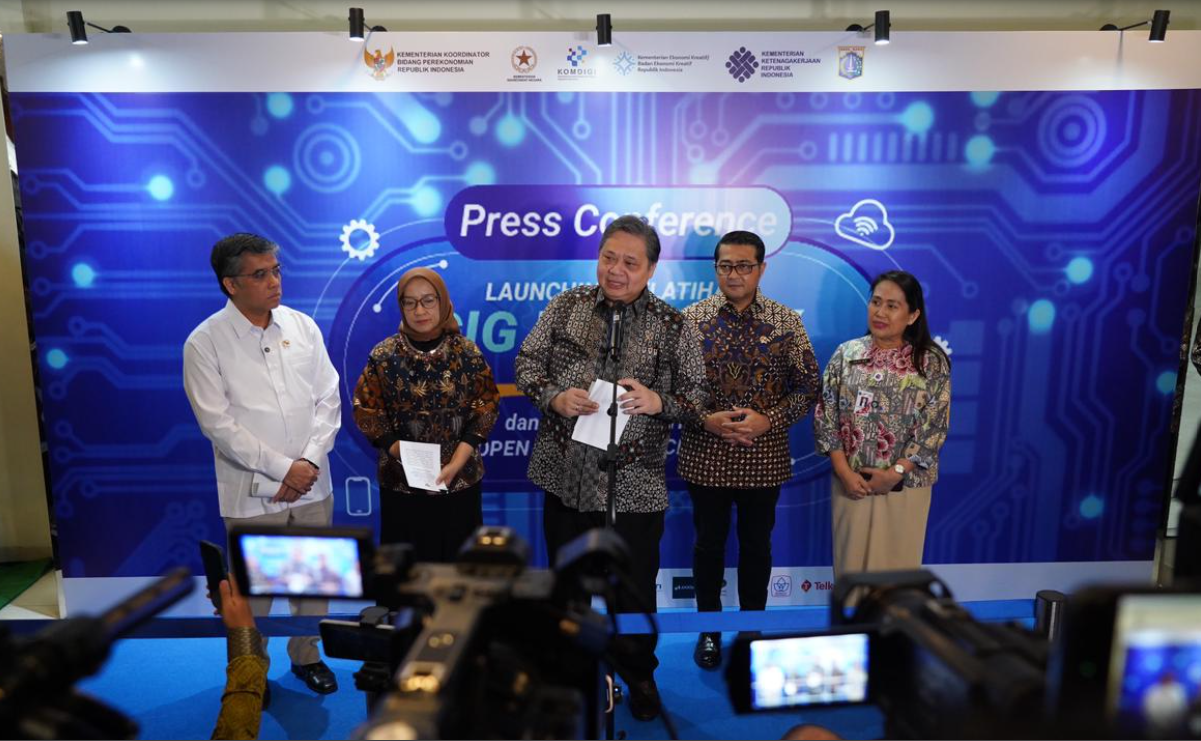
To ensure that prospective migrant workers are well-equipped ashigh skilled labor, Deputy Minister for the Protection of Indonesian Migrant Workers (Wamen P2MI), Christina Aryani, visited the Vocational and Productivity Training Center (BBPVP) in Bekasi, West Java, on Tuesday (23/9/2025).
Christina's visit was in preparation for a pilot project to placecaregivers in Singapore, for which training will begin this week.
"Our purpose in coming is to ensure the readiness of the training facilities for prospective caregivers who will be dispatched to Singapore. They will undergo basic training here, then continue on the job training before being placed in Singapore," he said after the review.
Christina explained that this pilot project is the first step in measuring market response as well as public interest in the caregiver placement scheme. Moreover, she said, the interest of applicants is very high to date.
"So far it has been very positive, there have been more than a thousand applicants. Of course, they will go through a strict selection process to match the criteria for needs in Singapore," he explained.
The selection process, Christina continued, will be conducted in an integrated manner by a team from the Ministry of P2MI together with the Ministry of Women's Empowerment and Child Protection (KemenPPPA). In the future, this program will not stop at the pilot project, but will continue and expand.
"Hopefully, Indonesia can prepare professional caregivers who are not only competent, but also protected from the beginning of the placement process," added the Golkar Party politician.
At the same time, the Head of BBPVP Bekasi Yose Rizal welcomed the implementation of this caregiver pilot project, as it would be the first experience for the training center that he leads.
"For us, this is a first experience that expands the scope of vocational and productivity training services. This program is a great opportunity as well as a positive contribution for the Indonesian workforce to fill the overseas job market," he concluded.
In addition to reviewing the preparations for caregiver training, Deputy Minister Christina also toured several language training classes at BBPVP Bekasi. Such as to the Japanese language class, ICT generate AI class, ICT smart social media class, Panasonic Laboratory, Cherry Automotive Laboratory, caregiver class, and Japanese apprenticeship class.
Executive Director of the Institute for Development of Economics and Finance (Indef) Esther Sri Astuti said, one of the main provisions that Indonesian migrant workers must have before leaving is the ability to speak foreign languages, especially English as a universal language.
Migrant workers need to master basic English to communicate easily, as most of the countries they work in are Hong Kong, Taiwan, Singapore. These countries use English as their daily language.
"LPK must teach good and correct language skills, at least they understand English even though they are not fluent," Esther told SUAR in Jakarta (27/9).
Esther added that besides improving the skills of workers, the main function of LPK is to provide information on the world of work. LPK can provide accurate information about career opportunities in various sectors.
Another important factor is that the government must protect and regulate the standardization of Indonesian migrant workers. The goal is that they can work calmly and safely in other countries, and get legal protection.
Boosting the economy
One of the conclusions of the Roundtable Decision: The Economic Power of Indonesian Migrant Workers held by Suar.id, last Thursday (18/9/2025), in Jakarta, is that the potential of Indonesian migrant workers (PMI) is greater than efforts to alleviate unemployment.
PMI can be directed to become an agent of Indonesia's economic development because it has the potential to attract investment and transfer technology. One of the efforts that can be made is to continue to improve skills and improve the governance of the ecosystem.
Read also:
 Benedictus Krisna Yogatama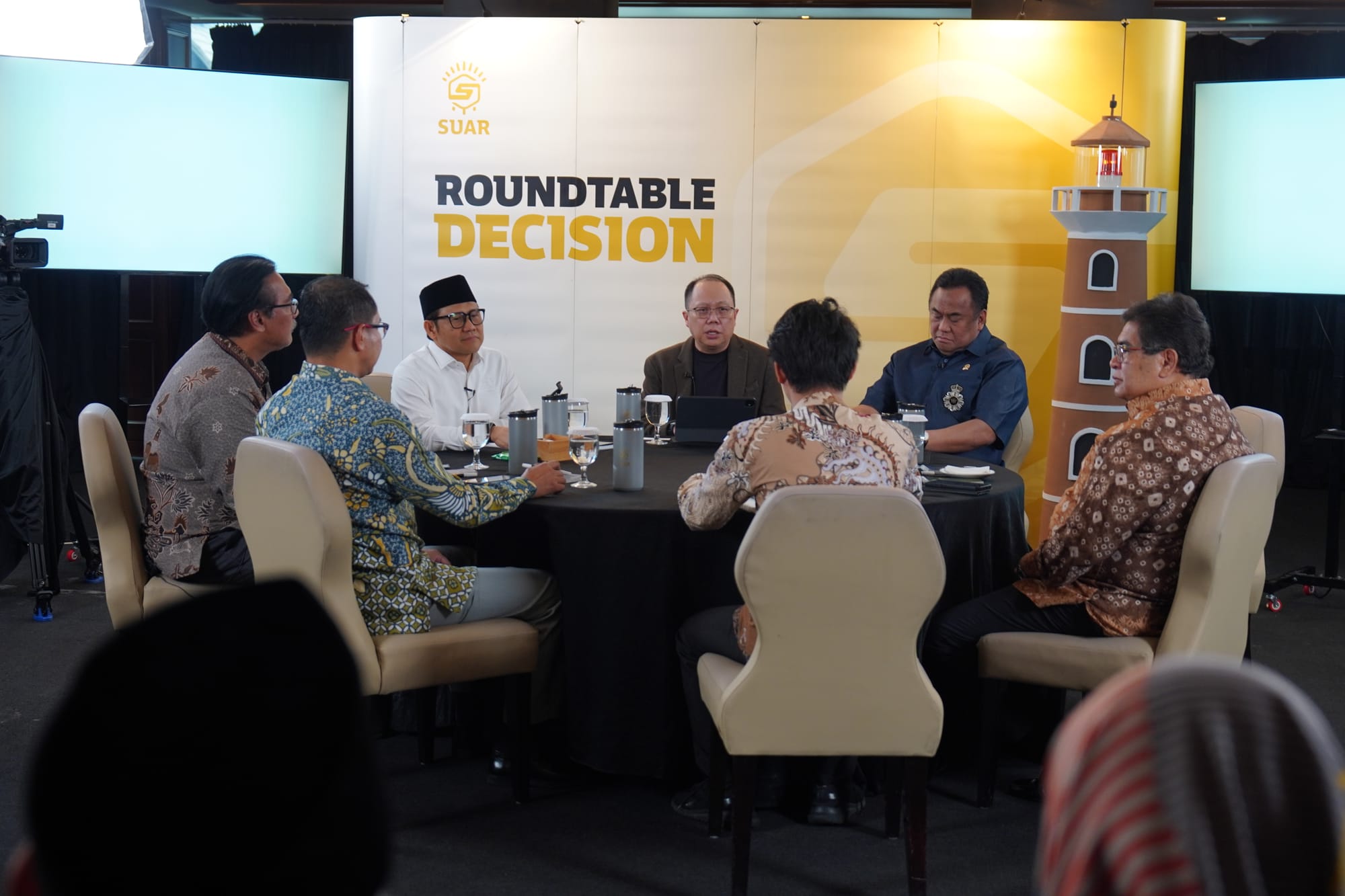
Member of the House of Representatives & Chairman of Panasonic Gobel Rachmat Gobel said that the issue of migrant workers cannot be seen as limited to answering the problem of labor absorption. "PMI must also be seen as agents of development. So that when they return, they can participate in turning the wheels of the economy," he said.
This can be started by opening access to scholarships, for example through schemes such as LPDP, to help workers obtain specified skilled work (SSW) certificates. In addition, Rachmat believes that there needs to be a special LPK that focuses on preparing PMI. This way, vocational students and university students who aspire to work abroad not only have access to financing, but also know that there are suitable training institutions.
Dwi Setiawan Susanto, an official at the Ministry of Protection of Indonesian Migrant Workers (P2MI), stated that the number of jobs available abroad is relatively high. Referring to SiskoP2MI data, in 2024, there were 297,000 jobs. According to him, this shows the great potential of the labor market abroad.
He gave the example of departure to Japan. In the last 5 years alone, there are 850,000 jobs available.
"The challenge is how we can take that opportunity, to link and match prospective migrant workers with job needs in placement countries," he said.
Coordinating Minister for Community Empowerment Muhaimin Iskandar confirmed Dwi's explanation. According to him, improving the skills of prospective migrant workers can be done with systemic interventions. This can be started by including the qualifications needed by migrant workers in the learning curriculum at vocational schools, vocational training institutions (LPK), and universities.
Watch the video:
Muhaimin said, for language skills, not all vocational schools require foreign language skills. As a result, we are lagging behind the Philippines, which requires students to be proficient in English.
"This work must be completed immediately so that once the market is known, the curriculum can be truly aligned with the needs," Muhaimin said.
Muhaimin added that another important effort is to map the aspirations of vocational and university students who wish to work abroad. In this way, preparations can be made early as well as identifying the needs in the destination country that match the skills of prospective migrant workers.