
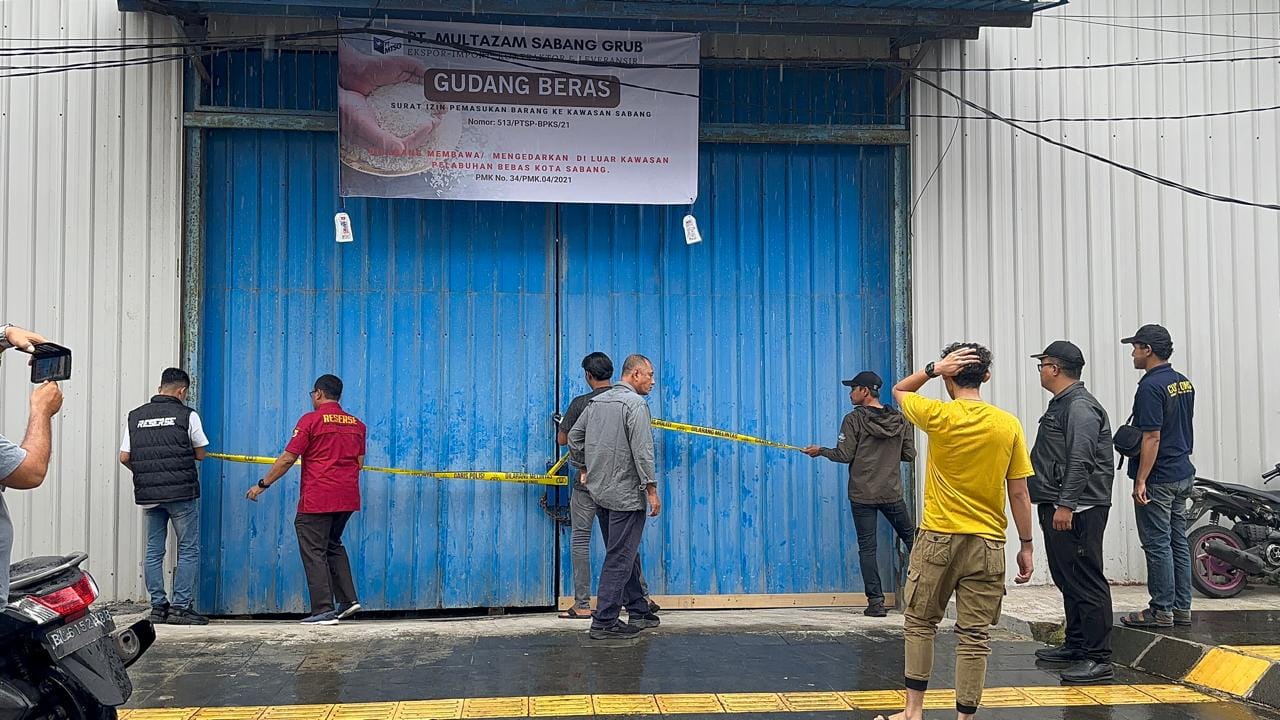
The government and law enforcement officials uncovered 250 tons of illegal rice from Thailand that entered without permission through Sabang, Aceh. Together with law enforcement officials, the government officially sealed the warehouse of PT Multazam Sabang Group, the company that reportedly imported without a central government permit.
Minister of Agriculture Andi Amran Sulaiman explained that he received the report on Sunday (23/11/2025) afternoon at around 2pm. After the investigation, he immediately coordinated with the Aceh Police Chief, the Head of the Police Criminal Investigation Agency (Kabareskrim), and the Commander of the Iskandar Muda Military Region (Pangdam) to stop the activities at the location.
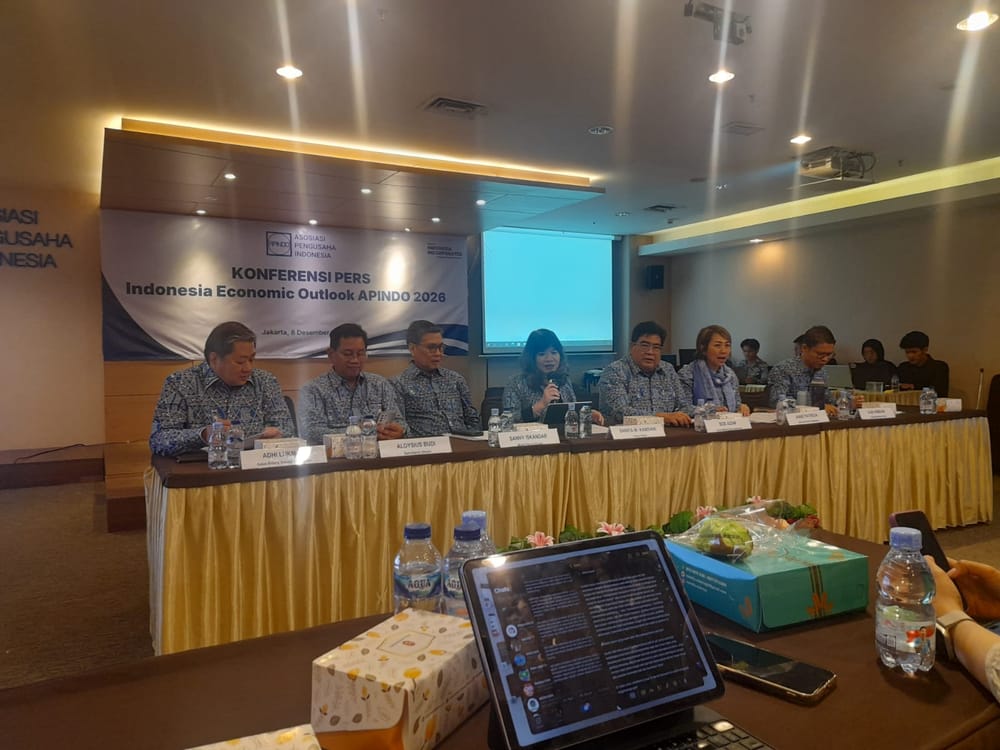
"Around 2 o'clock we received a report that there was rice entering Sabang, 250 tons without permission from the center, without central approval. We immediately called the Kapolda, then the Kabareskrim, then the Pangdam. It was immediately sealed. We ordered the rice not to be released," Amran said at a press conference in Jakarta on Sunday (23/11/2025).
He emphasized that the sealing was accompanied by instructions to trace the parties involved in the illegal rice entry. "That we seal it and we ask to trace who the perpetrators are," he said.
Amran revealed that this is an indication of import planning done without the basis of government approval.
"The meeting is on the 14th in Jakarta, but the permit from Thailand has already been issued. This means that this has been planned, indeed it has been planned," said Minister Amran.
He emphasized that according to President Prabowo Subianto's directive, the government will not open the import tap because the national stock is sufficient, once touching 4.2 million tons and currently around 3.8 million tons.
"The President has said that there should be no imports because we have plenty of stock," he said.
In addition to the sealing in Sabang, Amran received initial reports regarding the alleged rice imports in other locations.
"We moved quickly and sealed, not releasing rice that entered Indonesia, to Sabang. In fact, we also received reports that there were allegations that rice had entered Batam. But that cannot be confirmed," he said.
Post-harvest infrastructure development
On a separate occasion, Perum BULOG responded quickly to the government's plan to build 100 post-harvest infrastructure (IPP) spread across Indonesia by conducting initial coordination with BUMN Karya.
President Director of Perum BULOG Ahmad Rizal Ramdhani emphasized the importance of inter-SOE synergy to ensure the project runs quickly, precisely, and with quality.
The construction of 100 IPPs includes rice and corn storage warehouses, dryer facilities, milling units (RMUs), silos, and Rice to Rice (RTR) based on modern technology. The program is supported by IDR 5 trillion in funding from non-permanent government investment funds.
"We are mandated by the President to build 100 post-harvest infrastructures in response to the increasing national food production. BULOG cannot work alone. We need the collaboration of BUMN Karya so that this development runs fast and on target," he said in a press release received by SUAR in Jakarta (21/11).
Rizal added that this project is not just about infrastructure, but about food sovereignty and access justice for all parts of Indonesia, including the 3T (frontier, outermost, and remote) areas.
Previously, a Joint Decree was signed by Minister of Agriculture and Head of the National Food Agency Andi Amran Sulaiman, Minister of Home Affairs Muhammad Tito Karnavian, Secretary General of the Ministry of Finance Heru Pambudi, and Head of the SOE Regulatory Agency Dony Oskaria, with the support of Coordinating Minister for Food Zulkifli Hasan.
Perum BULOG is taking strategic steps to protect and empower more than 160,000 small-scale rice mills in Indonesia and is a key focus for monitoring.
"Small rice mills are the heart of our food security. Those who sustain food security at the grassroots level should not be crushed by unfair competition and limited access," Rizal said.
Benefits of Sustainable Agriculture Practices
IPB Agricultural Analyst Dwi Andreas said the benefits of sustainable agricultural practices are extensive and impact farmers, the environment and consumers.
The benefits for farmers are increased income, production costs can fall due to reduced use of chemical fertilizers and pesticides, so that farmers get greater economic benefits.
Farmers become more independent by utilizing local resources, such as processing waste into compost or animal feed.
Environmental benefits include reduced fossil fuel use and increased carbon sequestration by plants, which contributes to climate change mitigation.
"Reducing water and energy use, and preventing soil degradation through good land management," he told SUAR in Jakarta (21/11).
The benefit for the community and consumers is to produce safer and higher quality agricultural products due to the minimal use of harmful chemicals.