

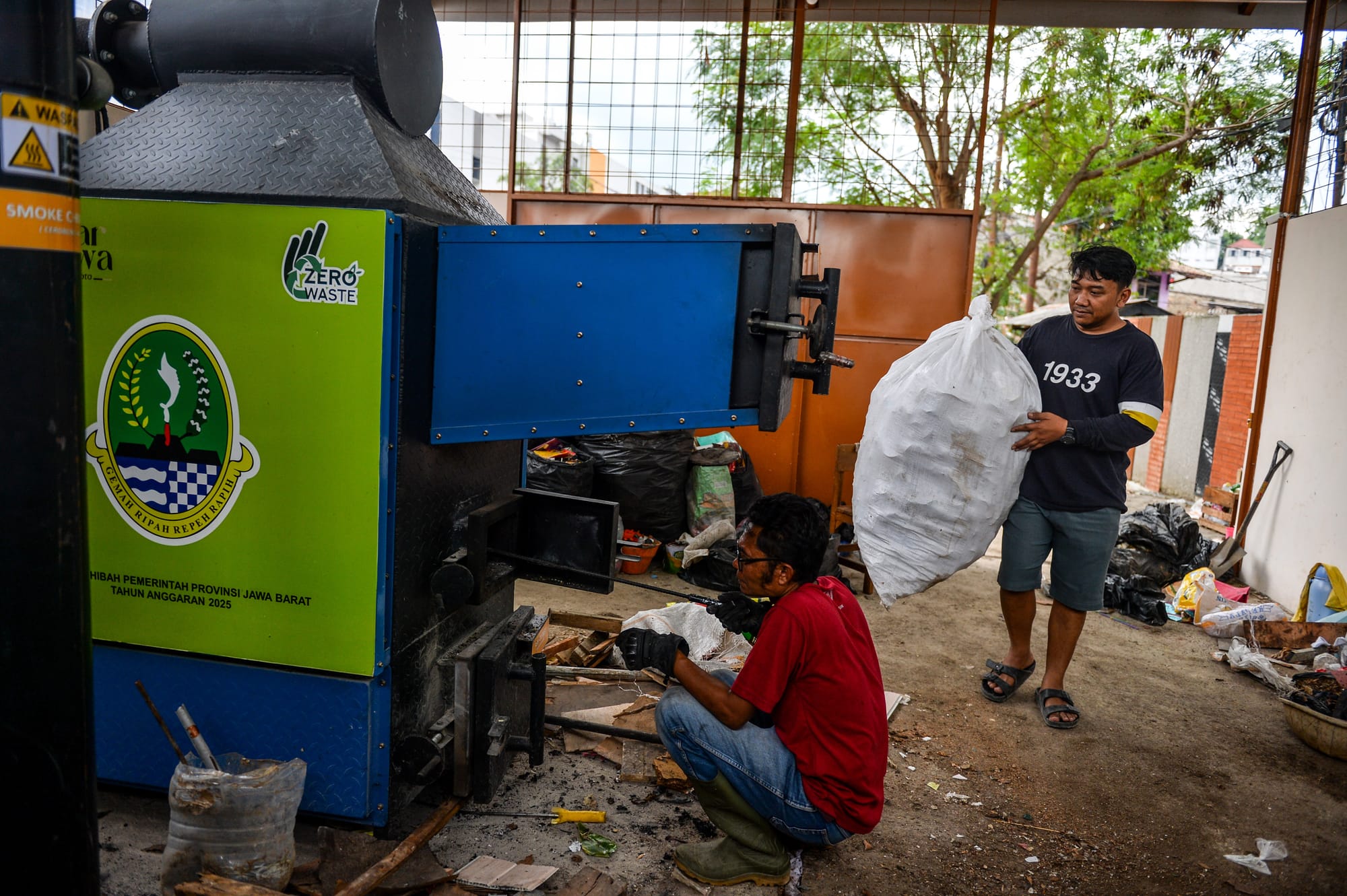
Waste is no longer just a matter of odors and piles, but has the potential for trillions in investment from the business of processing new energy sources. Through the waste to energy (WTE) project, or processing waste into electricity, Indonesia plans to build similar facilities in 33 cities. The initial phase will start in 10 major cities, including Jakarta, Bandung, Yogyakarta, Semarang, Surabaya, Bali, and Makassar.
The CEO of the Investment Management Agency (BPI) Daya Anagata Nusantara (Danantara), Rosan Roeslani, said that the total investment for this project could reach Rp91 trillion. This figure is calculated from the needs of each city, which on average produces one thousand tons of waste per day. But in some areas, the processing capacity can be much greater.
"The total investment is estimated to be around Rp91 trillion for 33 regions. But because in some cities the volume of waste is higher, the value can increase," Rosan said on the sidelines of the Indonesia International Sustainability Forum (ISF) at the Jakarta Convention Center, Friday (10/10/2025).
One Waste to Electrical Energy Processing (PSEL) facility requires an investment of around Rp2-3 trillion and is capable of processing up to 1,000 tons of waste per day. In Jakarta, for example, the processing potential can reach three to four points due to the high volume of waste.
"Jakarta produces around 8,000 tons of waste per day. If there is no significant change, the pile could reach 55 million tons, equivalent to 16,500 football fields," said Rosan.
Through this massive project, Danantara aims to change the way major cities manage waste, while opening up new energy markets in the waste management sector. But despite the size of the investment, challenges remain: ensuring this capital-intensive project not only generates electricity, but also a sustainable business model amidst fluctuating energy prices and the complexity of urban infrastructure.
Energy from Waste Business
The concept of waste to energy (WTE) is not new. In Europe, this technology has long been used to convert solid waste into thermal energy or electricity, a model that promises double efficiency: reducing landfills while increasing the supply of non-fossil electricity. Indonesia is now trying to follow suit with the District Waste to Energy (DTE) project, a public-private partnership. Danantara, as the government's energy investment manager, is tasked with overseeing this project.
However, behind the jargon of energy transition and green economy, WTE projects are not just about electricity. "I see DTE as a waste solution, not an energy solution," said energy analyst from the Institute for Essential Services Reform (IESR), Fabby Tumiwa, when contacted. "We are currently in a waste emergency. Almost all landfills in big cities are full, from Jakarta to Semarang. So, it's more about reducing the stockpiles that are already in crisis."
According to Fabby, the government's approach to burning waste and converting it into heat energy makes sense, but is expensive. "Burning waste is high cost. But because from that process we get heat that can drive turbines, the concept of waste to energy was born," he explains. In other words, electricity is just a by-product of the main mission: destroying waste.
On paper, WTE can look promising. But on the ground, it's much more complicated than just "burn it and make electricity." The volume of waste collected must be stable to maintain energy supply. Then, the electricity generated must also have a long-term buyer, and that is usually only PLN. "If electricity is generated, someone has to buy it. If PLN is told to choose, they will definitely prefer refuse derived fuel (RDF) because it can be a substitute for coal at a more reasonable price," Fabby said.
Another classic problem is price. The government previously set a maximum WTE electricity purchase price of 13 cents per kWh with an additional tipping fee of Rp500 thousand per ton for local governments. However, many local governments were unable to pay the fee, making it difficult for WTE projects to proceed. Now, through the latest revision of the Government Regulation, the purchase price of electricity from WTE is set to rise to 20 cents per kWh, without the tipping fee. "With that price, it should be attractive enough for investors," Fabby said.
However, in terms of energy, WTE's contribution to the national electricity mix is still small. With an average capacity of only 18-25 megawatts per site and a total potential of around 400 MW, this project will not shift the dominance of coal, which reaches tens of gigawatts. "If you want to talk about energy transition, this is a very small portion. This is a waste project, not a strategic energy project," said Fabby.
He believes that WTE should be seen as a medium-term solution, 15 to 20 years in the future. After that, if circular economy policies and waste reduction from the source are effective, the supply of waste that can be burned will actually decrease. "If waste management (3R) gets better, it will be difficult to meet the thousand tons per day. Don't let us end up importing waste," he said, half-jokingly.
Thus, for him, WTE projects are not a shortcut to green energy transition, but a realistic response to the municipal waste emergency. But still, how this project is managed, from price certainty, investment schemes, to upstream waste management, will determine whether Indonesia truly gets the double benefit of waste: clean cities and sustainable energy.