Accelerating the placement of competent or skilled migrant workers is discussed as a solution to reduce unemployment in the country. The government is serious about training as well as advocating for protection, including before departure to after return.
Three times, Jiati has tried her luck in a foreign country. She first went to Taiwan, 26 years ago. Domestic problems and economic difficulties forced her to look for opportunities elsewhere. Seeing many of her neighbors leaving to become migrant workers, Jiati was convinced to go abroad.
He is determined to improve his family's economy. "I'm only an elementary school graduate, it's hard to find work here. I'm just a housewife," said the 46-year-old woman.
Jiati's first departure to Taiwan was facilitated by PT Asri Cipta Tenaga Karya. At that place, Jiati's daily life was filled with routine exercises every morning, learning Taiwanese, and learning technical skills. Jiati learned many skills, from cooking, cleaning, ironing, tidying up the bedroom like in a hotel, to how to push a wheelchair.
"I practiced carrying too. How to lift from the front. Then other practices such as pushing a wheelchair. For example, on a downhill road, I have to be in front. I have to walk backwards so that the wheelchair can be held," he said.
To learn these skills, Jiati found no significant difficulties. The challenge came when Jiati learned Taiwanese. She was not familiar with the language at all. Not to mention, "most of us who want to go have a lot of problems, our minds must be complicated," she said with a chuckle.
The rules set by PT Asri Cipta Tenaga Karya for prospective migrant workers are relatively strict. Prospective migrant workers are not allowed to leave the company environment. "For example, there is someone who already has a husband, then she goes home for a while. When she returned to PT again, it turned out that she was pregnant. PT loses, especially if the visa has been released and an employer has been found," said Jiati.
This was the most difficult moment for Jiati while she was at PT Asri Cipta Tenaga Karya, separated from her family. That's why Jiati is so happy when her family comes to visit her on weekends. Usually they will spend the whole day, eating together, while gossiping.
The Sweet and Bitter Life Line of Migrant Workers
Jiati had her next happiest moment: getting a job. After studying and waiting for 2 months, an employer in Taiwan finally chose Jiati. At first, Jiati was promised to work as a caregiver.

However, when the contract was presented to her, Jiati only worked at a food stall. She also only received a salary of around NT $15,470. Jiati said that this was against the rules of Taiwan. At that time, foreign workers were not allowed to work outside the household sector. Employers caught violating the rule will be fined up to NT$300,000.
But he just agreed. "At that time I didn't understand. In my mind, the important thing was to leave quickly," she said. If any local authorities asked Jiati, she had to claim to work as a nurse for the elderly and children. Jiati left for Taiwan and arrived in Taoyuan, a satellite city that has now developed into a metropolis like the capital Taipei.
Jiati works while hiding her real job. Every time a customer at the warung asked her a question, she would claim to be a caregiver. Practically, the caregiver skills that Jiati learned in Malang were not used at all.
After a year and a half of working, a journalist who often ate at the stall where Jiati worked offered her an interview. Jiati was thrilled. "I wanted to be interviewed because I thought it would be watched by my family in Malang. I can send my regards," said the woman from Ngantang, Malang. The interview was conducted when Jiati's employer was not at the stall.
Unfortunately, the interview brought bad luck to Jiati. The interview was aired on national TV. Jiati's employer's neighbor who watched the broadcast immediately reported it to Jiati's employer. The employer then panicked. Jiati was immediately secured on the spot.
In the evening, Jiati was asked to pack by her employer. Someone picked Jiati up from her employer's house and took her somewhere else for a 5-hour journey. "I arrived at a shophouse. I don't remember what place it was," she said. Jiati was asked to wait in the shophouse until she got the next instruction.
However, Jiati felt uncomfortable. Being in an unknown location made Jiati anxious. She called her employer's son and wanted to return home. The employer's son, after reporting to his parents, allowed Jiati to go home. "I immediately looked for the nearest bus station," she said.
Arriving at the employer's house, Jiati no longer worked at the shop. For about four days, she stayed at her employer's house. Until finally, a decision had to be made. Jiati was fired. She was asked to pack up all her belongings.

Jiati's own employer took her directly to the airport. There, her employer paid for all of Jiati's rights, including buying her a plane ticket. "My employer was crying," said Jiati.
Jiati said that her first experience working abroad was very memorable. She had good employers and never once experienced discriminatory treatment. Therefore, she felt sad when she had to part with her employer.
"I don't have an appetite for food because the stall keeps getting smoked. My employer bought me fruit so I could eat. He always takes me on trips. I joined him for a warm bath during his vacation. He also bought me things. Our relationship is like parents and children," she said.
Jiati returned to Malang and went back to PT Asri Cipta Tenaga Karya. She returned to her routine as a CPMI: learning foreign languages such as Mandarin, honing her skills, while hoping to find a job soon. It took six months for Jiati to get another chance to work abroad. Jiati went on to work in Hong Kong as a pediatric nurse with a salary of around HK$4,450.
Jiati returned to her routine as a CPMI: learning foreign languages such as Mandarin, honing her skills, while hoping to find a job soon.
However, what Jiati experienced in Hong Kong was 180 degrees different from that in Taiwan. Jiati often received discriminatory treatment from her employer. When lulling the employer's child, Jiati was not allowed to sit on the bed. She was asked to sit on the floor. In terms of eating too. Jiati was not allowed to eat with her employer at the same table. "In Taiwan, I eat at the same table as my employer," she said in comparison.
The discriminatory treatment didn't stop there. In the first three months, Jiati could only get 2 days off a month. In fact, the rules in Hong Kong require workers to take a vacation every week.
Not to mention the little things that to Jiati seem trivial, but can trigger the employer's anger. When she mopped the floor and her employer found a strand of hair left behind, Jiati was scolded again and asked to mop again. "My employer is sadistic," she said.
Every day, Jiati was required to make a written report on all the work she had done. Every time she submitted a report to her employer, she was almost always scolded. Her employer was always looking for flaws in what Jiati had done.
"My employer was overprotective of her son," Jiati says. "I must always be on time. For example, if I drop my children off at school at 9 o'clock, I have to report at 9 o'clock. No less, no more. The same goes when I go home. If he asks me to be home by 2, I have to be there by 2. He's like a stressed person. I don't know why."
Jiati even received verbal death threats. The child in her care was referred to as the family heir, and Jiati was warned that she would be held fully accountable if anything happened. "You will be killed if anything happens!" said Jiati, imitating her employer's words.
No doubt, Jiati was depressed. She was mentally broken. Every night after work, Jiati would cry alone in her bedroom. "Every time I read a letter from my family in Malang and see a picture of my children, I would cry," she said.
Jiati was depressed. She was mentally broken. Every night after work, Jiati would cry alone in her bedroom.
After seven months of working in such a situation, Jiati was fired. To date, Jiati does not know the reason for her dismissal. Jiati's rights as a victim of layoffs were also not fulfilled. Jiati immediately packed her belongings and went to meet her fellow migrant workers in Hong Kong under the Indonesia Migrant Workers Union (IMWU).
Jiati shared her case with IMWU. "They were willing to assist me," says Jiati. During the negotiation process, Jiati learned about organizing and workers' rights. After two months of negotiations, Jiati's employer finally agreed to pay all her rights.
Jiati is without a job again. She doesn't want to return to Indonesia yet. Jiati still wants to stay in Hong Kong looking for work. However, this is not possible because Jiati must have a stock of money to survive in Hong Kong. Jiati was forced to return to Malang.
Embracing a New Life
In Malang, armed with the knowledge she gained during her process with IMWU, Jiati asked PT Asri Cipta Tenaga Karya for the insurance money she was entitled to as a layoff victim. Jiati was accompanied by a man from the Indonesian Migrant Workers Defense Consortium (KOPBUMI). The process was not complicated.
PT Asri Cipta Tenaga Karya immediately paid Jiati's insurance money. Then, the man who accompanied her married her.
After returning from Hong Kong, Jiati did not actively seek work abroad. She has been active in migrant labor issues. Together with fellow migrant workers, Jiati initiated the establishment of the Malang Migrant Workers Movement (Gemilang). This movement later became an organ of the Indonesian Migrant Workers Union (SBMI), and changed its name to SBMI Malang Branch Management Council (DPC). Jiati briefly served as chairperson.
Not only in Malang, Jiati is also active at the provincial and national levels. She was once the chairperson of the SBMI East Java Regional Executive Board. During that period, Jiati said, she often traveled back and forth to Jakarta. "Accompanying migrant workers who are in trouble."
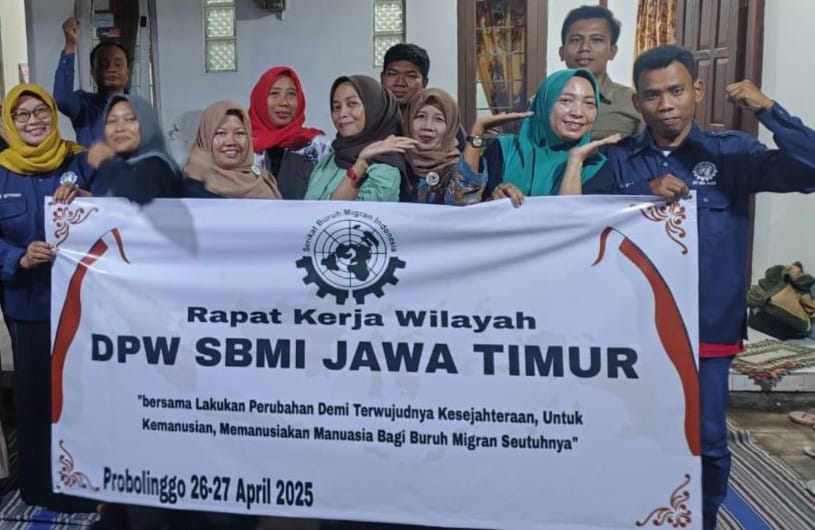
In addition to actively accompanying and advocating cases against migrant workers, Jiati also actively conducts educational and organizing work. Starting from understanding labor rights to efforts to be economically independent. One of them, Jiati initiated the establishment of a special cooperative for migrant workers in Malang, Koperasi TKI Purna Jaya Makmur. "Initially it was a savings and loan cooperative. Now we have a store," she said.
For almost two decades Jiati was a labor activist. He left that activism after he was regularized in his organization, which made him return to his village. "I raise cattle and open a motorcycle repair shop," he said. Unfortunately, the COVID pandemic broke out. Jiati's economy slumped again. His workshop was closed. "COVID makes everything difficult. Not to mention my cattle got foot and mouth disease," he said.
To keep the kitchen smoky, Jiati made the decision to return overseas. She took advantage of her network of fellow migrant workers in Taiwan. "I called some friends there. I asked them to help me, please find a job for me," she said.
Good news came. Her friend managed to find a job for Jiati. She would work as a caregiver. She immediately took care of all the necessities to return to Taiwan. This time the process was a bit different. If previously Jiati came first to the placement company, studied, then waited for an employer, now it's the other way around. The agency in Taiwan chose the company for Jiati. She was sent by PT Defita Bersaudara.
Unfortunately, Jiati could not fly directly to Taiwan. Due to the COVID pandemic, the Taiwanese government is still banning the arrival of tourists and migrant workers. Jiati had to wait for a year.
Jiati only arrived at PT Defita Bersaudara two months before her departure. There, she went back to the routine she had done 26 years ago. "At first I was a bit embarrassed because I've often spoken everywhere. And now I want to be a migrant worker again. But what else can I do?" she said. Because she is a former migrant worker, Jiati not only participates in learning, but is also often asked to help teach other prospective workers there.
Jiati has been working for three years now in Yunlin, Taiwan. She takes care of a 95-year-old elder and lives with him and three of his family members. There are no significant obstacles during Jiati's work.
Her employer's character is the same as her first employer in Taoyuan. "I was already considered part of their family."
In this new place, Jiati again feels the warmth of togetherness. She eats at the same table with her employer. She no longer receives discriminatory treatment. Again, she is always invited on family vacations. Jiati feels at home in her job. "I no longer worry about being nagged every day," said Jiati, who said she was vacationing with her employer's family in Taipei.

Jiati has just extended her contract for 3 years. As of October 2025, her salary will increase: from NT$20,000 per year to NT$24,500 per year. "I have bought another cow in Malang. I hope to make a profit," he said.
If Jiati has succeeded in a foreign country, Juhro from Indramayu is still struggling to get to her placement country. This 23-year-old woman had worked as a garment worker for a year in Majalengka.
She decided to change her fate and applied to become a migrant worker through PT Sentosakarya Aditama in Indramayu. Juhro was trained at the company for two months before leaving for the head office in Bekasi. At the head office, Juhro spent six months. Both in Indramayu and Bekasi, Juhro did relatively the same thing on a daily basis: learning languages and skills in accordance with the chosen job. He is about to leave for Taiwan.
At PT Sentosakarya Aditama, Juhro said, there are three jobs that prospective Indonesian migrant workers (CPMIs) like herself can choose from: caring for their parents, working in a factory, and becoming a domestic helper. Juhro chose the latter.

After 6 months at the head office, on July 14, along with 4 other people from Cilacap and Indramayu, Juhro will leave to work in Taiwan. "Some have been with their employers for only a month, while others take longer. It depends on our fortune," he said.
By working in Taiwan, Juhro will earn much more money than working in Indonesia. When she was a domestic worker in Bekasi, Juhro's salary was Rp2 million. In Taiwan, Juhro earns five times more. "About 10 million, 3-year contract," she said.
Migrating with Bailout Funds
While in Indramayu and Bekasi, Juhro said that he did not incur any expenses, although there were still costs that he would later pay. "We will use the bailout funds," he said. Regarding the reimbursement system, Juhro admitted that he did not know the mechanism in detail. This will be explained ahead of his departure.
This kind of bailout scheme is made possible by regulation. In the decision of the Head of the Indonesian Migrant Workers Protection Agency BP2MI Number 214 of 2021, it is explained that placement costs can first be borne by placement companies or partners in the destination country.
The latest regulation, Decree of the Head of BP2MI Number 50 of 2023 sets the placement fee to Taiwan with a maximum limit of IDR 9.62 million for the domestic cost component, and NT$20,000 as a service fee paid to overseas partners.
Febri Eko, Operations Director of PT Sentosakarya Aditama, said that the entire cost of preparing for CPMI was indeed covered by his company. The cooperative, one of the business units of PT Sentosakarya Aditama, has the task of taking care of matters related to this financing. CPMI will reimburse the departure company after they start working and get a salary. "They will pay in monthly installments," said Eko.
All CPMI preparation costs are covered by the company through the cooperative, which has the task of taking care of matters related to this financing. CPMI will reimburse the departure company once they start working and earn a salary.
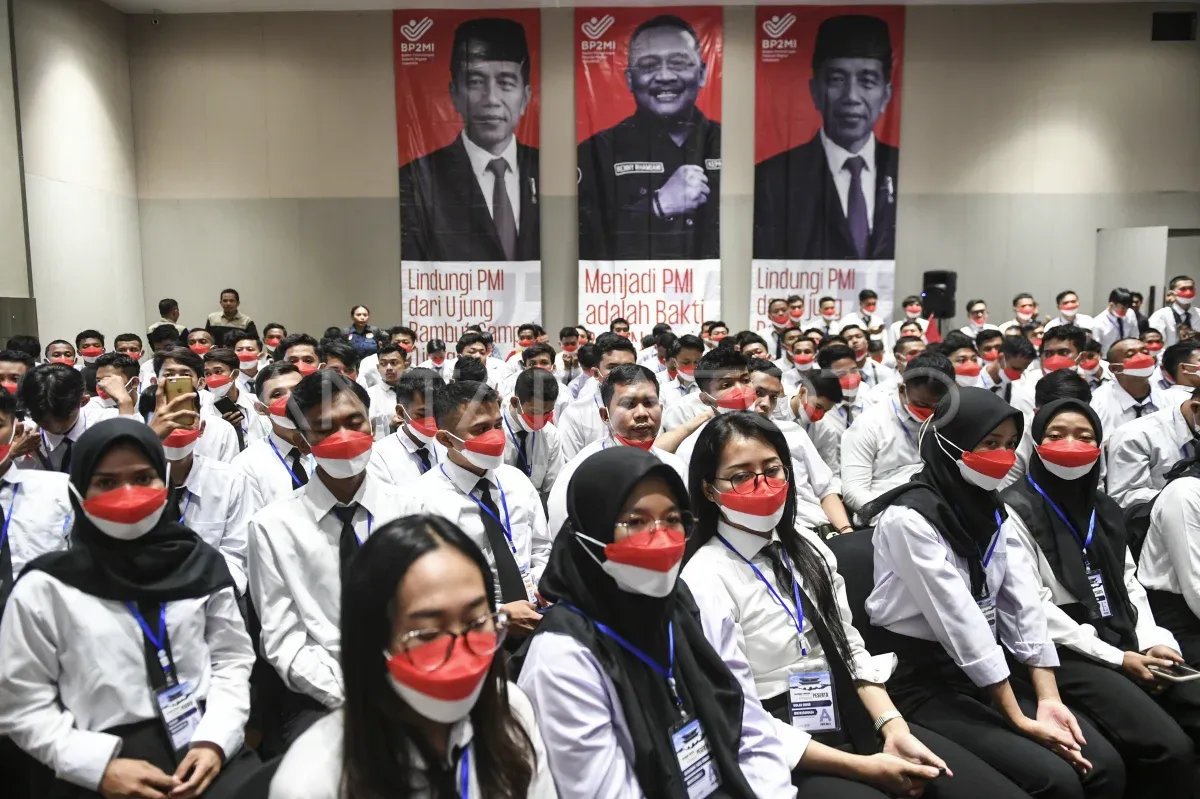
The company continues to provide training to all CPMIs who register. Eko said that although some are alumni of vocational training institutions (LPK), they are still retrained until the time of departure. In addition to providing language lessons and technical skills, Eko also emphasizes the importance of materials related to customs in accordance with the placement country. "So that the employers there will be happy with the migrant workers," he said.
In addition to covering all preparation costs and continuing to provide training, the company also plays a role in finding jobs for CPMI in the placement country. This is done by cooperating with various agencies in the placement country. The agency will be tasked with finding prospective workplaces or employers for CPMI. "Last year we sent the most PMI to Taiwan, around 300. The rest are in Hong Kong, Malaysia and Singapore," said Eko.
Reducing Unemployment While Adding Foreign Exchange
Jiati and Juhro are small stories from a large part of the efforts of thousands of Indonesian migrant workers who are trying to improve their fate, due to the lack of jobs in the country. Every year, these Indonesian Migrant Workers (PMI) contribute foreign exchange to the country, or remittances of up to billions of rupiah.
In 2024, PMI remittances will reach Rp253.3 trillion. Meanwhile, this year, the Ministry of Protection of Indonesian Migrant Workers / Indonesian Migrant Workers Protection Agency (BP2MI) targets foreign exchange contributions from PMI of IDR 436 trillion.
Currently, Indonesia deploys 200,000-300,000 migrant workers annually, but this figure is about 30% lower than the 2014-2015 figure. The deployment of migrant workers is expected to increase by more than 176% in 2022 and by 37% in 2023.
The government has begun to look at the great potential of placing Indonesian workers abroad because of the foreign exchange and welfare that can be obtained by the workers themselves. Minister for the Protection of Migrant Workers/Head of BP2MI Abdul Kadir Karding also encouraged more Indonesians to work abroad, as it would be a solution to reducing the unemployment rate in Indonesia.
However, Karding emphasized that this suggestion does not mean that he wants Indonesians to be displaced abroad, just because the government wants to reduce the number of unemployed. "I am in charge of protecting migrant workers and placing them. So the context is clear, it does not mean that there are no jobs in the country, but rather provides additional opportunities abroad that are safe and legal," he said.
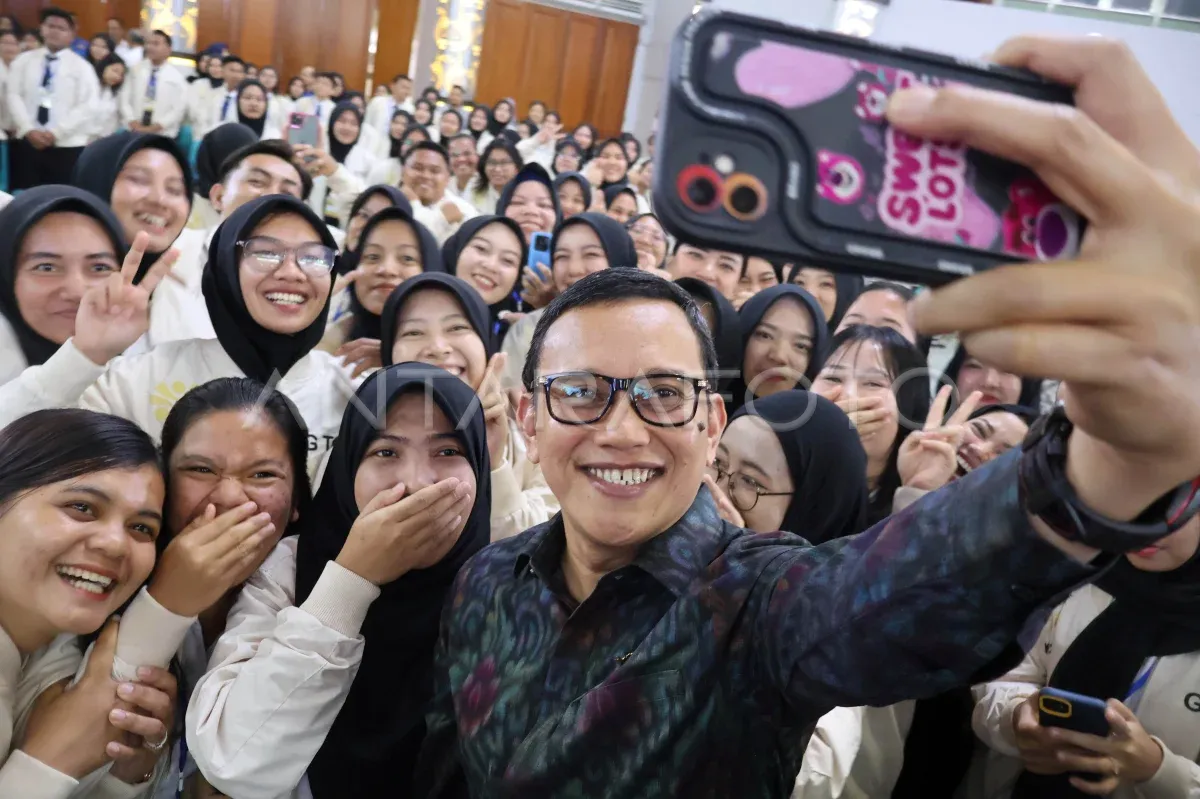
Minister Karding also reminded the importance of massive education and socialization so that people better understand the process, opportunities, and protection provided by the government to prospective migrant workers. He hopes that people understand that the migrant worker placement program is an opportunity, not a compulsion, and is carried out with the principles of protection and welfare improvement.
The government's intention to strengthen the overseas-oriented employment sector began to be initiated since the amendment of Law No. 39 of 2004, concerning the Placement and Protection of Indonesian Workers Abroad, which was perfected through Law 18 of 2017 concerning the Protection of Migrant Workers.
The changes continued through Presidential Regulation (Perpres) Number 90 of 2019 which changed the National Agency for the Placement and Protection of Indonesian Migrant Workers (BNP2TKI) into the Indonesian Migrant Workers Protection Agency (BP2MI), an institution that is directly under the President and is tasked with carrying out technical policies for the protection and empowerment of PMI.
Most recently, based on Presidential Decree Number 165 and 166 of 2024, BP2MI became part of the Ministry of Protection of Indonesian Migrant Workers (KemenP2MI), a new ministry established to handle migrant worker issues in a more centralized and strategic manner.
Judha Nugraha, Director of Protection of Indonesian Citizens (PWNI) of the Ministry of Foreign Affairs, said that the existence of several new laws marks a fundamental change in the management of migrant workers by the Government of Indonesia.
"The fundamental thing that has changed from the law is that we used to separate the placement process from the protection process. In the new law, the placement process is an integral part of protection. The title is no longer placement and protection, but directly protection of Indonesian migrant workers," Judha explained.
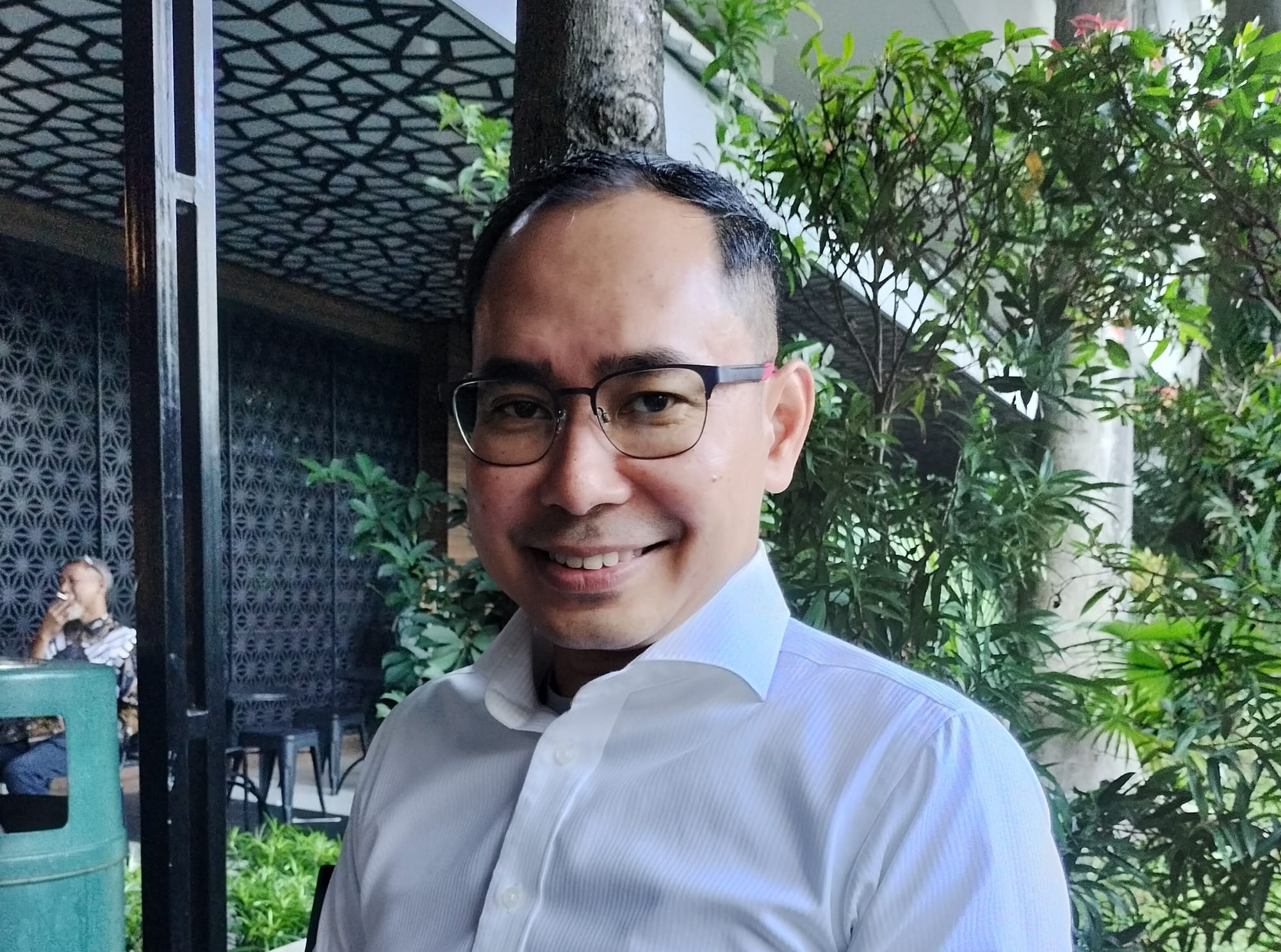
In addition, if in the past the state mobilized, now the state facilitates. So that the choice to migrate is up to each individual citizen. On the other hand, with the new regulation, the protection provided by the state is not only when there is a case. However, the protection must begin before the prospective migrant workers leave. "This is what we then remind that protection must start from upstream," Judha said.
The new laws mark a fundamental change in the way the Indonesian government manages its migrant workforce.
When looking at the existing data, the issue of violation of regulations is the main thing that is often experienced by PMI. In 2024, there were a total of more than 67 thousand cases of Indonesian citizens handled by the Ministry of Foreign Affairs and its representatives. Of the 67 thousand cases, 10% of them were cases of violations of residence permits, as well as violations of work visas. Then the second is labor cases.
This shows that Indonesian migrant workers leaving for abroad still use unsafe and non-procedural means. "Now this is our biggest challenge. That there are more who work non-procedurally than procedurally," Judha added.
Regarding the discourse on increasing the placement of migrant workers who are competent or have special skills, according to Judha, the impact will indeed be positive for PMI's own protection efforts. Because from existing experience, so far skilled workers who are placed through procedures in accordance with the rules, will have better protection than those who do not have skills. Meanwhile, domestic workers, or those who work in households, have more difficult supervision than those who work in the formal sector.
In addition to protection, the main task of the state in this case is to develop human resources. A migrant worker who has ended his contract period, as an experienced professional, he can pass on his knowledge when he returns to Indonesia. "So the concept of migration is very broad, it should not only be judged in terms of remittances," he said.
Unemployment Solution and Boosting Foreign Exchange
The placement of Indonesian workers abroad, especially those who have competence, or have skills, can indeed be a solution to the current unemployment problem. It is estimated that Indonesia currently faces challenges in the form of 7.47 million unemployed and 11.56 million underemployed people.
A study conducted by the Indonesia Business Council (IBC) said that unemployment can be reduced significantly in the future, one of which is by managing labor delivery well from now on. Especially for migrant workers who have skills or competencies. It is estimated that currently, migrant workers who do not have specific skills account for up to 67% of migrant workers who have specific competencies.
IBC's simulation, using data from 2015 to 2023, estimates that the unemployment rate from 2025 to 2029, if there is no acceleration of placement, will decrease by 0.21 percentage points, equivalent to 324,600 fewer people unemployed each year (2025-2029).
However, if there is a 30% increase in the placement of Indonesian migrant workers in various countries around the world, it will reduce the unemployment rate by 0.28 percentage points between 2025 and 2029, which is equivalent to 422,000 people. This is a significant figure, considering Indonesia managed to reduce its unemployment rate by only 0.7 percentage points between 2016 and 2024 (from 5.61% to 4.91%).
In addition to improving placement, increasing the share of migrant workers working in low- and medium-skilled jobs from the currently dominant unskilled jobs can increase the economic contribution of migrant workers.
While the impact of increasing PMI placements may be limited in the short term, increasing current placements by 30% aimed at low- and medium-skilled job levels could increase Indonesia's remittances from an estimated $14.9 billion in 2024 to $27.6 billion in 2029. This would significantly increase household income and contribute to regional economic development.
Placement Process Refinement
Director General of Promotion and Utilization of Overseas Employment Opportunities of the Ministry, Dwi Susanto, admitted that his office is currently mapping potential placement countries and the quantity of job opportunities. The ministry will supervise private to private (P2P) migrant worker sending cooperation, in addition to continuing bilateral or government to government(G2G) relations that have been established with Germany, Japan and South Korea.
To SUAR, Dwi Setiawan explained, at least the P2P scheme had netted 100 placement countries, which narrowed down to hundreds of job positions. Starting from the nursing sector to industry. The problem that needs to be done is to prepare CPMI which has international class competitiveness, both in technical, language, cultural and mental abilities. "This must be prepared in a process that we are currently developing as a Migrant Center," he said.
Conceptually, the Migrant Center will act as an integrated service center within the national vocational system. The Migrant Center will be an integrated service that combines information, training, certification, and overseas job placement. In mid-2025, new Migrant Centers were established at Diponegoro University and Padang State University.
Higher education institutions were chosen as Migrant Care 's initial center to spark the interest and talent of campus graduates for careers abroad. In addition, the infrastructure and focus of education on campus is considered to be able to target the fulfillment of labor needs, which should be medium and high skilled.
However, there needs to be language deepening prepared from the beginning of the semester so that CPMI from campus alumni are ready to work. "With this Migrant Center, we can match it with the competency standards in the destination country because classes will be made for overseas," Dwi said.
Ordering and Strengthening Training Institutions
The role of universities as Migrant Centers can also supervise the training that takes place at LPK. Dwi believes that there are many LPKs that are not certified institutionally or by their instructors. In addition, there are also LPKs that do not map the needs of special migrant workers, because LPKs also serve training needs for domestic work needs. In fact, in certain cases, LPKs also violate the rules by acting as a distribution company. As a result, CPMI training does not run effectively.
Dwi emphasized that LPK should only focus on the skills of migrant workers. If the destination country is Japan, then language training and technical skills are designed according to the job sector. "The curriculum will be made specific. We can also bring in facilitators from Japan directly," he said.
In the future, Dwi said, KemenP2MI will evaluate the work of LPK. There will be a determination letter regarding whether or not the LPK is suitable for training migrant workers. This means that the legitimacy of a decent LPK is not only from the Ministry of Manpower. To boost the quality of training, LPKs will also receive assistance from the government. For example, LPKs that teach German, the government plays a role in bridging with the Goethe institution.
Thus, LPKs that have been handled by KP2MI can also be labeled as Migrant Centers. "A kind of determination, it can be a decree (which) states that (LPK) is indeed worthy of being a migrant class," he said.
LPKs in technical fields will also be highlighted. Dwi warned that the number of CPMIs must be increased in low- and medium-skilled job sectors. KP2MI targets optimizing the nursing workforce to countries that have a large projected elderly population. Or other job sectors that have enough bargaining power. Thus, it can erode the dominance of domestic work.
"PMI is no longer known as ART, but caregiver. PMIs can also be experts in the electrical field. Even if he is a driver in the household, later he can work in the company. They can move up a class," he said.
Legitimacy of Migrant Center
It is not only in universities and LPKs that KemenP2MI is accelerating. The legitimacy of the Migrant Center will also target vocational education institutions such as Vocational High Schools (SMK). The urgency is to reduce the number of unemployed at this level of education. Referring to data from the Central Statistics Agency (BPS), the number of open unemployment is mostly from SMK graduates, worth 9.01 percent as of February 2025.
KP2MI is currently targeting several vocational schools in Lampung Province to be labeled Migrant Center. The local government is encouraged to create a special curriculum and classes for prospective migrant workers for vocational students. What is trained to students will follow the labor market needs of the destination country. Teaching materials are also adjusted to the standards of the target country.
"Later, 6 schools will be piloted. These 6 schools will be directed towards up-skilling. Vocational students already have technical skills and only need to strengthen their language skills. Later, the technique will be to collaborate with LPK, or the teachers will be up-skilled," Dwi said.
Apart from educational institutions, the level of ministries that have Job Training Centers (BLK) and local governments will also not escape being labeled Migrant Centers. This is because these two institutions have not fully focused on opening migrant worker preparation classes. Also, regarding the standardization of training, Dwi said there will be adjustments to teaching materials and improvement of instructors' abilities.
The inclusion of government institutions at the national and regional levels in strengthening CPMI skills will trigger budget allocations, which come from the APBN or APBD. In other words, the establishment of Migrant Centers in each institution does not use only one party's budget.
At the same time, each government institution in charge of educational institutions can collaborate to patch up the gaps in training that cannot be done. "So don't think migrant centers are just training. This migrant center is an ecosystem," he said.
PMI Needs Tend to Increase
Efforts to boost the number of competent migrant workers abroad are also in line with the high demand for competent workers in various placement destination countries. Some countries with a high number of elderly people, such as Japan, Germany, Australia, the UK and Canada, have a high demand for workers in the field of parental care.
As in Japan, care workers for the elderly are in high demand, but there are other sectors that Indonesian migrant workers can actually enter and the demand is also great. According to Gina Aghnia Virginianty, Second Secretary for Economy at the Indonesian Embassy in Tokyo; there are several other job sectors that are most filled by Indonesians currently in Japan. Those are agriculture, manufacturing, and food and beverage production. "There is also the production sector of industrial products such as machinery as well as the aquaculture sector to construction," she explained.
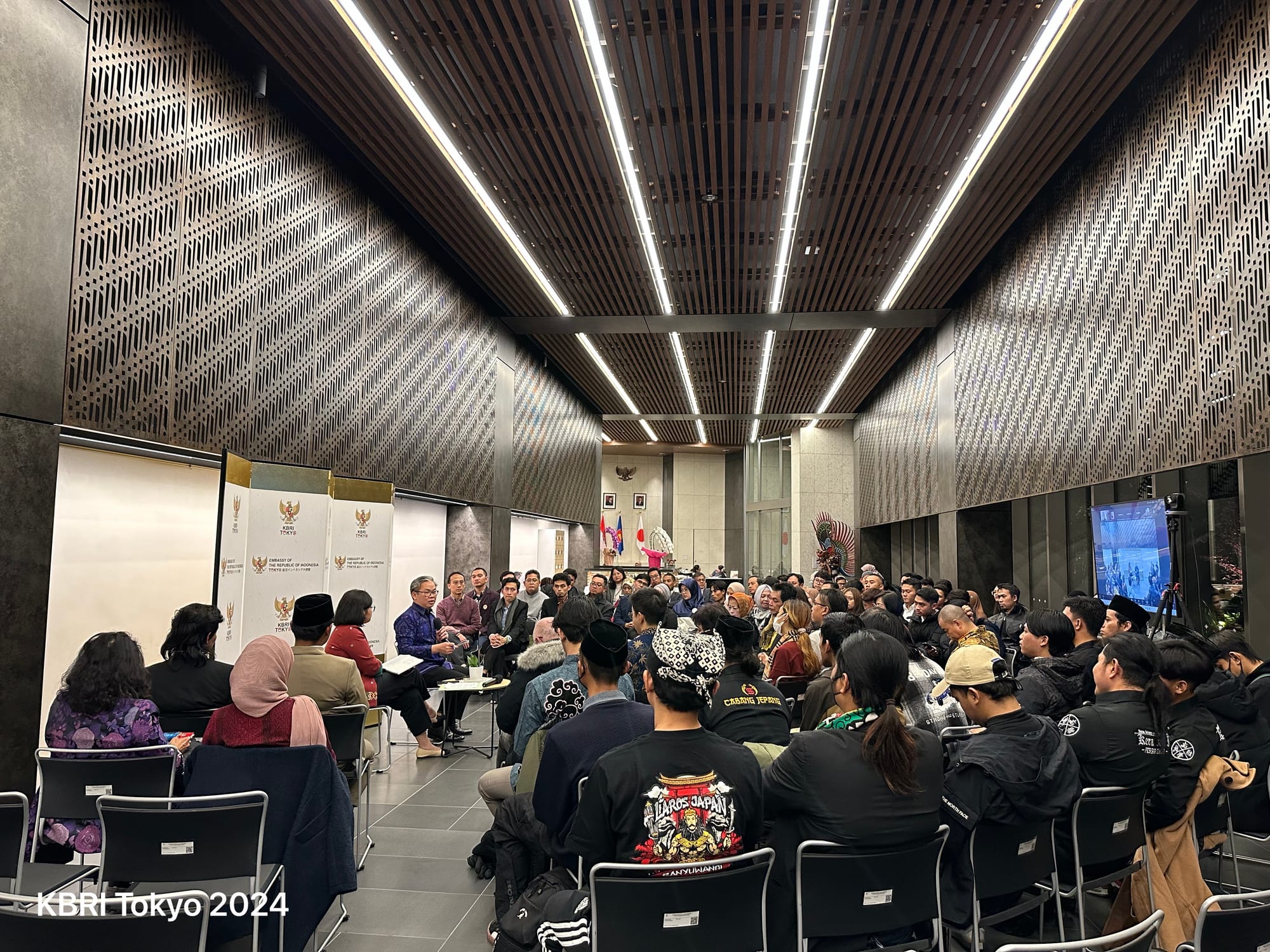
However, the Embassy has also begun trying to open new sectors that can be filled by Indonesian workers. "It's just that the process also takes time, especially from the preparation of human resources," he said.
Some of the new fields opened are the car transportation industry sector, or a kind of logistics transportation driver. There is also the railroad sector, then the forestry industry sector where the placement will actually work in the forest, to the wood industry sector which usually makes furniture. "These 4 new fields are currently still in the process of being adjusted. Because we also have potential in this field," said Gina.
The Indonesian Embassy in Japan has begun working to open new sectors. Such as the car transportation industry sector, the railroad sector, the forestry industry sector and the wood industry sector.
Gina suggested that if you want to work abroad such as in Japan, you need to match your skills and work destination with PMI's personal professional interests. So that you can work wholeheartedly. "Don't want to change jobs in the middle of the road," said Gina.
The placement of migrant workers to the land of the rising sun has actually been done for a long time. Initially in 1993 this program began with an internship program for Indonesian students. There is also a job placement program that is part of the bilateral cooperation between the Indonesian government and Japan called the Economic Partnership Agreement (EPA). One of them is the placement of migrant workers in the field of nursing and elderly care or called kaigo in Japanese.
Only in 2019, the Japanese government began to create a new program offered to countries that cooperate through the Specified Skilled Workers (SSW) program. "So this is the placement of semi-skilled migrant workers who can stay in Japan for a long time, different from apprenticeships which have a short period of time," said Gina.
For this program, migrant workers who want to participate are required to have prior skills according to their job vacancies, including Japanese. There are 16 fields of work that are targeted for the fulfillment of these migrant workers. Such as agriculture, construction, and elderly care.
During the first 3 years of sending through the SSW program, Indonesia has not optimally sent migrant workers with the required skills. That is, only around 10 thousand PMIs have been placed. "The 10,000 figure is still small compared to other countries," said Gina.
It was only in 2022 that there was a significant increase in the number of migrant workers stationed in Japan. Until October 2024, Indonesian SSW migrant workers totaled around 43,723 people. While this SSW program, Japan needs around 820,000 foreign workers until March 2029. And it is offered to around 18 countries that cooperate in this program. Each country can place whatever it can, until the total national quota is met.
The need for foreign workers in Japan is huge. For the nursing sector alone, Japan needs up to March 2029, around 135,000 foreign workers. The new ones filled are estimated to be around 30,000. "So indeed the need is very high. It could be that they will continue to open these job opportunities until 135,000 are reached for this nurse," said Gina.
Muhammad Hanri, Head of Social Protection and Labor Research Group of the Institute for Economic and Social Research (LPEM) of the University of Indonesia (UI), suggested that before the government really boosts the massive placement of competent migrant workers to other countries, it is necessary to prepare market intelligence related to the needs of the destination countries.
This aims to train prospective migrant workers appropriately. "We should not train migrant workers whose skills are not needed in the destination country. The money is wasted," said Hanri. Determining the right destination country and training, he continued, also prevents trained migrant workers from being absorbed by the labor market.
Furthermore, Hanri reminded the importance of paying attention to the social aspects of the families left behind. Hanri said it is important to look at the conditions of migrant workers' families. "For example, a woman who leaves has a child. Now the child must be ensured education and growth. Don't let it become a new problem," said Hanri.
Hanri views this regulatory change as a positive signal from the government. The increase in BP2MI's status to a ministry is considered a form of more serious attention to the issue of migrant workers. Although the addition of the ministry raises debates in terms of budget, Hanri sees this step as a good intention of the government in strengthening the protection and recognition of the role of migrant workers.
Mukhlison, Harits Arrazie, Rohman Wibowo and Tria Dianti