
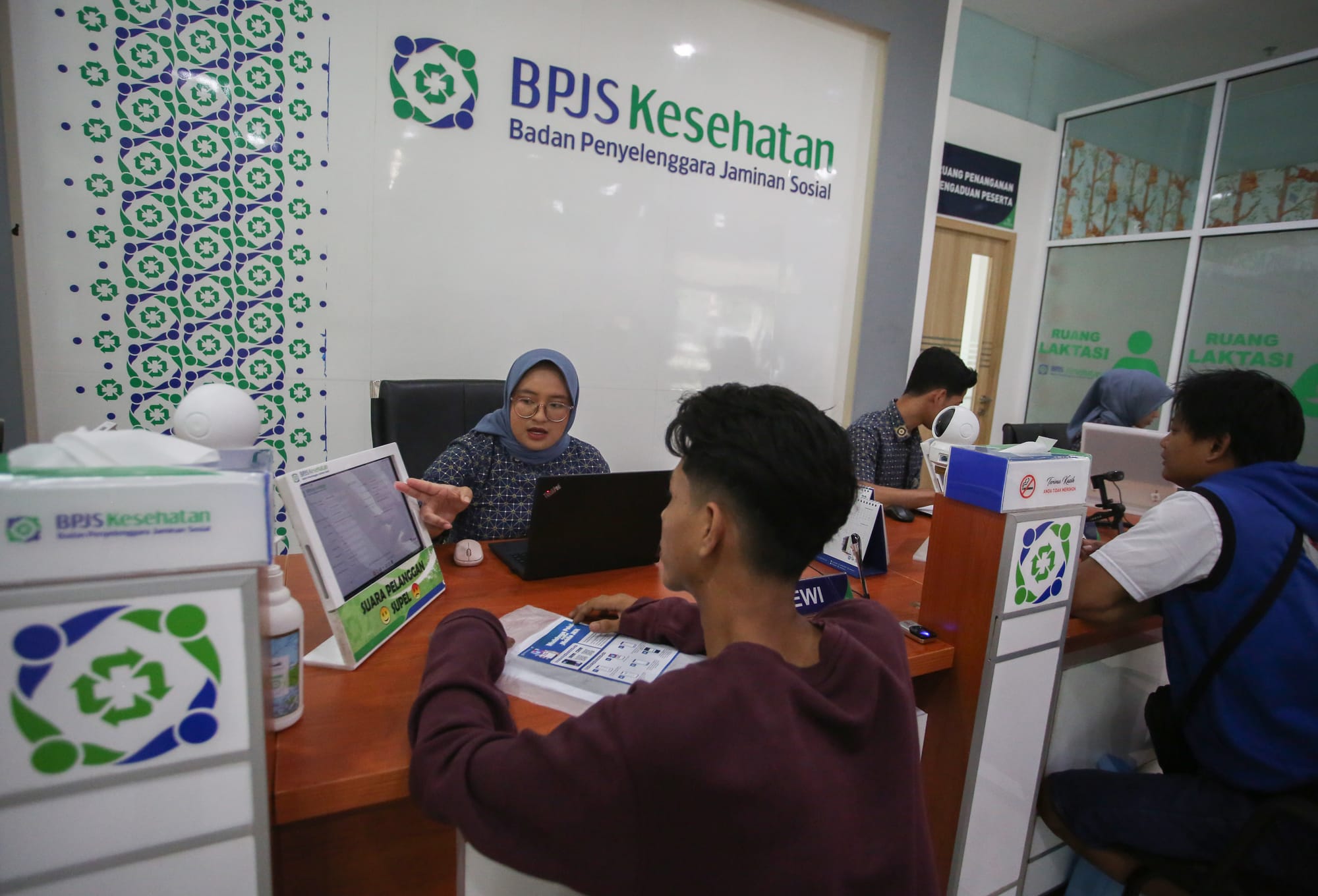
The government has prepared funds of around IDR 20 trillion to partially clear arrears of BPJS Health contributions for certain participants. The budget will be used to support a bleaching program aimed at independent participants who are now turning into contribution assistance recipients (PBI) and non-wage earners (PBPU) covered by local governments.
Pemutihan arrears BPJS Kesehatan is a policy that aims to remove outstanding contributions from participants in accordance with predetermined provisions. This program is expected to help underprivileged people so that they can still get health services without being constrained by administrative problems.
Finance Minister Purbaya Yudhi Sadewa confirmed that the funds had been included in the 2026 State Budget. "Already, for 2026 it is ready," he said when met at the Coordinating Ministry for Economic Affairs, Jakarta, Wednesday (22/10/2025).
The government will not impose sanctions if BPJS has not achieved the improvement target, but emphasizes the importance of improvement so that the benefits of the program are greater for the community.
According to Purbaya, BPJS has helped many underprivileged citizens obtain essential medical services, and the whitening policy will expand the reach of those benefits. "I said it's okay to bleach, but then the system will be improved," he said.
The government has also postponed the discourse on increasing BPJS Health contributions until economic conditions have fully recovered. The current focus, said Purbaya, is to ensure that low-income people can still access health services without the burden of arrears.
Purbaya explained that in addition to preparing the budget, the government also asked BPJS Kesehatan to improve its governance and management system. The institution's information technology capacity needs to be optimized to be able to detect improper claims.
"They have 200 people in IT, it's like their own computer company. I ask to optimize it, use integration and AI so that odd claims can be quickly detected," he said.
On a different occasion, BPJS Kesehatan President Director Ali Ghufron Mukti said that the total arrears were worth around Rp10 trillion with 23 million participants. These arrears come from independent participants who are now categorized as incapable so that they will be transferred to become contribution assistance recipients (PBI) participants.
Ghufron ensured that the arrears whitening policy would not disrupt the cash flow of his institution. He emphasized that this only applies if the implementation is right on target according to the economic data of the participants.
"No, it will not interfere, as long as it is right on target. If it is not on target, it can be disruptive, but if it is on target I don't think so," he was quoted as saying by Antara, Wednesday (22/10/2025).
Ghufron explained that bleaching was carried out for participants who moved components, such as from independent participants to PBI. There are many cases where participants who have been covered by the local government are still recorded as having old arrears in the BPJS system, so their debts will be removed.
This policy, he said, refers to the National Social and Economic Single Data (DTSEN) and is intended for low-decile participants. "What is clear is that BPJS is a state presence, but it should not be abused. People who can afford it should pay," Ghufron said.
Ghufron explained that the arrears that will be removed are a maximum of 24 months. For example, if there is a participant who has been in arrears since 2014 or about 11 years ago, the arrears that will be cleared or removed are the last 24 months. This means that the other 9 years of arrears remain.
He explained that his party could not write off all arrears because it would burden the current BPJS Finance finances.
Informal workers
From this policy, public attention then turned to informal worker groups such as online motorcycle taxi drivers, who were among the most affected by this policy.
The plan to eliminate arrears of BPJS Health dues was welcomed positively by transportation workers.
Chairperson of the Indonesian Transport Workers Union (SPAI) Lily Pujiati said the government's move should be appreciated, although ideally the policy should not stop at clearing some arrears.
Lily believes that transportation workers, including online motorcycle taxi drivers, should receive full subsidies from the state because they are in the low-income group.
According to Lily, the majority of ojol drivers have incomes below the average minimum wage and the nature of their income is irregular. This condition makes it difficult for them to pay BPJS contributions regularly.
It would be fairer if the government made contributions free for informal workers so that access to health services is truly equal. "These people are middle to lower class. If the state wants to help, let's make it free," he said.
He also highlighted the lack of understanding among drivers about the difference between BPJS Ketenagakerjaan and BPJS Kesehatan. Some workers, he said, think that membership in the employment program already includes health insurance.
As a result, many do not pay health contributions because they think they are already protected by other programs. Lily said the socialization conducted by BPJS has not yet reached all levels of field workers.
Lily explained that so far many drivers have only received information through BPJS shield agents, who are not always active in providing direct explanations.
According to her, such a communication approach has not been effective in reaching transportation workers with high mobility. Lili believes that a new way is needed so that information on membership and contribution obligations can be conveyed directly and evenly.
Regarding the payment mechanism, Lily suggested that the government simplify the contribution system by utilizing digital services that are already familiar to drivers, such as payment through electronic wallets or online banking applications.
However, he rejected the idea of automatic deductions through transportation applicators. Drivers are better off managing their own contribution payments to be more aware and responsible for their health protection.
Read also:
 Zikrina Ratri
Deni Friawan, a researcher at the Economic Department of the Center for Strategic and International Studies (CSIS), believes that the BPJS Health arrears whitening policy is an inevitable step. Deni explained that this policy only applies to participants who are now in the category of contribution assistance recipients (PBI) and can no longer afford to pay. According to him, the Rp20 trillion allocation from the government is more aimed at improving BPJS Kesehatan's cash flow rather than providing direct benefits to participants.
Deni said the government does not have much choice. Collecting back arrears from groups that have lost income will only prolong the problem. "Asking them to pay again will also not be possible, because there is no money," he said.
From the fiscal side, Deni emphasized the need for transparency in the source of the Rp20 trillion financing. Deni questioned whether the funds had been included in the RAPBN or taken from other posts that should be used for different needs. Every budget decision, he said, has consequences because the government's fiscal space is limited.
Apart from the budget issue, Deni highlighted the issue of governance and efficiency in BPJS Kesehatan. He assessed that supervision of hospital claims and reporting needs to be strengthened so that the bleaching policy does not leak downstream. "If the data is not accurate and management is not addressed, leaks will continue to recur in this system," he said.
Deni calls bleaching a short-term rescue measure, not a permanent solution. This policy only prevents the BPJS financial system from sinking temporarily without fixing structural financing problems. Without comprehensive reform, the need for funding injections will continue to recur, while the benefits felt by the public do not increase.
The main problem with BPJS Kesehatan lies in its unsustainable funding design. As long as all contributions are used up to cover short-term needs such as claims and operations, this institution will not have room to build long-term reserve funds like a healthy insurance system. "If the system is not improved, whatever funds are injected will run out quickly," said Deni.