
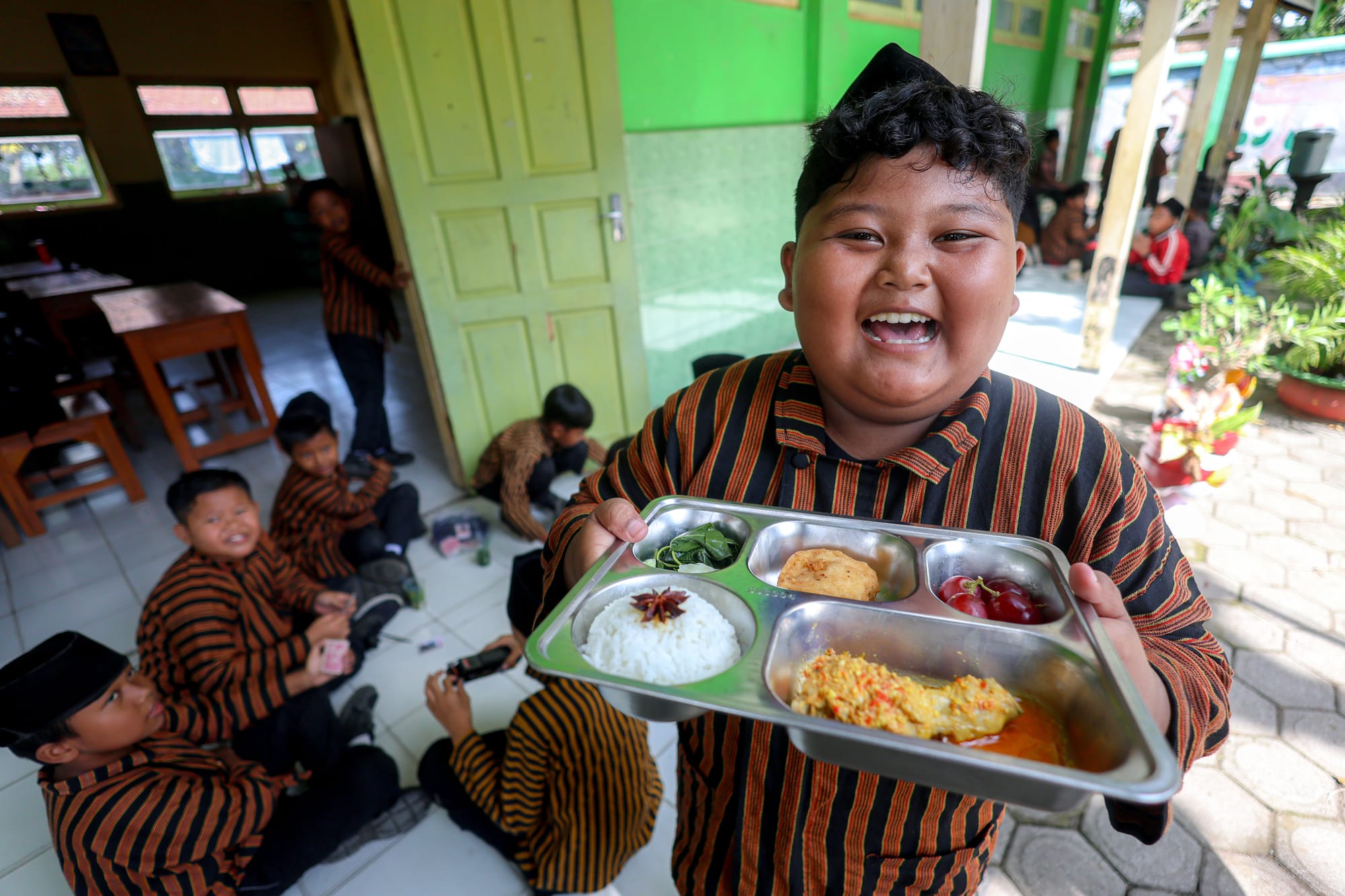
The Free Nutritious Meals Program (MBG) is not expected to burden the state budget deficit, as the program's funding comes from reallocated state budget funds, according to a report by the Institute for Development of Economics and Finance (Indef).
Head of the Center for Macroeconomics and Finance at the Institute for Development of Economics and Finance (Indef) Rizal Taufikurahhman said that the implementation of the MBG is more of a change in the composition of spending.
"If managed properly, MBG will not affect the state budget deficit," said Rizal during a discussion in Jakarta (8/1).
Indef has conducted research on the MBG program using the Overlapping Generation Model method. This approach was used to calculate the cross-generational impact of the MBG program.
The generations most affected by MBG are children of preschool to high school age, as well as pregnant and breastfeeding mothers. Rizal explained that from a macroeconomic indicator perspective, MBG has an impact on job creation and the empowerment UMKM.
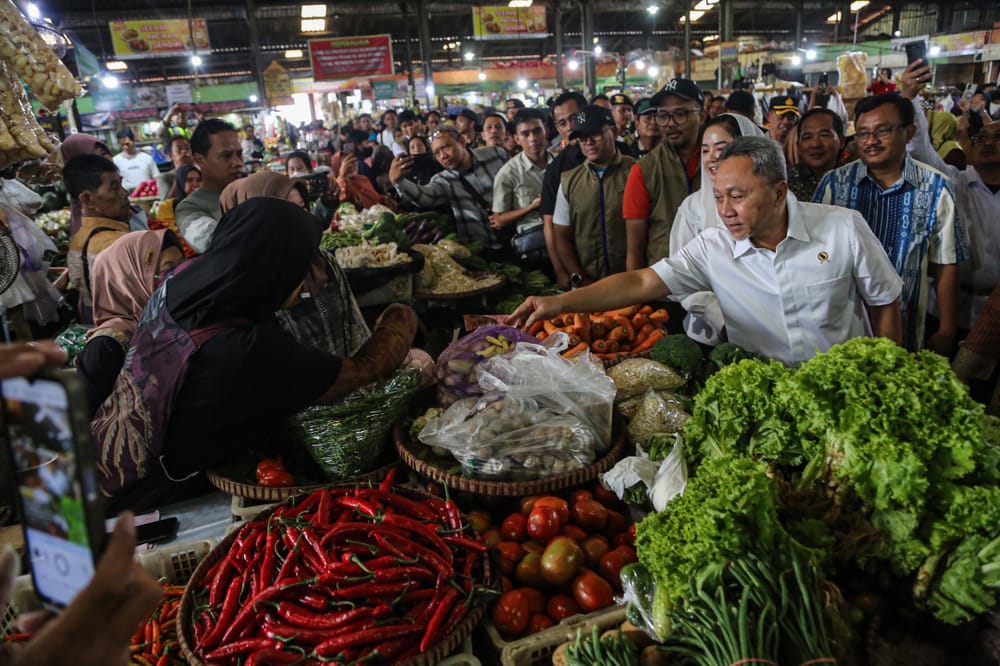
"MBG opens up new business opportunities for UMKM , raw material suppliers, and micro logistics services," he said.
MBG also absorbs massive labor at various levels, from farmers to local service providers, and creates regional economic turnover.
In addition, the MBG Program also contributes to an increase in gross domestic product or GDP.
GDP growth was moderate, peaking at around 0.15 to 0.17 percent, then declining. However, the program is considered to have gradually boosted labor productivity.
The government has allocated a budget of Rp 335 trillion for MBG in 2026. This amount represents a sharp increase compared to the 2025 MBG budget allocation of Rp 71 trillion.
Transformation of spending
On the same occasion, Deputy for Macro Development Planning at the Ministry of National Development Planning/National Development Planning Agency (PPN/Bappenas) Eka Chandra Buana said that the transformation of state spending is directed towards programs such as Danantara and Free Nutritious Meals (MBG).
"The transformation of government spending is directed towards high-impact programs such as Danantara and MBG so that fiscal spending is not only consumptive, but can also produce measurable socio-economic impacts," he said.
Based on the 2025-2029 National Medium-Term Development Plan (RPJMN), Danantara and the MBG program are said to be flagship programs in education.
As a strategic financing instrument, Danantara encourages investment in quality sectors with multiple effects and high indirect impacts. Danantara is considered to complement and strengthen the effectiveness of fiscal policy through a productive investment approach.
MBG, which is a form of cross-generational human resource investment, will directly improve children's nutritional status.
He added that the reallocation of the MBG budget is considered a crucial policy instrument.
In ensuring this reallocation, Danantara and MBG optimization must be carried out in a sustainable manner, requiring an analytical tool capable of viewing overlapping generations, namely the Overlapping Generation (OG) Model.
This model is said to be able to analyze policies including budget reallocation, investment financing, and business programs that will affect the productive generation (entering the job market), as well as the fiscal implications for the long-term economy.
MBG's Success Strategy
Professor Firmansyah from the Faculty of Economics and Business at Diponegoro University said that for the MBG program to be successful, the strategies that must be implemented include strong cross-sector collaboration, efficient local supply chain management (UMKM), strict quality and hygiene standards, and continuous human resource training.
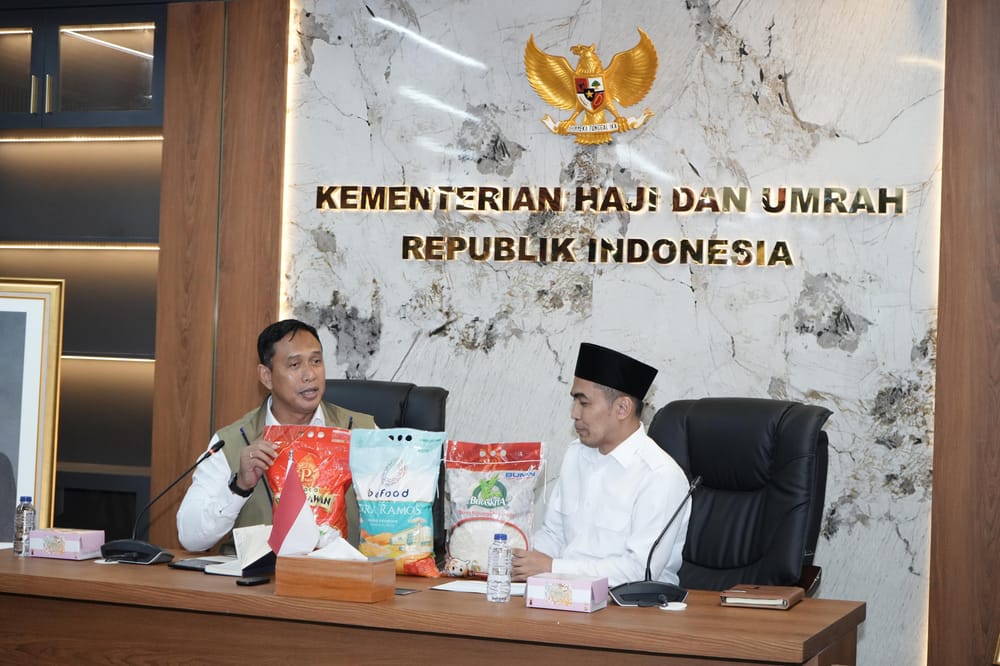
Synergy between the central government, local governments, the Ministry of Health, the Ministry of Education and Culture, the Ministry of Religious Affairs, the National Agency of Drug and Food Control, industry, and local communities is crucial and serves as an indicator of the success of MBG.
"There should be no miscommunication regarding MBG; everything must be synchronized and measurable," he said.
Involve local farmers and UMKM BUMDes) in the supply chain for food and economic independence in villages, and adjust the menu to local customs and tastes based on feedback from parents/students.
Director of Macroeconomic Planning and Development Modeling at the Ministry of National Development Planning/Bappenas Ibnu Yahya said that food quality and safety must also be taken into consideration for the success of the MBG.
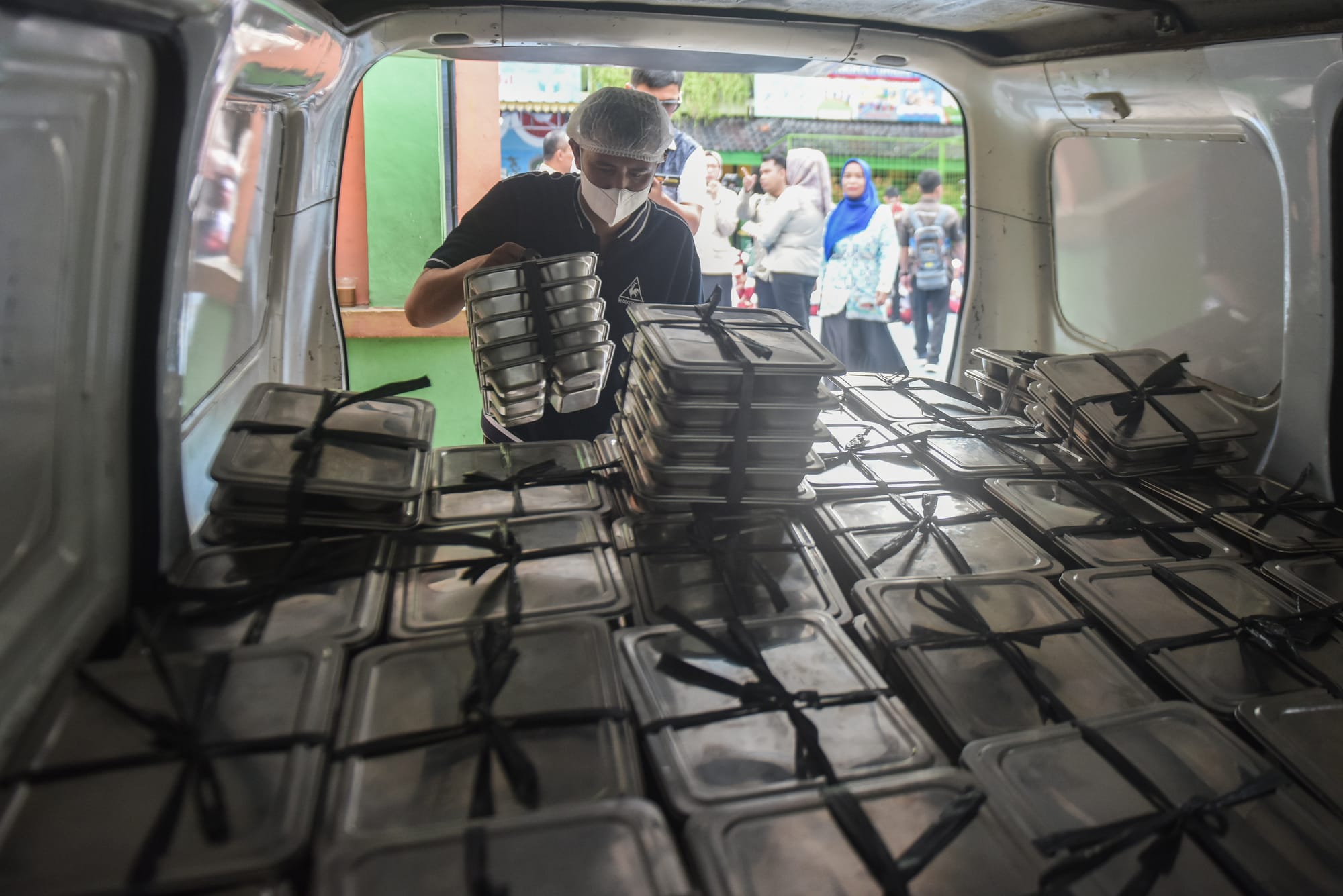
Implement HACCP (Hazard Analysis Critical Control Point) and strict hygiene standards in the SPPG (Nutrition Service Unit) kitchen and provide regular training to the kitchen team on food safety standards.
"Conduct regular evaluations, including sterilizing equipment and improving sanitation in the kitchen," he said.