
On Wednesday (3/12), the House of Representatives revealed plans to revise Law No. 4 of 2023 concerning the Development and Strengthening of the Financial Sector (P2SK Law), which will strengthen the financial sector's authority in maintaining stability, while encouraging financial service industry players to take the initiative rather than simply waiting for demand.
This addresses public and financial observers' concerns that the revision of the P2SK Law will weaken the independence of state financial authorities such as Bank Indonesia (BI), the Financial Services Authority (OJK), and the Deposit Insurance Corporation (LPS).
"I would like to remind financial authorities and service providers to balance supply-leading hypotheses by providing innovative products, services, and financing before demand arises. For the sake of inclusive and sustainable development, the financial sector should no longer wait for demand, but actively take the initiative," said Deputy Speaker of the Indonesian House of Representatives Adies Kadir in his speech at a forum in Jakarta on Wednesday (03/12/2025).
He explained that the function of financial intermediation is still dependent on demand, whereas the financial sector must operate more quickly as a catalyst for economic growth.
Adies highlighted the slow growth in money supply (M2) from Rp9,232.8 trillion to Rp9,771.3 trillion between January and October 2025. In addition, credit growth weakened to 7.36% year-on-year ( YoY), while the ratio of domestic private credit to GDP stagnated at around 32-40%.
With an omnibus law approach to an integrated ecosystem, the revision of the P2SK Law is designed to address structural weaknesses, strengthen the financial system, and promote long-term growth with four key points.
- First, strengthening the institutions of the Financial Services Authority (OJK), Bank Indonesia (BI), and the Deposit Insurance Corporation (LPS).
- Second, improving governance and consumer protection.
- Third, deepening the capital market and financial market.
- Fourth, harmonization of authority among member institutions of the Financial System Stability Committee (KSSK), especially in terms of rapid and coordinated crisis response.
"The revision of the P2SK Law will keep the growth engine running fast and spur the financial sector to contribute significantly to economic growth through product diversification, market deepening, and increasingly prudent and professional decision-making," Adies concluded.
Becoming a facilitator
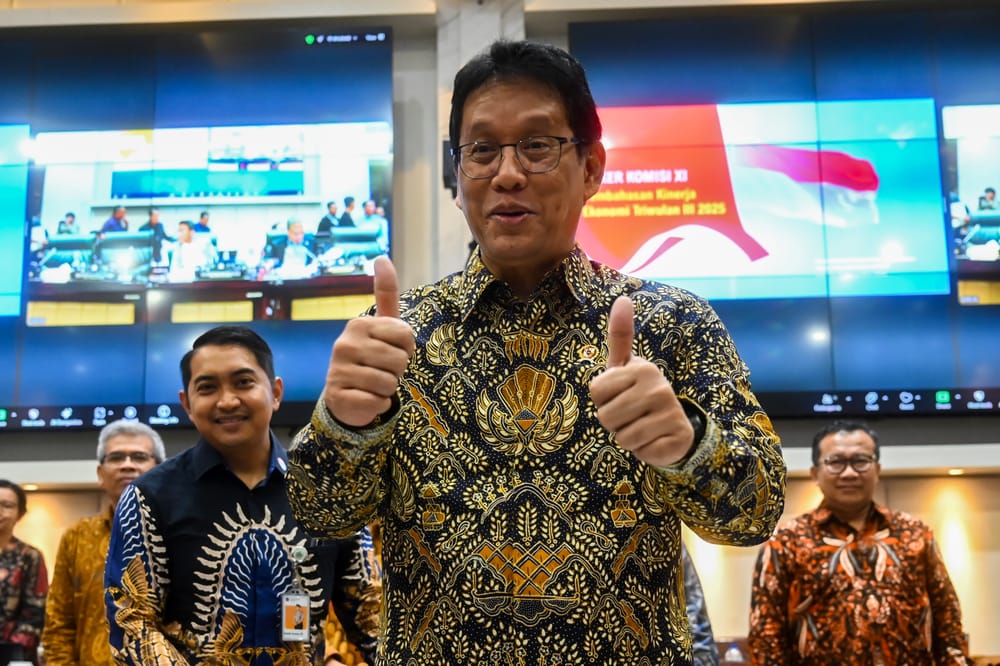
The Chairman of Commission XI of the Indonesian House of Representatives, Muhammad Misbakhun, revealed that the economic growth target and the replacement of the finance minister were two momentum to improve the lacking parts of the P2SK Law.
The ambitious target of 8% by 2029, according to Misbakhun, can only be achieved if the financial sector is driven alongside other engines of growth.
"We fully support the central bank in promoting economic growth because BI now has two policy directions: pro-growth or pro-stability. We are heading in that direction, without wanting to interfere with the independence of the central bank in any way. We do not interfere with its independence in any way," Misbakhun emphasized.
Misbakhun explained to the OJK that the revision of the P2SK Law provides an umbrella for regulating tokenization, real world assets, and stablecoins in crypto asset trading. The revision of the P2SK Law also protects the LPS in insurance policy guarantee practices, which will begin no later than 2028. The strengthening of these three authorities will ultimately ensure that these three institutions, which have enormous responsibilities and very powerful roles in the financial services industry, operate optimally.
"We hope that the revision of the P2SK Law will strengthen institutions in the industry and consumer protection. We in the House of Representatives only want to be facilitators so that the mandate of the law runs well and is articulated in society," he said.
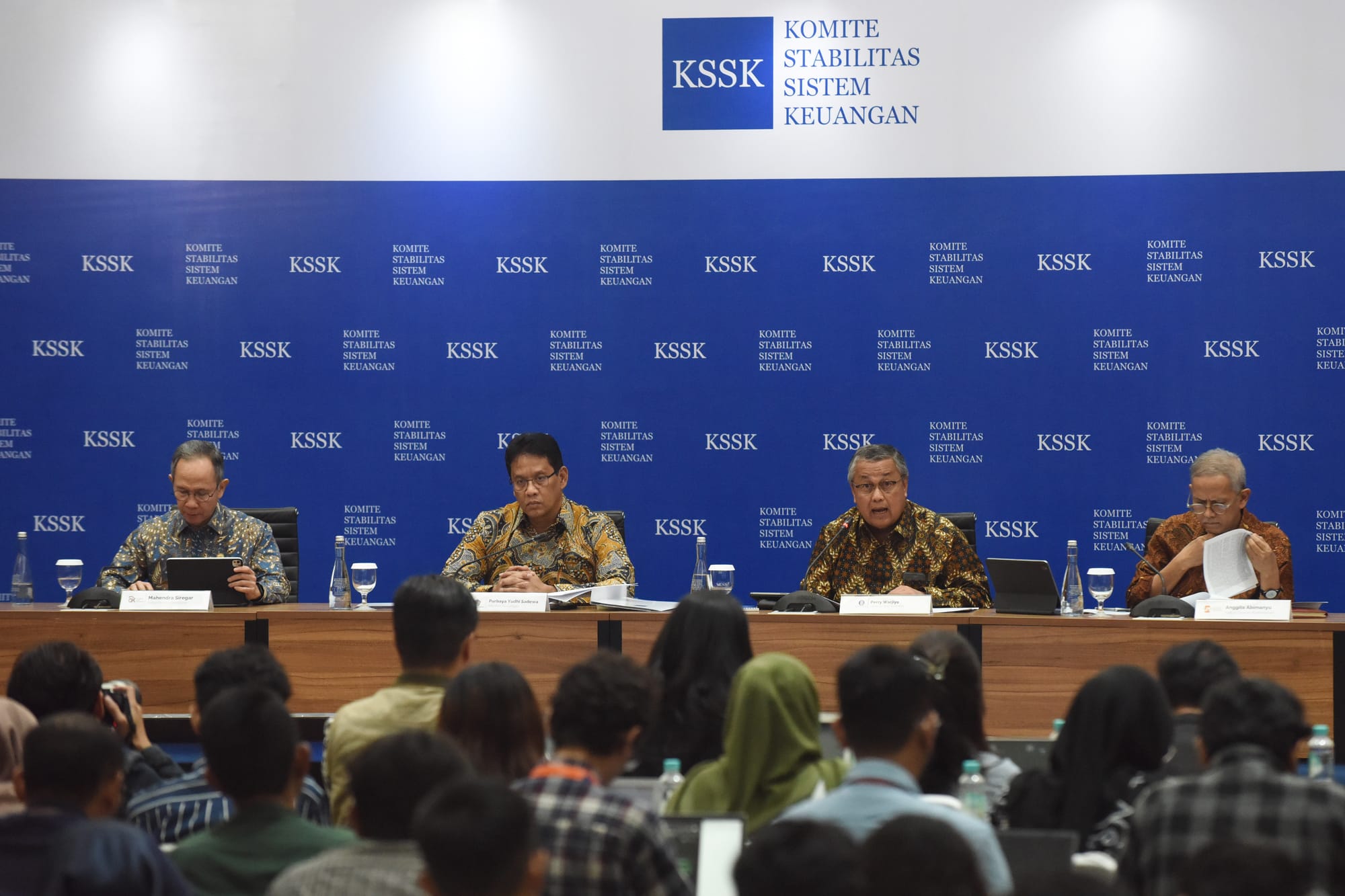
Minister of Finance and ex-officio Chairman of the Financial Services Authority (KSSK) Purbaya Yudhi Sadewa agreed with Misbakhun's argument. According to him, the revision of the P2SK Law will remove the barriers between fiscal, monetary, guarantee, and financial services protection authorities so that positive overlap can be achieved, especially in the task of driving growth, which currently rests on four pillars, not just fiscal policy.
"In the future, when we can be more open and united, we can align our views more quickly, so that the P2SK Law will become a safety net for the financial system. The order from the front is OJK, BI, LPS, then the Ministry of Finance. The aim is to ensure that financial problems stop at BI, and that LPS does not have to intervene," said Purbaya.
By maximizing the instruments of all financial services authorities in integrated coordination, Purbaya emphasized that future economic growth will be maintained and a crisis will not occur. If an emergency does occur, the P2SK Law has provided the LPS with ample room to maneuver so that it can act more quickly.
"The government and I, as Chairman of the KSSK, will ensure that all authorities enforce the P2SK Law so that we will not experience a crisis and Mr. Anggito and the LPS remain unemployed," said Purbaya with a laugh.

More flexible
In response to this, Senior Deputy Governor of Bank Indonesia Destry Damayanti stated that the expansion of BI's responsibilities towards economic growth and job creation as mandated in the revised P2SK Law is a clarification of the direction of BI's policy in supporting a sustainable economy and the rhythm of monetary policy transmission to the real sector.
"We are working hard with KSSK to deepen the financial market, which currently trades Rp17 trillion per day, and the foreign exchange market, which reaches USD 9.9 billion per day. If the money market and foreign exchange market are deep, stability will be achieved along with growth. We are fortunate because KSSK and the P2SK Law are not owned by other countries and are strongly supported by the House of Representatives, so discussions are pleasant," said Destry.
Through the revision of the P2SK Law, BI gained more leeway in conducting monetary operations. Destry cited the example of when the rupiah was shaken by the April spot market rally. Coordination between BI and Commission XI, facilitated by the P2SK Law, enabled BI to immediately intervene in the non-deliverable forward foreign exchange market, thereby stabilizing the rupiah and saving foreign exchange reserves.
"If such operations and access can be protected by law, BI can maintain the stability of the rupiah more agilely. Of course, we must build expectations so that inflation is maintained, economic fundamentals remain strong, and no wild expectations develop outside," he said.
Meanwhile, OJK Chairman Mahendra Siregar also emphasized the impact of the P2SK Law, which allows the expansion of commercial banking business lines to operate in the capital market. According to Mahendra, this expansion is a solution to increase the credit-to-GDP ratio, which has been sluggish due to regulatory limitations that have restricted and differentiated the scope of commercial banks and investment banks.
"With the relaxation of activities, banks can connect directly with the capital market and LKNB. Conversely, with the entry of banks into capital market activities, there will certainly be additional liquidity and deepening because it becomes an opportunity for new investors to enter banks, as part of investment banking activities," said Mahendra.
Mahendra appreciates the extension of the OJK's authority, which provides direct legal protection in crypto trading activities. With this authority, continuous strengthening will increase public confidence in the financial sector. Of course, the OJK's input in the revision is based on the lessons learned by the OJK in supervising crypto transactions so far.
Read also:
 Benedictus Krisna Yogatama
"This step shows that even though the P2SK Law feels new, there are many lessons learned that necessitate revisions. After the revisions, the OJK must follow up on and complete around 60 new regulations. However, everything mandated by the P2SK Law has been completed and finalized," he added.
For LPS Board of Commissioners Chairman Anggito Abimanyu, the design to strengthen the LPS as an independent state institution in determining guarantee interest rates opens up opportunities for transparency in the LPS's performance and public accountability through the House of Representatives. With an annual operating budget of Rp30 trillion allocated in SBN premiums, the LPS is committed to maximizing its operations with a lean and professional workforce .
"The restructuring we carried out for 146 BPR/BPRS, although their assets were not particularly large, received quite a lot of complaints from the public. The revision of the P2SK Law gives LPS the role of risk minimizer, which does not necessarily involve liquidation, but can be done through fund placement, share transfers, and restructuring by withdrawing shares from old PSPs that do not support resolution measures," explained Anggito.
According to Anggito, the responsibility for insurance policy guarantees borne by LPS by 2028 at the latest is expected to be accelerated in two stages, namely a temporary resolution in the initial stage and full guarantee claim payments starting in 2030.
"LPS is now different, not only in terms of new authority, but also in its role in KSSK. We have a good data exchange system that can be used by the Ministry of Finance to promote fiscal policy. KSSK works with data exchange and all institutions can share information with each other," concluded Anggito.