
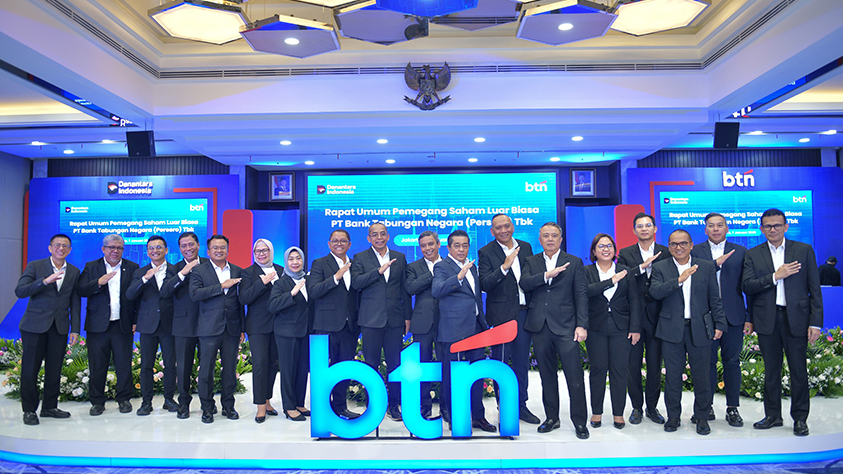
PT Bank Tabungan Negara (Persero) Tbk (BTN) concluded its Extraordinary General Meeting of Shareholders (EGMS) on Wednesday (January 7, 2025). This follows the members of the State-Owned Banks Association (Himbara) holding EGMs since the end of 2025 and continuing into the beginning of this year. This is considered strategic because it took place at the beginning of the year, following a major consolidation within the state-owned banking sector.
The BTN Extraordinary General Meeting of Shareholders decided to add one person to the company's board of commissioners. Shareholders approved the appointment of Didyk Choiroel as a commissioner of BTN.
In addition to adding to the board of commissioners, the BTN EGMS also approved changes to the company's articles of association and the delegation of authority to approve the 2026 Work Plan and Company Budget (RKAP).
The approval of this EGMS is part of BTN's strategy to strengthen corporate governance while ensuring leadership continuity. These efforts are being made to support the transformation process and maintain sustainable business growth amid the dynamics of the banking industry.
The amendments to the articles of association were made in accordance with the issuance of State-Owned Enterprises Law No. 16 of 2025. In addition, BTN followed up on the letter from the Head of BP BUMN No. 23/BPU/10/2025 dated October 28, 2025. As a state-owned enterprise, BTN is required to adjust its articles of association to comply with the latest regulations.
Meanwhile, the delegation of authority for the approval of the 2026 RKAP was carried out in accordance with the provisions of Article 15G paragraphs (3) and (5) of the State-Owned Enterprises Law. These provisions stipulate that the board of directors is required to prepare the RKAP before the start of the next fiscal year.
BTN President Director Nixon LP Napitupulu said that amid the economic recovery process and macroeconomic challenges, the company was able to record solid performance until the end of 2025. BTN's total assets grew 8.6% year-on-year (YoY) to around Rp 510 trillion.
"This performance was supported by credit growth and third-party funds (DPK) that remained positive and healthy. BTN's financial ratios were also maintained and remained above the minimum requirements set by regulators," said Nixon.
Nixon explained that the adjustment to the management structure is a form of the company's commitment to ensuring that the organization remains adaptive to industry dynamics and future challenges. This is in line with the direction of national economic development policies and the ever-evolving needs of the banking industry.
"This change is part of BTN's long-term strategy to strengthen its organizational structure, enhance inter-functional synergy, and accelerate strategic decision-making to support more effective business transformation and contribute to economic strengthening," he said.
At the EGMS, shareholders also approved the addition of new members to BTN's Board of Commissioners, which was established to strengthen the company's future transformation and strategic leadership.
Other Himbara
Prior to BTN, other Himbara bank members, namely PT Bank Rakyat Indonesia (Persero) Tbk (BRI), PT Bank Mandiri (Persero) Tbk, PT Bank Negara Indonesia (Persero) Tbk (BNI), and PT Bank Syariah Indonesia (Persero) Tbk (BSI), had already held their Extraordinary General Meetings of Shareholders (EGM) at the end of last year. The results of the fifth Himbara EGMS had a common thread, including changes in the board of directors and commissioners.
BRI, through its Extraordinary General Meeting of Shareholders on December 17, 2025, made significant changes to its board of directors. Viviana Dyah Ayu Retno Kumalasari was appointed as Deputy President Director, replacing Agus Noorsanto. BRI also appointed Mahdi Yusuf as Director of Legal & Compliance, Ety Yuniarti as Director of Risk Management, Aris Hartanto as Director of Consumer Banking, and Achmad Royadi as Director of Finance & Strategy.
Bank Mandiri replaced its board of commissioners at the Extraordinary General Meeting of Shareholders on December 19, 2025. Zulkifli Zaini was appointed as President Commissioner, with M. Rudy Salahuddin Ramto as Vice President Commissioner, and B. Bintoro Kunto Pardewo as Independent Commissioner. Bank Mandiri also approved amendments to the Articles of Association and the delegation of authority for the 2026 RKAP.
Meanwhile, BNI appointed Febrio Nathan Kacaribu as Commissioner at the Extraordinary General Meeting of Shareholders on December 15, 2025, and approved adjustments to the Articles of Association and the 2026 Business Plan. Meanwhile, PT Bank Syariah Indonesia Tbk. (BSI) ratified its change in status to a limited liability company through an Extraordinary General Meeting of Shareholders on December 22, 2025.
BSI also held an Extraordinary General Meeting of Shareholders on December 22, 2025. Unlike other Himbara members, a significant outcome of BSI's Extraordinary General Meeting of Shareholders was a change in the company's Articles of Association. As a result, BSI is now a state-owned bank, also known as a Badan Usaha Milik Negara (BUMN) bank. This makes BSI the fifth member of Himbara.
Consolidation, not a change in strategy
According to market players, BTN's Extraordinary General Meeting of Shareholders reflects the company's need for internal consolidation, rather than signaling a fundamental change in business strategy. Senior Market Analyst at Mirae Asset Sekuritas, Nafan Aji Gusta, believes that the steps taken by BTN are in line with the consolidation dynamics that have also been carried out by banks belonging to the State-Owned Banks Association (Himbara).
According to Nafan, the recent BTN Extraordinary General Meeting of Shareholders (EGMS) reflected a strengthening of the organizational structure to ensure the achievement of business targets, rather than a significant change in strategic direction.
"This is actually the AGM held by Himbara banks in recent years, which truly reflects the need for consolidation," Nafan told SUAR on Wednesday (7/1/2026).
He believes that strategic changes will generally only occur when there is a change in leadership at the highest level.
"If there is a change in strategy, I don't think it will be too drastic or too frequent. Unless there is a change in leadership, in which case there will most likely be a change in strategic direction," said Nafan.
From a business and market perspective, BTN's consolidation is seen as a sign of internal strengthening to make the company more adaptive in facing the challenges of the banking industry. Nafan believes that this step aims to create opportunities for BTN to achieve its business targets in a sustainable manner.
"If the business world reads the signals, especially BTN, this is actually part of a consolidation effort to create opportunities so that business goals can be achieved," he said.
He explained that the consolidation is expected to support the achievement of credit growth targets, lending, and third-party funding.
"For example, if the credit growth target is achieved, the lending target can be realized, and the funding target can also be realized," said Nafan.
Impact of the State-Owned Enterprises Law
On the other hand, the BTN EGMS is considered a direct consequence of the enactment of State-Owned Enterprises Law No. 16 of 2025, which has serious implications for the governance and independence of state-owned enterprises.
Researcher at the Center of Economic and Law Studies (Celios) Galau D. Muhammad said that the agenda of BTN's Extraordinary General Meeting of Shareholders cannot be separated from the dynamics of new regulations that have triggered a restructuring of strategic decision-making within state-owned enterprises.
According to Galau, there are many critical comments regarding the SOE Law because it has the potential to open up space for overlapping political interests in business decisions.
"This is a direct consequence of the amendment to Law No. 16 of 2025 on State-Owned Enterprises, which has serious implications for the governance and independence of state-owned enterprises," Galau explained to SUAR.
He emphasized that the main concern stems from the potential for political interference, particularly in determining the direction of investment and the government's priority projects.
The uncertainty surrounding the agenda of BTN's Extraordinary General Meeting of Shareholders, such as the delegation of authority to approve the Company's Work Plan and Budget (RKAP) and changes to the composition of the board of directors and board of commissioners, indicates a systematic effort to reorganize the highest decision-making structure. This move is considered strategic, but must be closely monitored so as not to undermine the principle of prudence in banking.
"BTN must continue to adhere to the principle of banking prudence and not be pressured into making business decisions based on certain political priorities," he said.
Read also:
 Benedictus Krisna Yogatama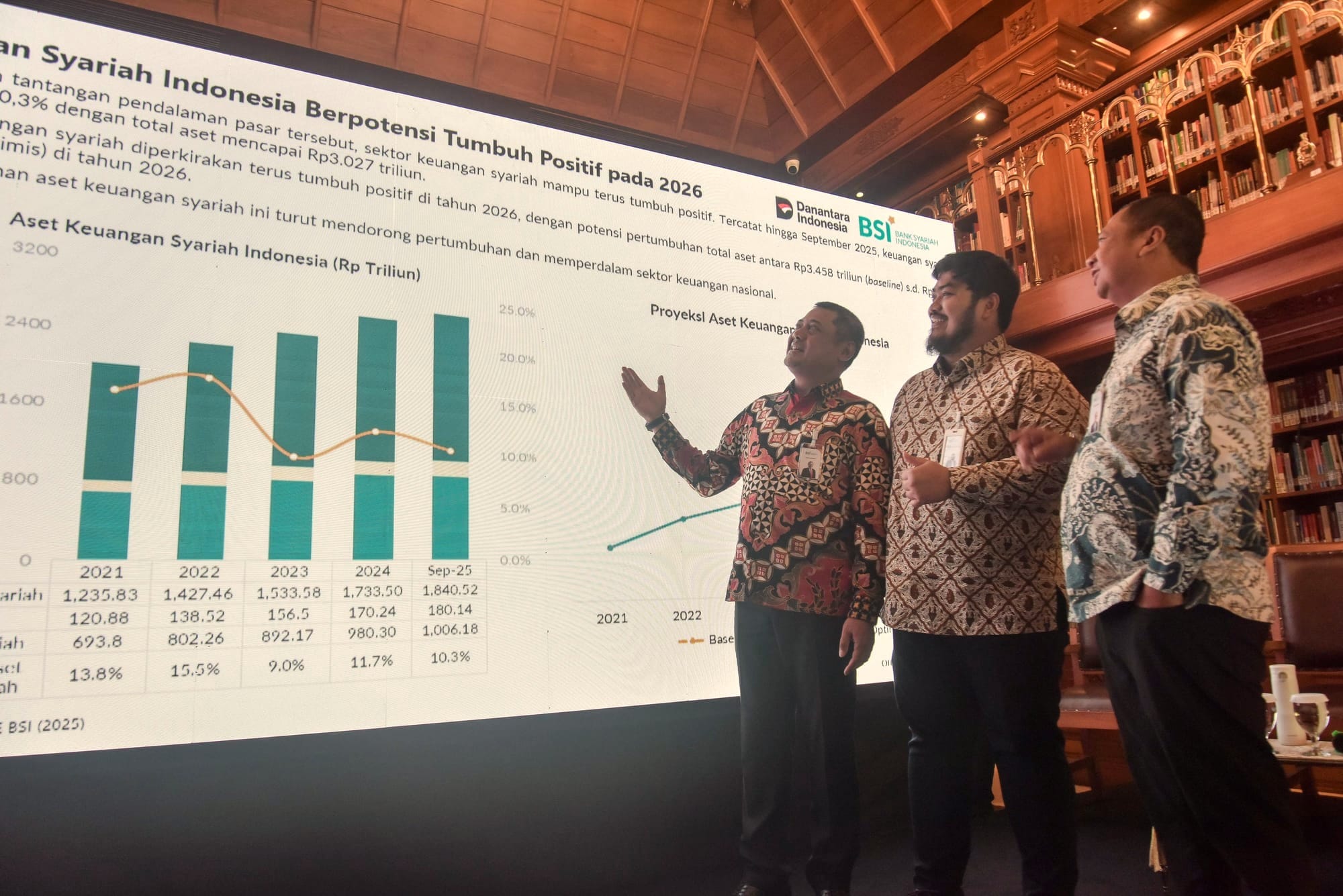
In the context of the State-Owned Banks Association (Himbara), Galau views the EGMS as part of the adjustment phase to new regulations accompanied by an agenda of institutional consolidation and accelerated decision-making.
He acknowledged that consolidation could have a positive impact if it was oriented towards strengthening state-owned enterprises, but it still posed a risk to business independence if the appointment of management was based more on political loyalty than banking expertise.
In addition to regulatory factors, global economic pressures are also considered a rational consideration behind consolidation. Galau highlights the global economic slowdown, uncertainty, and increased credit risk and default. In this situation, the EGMS is considered to be a momentum to improve the quality of financing distribution to be more selective and based on business feasibility.
He emphasized that BTN, as a public bank, must ensure that its intermediary function runs optimally and is free from unproductive intervention.
"BTN is publicly owned, so any changes must ensure that the public interest remains at the forefront," he said.
Galau emphasized the importance of meritocracy, professionalism, and strategic consistency so that BTN remains prudent in managing public funds and supporting productive sectors, particularly public housing, amid ongoing economic challenges.