
Indonesia has recorded a new milestone in its investment performance. Not only has it recorded high growth, but the contribution of domestic investors continues to increase.
The Ministry of Investment and Downstream Investment Coordinating Board (BKPM) noted that in the third quarter of 2025, investment realization reached IDR 491.4 trillion, up 13.9% YoY. Of that amount, 56.86% came from domestic investment (PMDN), setting the highest record since 2007.
For the first time in a decade, more than half of the national investment flowed outside Java. Of the total IDR491.4 trillion, around IDR256.8 trillion or 54.09 percent was realized outside Java, the highest figure in the last ten years.
The provinces of Central Sulawesi, North Maluku and East Kalimantan have become new magnets thanks to a rush of investment in the mining and mineral processing sectors. In Central Sulawesi, for example, nickel and base metal processing projects accounted for nearly IDR 30 trillion of new investment during the third quarter of this year.
"This shows that the downstream strategy has begun to generate multiple effects for the regions," said Minister of Investment and Downstream/Head of BKPM Rosan Roeslani in his press conference presentation in Jakarta, Friday (17/10/2025).
"We are no longer talking about exporting raw materials, but building an industrial ecosystem that triggers local growth."

The downstream policy has again become the main motor of achieving the national investment target. In the third quarter of 2025, investment realization in this sector reached Rp150.6 trillion or 30.6% of total investment, up 64.6% compared to the same period last year. This increase confirms the role of downstream as an important pillar in strengthening domestic added value.
Rosan said that the mineral sector was the biggest contributor to the turnaround with a total investment of IDR97.8 trillion. Of that amount, nickel dominated with Rp42 trillion, followed by copper with Rp21.2 trillion. He also highlighted the contribution of the plantation and forestry sectors, such as palm oil worth IDR 21 trillion, logs IDR 11.7 trillion, and rubber IDR 1.6 trillion.
Investment equity is also increasingly visible. The investment value outside Java reached Rp265.8 trillion (54.1%), surpassing Java which recorded Rp225.6 trillion (45.9%). The five provinces with the highest realization are West Java (IDR77.1 trillion), DKI Jakarta (IDR63.3 trillion), Central Sulawesi (IDR33.4 trillion), Banten (IDR30.8 trillion), and East Java (IDR30.4 trillion).
"Most importantly, incoming investment must be sustainable in order to have a real impact," he said.
Even so, not all regions have felt the same impact. West Java, DKI Jakarta, and Banten still occupy the top three highest investment recipients. Uneven basic infrastructure, limited energy, and the availability of skilled human resources are still the main obstacles to equitable investment.
For NEXT Indonesia Center Executive Director Christiantoko, this achievement is not just a number. It marks a change in the direction of the Indonesian economy, from one that has been dominated by foreign capital, to one that now relies more on domestic strength.
"The role of domestic investors is the highest achievement in the last 18 years," he said in an official statement in Jakarta, Sunday (18/10). "The capital is invested here, and the spending tends to be done domestically. This means that the money circulation remains in Indonesia."
According to him, the increase in PMDN shows the growing confidence of local businesses in national economic stability. The industrial downstreaming program, licensing simplification, and fiscal incentives are considered to be a combination that makes domestic investors more willing to invest.
For businesses, this imbalance opens up opportunities. Growing regions outside Java are becoming new grounds for expansion in the logistics, clean energy and light manufacturing sectors. "Investment equity is not just the government's responsibility," says Christiantoko. "Businesses also need to see the potential outside of markets that have been considered established."
Momentum for Equity and Green Economy
The Ministry of Investment noted that throughout 2025, investment has absorbed nearly 1.95 million new workers, with 696 thousand of them created just from third-quarter projects. The figure shows the role of investment as one of the main pillars of national economic growth, after household consumption.
However, amidst the race for numbers, the government emphasizes the importance of quality investment, which not only generates profits, but also has a social and environmental impact. "A good investment is not just a big one, but one that provides long-term benefits to society," Rosan said.
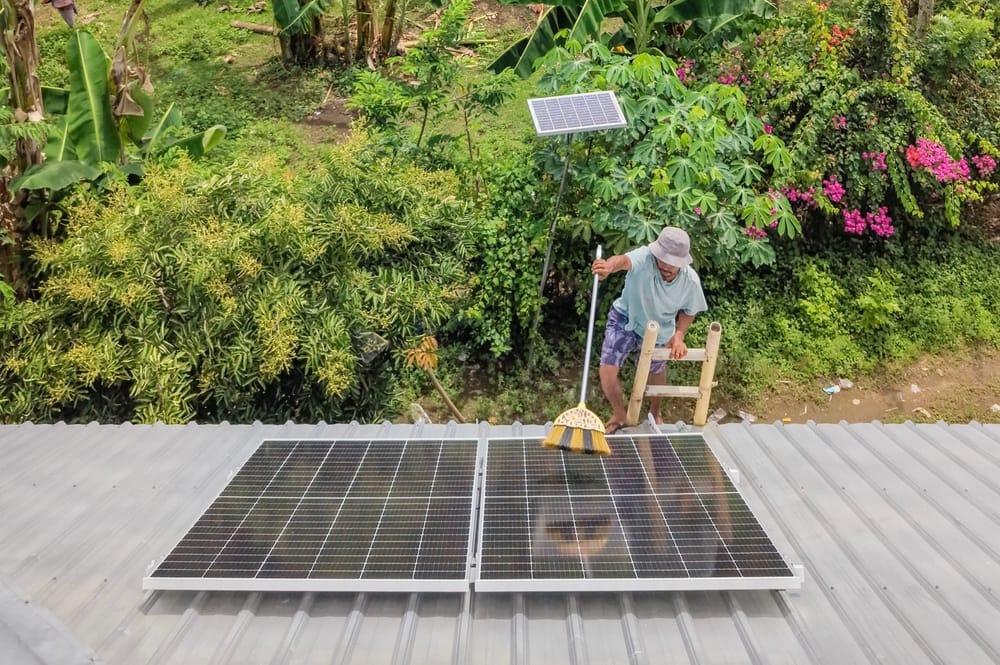
Steps in that direction are beginning to appear. A number of projects in the renewable energy and waste treatment sectors have begun to grow outside Java, such as solar power plant investments in East Nusa Tenggara and bioenergy projects in West Kalimantan. The government is also preparing green tax incentives to encourage more investors to enter the clean energy sector.
This policy is in line with global trends. The business world is now not only required to create profits, but also to implement ESG(environmental, social, governance) principles. With the contribution of investment to GDP now reaching 29 percent, strengthening green investment can be one of the most effective ways to achieve inclusive and sustainable economic growth.
Maintain trust and certainty
Although the data shows a positive direction, many economists think the government still has a lot of work to do in maintaining investor confidence. Political stability, bureaucratic efficiency, and policy consistency are key.
"The more complicated the licensing, the more expensive the regulatory costs, and the less interest investors have in staying," said Christiantoko. Therefore, improving the quality of licensing services, especially in the regions, is an important indicator in improving the Ease of Doing Business ranking.
West Java, for example. The importance of maintaining trust and legal certainty was also expressed by the Head of the West Java Investment and One-Stop Integrated Service (DPMPTSP) Dedi Taufik. Dedi said the achievement shows that the attractiveness of West Java as an investment destination is still very strong for domestic (PMDA) or foreign investment (PMA).
"Investor confidence in West Java is still high. A conducive business climate, infrastructure support, and accelerated licensing services continue to be the main factors that maintain this positive momentum," Dedi said as quoted from Antara on Saturday (18/10).
Dedi Taufik said that the increase in investment in West Java absorbed 303,469 workers, up 4.45 percent from last year (290,545 people). Of that number, 175,385 came from PMDN and 128,084 from PMA. Foreign investment came mostly from Japan, Singapore, and Hong Kong, with the greatest interest in the manufacturing industry, trade, communication, and real estate sectors.
"This investment figure is expected to continue to increase along with the entry of new investments in various industrial areas such as Rebana, Bekasi, and Greater Bandung," he said.
Read also:
 Zikrina Ratri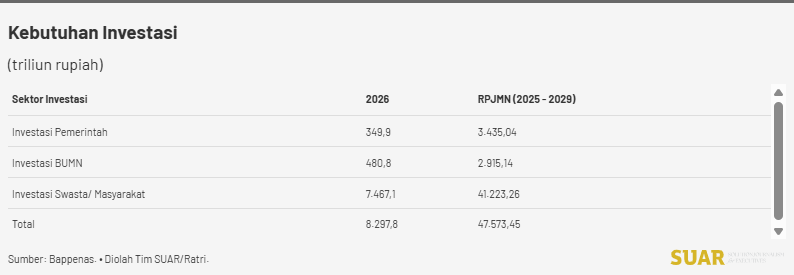
The government itself targets the contribution of investment to GDP to exceed 30 percent per year. If achieved, the chances of Indonesia's economic growth to break 5 percent or more will be greater, as experienced by India and China.
However, more than just chasing numbers, investment success is now measured by the extent to which capital can create jobs, reduce inequality, and strengthen regional competitiveness.
"What is needed is not only investors who trust," Christiantoko said in closing his statement, "but also a system that can ensure that trust lasts."
Downstreaming Encourages Investment Outside Java, but the Benefits Are Not Evenly Spread
The surge in investment outside Java in recent years cannot be separated from the government's downstream policy. This program is the main driver of investment, especially in the natural resource processing sector. According to Center of Reform on Economics (CORE) Indonesia researcher Yusuf Manilet, downstreaming has succeeded in creating new economic activities in various regions, opening up jobs, and adjusting the type of work to the characteristics of the local workforce.
"Regions that run downstream programs generally grow faster than other regions. This means that downstreaming does act as a catalyst for regional economic growth," Yusuf said.
However, he assessed that the investment is still highly dependent on the downstream sector, while other sectors have not grown significantly. "Investment outside the downstream sector does exist, but the portion is still much smaller," he said. This condition makes the regional economic structure remain narrow and prone to inequality.
From the socio-economic side, Yusuf also highlighted that the increase in investment has not been fully proportional to the improvement of community welfare. Although employment has increased, the quality of jobs created has not been sufficient to raise the standard of living of residents around industrial areas. The poverty rate in downstream industrial areas is still relatively high.
"The distribution of economic benefits is also uneven. Government transfer funds to the regions are not strong enough to expand the multiplier effect of investment," he added. Yusuf assessed that government transfer funds to the regions are not strong enough to expand the multiplier effect of incoming investment, so that economic benefits are still concentrated in certain groups.
Center for Strategic and International Studies (CSIS) researcher Deni Friawan reinforced this view. He assessed that the increase in investment outside Java was still concentrated in extractive sectors, especially downstream minerals such as nickel and copper. "So this is not comprehensive growth. Investment is indeed large, but it is still accumulated in capital intensive sectors," he said.
Deni pointed out that regions such as Sulawesi and Maluku recorded high economic growth thanks to nickel downstreaming, but the impact on employment is still limited. "Because the nature of the industry is capital-intensive, not labor-intensive, the absorption of labor remains small," he said. In addition, most of the high-skilled jobs are filled by workers from outside the region, while local people are mostly involved in supporting sectors such as small trade and daily services.
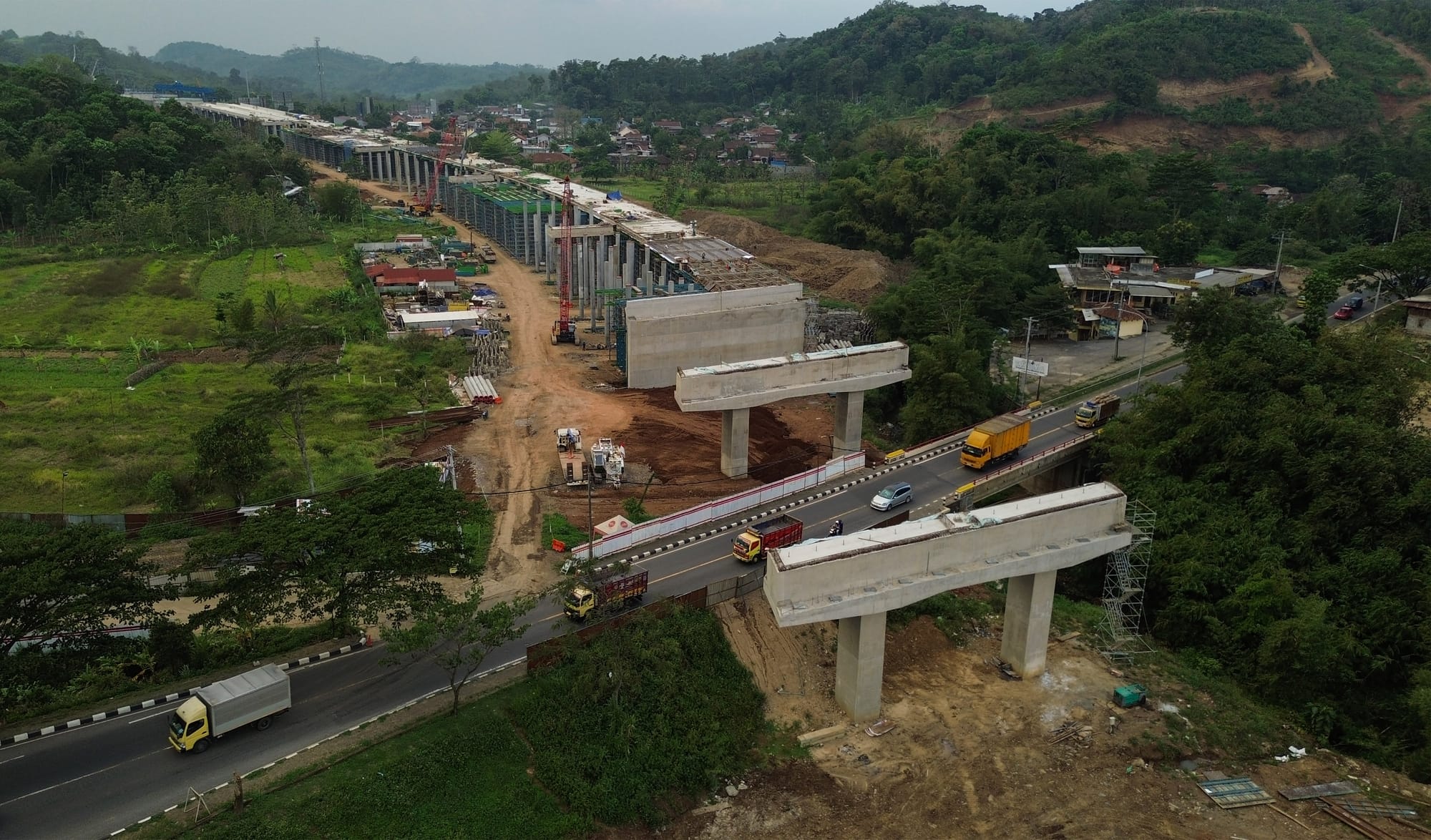
Both experts agreed that in order for downstreaming not only to produce growth on paper, the government needs to strengthen the foundation of the business climate in the regions. Deni emphasized the importance of adequate logistics infrastructure, regulatory certainty, and inter-regional connectivity so that the benefits of investment can spread more widely. "Investment should not stop in industrial enclaves. It must be able to grow other sectors around it," he said.
Another noteworthy challenge, Yusuf said, is the aspect of environmental sustainability. In some areas, downstream activities have put pressure on ecosystems, from pollution to land use change. Yusuf emphasized the importance of more sustainable planning so that economic benefits do not come at a high environmental cost. "Going forward, the government needs to ensure that increasing economic added value goes hand in hand with environmental protection and improving people's quality of life," he concluded.