

Indonesia signed a USD1.25 billion wheat purchase memorandum of understanding (MoU) with the United States in an effort to reach a negotiated agreement to avoid a potential high tariff burden.
The agreement between the Indonesian Wheat Flour Producers Association (APTINDO) and US Wheat Associates was signed in Jakarta on Monday (7/7), and includes a commitment to import at least one million metric tons of wheat per year for five years, from 2026 to 2030.
Last weekend, the government through PT Pertamina Geothermal Energy will also sign an agreement (MoU) worth US$ 34 billion with a US company.
The move comes two days before the US government's final decision deadline on July 9, which will determine the fate of tariffs on Indonesian products.
Currently, Indonesia faces the threat of an additional 32 percent tariff on top of the 10 percent base tariff. In the midst of this uncertainty, direct involvement of business actors is considered a form of active response from Indonesia to show its seriousness in balancing the bilateral trade balance.

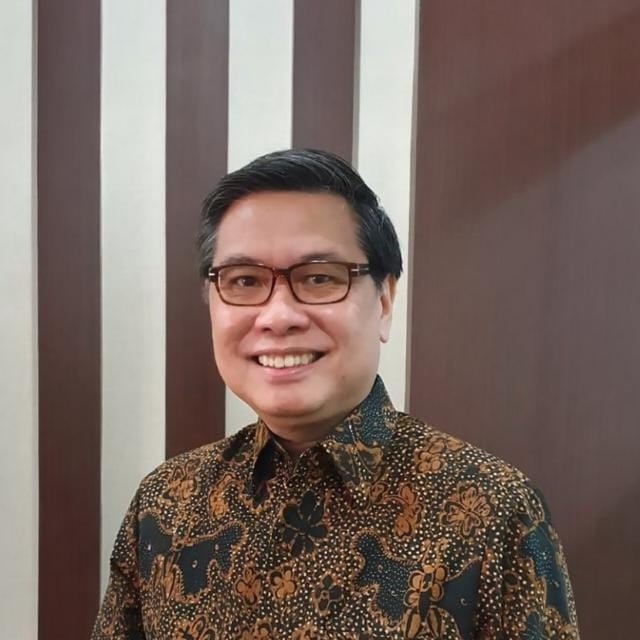
APTINDO Chairman Franciscus Welirang called this agreement a contribution from the business community to strengthen Indonesia's position in the negotiations.
He said that this wheat purchase cooperation is not only about trade transactions, but also building long-term relationships between Indonesian business actors and wheat farmers in the United States.
"This is a form of strengthening the business to business relationship between us and the wheat farmers there," he said when interviewed by SUAR by telephone in Jakarta on Monday (07/07).
Franciscus said that so far the volume of wheat imports from the US by APTINDO members has been around 500 thousand tons per year. Through the newly signed MoU, the company plans to increase the volume to one million tons starting next year.
Responding to the turbulent geopolitical situation, including uncertainty due to potential changes in US trade policy under Donald Trump, APTINDO emphasized that this step remains in line with the principle of Indonesia's free and active foreign policy.
"This is for the national interest. Indonesia is neutral, so hopefully this cooperation can still run smoothly and not be negatively affected," he added.
Actively involved from the beginning of the negotiation
Meanwhile, Deputy Chairman of the Indonesian Employers Association (APINDO), Sanny Iskandar stated that the business world has been actively involved in overseeing the tariff policy negotiation process between Indonesia and the US which is now entering a crucial stage. In the last 90 days, APINDO and businesses have provided various official inputs to the government, ranging from strategic export-import mapping to the selection of priority commodities that can support national competitiveness amid protectionist pressures.
"We view the Indonesian government's move to submit a strategic commitment worth US$34 billion to strategic partners in the United States as an important part of the negotiation strategy to reduce the threat of US reciprocal tariffs," Sanny wrote in his statement to Suar on Monday night (7/7).
Plans to purchase energy, agricultural products, and long-term investments by state-owned enterprises and national investment institutions such as Danantara are part of a win-win approach that can maintain Indonesia's market access to the US. Sanny believes that commodities such as cotton, soybeans, dairy products, corn, and crude oil can be a meeting point between the needs of the domestic industry and US deficit concerns.
Although Indonesia's export contribution to the US is only around 10 percent of total national exports, labor-intensive sectors such as textiles, footwear, furniture, and toys are considered to be the most affected if high tariffs are actually imposed. Amidst the weakening trend of the manufacturing index, rising production costs, and slowing global demand, Sanny reminded the importance of market diversification, production efficiency, and strengthening supply chain competitiveness.
"Stability, adaptability, and competitiveness are our principles. The business world encourages data-based trade diplomacy, while continuing to provide input so that the government has a strong foothold in negotiations," Sanny continued.
Previously, the Indonesian government through the Coordinating Ministry for Economic Affairs stated that it had submitted all technical documents requested by the US authorities and was pushing for an MoU as additional material in the negotiations.
Coordinating Ministry for Economic Affairs Spokesperson Haryo Limanseto said that this MoU document is a clear signal of Indonesia's seriousness to balance the trade balance with the US.
"We want to show the potential for concrete cooperation between the Indonesian and US business sectors. Hopefully, Indonesia can be included in the first wave of countries that get tariff reductions," Haryo said, quoted by Kontan.
Data from the Office of the US Trade Representative (USTR) shows that the US goods trade deficit against Indonesia reached US$17.9 billion in 2024, a 5.4 percent increase over the previous year.
The Indonesian government hopes that measures such as this increase in wheat imports can strengthen its position in negotiations and open up opportunities for more balanced long-term economic cooperation.
Data from the Office of the US Trade Representative (USTR) shows that by 2024, the US goods trade deficit with Indonesia will reach US$17.9 billion, up 5.4 percent from the previous year.
This effort is in line with the government's broader strategy: strengthening two-way economic cooperation, not only through exports, but also by increasing strategic imports from the US, especially in the agriculture and energy sectors.
Coordinating Minister for the Economy Airlangga Hartarto also previously stated that this private sector MoU is a complement to the two official proposals that the government has submitted to the US.
According to IDN Times, a number of Indonesian companies were invited to conduct an MoU with the US. The MoU and meeting are scheduled to take place on July 7-8, 2025 at the Embassy of the Republic of Indonesia in Washington, D.C., United States.
The list of invited Indonesian company officials, among others, came from: PT Pertamina (Persero), PT Garuda Indonesia (Persero) Tbk, Indo-Rama Synthetics Tbk, PT Indofood Sukses Makmur Tbk, PT FKS Food Sejahtera Tbk, PT Cargill Indonesia, PT Cerestar Flour Mills, PT Wilmar Nabati Indonesia, PT Bungasari Flour Mills, PT Fuguji Flour Indonesia, PT Dharma Mas, PT Duniatex, PT Budi Texindo Perkasa, PT Kahatex, Gabungan Asosiasi Perusahaan Makanan Ternak (GPMT), Asosiasi Perkelompokkan Producer Jagung Indonesia, Staplecon (President and CEO).


