

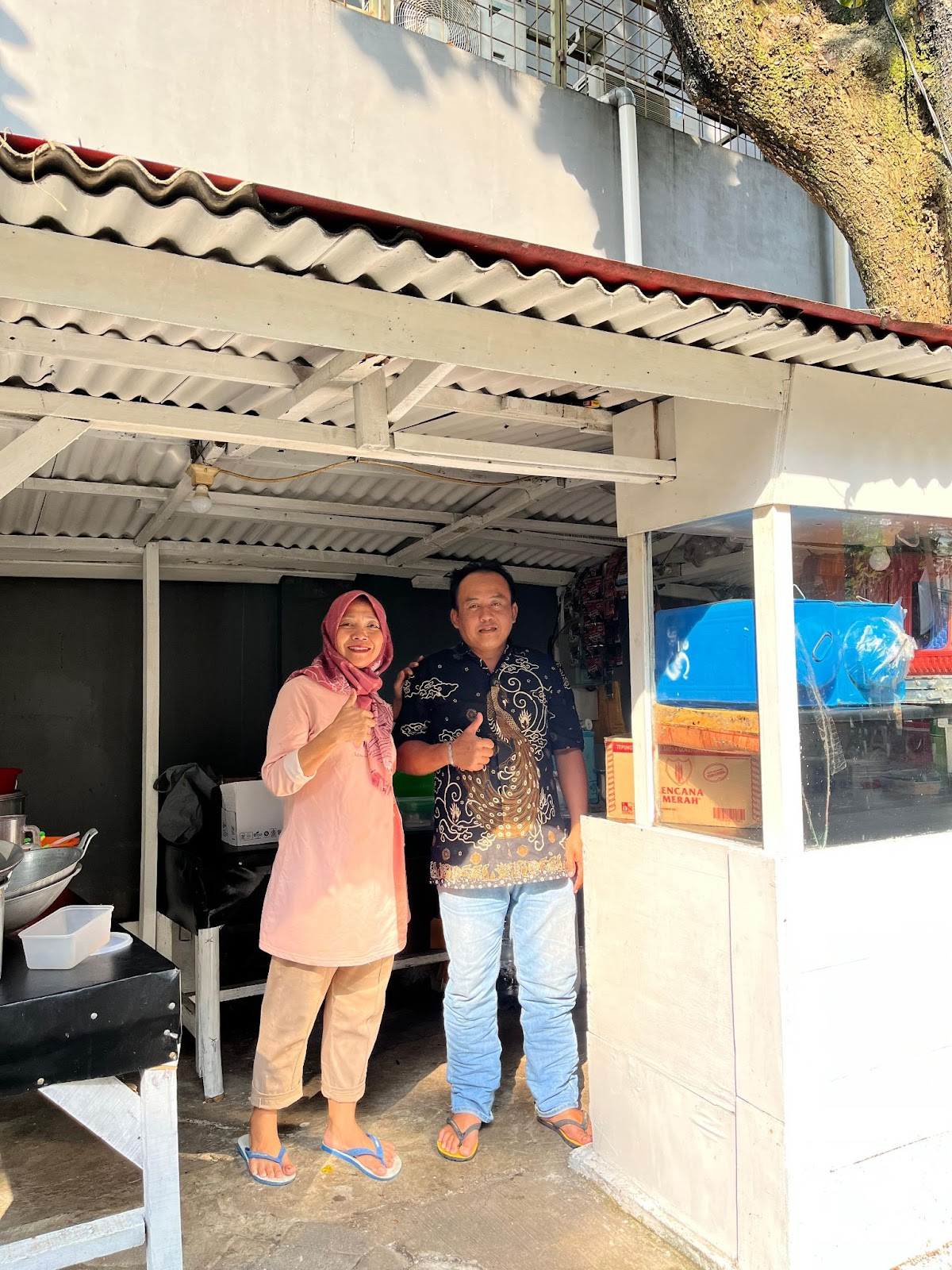
On the corner of Dempo Street, Kebayoran Baru, South Jakarta, a small warteg looks like any other warung. Wooden tables, plastic chairs, cans of crackers attached to the side of the table and soy sauce and chili sauce in the center are the companions of the customers.
There were people around the table eating. Meanwhile, a middle-aged woman was busy preparing orders to serve other customers who were taking turns. Understandably, it was lunchtime.
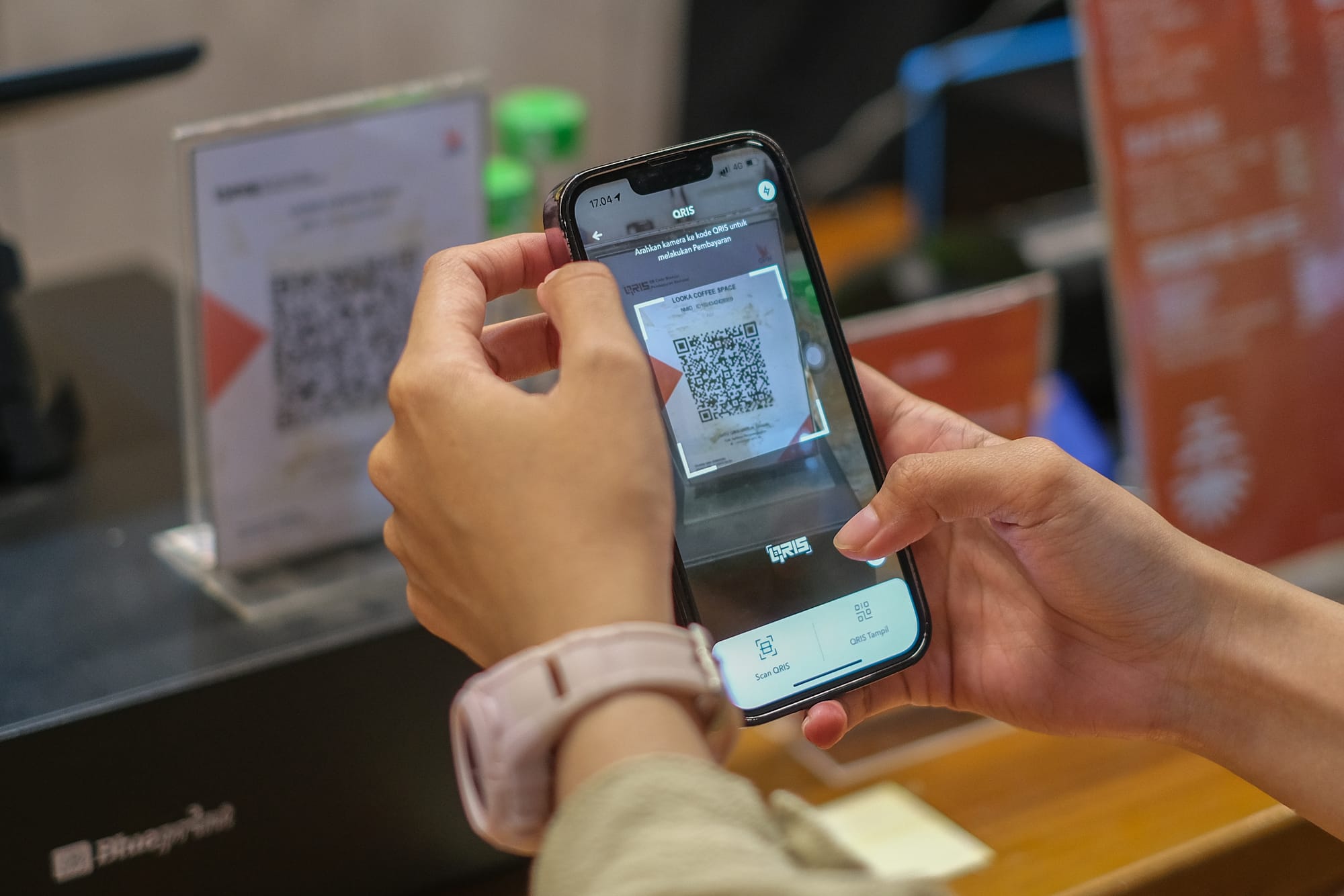
A board with a barcode code is shown to customers who want to pay for their meal. A moment later there was a "Triingg" sound.
"You're in," Mrs. Satriana continued.
Who would have thought, the shop owned by Mrs. Satriana now serves digital payments, even for purchases of IDR 2,000. The technology is called QRIS (Quick Response Code Indonesian Standard) which is now used as a digital payment tool in Indonesia.
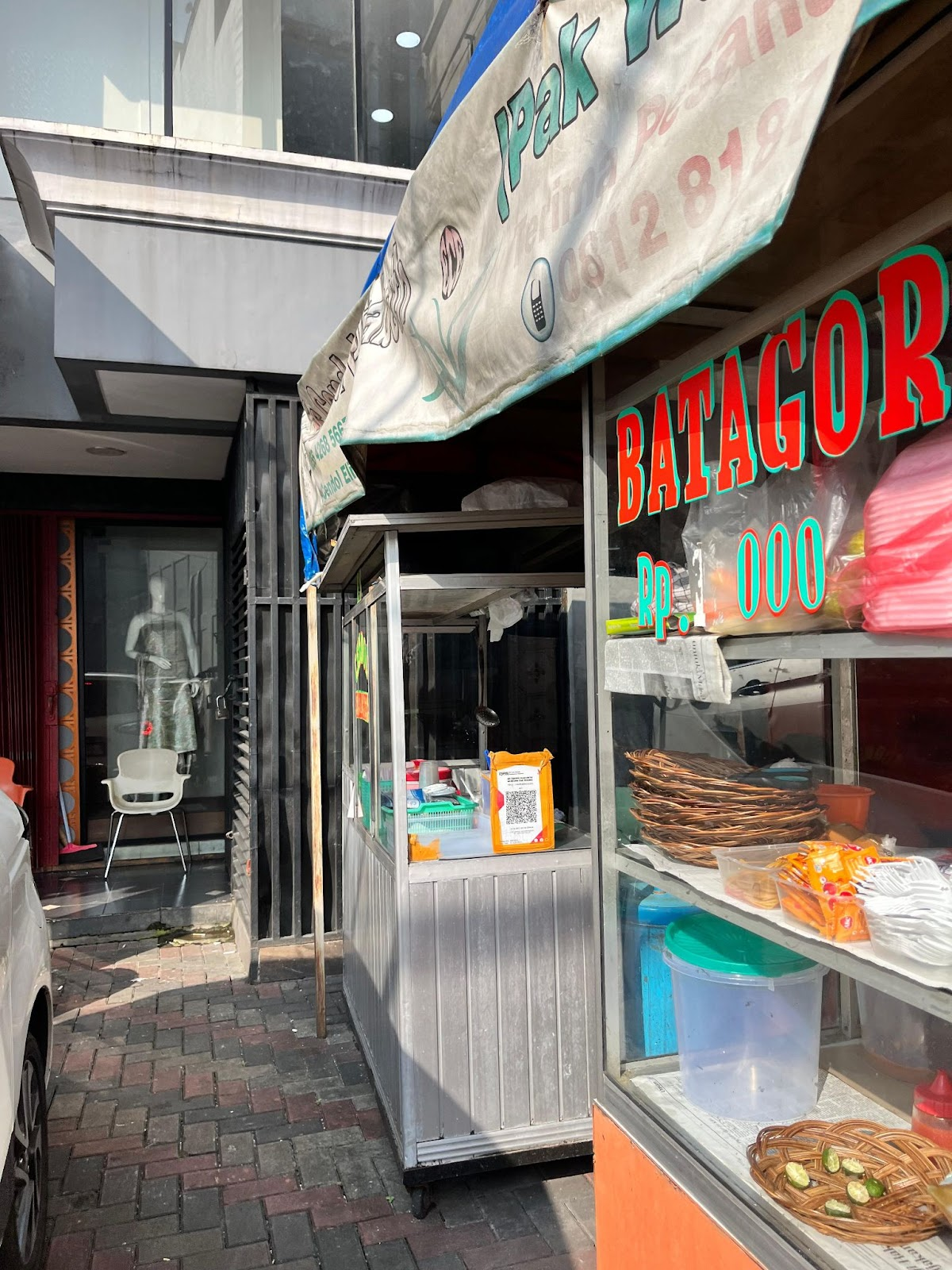
Not only by hipster cafes or modern stores, but also by food stalls, street vendors, home laundry, and fried food vendors.
"At first I thought, is it good to use QRIS? But it turns out that more and more people are asking, 'Mom, can you use QRIS?' Well, I finally used it too," Ms. Satriana told SUAR in Jakarta on Thursday (3/7).
Ms. Satriana started using QRIS in early 2025, after an officer from Bank Mandiri came to offer free QRIS creation. With only an ID card and an active account, Ms. Satriana now serves customers who are more comfortable paying with a digital wallet.
Ms. Satriana's story is not the only one. In the last two years, digital payments have increasingly penetrated the micro business sector. One of the reasons for the increased adoption is consumer demand.
"If you can't use QRIS, customers will cancel their meals. Now even Rp2,000, Rp3,000 can use QRIS," he said with a chuckle.
This technology, according to him, makes trading activities easier, especially when buyers are busy. He also feels safer because he can immediately know if the payment is successful through a voice notification from his cellphone.
"I use the regular one, but my cellphone is connected to bluetooth. So if someone pays, it makes a sound. If there is no sound, I say, 'Mom / Dad, it hasn't come in yet.' So it can be safer, not cheated," he explained.
According to Bank Indonesia data reported by Antara, until the first quarter of 2025, the number of QRIS users had reached 56.3 million with a transaction volume of 2.6 billion. Of the total users, 38.1 million are UMKM players. This shows that the majority of QRIS users are micro and small business sectors.
Deputy Director of BI's Inclusive and Green Finance Economy Department, Sri Noerhidajati, emphasized that digitization such as QRIS is proven to increase efficiency and open up growth opportunities for UMKM.
"Until the first quarter of 2025, thank God QRIS users have reached 56.3 million with a volume of 2.6 billion transactions and QRIS merchants are mostly UMKM as many as 38.1 million," Sri Noerhidajati said in Jakarta as quoted by Antaranews.
Meanwhile, launching Kumparan, at the end of 2024, BI Deputy Governor Filianingsih Hendarta said the food and beverage sector was the largest user of QRIS, reflecting the high penetration of technology in business lines closest to the community.
"Well, the volume is extraordinary, so the Governor challenged us, yes, that's the target. The target volume here is 2.5 billion transactions, so in November the transactions have reached 5.46 billion, so it has reached 218 percent," Filianingsih explained in late December last year as quoted by Kumparan.
Voice QRIS
Behind that convenience, there are increasingly interesting technological developments: Audio-based QRIS. This system lets merchants know the success of a transaction without having to read the screen, especially useful for the elderly, those with visual disabilities, or businesses with limited digital literacy.
This technology utilizes artificial intelligence (AI) in various forms: from smart notification systems, integration with bookkeeping systems, to analysis of transaction patterns. AI is starting to be presented not just as a powerful tool, but as a bridge of inclusion.
But to what extent does AI really help small businesses? According to Nailul Huda, a digital economy expert from CELIOS, the approach should be based on equity of access.
"Technology like voice QRIS is an example of how AI can make transactions more inclusive, not just sophisticated. But the challenge is affordability and socialization to UMKM at the lowest layer, as well as the potential for fraud," said Huda, on Friday (4/7).
Indeed, fraud is one of the big problems in the implementation of QRIS. Fraud often occurs when buyers pretend to have paid, even though the money has not yet entered the merchant's account. This often happens to UMKM that use static QRIS in the form of printed stickers, not EDC machines that have an automatic verification system.
"Because there is no notification, many merchants ask for QRIS proof of transfer, even though it can be manipulated. For the visually impaired, static QRIS is also not inclusive because they don't know if the transaction was successful," continued Huda.
This is where QRIS Voice comes in as a solution. This system allows transactions to be heard directly by both buyers and sellers, reducing the risk of fraud and helping users with disabilities. Although fraud loopholes can still be found by unscrupulous people, this technology is the first step towards a fairer and safer payment system.
"Therefore, the push to adopt QRIS Voice more widely, especially in regional markets, is important. Moreover, the tools are now mass available in the country, opening up opportunities for government programs to expand their distribution and education (QRIS Voice-read) to UMKM," he explained.
Still relying on chance
What Ms. Satriana experienced reflects a larger reality: many UMKM players are only "exposed" to technology by chance. In her case, she started using QRIS because a bank officer came directly to the location. Without that, she most likely wouldn't have taken care of it herself.
"If no one comes, I don't make it either. I was confused about how to do it. But when someone came to offer it, there were also many requests from customers, so I did it," she said.
This means that the digitalization of UMKM is not yet fully based on the availability of access, but still depends on individual initiatives or the luck of being reached by outsiders. On the other hand, digital literacy is still a challenge. Many businesses do not know the long-term benefits of digital technology, other than as a practical payment tool.
Indonesia has indeed adopted a national strategy to expand financial and digital inclusion, one of which is through the expansion of QRIS. However, regulation alone is not enough. What is needed is structured assistance, continuous socialization, and equitable infrastructure provision.
"Actually, it is necessary. The important thing is not to make it difficult. Make it easy, accessible to small people like us," said Ms. Satriana.
He hopes that the government will more often go directly to the field to introduce technology, not just create programs from behind a desk.
In this context, AI and digital technologies are not just about accelerating innovation, but also about direction: are they widening inequality, or closing the gap? If managed correctly, technologies like voice QRIS can be a small example of true technological justice.
Back to basics: who to reach
That day, customers came and went at Mrs. Satriana's shop. Some pay in cash, most use QRIS. No big machines, no sophisticated touch screens. Just a paper QR code on the side of the table and a small cellphone ready to ring.
"If there is a sound, it means it has entered. If not, I check first. But thank God, it's going well," she says while wiping the customers' plates. Technology may seem far away, but for Ms. Satriana, as long as it makes things easier and more accessible, why not?
QRIS, for some, is a symbol of modernization. But for UMKM like Ms. Satriana, it is a simple bridge to security and smooth trading. The condition is one: don't let them go it alone. Because technology, no matter how small, will only be useful if it actually gets into the hands of those who need it.


