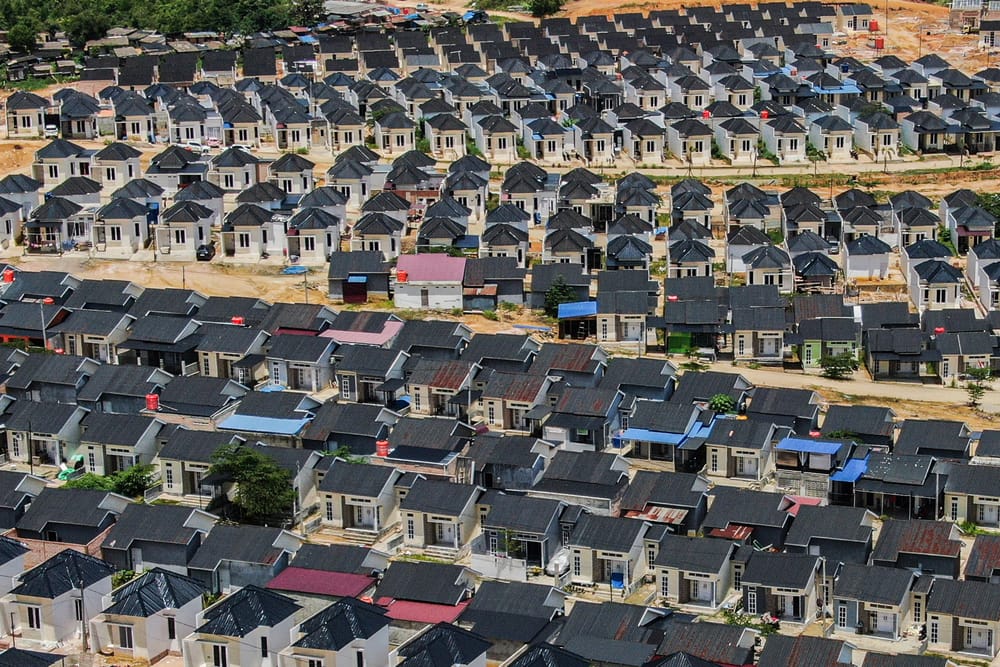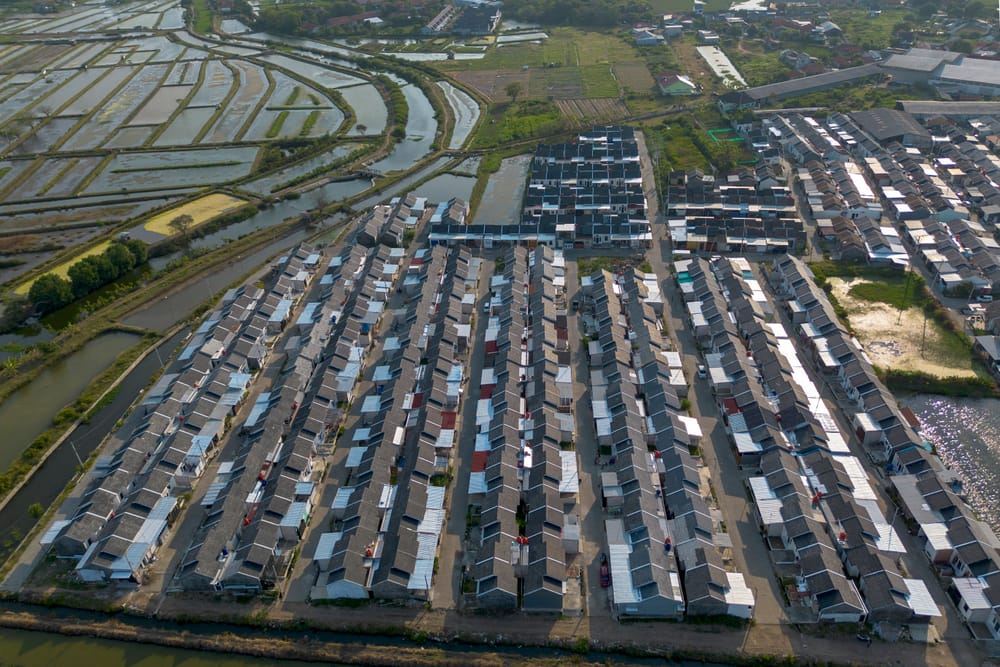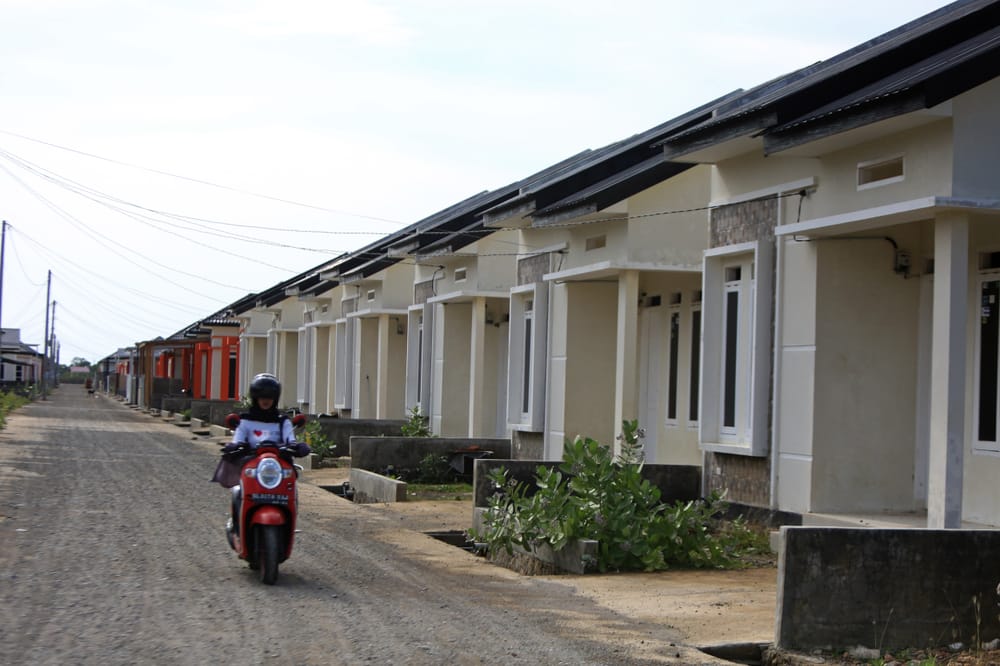

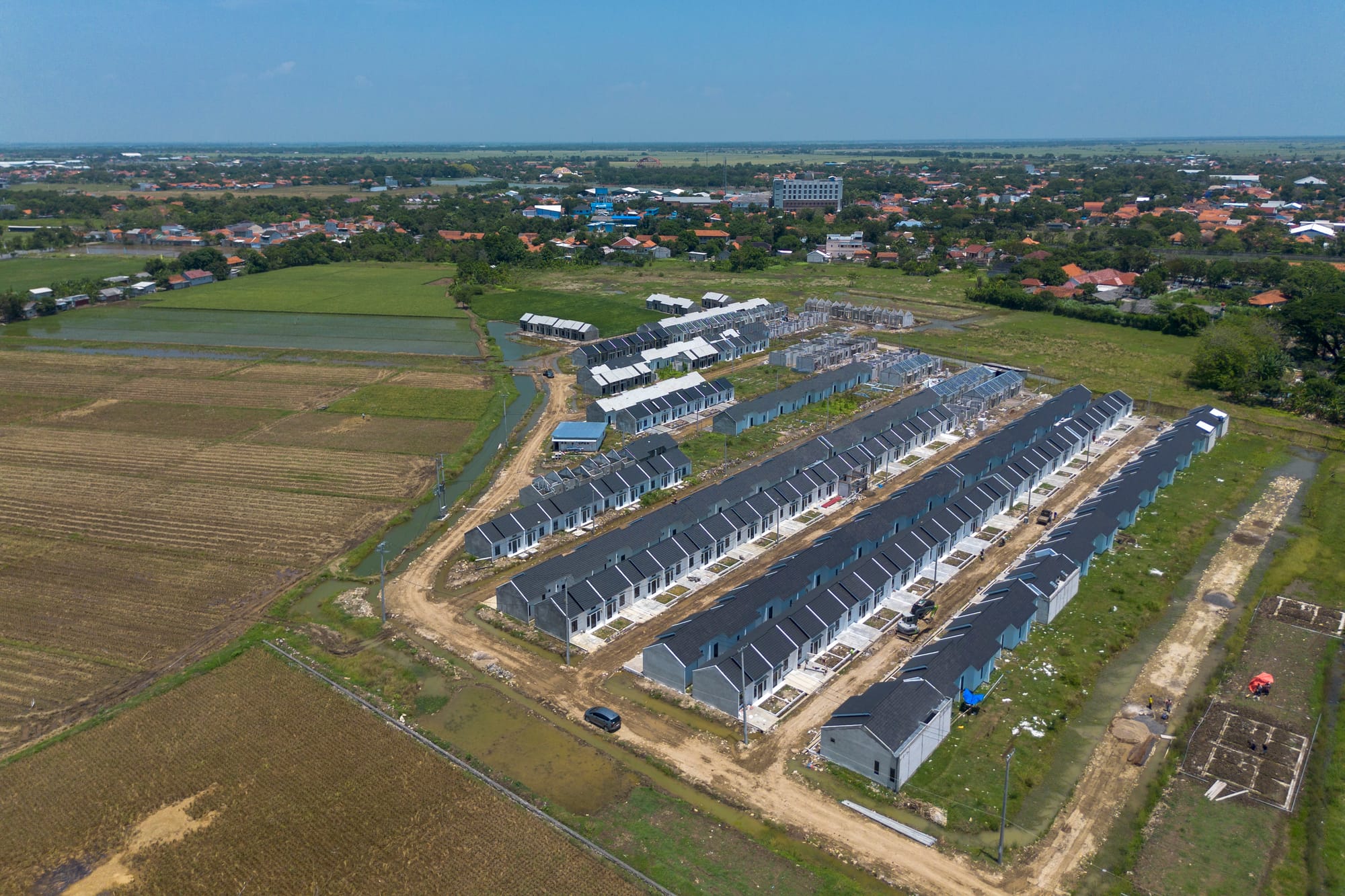
The government has made various efforts to fulfill the goal of building 3 million housing units. One of the steps to accelerate the achievement of President Prabowo's vision, the Ministry of Housing and Settlement Areas (PKP) in collaboration with the Ministry of Finance released the Housing Financing Liquidity Facility (FLPP).
This FLPP assistance allows the government to set an ambitious target of building up to 350,000 houses per year. However, the realization of the construction and distribution of subsidized houses must continue to be monitored until it is actually realized.
As one of the priority programs of President Prabowo Subianto's administration, the construction of 3,000,000 houses for low-income people (MBR) is a long-awaited commitment. Now, a year into the program, the proof of the government's commitment is starting to break.
Housing and Settlement Minister Maruarar Sirait stated that his office has reached an agreement with the Ministry of Finance and the Public Housing Savings Management Agency (BP Tapera) to do a launch contract for 25,000 subsidized houses on Monday, September 29, 2025.
"We are very pleased to carry out the contract for 25,000 subsidized houses in Bogor Regency, West Java. We chose to launch in Bogor because the developers are good, qualified, and we have checked," said Maruarar after attending a Tapera Commission meeting in Jakarta, Wednesday (24/9/2025).
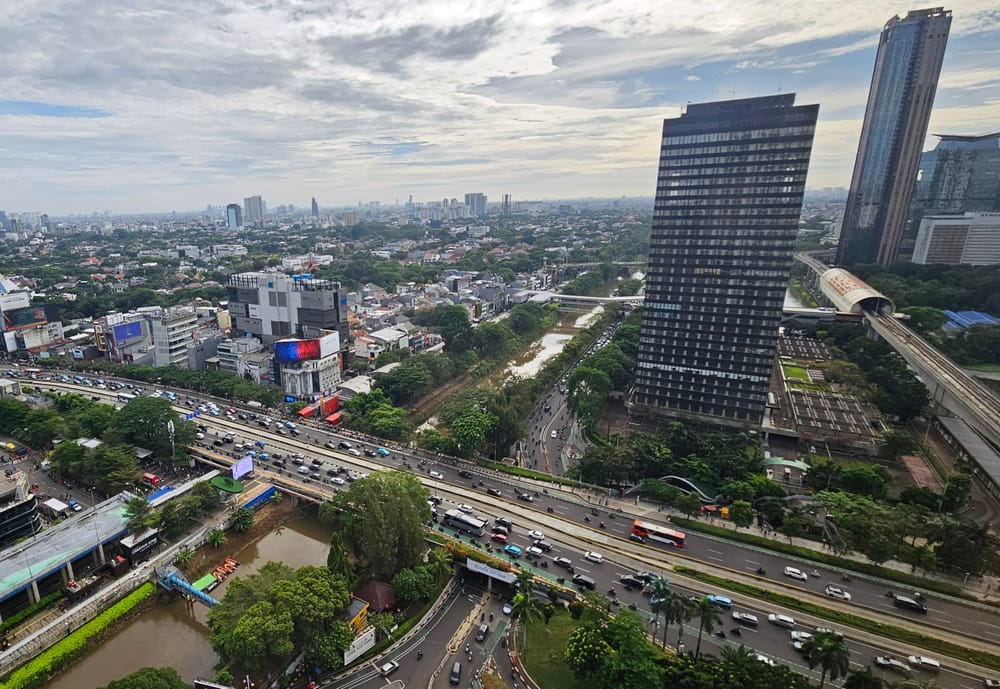
According to Maruarar, as a follow-up to the launch of the 25,000 subsidized houses, the Ministry of PKP will make breakthroughs. For example, working with local governments to build subsidized houses in areas closer to cities as centers of economic growth, including in Jakarta.
The mass signing of 25,000 subsidized houses on Monday, continued Maruarar, is proof of the state's real support to ensure affordable home ownership. He ensured that the People's Business Credit (KUR) for Housing will continue to run with a ceiling of Rp 130 trillion. The details are Rp 117 trillion for developer stimulus and Rp 13 trillion to stimulate demand.
"In addition to freeing BPHTB (land and building rights acquisition fee), the President has also agreed that the interest rate for the construction of subsidized houses for MBR remains at 5%. Of course, this is very attractive for the community, and also for developers. Thanks to the full support of the Ministry of Finance, all this can be realized," he said.
Director General of Economic and Fiscal Strategy at the Ministry of Finance Febrio Nathan Kacaribu, who was present with Maruarar, confirmed the Ministry's support. Complementing Maruarar's statement, the government not only launched subsidized houses built with FLPP, but also followed up the house renovation program with the Self-Help Housing Stimulant Assistance (BSPS) scheme.
"In addition to FLPP, we are also renovating 40,000 BSPS houses and providing 100% government-borne VAT (PPN DTP) for commercial houses up to IDR 5 billion, which is extended until the end of 2026," Febrio explained.
Next year, the government aims to aggressively double the target of subsidized housing recipients. Namely, renovating 400,000 houses through the BSPS scheme, building 330,000 FLPP houses, and providing VAT DTP for 40,000 houses. In total, state facilities for housing development will reach 770,000 housing units.
The public housing development program, said Maruarar again, will be a concrete driver of the real sector. During the construction process, this subsidized housing project will create many jobs. Then, plus the multiplier effect for building shops, the iron and steel industry, and UMKM around the housing area.
"The meeting decided that the realization in October should be at least 50%. Absorption must be high, but governance is also important. Not only high absorption, but the quality must also be good. The government's good intentions should not be tainted by problematic cases in the middle of the road," concluded Maruarar.
Cooperation with the business world
On a different occasion, Chairman of the Indonesian Chamber of Commerce and Industry (Kadin) Anindya Novyan Bakrie emphasized the importance of synergy between the government and the business world in realizing the 3 Million Houses Program, which is a priority of the administration of President Prabowo Subianto and Vice President Gibran Rakabuming Raka.
This was conveyed by Anindya at the National Heritage Housing Mutual Cooperation Meeting and Symposium entitled "Housing, National Growth Motor" which took place at Balai Sarbini, Lippo Mall Nusantara, Jakarta, on Wednesday (17/9/2025) evening.
Anin underlined that the housing sector is not just a fulfillment of people's basic needs, but also the main driver of the national economy. "The construction sector, including housing, absorbs 8.1 million people or 6% of the entire workforce in Indonesia. This makes it the fourth largest sector after agriculture, trade, and manufacturing," Anin explained.
Anin explained that each construction of one housing unit can absorb 5 to 6 direct workers, and encourage more than 140 derivative industry sectors, ranging from cement, steel, wood, to transportation services.
Guard the realization
Regardless of the government's target of setting a figure of hundreds of thousands for housing development, the community should remain critical and help closely oversee the realization of housing development until the handover. In other words, don't let the government's claims only stop at ceremonial moments.
Head of Research and Consultancy Division of CBRE Indonesia Property Agent Anton Sitorus assessed that the commitment to build hundreds to millions of houses for the people is not new in Indonesia. The declaration of this agenda has been carried out since the administration of Susilo Bambang Yudhoyono and Joko Widodo.
Therefore, despite his positive welcome, Anton emphasized that the ceremonial launch is one thing. But, closely guarding the realization of housing development until it is completed and handed over to the buyer on time and has specifications according to the agreement is a different thing.
"I have also heard that near my house in Sentra Primer Timur there is government land that wants to build subsidized housing. Indeed there was a ceremony, the location was fenced off, given a banner of information, but until now there is no sign of any movement," Anton said when contacted by SUAR, Thursday (9/25/2025).
According to Anton, the public has the right to monitor the construction of houses that have been allocated in the state budget. He added that the private sector and property developers will obviously be happy to welcome and ready to cooperate with the government to realize this program.
"Who wouldn't be happy with a program like this? The goal is for the community. The problem is now, what is the implementation and realization in the community? I heard the government said it wants to cooperate with developers from Qatar for housing in Kampung Bandan, so let's see what it looks like," he said.
As a practitioner, Anton reminded the government to be accountable and transparent. FLPP claims of up to 350,000 can indeed be made. However, if the realization does not reach this figure, he would not be surprised if the public thinks there is engineering in the construction of people's homes.
"Of the 25,000 units launched on Monday, the public has the right to ask where the detailed location is, what kind of house. If the government calls it a contract, it means that at least AJB already exists. Again, engineering is very possible and realization can be below that. We really have to keep an eye on it," said Anton.