
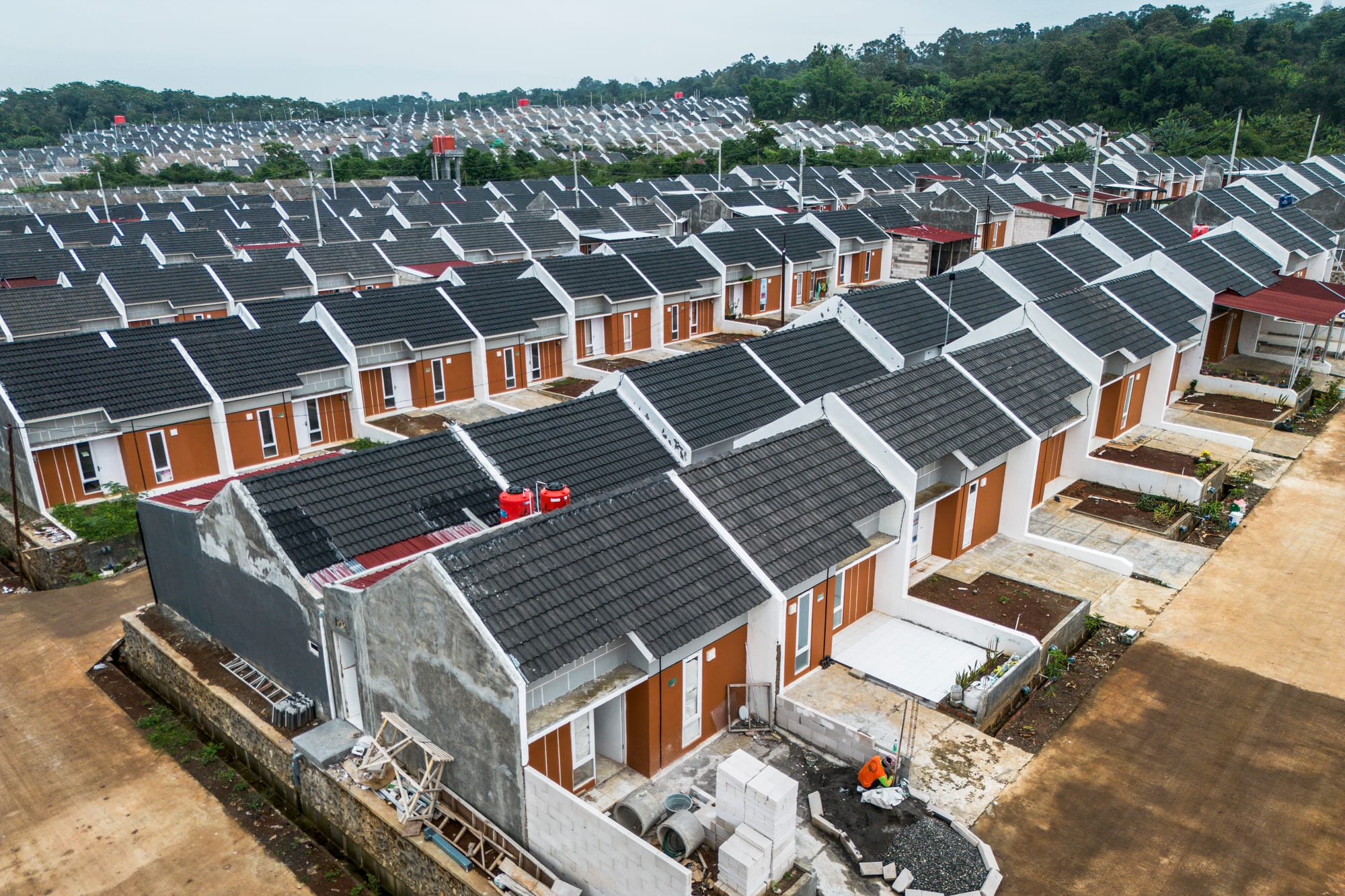
Various development programs and government incentives regarding housing have a positive impact on the increase in the performance of the ceramic industry. The industry's production volume in January-October 2025 reached 392.7 million square meters, growing 16% compared to the same period last year.
Chairman of the Indonesian Ceramic Association (Asaki) Edy Suyanto said that the increase in national ceramic production cannot be separated from government policies. These include government-borne VAT, People's Business Credit (KUR) for contractors and builders, and the Housing Financing Liquidity Facility (FLPP) for 350 thousand units.
These programs increased the demand for housing construction. This has also increased the demand and production of ceramics.
In addition, according to Edy, the policy of implementing the Indonesian National Standard (SNI) helps the domestic ceramic industry to compete against the flood of ceramic imports.
Gas price challenge
Despite the increase, Edy said that his party still faces the challenge of high gas prices.
"Although ceramic production is increasing, challenges still exist, namely high gas prices and the invasion of imported products, especially from China," he said when met at the DPR Building, Jakarta (15/11).
Edy said that at a recent meeting of the ASEAN ceramics association in Malaysia, it was revealed that gas prices in Malaysia and Thailand have actually decreased in recent years.
Malaysia reported that their gas price fell from US$10.05 per Billion Metric British Thermal Unit (MMBTU) to US$9.6 per MMBTU this year. Similar to Malaysia, Thailand also recorded a decline in gas prices in the last three years to US$9.9 per MMBTU. Meanwhile in Indonesia, the price trend is actually increasing, even though Indonesia is a gas producer.
This condition makes production costs in Indonesia much higher than neighboring countries. Currently, the unsubsidized market gas price for industry is in the range of USD 11-USD12 per MMBTU.
He asked the government to provide gas prices in accordance with industry standards, namely US$ 7 per MMBTU, so that the Indonesian ceramic industry can compete in the Asean region.
Confident industrial capability
In a separate place, the Ministry of Industry (Kemenperin) emphasized Indonesia's strategic role in the global supply chain of the ceramic industry through the organization of the 32nd World Ceramic Tiles Forum (WCTF) 2025 in Yogyakarta on November 10, 2025.
The international forum, which was attended by delegates from various countries, is an important momentum to show the strength of the national ceramic industry, which is now in the top five producers in the world.
Director General of Chemical, Pharmaceutical and Textile Industries (IKFT) of the Ministry of Industry, Taufiek Bawazier said that the ceramic industry is one of the national leading sectors that has great potential because it is based on local natural resources and has a strong structure of industrial linkage and depth.
"With a production capacity of 625 million square meters per year, Indonesia is currently in the top five ceramic producers in the world. We are optimistic, with the support of investment and the right policies, Indonesia will be able to rise to the top four in the world in the near future," he said in a press release received by SUAR in Jakarta (17/11/2025).
The performance of the ceramics industry also showed positive growth. In the second quarter of 2025, the cement, ceramics and non-metallic minerals processing sector grew by 10.07 percent (y-on-y), becoming one of the best performing subsectors in the non-oil and gas manufacturing sector.
He added, throughout 2020-2024, the total investment realization in the ceramics sector reached IDR 20.3 trillion with the absorption of 10,000 workers. Currently, the total investment value of the ceramics sector has reached Rp224 trillion, which also absorbs around 40,000 workers in various segments of the production chain.
"The prospects for the national ceramic industry going forward are still very promising. Increased infrastructure development, property, and construction are the main driving factors. Moreover, Indonesia's ceramic consumption level is still around 2.2 square meters per capita, lower than neighboring countries such as Malaysia and Thailand. This means that the domestic market growth space is still very wide," he explained.
In addition to strengthening production capacity, the government also encourages technological transformation in the ceramics sector through the adoption of digital printing and digital glazing in order to be able to produce large-sized products with high precision and meet international quality standards. Indonesian ceramic products have even been exported to various countries with an export value of US$31 million in the January-August 2025 period.
To strengthen the investment climate, the Ministry of Industry is also preparing a number of strategic industrial zones in the Batang, Kendal, and Semarang regions, which are located near major ports, toll road networks, and adequate gas infrastructure. These areas also offer various fiscal and non-fiscal incentives for domestic and foreign investors.
The government continues to provide support to improve the competitiveness of the ceramics industry through fiscal and non-fiscal policies, energy efficiency, and the implementation of Green Industry Standards. This step is in line with the target of achieving a net-zero emission industry by 2050.
He also emphasized the importance of global collaboration at the WCTF 2025 forum as a strategic platform to share best practices, strengthen partnerships, and drive sustainable innovation.
Business growth
In the midst of various challenges, ceramic companies are still recording business growth. Based on the public expose report quoted by SUAR on (17/11), ceramic issuer, PT Arwana Citramulia Tbk (ARNA) managed to record an increase in sales of 16.54% in the first semester of 2025 on a year-on-year basis. The company recorded sales rose from IDR 1.22 trillion to IDR 1.42 trillion.
CFO of PT Arwana Citramulia Tbk Rudy Sujanto said, growth in the midst of a decline in people's purchasing power is a performance that can be proud of. This is thanks to the innovation of Rectify ceramic products and porcelain ceramics with designs that match market trends.
"Average selling prices grew by 7.44% accompanied by sales volume growth of 8.47%," he said.
Read also:
 Benedictus Krisna Yogatama
The increase in sales was in line with the increase in cost of sales by 22.72% to Rp 985.92 billion until June 2025. ARNA managed to generate a gross profit of Rp 437.57 billion, up 4.65% from the gross profit in the first semester of 2024 which was recorded at Rp 418.12 billion.
On the other hand, ARNA's selling expenses rose 3%, from Rp 124.31 billion in the first semester of 2024 to Rp 128.03 billion in the first semester of 2025.
Likewise, general and administrative expenses jumped 13.51% to Rp 44.68 billion. Until the end of last June.
Rudi revealed that Arwana Ceramics is preparing for the upgrading of 4.0 production machines for production cost efficiency, and expansion of porcelain ceramic production capacity, P4D in Ogan Ilir, South Sumatra. This new plant is equipped with renewable technology machines designed to produce large size Porcelain ceramics and is planned to start commercial production at the end of 2025.