The government has placed energy security as one of the priority agendas in the 2026 Draft State Budget (RAPBN). With a budget allocation of IDR 402.4 trillion, one of the targets is to increase the volume of national oil and gas production.
In addition to focusing on efforts to create energy security through new and renewable energy (EBT), a necessary step to meet domestic energy needs is to increase oil and gas production. The decline in production is mainly from the oil sector, which in recent years has led to imports and a deficit in the oil and gas sector trade balance.
Therefore, the fiscal support allocated in the 2026 Draft State Budget is prioritized to increase oil and gas lifting to maintain energy price stability and increase production and energy mix in Indonesia.
In the report of the Directorate General of Oil and Gas of the Ministry of Energy and Mineral Resources, oil and gas production fluctuates, even tends to decline from 2016 to 2024. Oil production(oil lifting ) experienced a consistent decline, from 829 MBOPD in 2016 to 579 MBOPD in 2024.
Meanwhile, gas production( gaslifting ) also decreased from 1,188 MBOPD in 2016 to 983 MBOPD in 2020, then slightly increased and stabilized until it reached 1,026 MBOPD in 2024. The overall decline in oil lifting and gas lifting causes the realization of total oil and gas production to also decline, from 2,017 MBOPD in 2016 to 1,606 MBOPD in 2024.
Increasing oil and gas lifting or production volume is one of the main focuses in building energy security. The government plans to make breakthroughs to increase production through various strategies, such as reactivation of inactive oil wells, optimizing productive wells with enhanced oil recovery (EOR) technology, and exploration of new oil reserves.
Efforts to increase oil production are carried out through concrete and measurable strategies. One of them is the utilization of 16,990 idle wells spread throughout Indonesia. Of these, around 4,495 wells are considered feasible to be re-operated.
In addition, the government is also seeking to explore new reserves, given that Indonesia has oil reserves of around 2.41 billion barrels and 35.3 TCF of gas. This support is also reinforced by the provision of non-tax facilities, such as the new gross split model that offers more favorable profit sharing for contractors, thus encouraging investment in the upstream oil and gas sector.
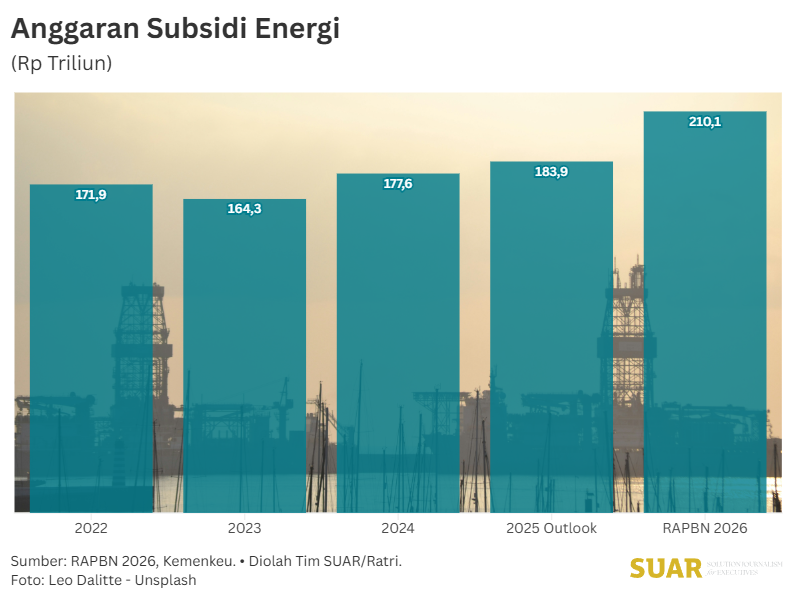
The energy security budget allocation in the 2026 Draft State Budget is also intended to provide energy subsidies for the community. The aim, among others, is to maintain people's purchasing power and increase the competitiveness and productivity of economic sectors.