


The Central Java Provincial Government is facing a difficult problem. As an area with the lowest Provincial Minimum Wage (UMP) compared to other regions in Indonesia, Central Java has attracted many investors. Some of them are factory relocations from areas in West Java.
President of the Confederation of Indonesian Trade Unions (KSPI) Said Iqbal once revealed that the manufacturers of sportswear brands Adidas and Nike will move to Brebes and Pekalongan regencies in Central Java. Currently, the 2025 Regency / City Minuimum Wage (UMK) in Tangerang Regency is IDR 4,901,117, while in Brebes it is still IDR 2,239,801.50, and Pekalongan is IDR 2,486,653.
Boyolali Regency and Klaten Regency are also being eyed by a number of other well-known shoe brand makers such as Reebok, Onitsuka, Hoka, and Converse. They are also said to be planning to invest and build production plants in Central Java. The 2025 minimum wage in Boyolali Regency is IDR 2,396,598. While in Klaten Regency it is IDR 2,389,872.78.
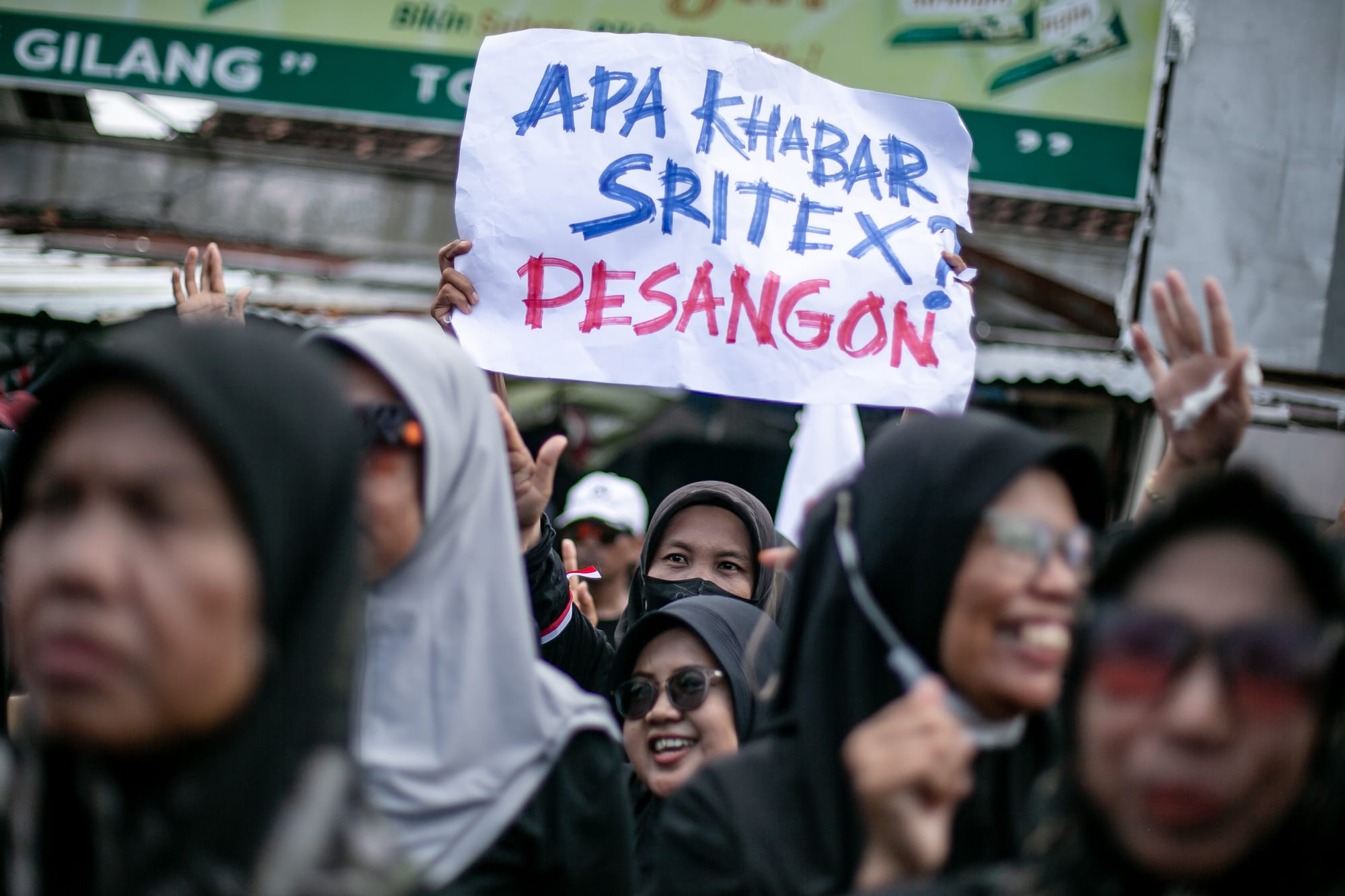
Sakina Rosellasari, Head of the Investment and One-Stop Integrated Service Office (DPMPTSP) of Central Java Province, admitted that investors from China, Taiwan, and the UK have been eyeing potential locations in Boyolali Regency and Klaten Regency.
Although still in the exploratory stage, he is optimistic that Central Java will be able to convince investors to set factory locations in the region. "We hope they will not move and can be fixed soon. So that these products can be made in Indonesia, namely in Central Java," Sakina said.
Workers sue over low wages
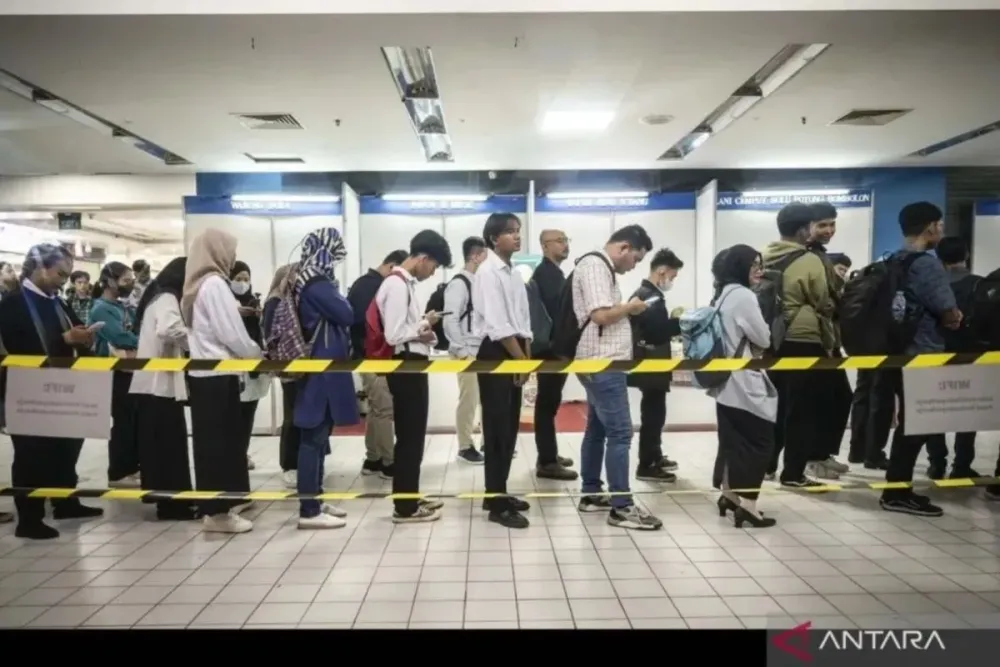
The low wage regime in Central Java, which is suspected of attracting investment, has begun to be challenged by workers. Next year, they are asking that the UMP in Central Java be set at Rp3,070,000. This figure is considered in accordance with the calculation of the Decent Living Needs (KHL).
"The Ministry of Labor regulates the Central Java UMP should reach at least 72% of the KHL calculation. Currently what we are asking for is 100% KHL for Central Java. The value is Rp3,070,000," said the DPD administrator of the Central Java Federation of Chemical, Energy and Mining Workers Unions (FSP KEP), Sodikin.
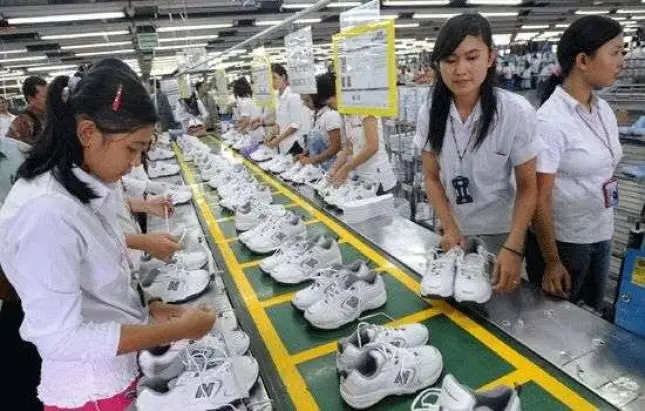
Meanwhile, Chairman of the DPD Federation of Indonesian Trade Unions of Struggle (FSPIP) Central Java Karmanto asked for the 2026 MSE to increase by 10.5%. He emphasized that this was important to reduce the wage disparity between Central Java and neighboring provinces such as West Java and East Java. "Because wages in 2025 only increased by around 6%, by increasing 10.5% in 2026, we want this wage disparity to be less pronounced," he added.
The 2025 Central Java Provincial Minimum Wage (UMP) is Rp2,169,349. This figure is an increase of 6.5% or Rp132,402 from 2024 of Rp2,036,947.
In Central Java, the UMP is more of a safety net to ensure that workers with less than one year of service receive a decent income, and are not paid below the set minimum standard.
In addition to the UMP, every year the district/city minimum wage (UMK) is also set in 35 regions in the province. The highest 2025 MSE value is Semarang City with Rp3,454,827. Then if in 2026 the increase is 10.5%, the Semarang City MSE will be Rp3,817,583. The lowest MSE is in Banjarnegara Regency with a figure of Rp2,170,475. If it increases by 10.5%, Banjarnegara will have a MSE of Rp2,398,374.
Meanwhile, Secretary of DPD National Labor Union (SPN) Central Java, Tabi'in reminded the Governor that the low wage policy should not be used as the main variable to attract investors to Central Java.
Central Java's attractiveness to investors is not about low wages, but because of its highly innovative and skilled workforce.
According to him, the attractiveness of Central Java for investors is not about low wages, but thanks to other factors. "Central Java has its own uniqueness. The workforce in Central Java is very innovative and skilled," said Tabi'in.
Business conditions are still unstable
In contrast to the labor proposal, the Indonesian Employers Association (Apindo) of Central Java said that the increase in MSEs in 2026 should be a maximum of 5%. The reason is that the performance of the business world is currently not good. Central Java Apindo Chairman Frans Kongi said the proposed wage increase of more than 10% is too high and has the potential to burden the business world.
According to him, wage determination should follow government regulations that will be issued in the near future. "We have all agreed, the minimum wage increase has regulations from the government. Labor may propose, but it should stick to the rules," said Frans.
Frans hopes that the government will consider economic conditions, industrial competitiveness, and employment before setting a minimum wage policy. "Because we want to keep the company running. Employees keep working. That's what we always think about. Don't let employees lose their jobs, don't let them. We don't want that either," he said.
Meanwhile, Head of the Central Java Manpower and Transmigration Office (Disnakertrans) Ahmad Aziz said that the 2026 Central Java UMP is scheduled to be determined on November 21, 2025. While the 2026 MSEs on November 30, 2025. However, this schedule depends on the issuance of government regulations (PP).
"The legal basis formula will be in the PP, there is a provincial minimum wage, provincial sectoral minimum wage, district / city minimum wage. Whether or not there is (UMSK), we will follow its journey in the wage board," Aziz explained.
Meanwhile, the Governor of Central Java, Ahmad Luthfi, stated that he had gathered the Wage Board, the Tripartite Cooperation Institution (LKS), and the Task Force for Termination of Employment (PHK).
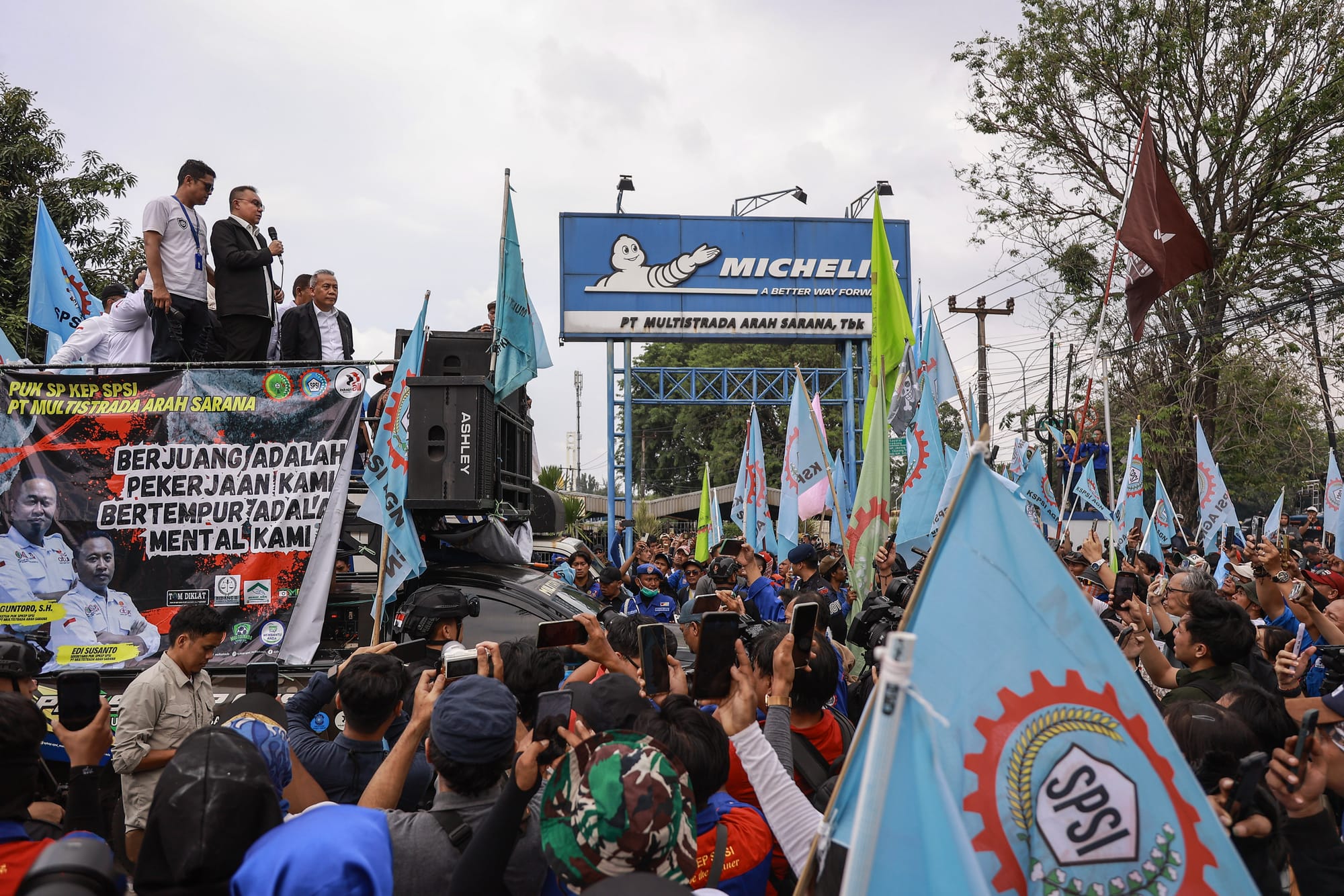
The meeting was to conduct dialogue, consolidation, and absorb aspirations from workers and employers, prior to the discussion and determination of the UMP. This dialogue is a communication from various directions, ranging from workers, employers, academics, and the government, in order to have the same understanding.
That way, there are no information blockages. "So it is necessary to equalize perceptions. Do not let workers, employers, and the government, there is a dichotomy that harms both parties, workers and employers," said Luthfi.
Luthfi explained that investment in Central Java continues to grow. Investment realization in Central Java until the third quarter of 2025 has touched IDR 66 trillion. Of which 65% is foreign investment (PMA), the rest is domestic investment (PMDN). "The goal of the investment climate in Central Java is the welfare of the community," he said.
Labor turmoil in the region
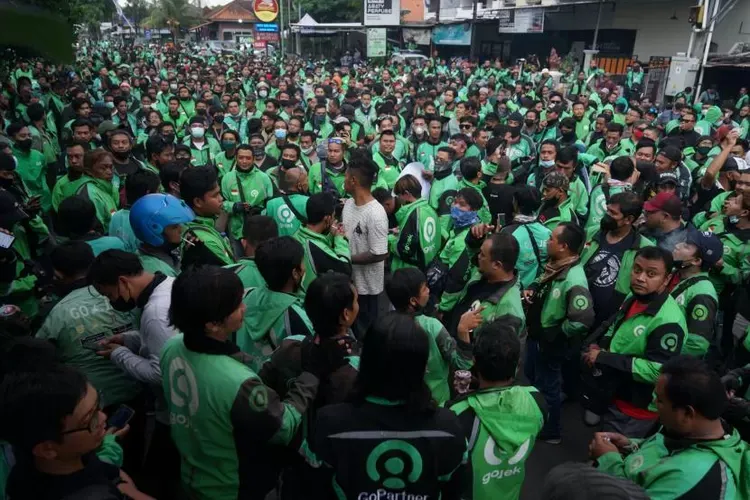
As in Central Java, labor organizations in several other regions have also begun to react to the issue of the 6.5% UMP 2026. The National Workers Union (SPN) of Banten Province, for example, in its statement, requested that the local government raise the UMP in 2026 in accordance with the cost of living, which is now felt to be increasingly heavy by workers. "The cost of living has increased, but income has remained the same. This puts workers in a tight spot," said SPN Banten Chairperson, Intan Indria Dewi, Monday, November 10, 2025 as quoted by Radar Banten.
SPN Banten proposes that the 2026 UMP be raised in the range of 8.5% to 10%. According to Intan, this is a realistic figure that takes into account the regional economic situation while maintaining the purchasing power of workers.
For information, Banten's UMP for 2025 was set at Rp2,905,199.90, up 6.5 percent from the previous year's Rp2,727,712. Beyond the issue of rising prices of basic necessities, the union also highlighted that there are still companies that pay their employees below the UMP/UMK. "Workers have worked fully, but the wages received are not in accordance with the provisions. This is a serious problem and must be disciplined," he said.
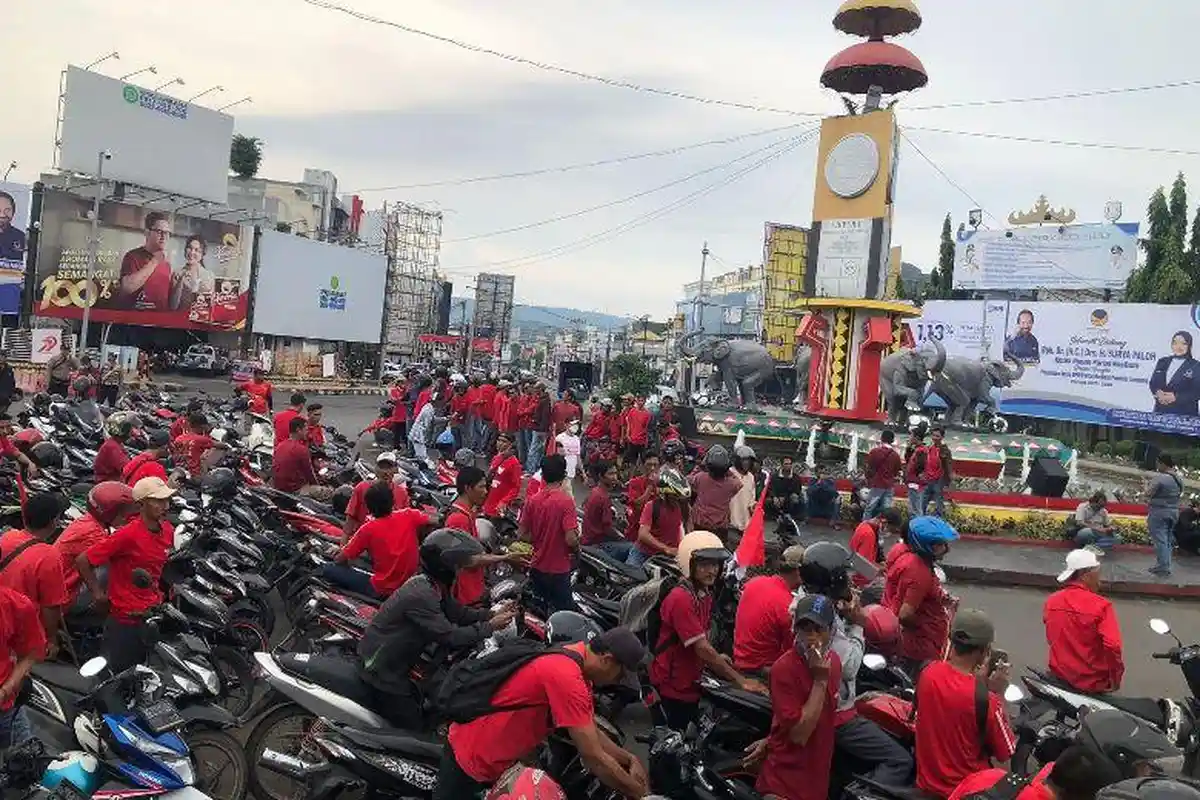
Meanwhile, in the city of Bandar Lampung, the Federation of Indonesian Labor Union Movements-Confederation of National Unions (FPSBI-KSN) held a demonstration in front of the Lampung Provincial DPRD building on Tuesday, November 11, 2025. In this action, the mass of workers urged the local government to raise the Lampung Provincial Minimum Wage (UMP) in 2026 by 15 percent.
Chairman of FPSBI-KSN, Yohanes Joko Purwanto, believes that the wage system in Indonesia has not been in favor of the welfare of workers. He said that wage policies that tend to benefit capital owners make many workers live in limited conditions.
He emphasized that the proposed 15 percent increase is based on the calculation of inflation, economic growth, and the Decent Living Needs (KHL). "If calculated on average from January to November, the increase should be above 8.5 percent. So it is natural that we propose 15 percent so that there is room for welfare improvement," he explained.
Head of the Lampung Province Manpower Office, Agus Nompitu, said that the local government is still waiting for an official formula from the central government through the Minister of Manpower Regulation (Permenaker).
According to him, the Lampung Regional Government is also preparing discussions on the Sectoral Minimum Wage (UMS) as a step to provide more proportional justice for workers in various sectors.
"We have received a number of proposals from labor unions, ranging from 8.3 percent, 8.5 percent to 15 percent. We have accommodated all aspirations, but the final decision will still follow the central provisions," he said.
The Bali Federation of Independent Trade Unions (FSPM), which covers workers in the Hotel, Restaurant, Plaza, Apartment, Retail, Catering, Tourism sectors, hopes that the wage increase for 2026 can range between 10-15 percent. According to Agung Rai from FSPM Bali, over the past ten years, wage increases have been relatively very low, while the prices of people's basic needs have been very high.
"We hope that the wage increase for 2026 will range from 10%-15%, because over the last 10 years the wage increase has been very low, while the prices of people's basic needs have been very high," he said.
Agung also encouraged the government to be sensitive to the welfare of workers. "We also urge the government to immediately make a formula for a decent wage increase for workers," he said.
Impact of world industry relocation
The relocation of local industries that is currently happening in Central Java is also happening on a global scale. Initially, developed countries such as the United States, Japan, and Germany began to move labor-intensive industries to developing countries to reduce labor costs.
Meanwhile, countries such as South Korea, Taiwan, and Mexico have become initial destinations due to their political stability and developing infrastructure.
In time, China became the global manufacturing hub, followed by Vietnam, Bangladesh and other Asean countries. And so the industrial relocation continued, not only in the textile industry, but also in electronics, automotive and technology components.
China, which was previously the center of the manufacturing industry, due to barriers such as tariffs in the largest market of the United States, has also begun to move its factories to Asean countries, especially Vietnam, India and Indonesia.
In addition to geopotential reasons, cheap labor, and a large market, there has been a shift in the center of the world's industrial development. The focus has shifted from cost efficiency to supply chain diversification strategies and logistics resilience.
However, the relocation of industries from developed to developing countries causes structural unemployment in developed countries, especially in the manufacturing sector, as workers lose their jobs due to lower wages in the destination country. Such workers generally find it difficult to find new jobs as their skills are only relevant for industries that have been reduced in the country of origin.
In addition, these relocations are driven by the aim to reduce labor costs, comply with looser regulations, and maximize profits through lower production costs in the destination country.
In the countries where investments are made, in addition to the blessings, there are also negative impacts due to the massive construction of factories and industrial operations that disturb the environment. The absorption of labor into the industrial sector also triggers the need for fair wage arrangements.
This is also why the low-wage regime persists, in order to keep investment coming. But over time, the need to increase wages becomes unstoppable. As a result, investment from relocation can be stalled, and for existing factories, due to the impact of wage increases, operations can cease in the country of investment.
According to the Chairperson of the Indonesian Garment and Textile Association (AGTI), Anne Patricia Sutanto, to reduce the risk of factory closures, AGTI and APINDO encourage cross-sector policy synergies. "There are several steps that can be taken, such as providing labor and fiscal incentives for labor-intensive industries, reducing energy costs (electricity, gas, and logistics), and accelerating deregulation and simplification of licensing that is still layered," she said. .
With such policy support, Anne is optimistic that manufacturing industries such as the national textile and garment sector can survive and even grow stronger. "Indonesia is considered to still have fundamental advantages, ranging from a complete industrial ecosystem, skilled labor, to a large potential domestic market," said Anne.
Mukhlison, Dian Amalia, Gemas Dzikri and M. Slamet (Semarang)
Need for Gender-Blind Wages
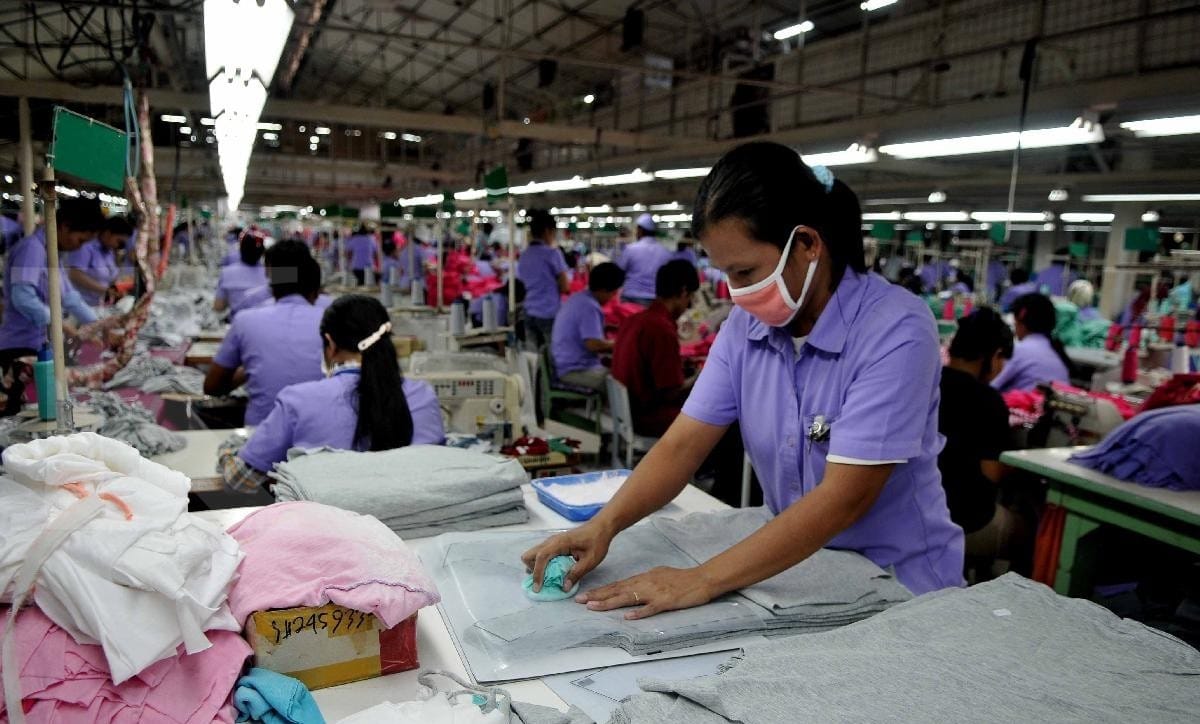
Wage matters are not only dominated by male workers, women workers also have a voice. Elza Yulianti, Department of Women Workers, Confederation of Indonesian Labor Unions (KPBI), Secretary of the Welfare and Women's Movement of the Labor Party assesses that the 2026 UMP increase policy does not reflect the real needs of women workers in the field.
According to her, the formula used by the government is still gender-blind and fails to accommodate the double burden borne by women workers. "In terms of eligibility, the current wage policy is very unable to answer the needs of women workers, especially in the labor-intensive and digital sectors," she said.
Elza assessed that the increase proposed by the government, below 8.5 percent, was not feasible enough. "We at KPBI are pushing for an increase between 8.5 to 10 percent. If it's below that, it's hard. Because the cost of living has gone up a lot, especially basic needs," she said.
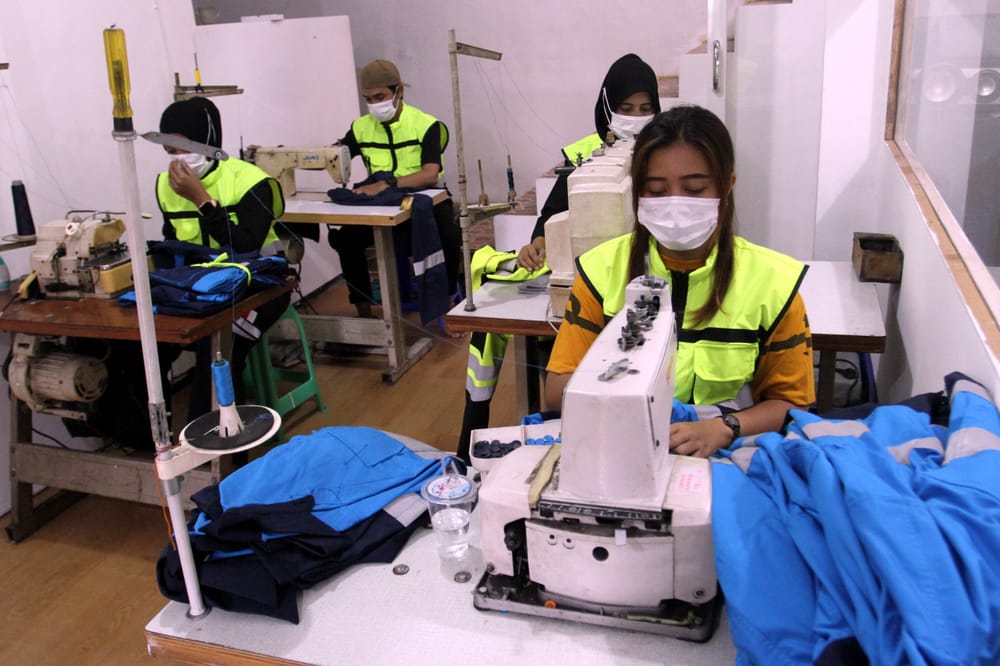
Elza explained that women workers in the textile and digital sectors face multiple pressures. On the one hand, they are required to compete in a global production system that keeps labor costs as low as possible. On the other hand, they still bear domestic work at home.
Women workers have a double burden. After working in the factory, they still have to take care of their children, take care of the house, etc.
"Women workers have a double burden. After working in the factory, they still have to take care of the children, take care of the house. It's unpaid work, but it's draining," she said.
He highlighted that the concept of Decent Living Needs (KHL) which has been the basis for determining UMP so far does not consider this reality. "KHL is often gender blind. Usually it only calculates the individual needs of single workers, not women who bear children and families. There are no childcare costs, no daycare facilities from the government," said Elza.
In fact, she continued, the absence of support for this social reproductive work actually reduces the productivity of women workers. "If there were safe and affordable daycare facilities, their productivity would increase."
In addition, Elza also mentioned the specific needs of women that are often overlooked. "Daily needs such as sanitary napkins, pregnancy control, reproductive health costs have never been a reference in the KHL. So the wage policy is still very gender-biased," she said.
The lack of women's perspectives is also evident in the decision-making process. In the tripartite structure, women's voices are still rarely heard. "The involvement of women in the wage-setting forum is very minimal. The majority of leaders are men, both in the union and in the tripartite forum. That is our homework, how can women be more in decision-making positions," said Elza.
Elza emphasized the importance of reforming the KHL component to be more progressive and gender responsive. In addition, she encouraged the government to immediately ratify ILO Convention 190 on violence and harassment in the world of work. "It is important to protect women workers, including in the context of wage negotiations and access to reproductive needs."
Elza hopes that next year's wage policy will be more in favor of workers, especially women. "If it is still below 8.5 percent, it is not feasible. The price of chilies, eggs, and rice has risen more than that," she said. According to her, the government must start looking at wage policies not only from an economic perspective, but also from social justice and gender equality. "If women workers continue to be marginalized, the gap will never be resolved."
Dian Amalia