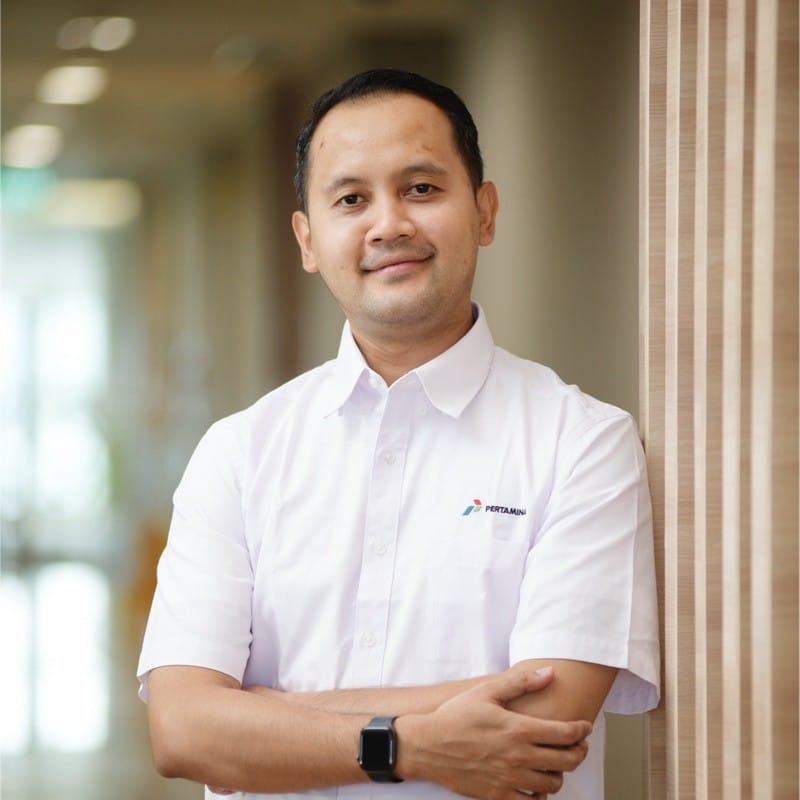
Interview Fadjar Djoko Santoso, Vice President Corporate Communication PT Pertamina (Persero)
In the ever-changing national energy landscape, PT Pertamina (Persero) is key to the nation's energy transformation and energy security. Amid global challenges and the demands of the energy transition, the state-owned energy company plays a strategic role in maintaining Indonesia's energy security, while encouraging sustainable innovation.
As a tool of the state, Pertamina will always be expected to ensure that the country's operations run without pause. On the other hand, the challenges are getting tougher. The world is changing, fossil energy sources are diminishing, while the demand for fuel oil is growing.
This is where Pertamina is required to be able to mitigate all the changes that occur. The use of renewable energy will become an unavoidable obligation. Then, how does Pertamina balance the demands of the times with the capital it now has, so that the people of Indonesia also enjoy the prosperity that the founding fathers envisioned.
The following is an excerpt of SUAR 's interview with Pertamina' s Vice President of Corporate Communication, Fadjar Djoko Santoso, last week.
How is Pertamina's readiness to support the government's policy on the roadmap for ethanol use as a fuel mixture?
To support the 10% ethanol (E10) biofuel policy program, Pertamina has an integrated energy infrastructure that is ready for supply and distribution.
On the mid-stream side, Pertamina's refineries already have fuel blending facilities with ethanol biofuel, as has been done in the program of blending 20% biodiesel - fatty acid methyl ester (FAME) - from palm oil with 80% diesel to produce B20 biodiesel and now B40.
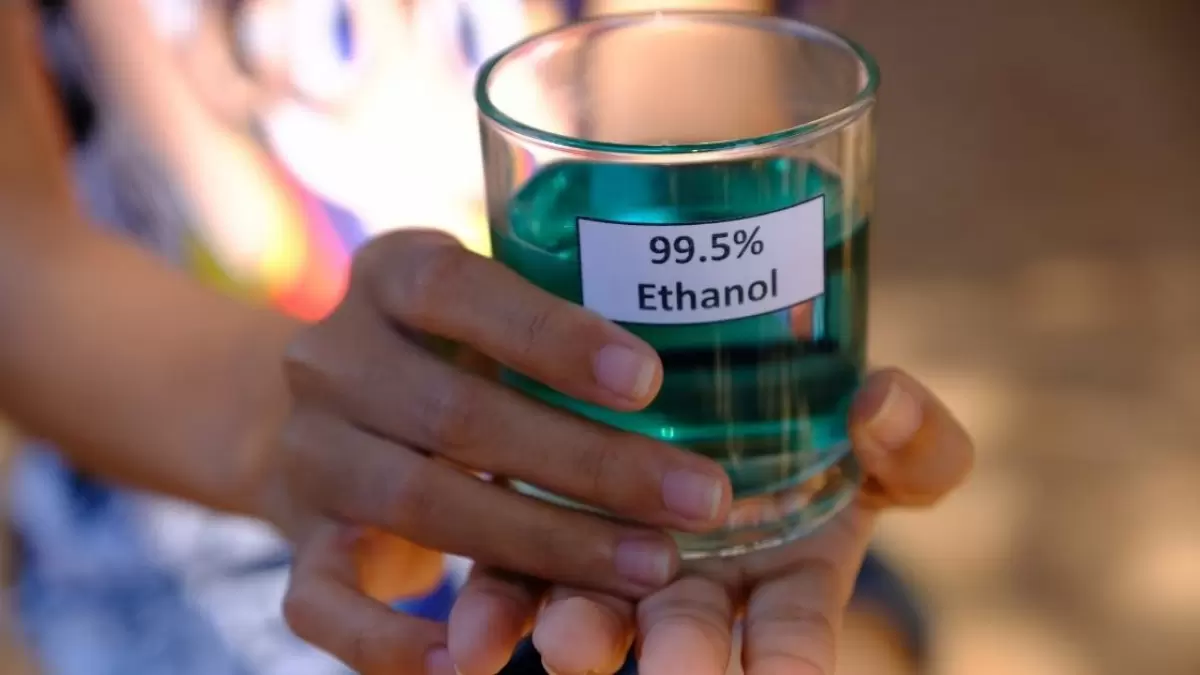
At the GIIAS 2024 event, Pertamina in synergy with Toyota conducted a test on Toyota's flex fuel vehicle (FFV) using E100 or 100% bioethanol from sorghum.
In addition, a 10% bioethanol (E10) trial on a number of Toyota cars - such as Agya, Avanza, Innova Zenix - through collaboration with TRAC in Surabaya for one year starting November 2024. Both trials aim to support the clean energy transition and achieve net zero emission (NZE) targets in Indonesia.
What is Pertamina's strategy to deal with the increasing demand for fuel every year?
To meet the needs of the community in providing fuel that continues to increase every year, Pertamina implements adual growth strategy. Namely, in addition to strengthening the oil and gas business, Pertamina also develops environmentally friendly fuels (biofuels) by utilizing abundant energy sources in the country.
In an effort to maximize our core business, we increased upstream production. Namely, maintaining energy security by increasing upstream oil and gas production and increasing refinery flexibility by optimizing refinery assets to improve efficiency and product margins, as well as the Refinery Development Masterplan Program (RDMP).
The Balikpapan RDMP project is said to change the national fuel processing map, what do you expect?
The Balikpapan RDMP will increase the processing capacity of the Balikpapan refinery from 260 kilo barrels per day (kbpd) to 360 kbpd, improve product quality to the more environmentally friendly Euro 5 standard, and increase refinery complexity to drive operational efficiency and expand product range.
Refinery complexity will also increase from the NCI (Nelson Complexity Index) scale of 3.7 to 8.0, reflecting the refinery's ability to process crude oil of varying quality into high-value products.
The Balikpapan RDMP operation is not only efficient, but also capable of processing mixed residue in the RFCC unit with a capacity of around 90,000 barrels per day.
This process produces several products that are directly processed further, such as LPG, naphtha, propylene, and gasoline, thereby also increasing the economic value of residues that were previously less than optimal, into high-value products.
What concrete steps is Pertamina taking to increase domestic refinery capacity and reduce dependence on imported fuel?
Over the past ten years, Pertamina has initiated refinery revitalization (RDMP) and refinery construction (GRR) projects. The RDMP project covers Balikpapan, Balongan, Cilacap, Dumai, and Plaju refineries. Meanwhile, the construction of a new refinery is located in Tuban.
In the 2019-2024 period, Pertamina through PT Kilang Pertamina Internasional has completed 11 strategic refinery projects spread across five locations, namely the Cilacap Refinery, Balongan Refinery, Balikpapan Refinery, Dumai Refinery, and PT Trans-Pacific Petrochemical Indotama (TPPI) Refinery in Tuban.
Most recently, Pertamina has finished building the Lawe-Lawe storage tank, which is the largest fuel storage tank in Southeast Asia. With facilities like this, processing products from the refinery can be placed in the storage tank, and the refinery continues to operate processing other products.
What is Pertamina's commitment in supporting the Net Zero Emission 2060 target, especially from the fuel and transportation sectors?
Pertamina is committed to supporting the Government of Indonesia's target for NZE by 2060. Pertamina has prepared a Net Zero Emissions Roadmap 2022-2060, with two main pillars: decarbonization of business activities and development ofnew green business.
In relation to the use of fuel for transportation, Pertamina has undertaken initiatives in the energy transition era such as developing green refineries in order to produce biofuels (Biosolar B40, Pertamax Green).
To serve the needs of aircraft fuel, Pertamina has started producing sustainable aviation fuel (SAF), part of which feedstock is used cooking oil.
What is Pertamina's strategy to ensure fair and equitable fuel distribution, especially in the 3T (frontier, outermost, underdeveloped) areas?
The number of Pertamina's fuel and LPG distributing institutions is more than 15,000 institutions throughout Indonesia, including 573 BBM 1 Harga spread in the 3T area. The One Price BBM program has been running since 2018, until now.
One of them is the One Price Fuel Station in Napirboy Village, Saonek Village, South Waigeo District, Waisai. South Waigeo is a district located on Waigeo Island, within the Raja Ampat Regency, Southwest Papua Province. The current fuel price in Waigeo is only IDR 10,000 per liter for Pertalite and IDR 6,800 for Solar. Prior to One Price BBM, the price of these fuels was three times higher.
In addition to the One Price BBM program, Pertamina also builds and develops Pertashop, which is a non-subsidized fuel sales outlet in areas far from gas stations, so that people have easier access to buying fuel.
Through integrated and extensive energy infrastructure supported by digitalization, Pertamina guarantees reliable energy availability to all corners of Indonesia.