
In the midst of global economic uncertainty, when many developing countries are struggling to contain currency weakness and maintain fiscal credibility, Indonesia received good news. International rating agency Rating and Investment Information, Inc. (R&I) maintained Indonesia's credit rating at BBB+ level with a stable outlook in its latest report, October 24, 2025.
A BBB+ credit rating is an investment grade rating which indicates that the rated institution or entity has good credit quality with a low risk of default.
Head of the Communication and Information Services Bureau of the Ministry of Finance Deni Surjantoro said that R&I's decision shows that the world still has confidence in Indonesia's economic resilience.
"This affirmation is proof of the world's confidence in our economy, as well as recognition of the consistency of fiscal and monetary policies that remain prudent," R&I wrote in a statement received on Friday (31/10/2025).
In addition to R&I, Indonesia also recorded ratings from other world credit rating agencies. They include Fitch rating BBB with a stable outlook ; Moody's rating Baa2 with a stable outlook; S&P rating BBB with a stable outlook; and Japan Credit Rating (JCR) Agency rating BBB+ with a stable outlook.
R&I's assessment is based on a number of Indonesia's macroeconomic indicators. Controlled inflation within the target of 2.5% ± 1%, a fiscal deficit that remains below 3% of GDP, and a government debt ratio in the range of 40% of GDP are key factors behind the confidence. Likewise, foreign exchange reserves are still able to cover six months of import needs and foreign debt payments.
Permata Bank Chief Economist, Joshua Pardede also agreed with this achievement. "R&I's decision confirms that Indonesia's economic fundamentals are still resilient," said Joshua when contacted by Suar through his written statement, Sunday (2/10/2025).
Solid Performance in Transition Year
The year 2024 was not an easy one. Energy prices fluctuated, geopolitical tensions rose, and monetary tightening in the United States rattled many markets. But Indonesia managed to maintain stability with solid economic growth, supported by domestic consumption that remained strong.
For Deni, this achievement is proof that Indonesia's economic foundation is not only dependent on external factors, but also on the purchasing power and economic activity of a society that remains dynamic.
R&I estimates that the growth trend of real Gross Domestic Product (GDP) will remain on a healthy and sustainable path in 2025. Inflation is successfully controlled in the range of 2.5% ± 1%, the rupiah exchange rate is relatively stable, and foreign exchange reserves remain sufficient to cover six months of imports and foreign debt payments.
"Consistency in maintaining a deficit below 3% and a debt ratio of around 40% of GDP is a form of government commitment to medium-term fiscal sustainability," Deni continued.
According to Josua from Bank Permata, Bank Indonesia (BI) took a cautious step by cutting interest rates by 150 basis points since September 2024, then holding them in October 2025 to maintain a balance between promoting growth and protecting the exchange rate. "The combination of measured easing and exchange rate stability is a positive signal for investors," he said.
The Ministry of Finance also emphasized that fiscal policy remains prudent and credible. The 2024 deficit was recorded at 2.3%, while in 2025 it was adjusted to 2.78% of GDP to accommodate the financing of priority programs without moving out of a safe fiscal corridor. The year 2026 is even planned to slightly decline to 2.68%, showing a measured and sustainable direction.
Rating as an Anchor of Trust
The investment grade status that Indonesia maintains has strategic significance. According to economist Josua Pardede, the R&I assessment shows that Indonesia's macro fundamentals remain resilient: inflation is under control, debt is low, foreign exchange reserves are adequate, and both fiscal and current account deficits are within safe limits.
However, he added that the reason Indonesia's rating "only" stands at BBB+ with a stable outlook, not a positive one, is because rating agencies are still waiting for evidence that the acceleration of government spending, including social programs, can work without eroding medium-term fiscal health.
"Investment grade status is like an anchor for risk perception," explains Josua. "Cross-country studies show that this status reduces bond spreads by around 36% outside of macro fundamental factors. This means that the rating is not cosmetic, it really affects how much the cost of funds that governments and corporations have to pay."
In the context of international funding, especially yen-based, ratings from Japanese institutions such as R&I also open access to Japan's highly selective domestic investor base. "This helps the Indonesian government and private sector obtain financing with more competitive spreads in the USD, EUR and JPY markets," said Josua.
According to Josua, when the sovereign rating is stable, the cost of funds for SOEs and corporations is automatically maintained. "This is important to diversify financing sources, especially when the US dollar market is volatile," he added.
New Challenges: Fiscal, Structural, and Global
However, behind the positive affirmation, the challenges are not small. First, the tax revenue base is still narrow compared to economic potential. The transition of the tax system and the transfer of some SOE dividends to a new institution, Danantara, have held back revenue.
Second, businesses and rating agencies alike are waiting for clarity on Danantara's governance, especially so that this institution does not pose quasi-fiscal risks beyond the state budget.
Third, external pressures remain looming. The global economic slowdown, trade tensions, and Fed interest rate changes could affect exchange rates and capital flows. "The growth target of above 5% this year is realistic, but full of challenges," said Josua. "Most importantly, the government maintains policy credibility so that the market continues to believe."
Maintaining the Trust Narrative
By maintaining its BBB+ rating and stable outlook, Indonesia confirms its position as one of the most resilient emerging market countries in the region. This success reflects prudent fiscal and monetary management, as well as structural reforms that are starting to show results.
However, maintaining global confidence does not stop at macro stability. The business world considers that Indonesia's economic credibility is also determined by legal certainty and regulatory consistency in the field.
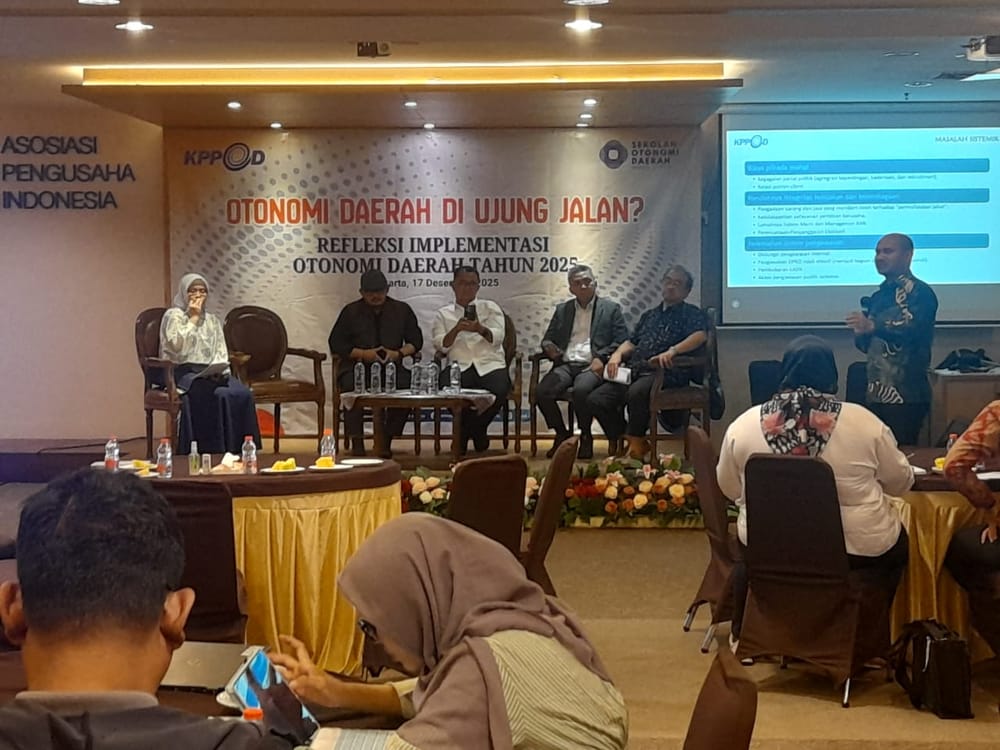
"For businesses, what they are looking for is simple: consistency between policy and practice in the field," said Sanny Iskandar, Deputy Chairman of the Indonesian Employers Association (Apindo).
"Business grows on a calculated basis. Risk is predictable, uncertainty is not."
According to Sanny, legal certainty is an important foundation for investment and exports. Without it, the business climate is difficult to develop even though macro indicators look good. Many companies are still faced with lengthy licensing processes, overlapping regulations between the center and regions, and non-uniform implementation of rules.
"Without legal certainty, investment calculations become impossible, export opportunities are hampered, and investment is reluctant to flow," he added.
This view of the business world is a reminder that maintaining trust is not enough through fiscal stability alone. When economic policies can be translated well at the operational level, the narrative of trust in Indonesia will stand on a firmer foundation, not only in the eyes of rating agencies, but also in the eyes of economic actors who deal with the realities on the ground every day.