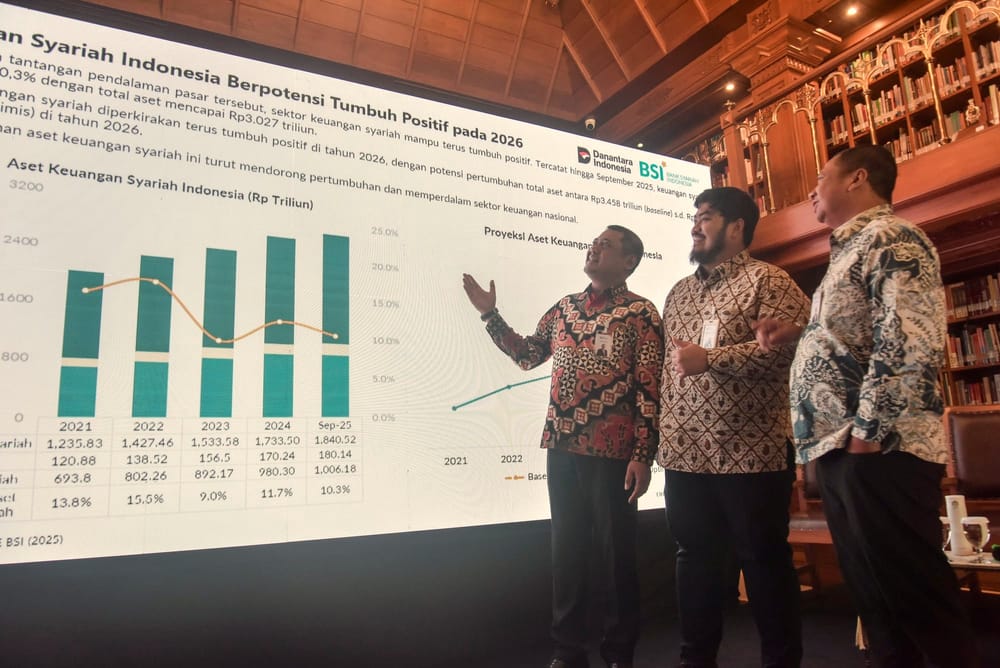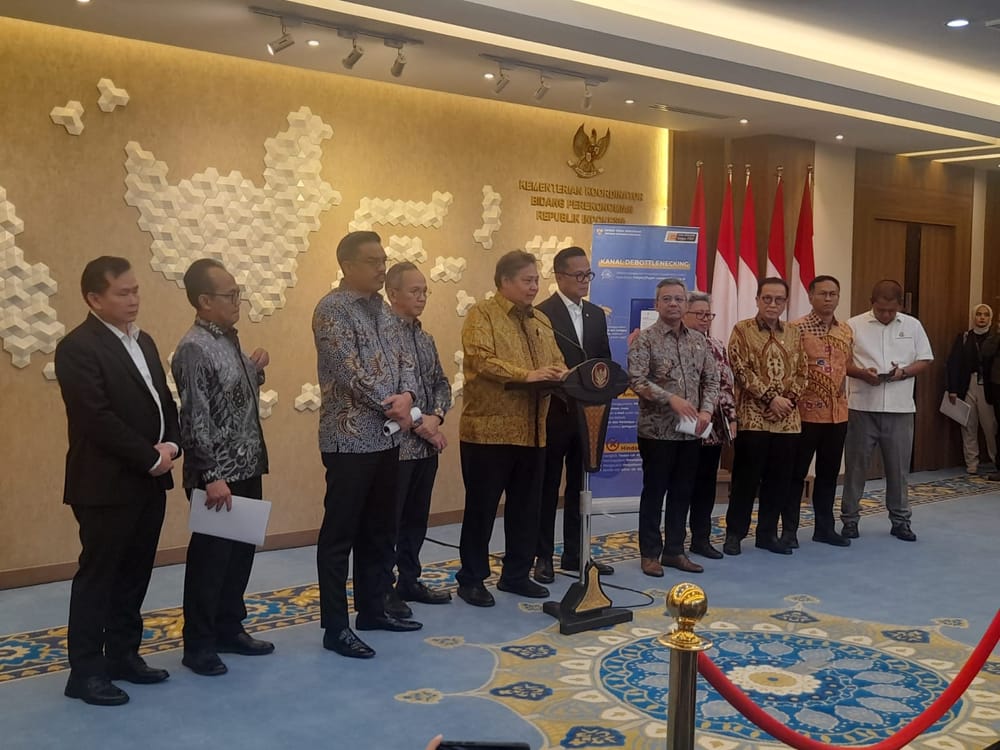


Banks are increasingly active in maximizing the potential for non-interest income from digital transactions amidst the drag on interest-based income such as deposits, credit loans.
Various banks now have digital products to maximize non-interest income, such as fee-based income in mobile banking transactions,marketplace transactions, and the use of QRIS for payments.
Bank BNI and Mandiri, for example, in their third quarter performance presentation recorded an increase in transaction volume and value due to the number of mobile banking application users.
Bank Mandiri Director of Finance and Strategy Novita Widya Anggraini explained that the growth of Bank Mandiri's Third Party Funds (DPK) by 13% year-on-year (YoY) to Rp1,884 trillion could not be separated from the increase in digital transactions through the Super App Livin' by Mandiri, Livin' Merchant, and Kopra by Mandiri.
"The three mobile applications are pillars of digital acceleration to expand financial services and encourage transaction efficiency in all segments," said Novita in a written statement received by SUAR. SUARMonday (27/10/2025)...
By the end of September 2025, Livin' by Mandiri had been used by 35.1 million users, growing 27% YoY. Transaction frequency increased 25% YoY, and transaction value reached Rp3,220 trillion, up 10% in the first nine months of 2025.
"Now, more than 91% of new account openings have been done digitally," he added.
According to Novita, Livin' Merchant is present as a digital solution to strengthen the competitiveness of business actors. The integration of payment systems and more efficient transaction recording is expected to be a catalyst for UMKM, especially for the 3 million businesses that have used it.
Complementing Novita's statement, Bank Mandiri Risk Management Director Danis Subyantoro said that the digitalization strategy is one of the components to improve the sustainable operational pillar by reducing operational emissions, in addition to increasing financial inclusion which is key to customer diversification.
"Through Livin' Merchant, we are expanding financial services for UMKM, with a total of 1.8 million or 62% of application users in non-urban areas until September 2025," Danis said in Bank Mandiri's Q3 Performance Expose in Jakarta, Monday (27/10/2025).
Aggressive move
Efforts to expand digital transactions have paid off. With a growth of 7.97% YoY, non-interest income generated by Bank Mandiri reached Rp33.2 trillion in Q3 2025.
Of this amount, the ratio of fee-based income to total revenue reached 32.7% or almost one-third of total revenue of Rp112 trillion.
"Digitalization is at the core of Bank Mandiri's growth strategy. Through the synergy of Livin', Kopra, and Livin' Merchant, Bank Mandiri is able to strengthen the growth of deposits while maintaining the efficiency of the cost of funds which contributes to the growth of commission-based income," Novita concluded.
Bank Negara Indonesia (BNI) experienced the same thing. Bank Negara Indonesia (BNI) Director of Treasury & International Banking Abu Santosa Sudradjat stated that an aggressive digital banking transaction strategy has created strong deposits growth of 21.4% YoY to Rp943.3 trillion, with CASA low-cost funds rising 13.3% YoY to Rp613.4 trillion.
"The acceleration of digital channels, especially the Wondr by BNI application, recorded a surge in users from 2.8 million in September 2024 to 10.5 million users as of September 2025. Of the 866 million transactions recorded during the same period, the transaction value of Wondr by BNI reached IDR 783 trillion," Abu said in a written statement received by SUAR. SUARFriday (24/10/2025).
The rate of increase in the value and number of application users is reflected in the growth of fee-based income by 11% YoY and contributed 30% of BNI's total revenue by the end of the third quarter of 2025.
In addition to Wondr, the BNIdirect channel for the corporate segment also recorded transaction growth of 26.7% YoY to reach Rp8,080 trillion, with a 14.8% increase in transaction volume to 1,061 million transactions.
"Our aggressive digital transaction banking strategy is driving more sustainable CASA growth and consistent fee-based income . We see this as the beginning of a healthier and more sustainable cost of funds recovery phase," Abu said.
Efficiency and diversification
In addition to providing room for stable and sustainable DPK expansion, the Financial Services Authority (OJK) revealed that the improvement in the performance of digital banking transactions played a role in streamlining bank operations, which was marked by a reduction in the number of branch offices, followed by a progressive increase in the number of assets.
In the latest Indonesian Banking Statistics published in August 2025, until Q2 2025, OJK recorded a decrease in the number of conventional bank branch offices from 32,366 offices in 2021 to 23,538 offices in June 2025. This decrease was followed by an increase in total assets of commercial banks from IDR 10,112,304 billion in 2021 to IDR 12,822,677 billion in 2025.
In line with OJK's notes, Bank Indonesia Governor Perry Warjiyo explained that the performance of digital economic and financial transactions in Q3 2025 reached 12.99 billion transaction volumes or grew 38.08%, supported by the expansion of acceptance and digital payment channels. In detail, the transaction volume of mobile and internet banking applications grew 13.11% YoY and 17.8% YoY, respectively, while QRIS transactions grew rapidly reaching 147.65% YoY.
"In terms of infrastructure, the volume of retail transactions processed through BI-FAST reached Rp1,223.82 million or grew 32.34% (yoy) with a transaction value of Rp3,024.08 trillion. The volume of large value transactions through the BI-RTGS System was recorded at 2.76 million transactions, with a value of Rp56,422.87 trillion in the third quarter of 2025," Perry said at the Press Conference of the Bank Indonesia Board of Governors Meeting in Jakarta, Tuesday (22/10/2025).
In addition to operational efficiency, the increase in digital banking transactions is also a sign of the success of banks in diversifying sources of income other than interest on an ongoing basis. Director of Digital Economy at the Center of Economics and Law Studies (Celios) Nailul Huda explained that through this diversification, a new style of banking business competition has been formed in the banking industry.
"Big banks are also aggressively penetrating to develop digital financial ecosystems through their respective products. BRI aggressively encourages the use of Brimo and BRI-Link. Likewise, BCA and Bank Mandiri maximize non-interest income to compete," said Huda when contacted. SUARMonday (28/10/2025).
In these circumstances, digitalization becomes an enabler that allows people to increase the frequency of transactions higher and the increase in frequency is an opportunity that must be utilized as much as possible, especially with the existence of QRIS which is able to reach up to the grassroots level.
"Banks can utilize digital transactions to increase revenue, although I don't think it will be as big as the profit from interest margins which is the source of conventional income," concluded Huda.