The SUAR team explores the thoughts of decision makers, leaders in companies, and economic observers regarding the condition of law enforcement in Indonesia that affects the economy and the business world through the Business World Universe Survey.
Highlight:
- The majority of respondents (90.6%) stated that law enforcement in Indonesia has not gone well. The main reason is that law enforcement practices are still selective and the performance of law enforcement officials (police, prosecutors, judges) has not met expectations.
- The government's performance in preventing and combating corruption is still poor (56.3%), with 18.8% saying it is getting worse.
- Corruption eradication performance within SOEs is also still poor (50%) and getting worse (6.3%).
- The majority of interviewees (65.6%) stated that the government's performance in reforming the law to improve the performance and integrity of law enforcement officials is still poor, and 12.5% stated that it is getting worse.
- Almost all interviewees (93.8%) stated that the punishment for corruptors has not been fair and deterrent.
- Current law enforcement performance has not been able to increase investor confidence to invest in Indonesia (81.3%).
In the report 1 Year of President Prabowo & the Red and White Cabinet reported by the Indonesian Government Communication Agency, there are 6 points of achievement in the field of law:
- The lowest-level judge's salary increased by 280%.
- Rp 300 trillion of the state budget that is prone to corruption has been diverted to pro-people programs.
- Major corruption cases are uncovered and prosecuted. No more untouchables.
- More than Rp 1,000 trillion in state losses have been saved by law enforcement.
- More than 4 million hectares of oil palm plantations within forest areas were confiscated and controlled by the state.
- More than IDR 100 trillion in losses from illegal mining and smuggling of mining products were stopped.
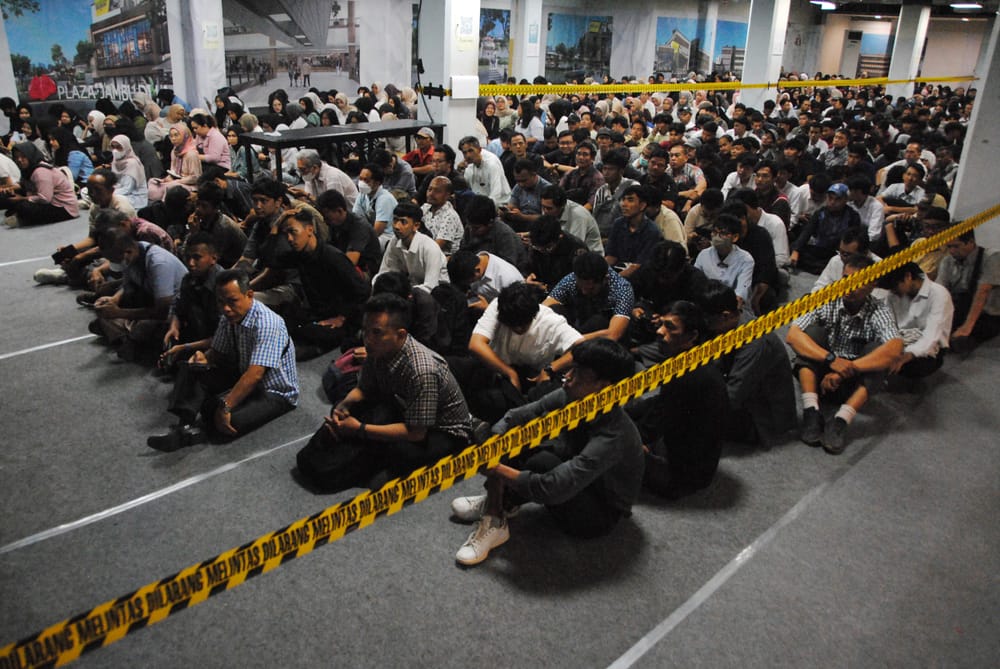
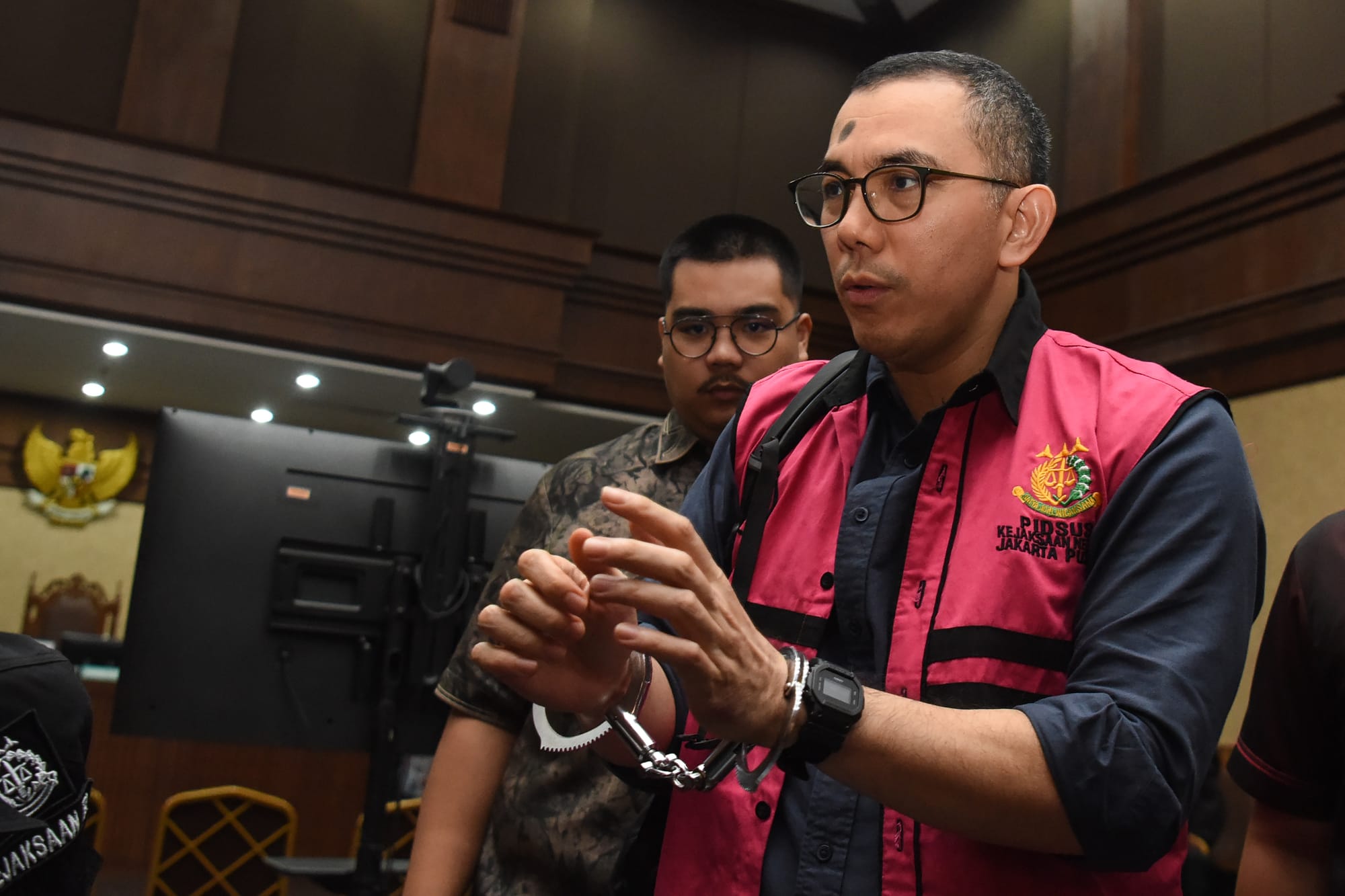
However, the government admits that corrupt practices within state-owned enterprises (SOEs) are still rampant. For example, from 2004 to 2024, the Corruption Eradication Commission (KPK) handled 168 cases of corruption offenses (TPK) within BUMN and BUMD.
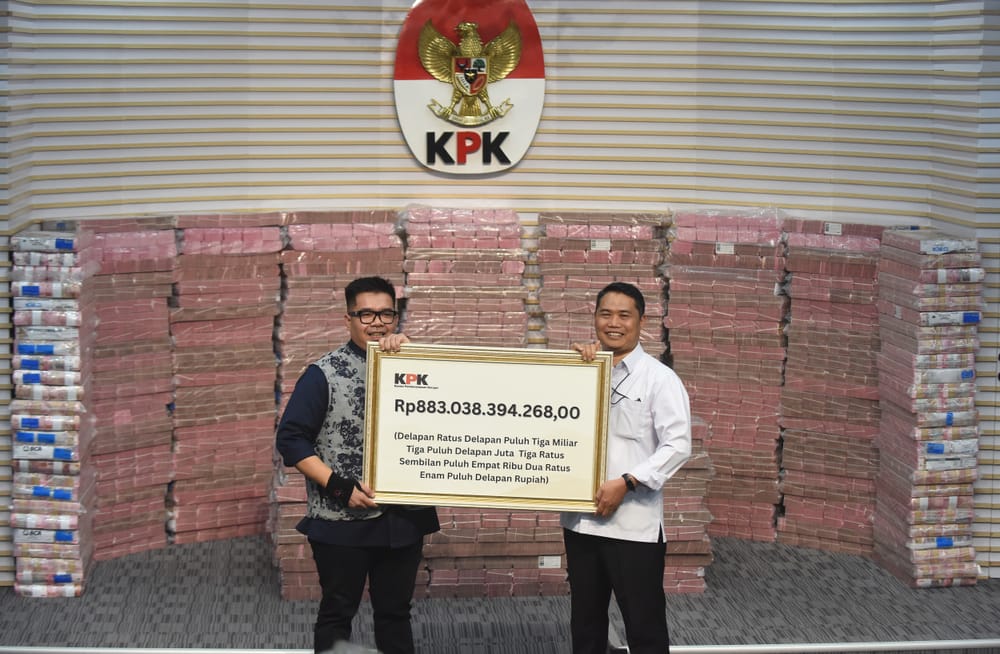
In early 2025, Pertamina's corruption was revealed. The alleged corruption case of this oil and gas SOE is related to the management of crude oil and refinery products at PT Pertamina, Sub Holding, and cooperation contractors (KKKS) which took place in the 2018-2023 period. This case is estimated to have cost the state finances IDR 193.7 trillion.
Observing such conditions, the majority of respondents (90.6%) stated that law enforcement in Indonesia has not gone well. The main reason is the practice of selective law enforcement and the performance of law enforcement officials (police, prosecutors, judges) that have not met expectations. Many law enforcement officials are involved in buying and selling cases. In addition, there are unclear or overlapping legal policies.
In terms of eradicating corruption, respondents view the government's performance in preventing and eradicating corruption as poor (56.3%), with 18.8% stating that it is getting worse. A smaller portion stated the opposite, namely that the performance is good (3.1%) and getting better (15.6%).
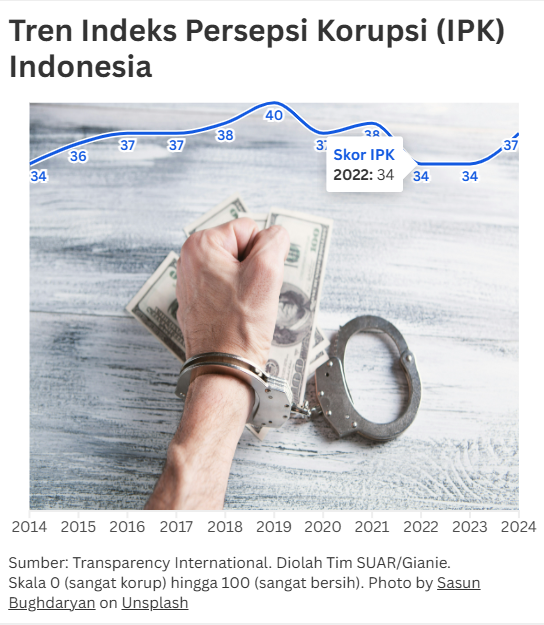
Although Indonesia's Corruption Perceptions Index (CPI) score for 2024 has increased (from 34 to 37) - meaning an improvement in response to corruption cases - it is still below the global average of 43. The highest CPI score Indonesia has achieved since it was assessed in 1995 was 40 in 2019. Transparency International's GPA is a global assessment of corruption as perceived by businesses and expert assessments of public institutions.
In cracking down on corruption in state-owned companies or SOEs, the government's performance is still unsatisfactory. More than half of the interviewees stated that the performance of eradicating corruption in SOEs was still poor (50%) and getting worse (6.3%). Only about 28% stated that it was good and getting better.
This assessment is reasonable because the public still remembers the corruption cases that occurred within SOEs. In addition to the PT Pertamina corruption case that was revealed in 2025, major cases that seized the public space of the mass media include the PT Asabri pension fund case, the case of investment fund management of PT Asuransi Jiwasraya, the corruption case of aircraft procurement by PT Garuda Indonesia, corruption of tin commodity trading by PT Timah Tbk, and corruption in the procurement of EDC machines at PT Bank Rakyat Indonesia.
Indonesia Corruption Watch (ICW) noted that there were 212 corruption cases within state-owned enterprises in the 2016-2023 period. The state lost at least Rp 64 trillion.
Indonesia Corruption Watch (ICW) noted that there were 212 cases of corruption within state-owned enterprises in the 2016-2023 period. Of the 212 cases that have been prosecuted by law enforcement officials, the state has lost around Rp 64 trillion. At least 349 SOE officials have been named as suspects in corruption cases, ranging from directors, middle leaders, to SOE employees.
Similar to efforts to curb illegal land, both plantations and private mines that annex state-owned land, the government's performance is also considered poor. The government is considered incapable (53.1%) of curbing state-owned lands that are under private control.
Law reform
In our country's legal system, there are three institutions that have the authority to investigate and prosecute corruption crimes. These are the Police, the Attorney General's Office, and the Corruption Eradication Commission (KPK). These three institutions, whose authorities are regulated by law, work by strengthening each other to prevent and eradicate corruption. These three institutions work in synergy to increase the effectiveness of corruption eradication.
Respondents assessed the government's performance in reforming law enforcement institutions or judicial institutions as still negative. The majority of interviewees (65.6%) stated that the government's performance in reforming the law, including in improving the performance and integrity of law enforcement officials, was still poor and 12.5% stated that it was getting worse.
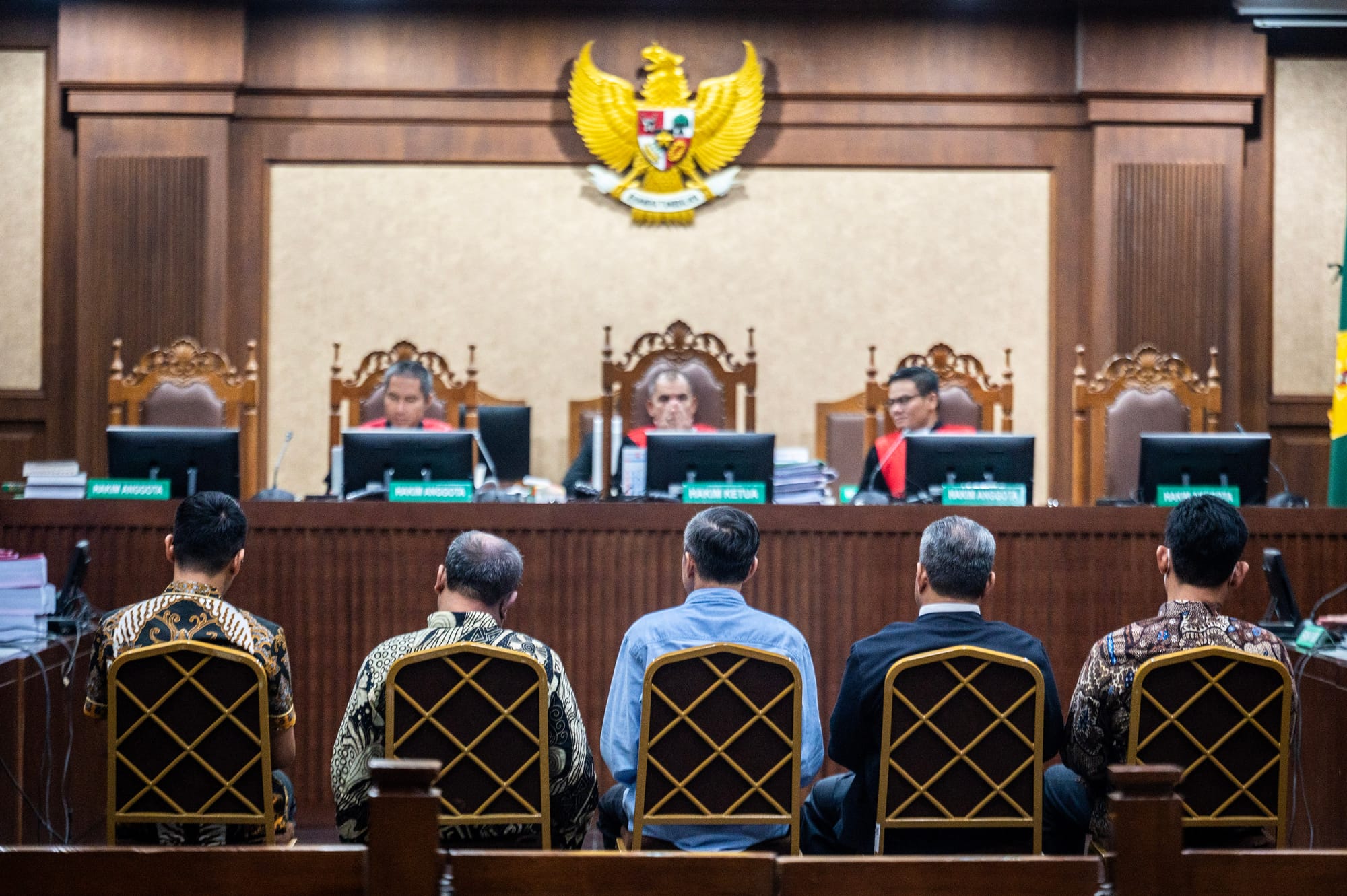
The case of former Supreme Court (MA) official Zarof Ricar who became a case broker at the MA is well known in the public memory. There was also the case of the arrest of four judges at the Central Jakarta District Court (PN) who tried and decided to release the case of granting crude palm oil (CPO) export facilities. The four judges were named as suspects for accepting bribes with a total value of Rp 60 billion. It is cases like these that have shaped negative opinions about the strength of the case mafia in the judiciary.
One thing that also shapes negative perceptions of law enforcement in Indonesia is the punishment of corruptors that does not have a deterrent effect, so corruption remains rampant. Nine out of 10 interviewees (93.8%) agreed that the punishment for corruptors is not fair and deterrent.
ICW has revealed that the judges' verdicts against corruptors are on average in the lenient category, which is less than 4 years. Only in the corruption case of PT Timah's tin commodity trading system, one of the defendants, Harvey Moeis, had his sentence increased at the appeal level from 6.5 years to 20 years in prison with a fine.
Investor confidence
It must be recognized that there is no perfect law enforcement in any country. Law enforcement is still transactional, selective, and cannot be separated from political interests.
However, the source saw that law enforcement must be maximized. This is because the condition of law enforcement has an impact on the economy, especially to bring in investment. The majority of respondents stated that the current law enforcement performance has not been able to increase investor confidence to invest in Indonesia (81.3%).
Law enforcement should provide legal certainty that can influence economic or business-related decision-making. Cases that tend to criminalize policy makers are a test of legal certainty. Moreover, if a court verdict can be overturned by using the president's prerogative over time, it can raise concerns that the legal system can be politically intervened.
Optimism must continue to be built that law enforcement can still be improved on all fronts. Handling corruption should not be selective, transactional, or become a political tool to hold hostages. The goal of impoverishing corruptors must be maximized. Therefore, the public is eagerly waiting for the Draft Law on Asset Forfeiture to be passed.
Methodology and Respondent Profile
The Business World Universe Survey was conducted from November 5 to November 25, 2025. A total of 32 resource persons (respondents) were selected by purposive sampling from the business world and economic observers. From the business world, the position of the resource persons varied, ranging from director, managing director, to owner.
In terms of education, most respondents were educated up to S1 (50%) and postgraduate or S2 / S3 (50%).
In terms of age, the number of younger respondents increased with 28.1% aged up to 35 years, 12.5% aged 36-45 years, 37.5% aged 46-55 years, and 21.9% aged 56 years and above.