The world is entering what many call “Trump Tariff War 2.0”, after U.S. President Donald Trump imposed sweeping new import duties, ranging from 10% to 41%, on 68 countries and the European Union, effective August 7, 2025.
Indonesia will face a 19% tariff on its exports to the United States, a move that presents both challenges and opportunities for Southeast Asia’s largest economy.
For Indonesia, the tariff rate is steep but not crippling. Economists argue that the real test lies in whether Jakarta can exploit loopholes and negotiate product-specific exemptions while keeping pace with regional competitors like Vietnam, Malaysia, and Thailand.
Fithra Faisal Hastiadi, spokesperson for the Presidential Communications Office on economic affairs, said the tariffs present both challenges and opportunities.
“In every difficulty, there is an opportunity,” Fithra said.
Trump 2.0, he added, is not only about threats but also openings—if Indonesia is shrewd. For example, the U.S. plan to lower the tariff on soybean meal to 0% could reduce feed costs and help Indonesia’s poultry farmers.
“In every policy there’s a window. The key is understanding the supply chain,” Fithra said.
Another example: if the U.S. hits Chinese goods with higher tariffs, Indonesia could fill market gaps—especially with products that do not directly compete with U.S. producers. But these opportunities require precision: Indonesia must know exactly which products are targeted and the scope for substitution.
Paramadina University economist Wijayanto Samirin called the 19% rate for Indonesia a decent starting point. “A very good beginning—what’s left is the detailing. A series of smaller negotiations could get certain products down to 0%,” he said.
The next key, he noted, lies in the fine print: identifying which products can be further negotiated, which sectors are most sensitive, and how to maintain competitiveness against regional peers.
“The most important thing is that our rate stays competitive with China, Vietnam, Thailand, Malaysia, and India. As long as that holds, we’ll be fine,” Wijayanto said.
For him, the priority is to avoid panic—but also avoid passivity. Ultimately, Trump needs a narrative of “America wins” for voters, while the technical details are often hashed out behind closed doors.
Meanwhile, Lili Yan Ing, Secretary-General of the International Economic Association (IEA), urged caution. A 19% rate may not be competitive if rival exporters secure lower tariffs.
“Don’t be too satisfied. Indonesia and all ASEAN countries should stand as a regional bloc to gain greater bargaining power,” she said.
She also warned that Indonesia’s arguments should not stop at trade in goods. Services trade, investment, and the surpluses the U.S. has long enjoyed from services and capital in ASEAN are equally important.
“ASEAN has contributed hundreds of trillions of U.S. dollars to American companies. This must be part of our case,” Lili added.
In her view, Trump’s announcement is a pressure tactic. Indonesia should respond rationally, not emotionally, and press for black-and-white clarity—not merely podium promises.
Export Performance
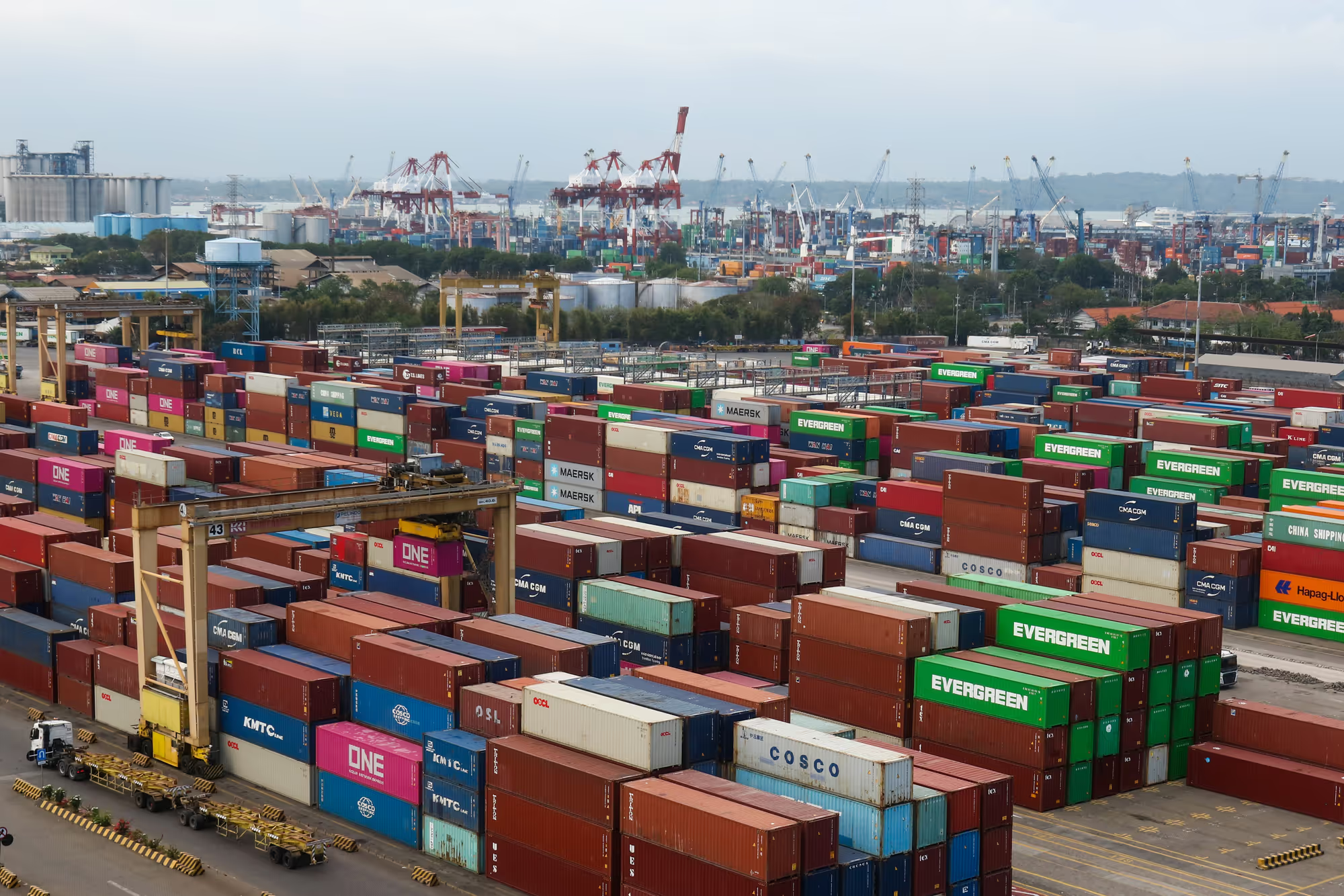
Amid the new Trump tariff decision, Statistics Indonesia (BPS) released the latest export figures. Indonesia’s total exports in January–June 2025 reached US$135.41 billion, up 11.29% year on year (YoY).
The increase was largely driven by non-oil and gas exports, which grew 12.61% YoY, while oil and gas exports fell 9.85% YoY.
Growth in non-oil and gas exports was supported by stronger shipments of animal/vegetable fats and oils (palm products), which rose 22.05% YoY. This category became the principal driver of overall non-oil and gas exports as the largest contributor, accounting for 12.37% of the non-oil and gas total.
By destination, China remained Indonesia’s largest export market with a 22.83% share of total exports, followed by the United States at 11.52%.
On the import side, Indonesia’s total imports in January–June 2025 reached US$115.94 billion, up 5.25% YoY. As exports continued to outpace imports, the trade balance recorded a surplus of US$19.48 billion.
“This extends the trade-surplus trend to 62 consecutive months,” said BPS Deputy for Distribution and Services Statistics, Pudji Ismartini.
Bank Indonesia (BI) Executive Director for Communications, Ramdan Denny Prakoso, said the surplus is positive for strengthening Indonesia’s external resilience.
“Going forward, BI will continue to enhance policy synergy with the Government and other authorities to bolster external resilience and support sustainable national economic growth,” he said.
The solid non-oil and gas performance was supported by resource-based exports such as animal/vegetable fats and oils, as well as manufactured products including various chemical goods. By destination, non-oil and gas exports to China, the United States, and India remained the main contributors to Indonesia’s export performance.