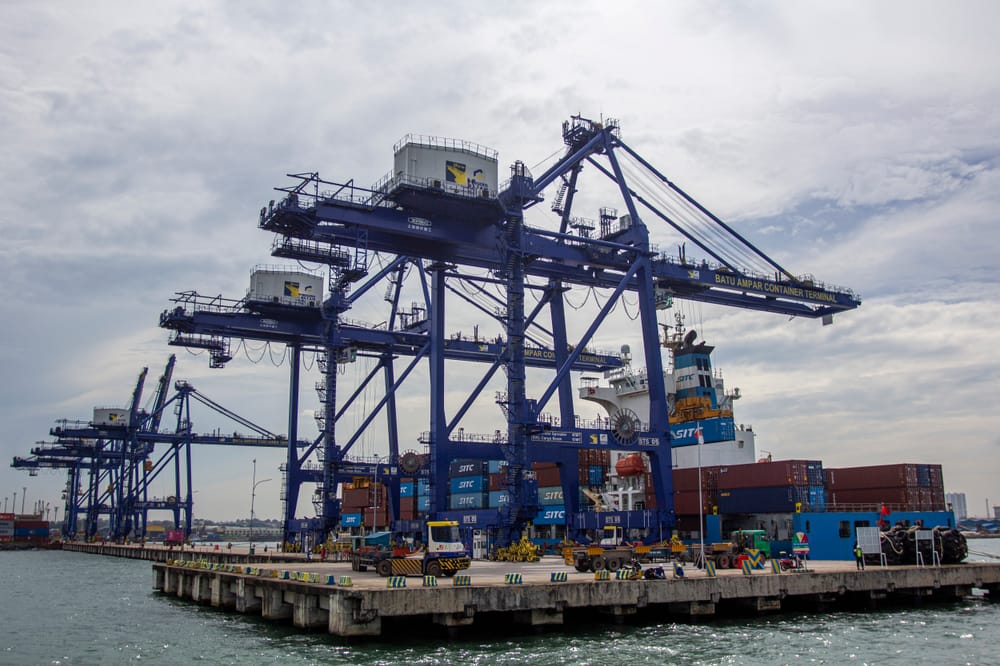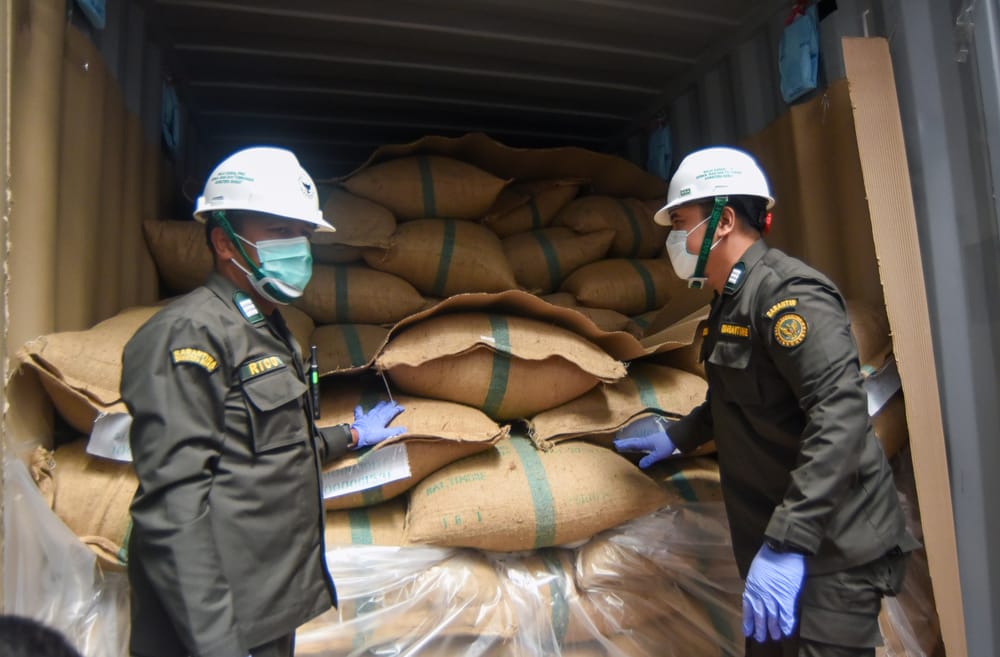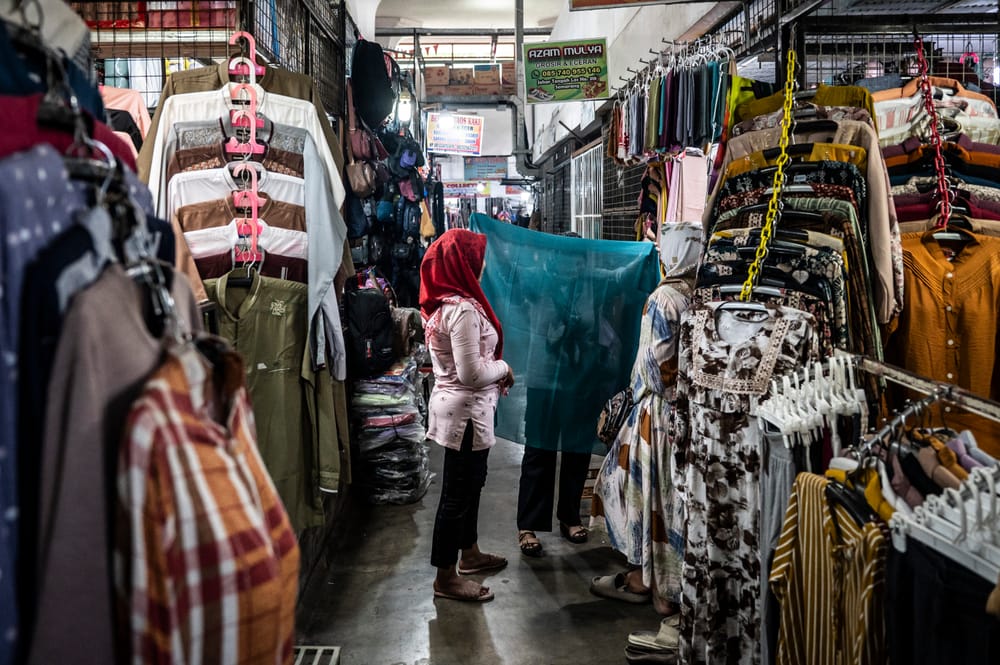

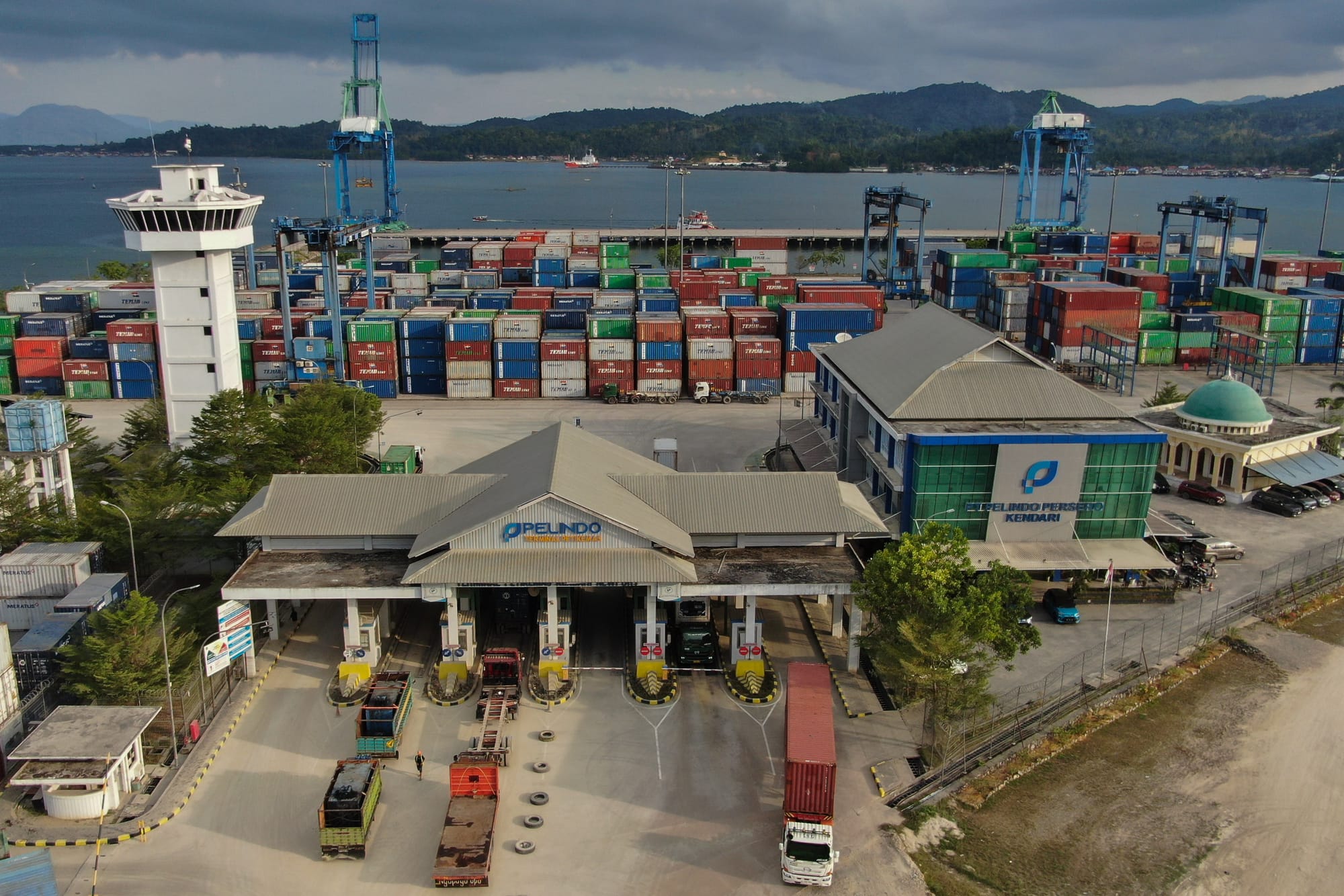
October 2025 exports were recorded at USD24.23 billion, down from September 2025 exports of USD24.67 billion, while October 2025 imports amounted to USD21.84 billion, up from September's USD20.33 billion. The trade balance surplus also decreased to USD2.39 billion in October from September's USD4.34 billion. However, the export-import performance is still in surplus for the 66th consecutive time since May 2020.
However, the value of Indonesia's exports from January to October 2025, which remained up 6.96% year-on-year (YoY), reached USD 234.03 billion. With January-October 2025 imports amounting to USD 198.16 billion, the trade balance remains in surplus.
Deputy for Distribution and Services Statistics of the Central Statistics Agency (BPS) Pudji Ismartini noted that although the value of oil and gas exports fell 16.11% YyY to IDR 10.93 billion, the value of Indonesia's non-oil and gas exports increased 8.42% compared to the same period last year, reaching USD 223.12 billion. The cumulative increase in the processing sector was the main driver, with a significant share of up to 11.68% of the overall non-oil and gas export value.
"Exports of the processing industry sector that rose considerably included palm oil, non-ferrous heavy metals, jewelry, organic basic chemicals, as well as semiconductors and other electronic components," Pudji explained in an Official Statistical News Release in Jakarta, Monday (01/12/2025).
With the exception of coal exports which fell 20.25% cumulatively, the export value of iron and steel commodities and crude palm oil as Indonesia's leading non-oil and gas commodities increased, 12.12% and 25.73% respectively.
Indonesia's top three non-oil and gas export destinations are China at USD 52.45 billion with iron and steel as the dominant commodity; the United States at USD 25.56 billion with electrical machinery and equipment; and India at USD 15.32 billion with mineral fuels.
While the decline in exports was successfully supported by non-oil and gas commodities, Indonesia's imports remained under control with a priority on capital goods. With a total value of USD 171.61 billion, imports of capital goods became the largest contributor, reaching USD 40.55 billion or up 18.67% compared to the same period last year. The capital goods imports include imports of mechanical machinery, electrical machinery, and vehicles and their parts.
"The development of import value of main commodities has a 37.84% contribution to non-oil and gas imports. Imports of mechanical machinery rose 7.43% to USD 30.10 billion, electrical machinery rose 13.4% to USD 25.73 billion, and vehicles and their parts rose 15.39% to USD 9.10 billion," Pudji explained.
With exports sustained and imports maintained, the largest trade surpluses occurred in Indonesia's trade with the United States, India, and the Philippines.
Meanwhile, the deepest trade deficits occurred with China, Australia, and Singapore. Commodities contributing to the surplus included animal and vegetable fats/oils, mineral fuels, and iron and steel, while commodities contributing to the deficit were mechanical machinery, electrical machinery, and plastic goods.
"The export commodities with the largest decline were mineral fuels, at 19.04% and metal and copper ore commodities, down 43.72%. Copper ore concentrate exports experienced a significant decline, both on an annual and cumulative basis due to the ban since the beginning of this year. No copper ore exports were recorded, while cumulatively, the value fell 39.44% and the volume fell 41.67%," he said.
With an increase in surplus of USD 10.98 billion compared to the same period last year, Pudji emphasized that commodity price variations towards the end of the year will continue to affect Indonesia's export and import performance. The increase in exports from the processing sector confirms that the manufacturing industry still plays an important role in increasing the added value and competitiveness of Indonesian products.
Policy determines
Apart from the price fluctuation factor that determines Indonesia's export performance, government policies, especially in the field of distribution and logistics, also determine the sustainability of exports and the flow of goods out of Indonesia. Exporters need the full support of the government so that in the midst of efforts to survive, government policies can facilitate, not hinder, the work of exporting commodities abroad.
Chairman of the Indonesian Exporters Association Benny Soetrisno emphasized that, unlike the delivery of domestic goods which can be postponed, the performance of export products in penetrating foreign markets is determined by ship departure schedules and strict trade contract provisions. If the goods are late in entering the port, exporters face the risk of additional costs to cancel the transaction.
"We adjust the schedule of the ships that will transport our goods. If we are delayed at the port, we may incur demurrage charges, have to make changes to the letter of credit, and even the buyer may refuse to extend the contract because the price of the goods ordered has dropped," said Benny.
Read also:
 Tria Dianti
To ensure that Indonesia's export performance remains viable amidst competitive international trade, Benny expects the government to implement more flexible arrangements, such as allowing trucks to operate on arterial roads or only at night during the Christmas and New Year homecoming schedule.
"Delays in the delivery of industrial goods not only affect exporters, but also the overall performance of the national economy. Ships continue to run according to their schedule, not counting whether there are holidays in Indonesia or not," he said.
In addition to decisive government policy support, Indonesia's export performance is also heavily influenced by the United States' lingering reciprocal tariff policy.
Director of Center of Reform on Economics (CORE) Indonesia Mohammad Faisal cautioned that the increase in non-oil and gas exports to the US is only a momentary effect of front-loading activities and is an artificial picture rather than a fundamental boost.
"In addition to the impact of declining exports, the tariff policy has also been seen to have the effect of increasing imports, especially imports from China which are expected to be higher as market diversification efforts out of the US. China is also interested in solving the problem of excess manufacturing industry output that is not absorbed due to weak domestic household consumption," Faisal explained.
Taking into account the increase in exports from the processing industry, rising palm oil and coconut oil prices, Faisal emphasized that the export performance of both needs to be maintained as demand rises, although Indonesia also needs to pay attention to the fulfillment of domestic supply.
"Export growth will be slightly restrained due to the full implementation of the reciprocal tariff policy. On the other hand, palm commodity prices have the potential to rise, even though Indonesia will not fully release palm oil to the global market to support the domestic B50 policy. The surplus remains, but will narrow next year," he concluded.