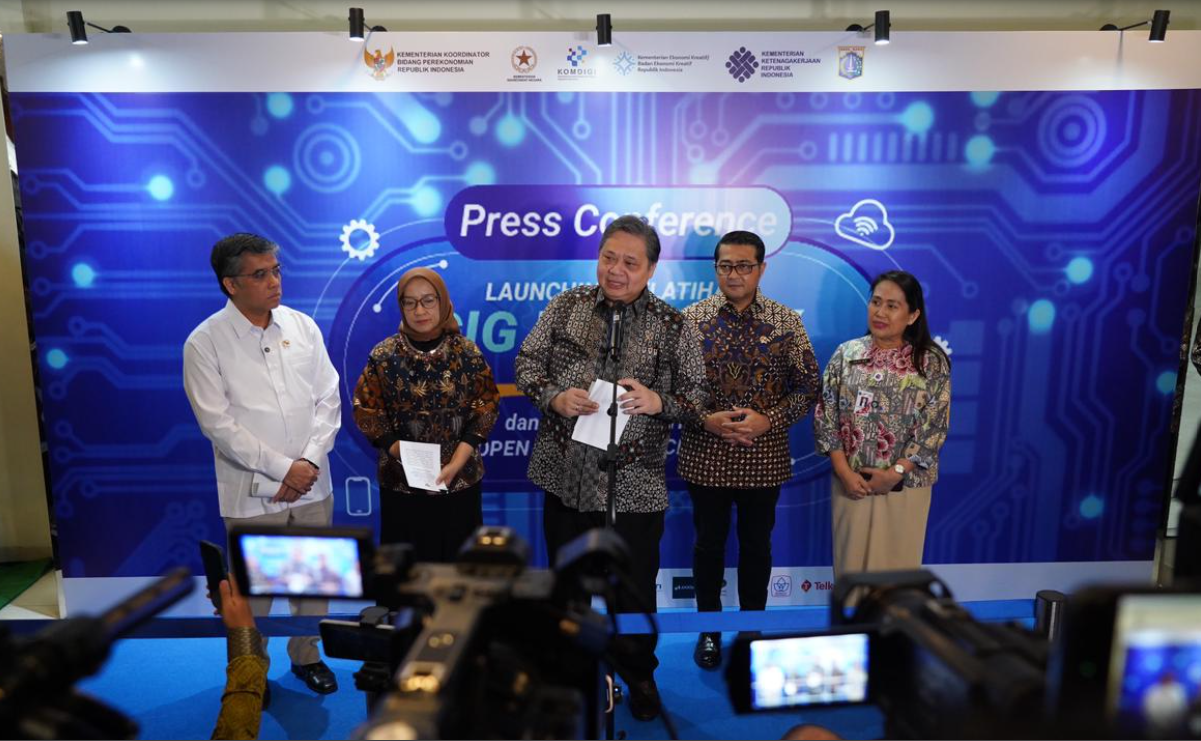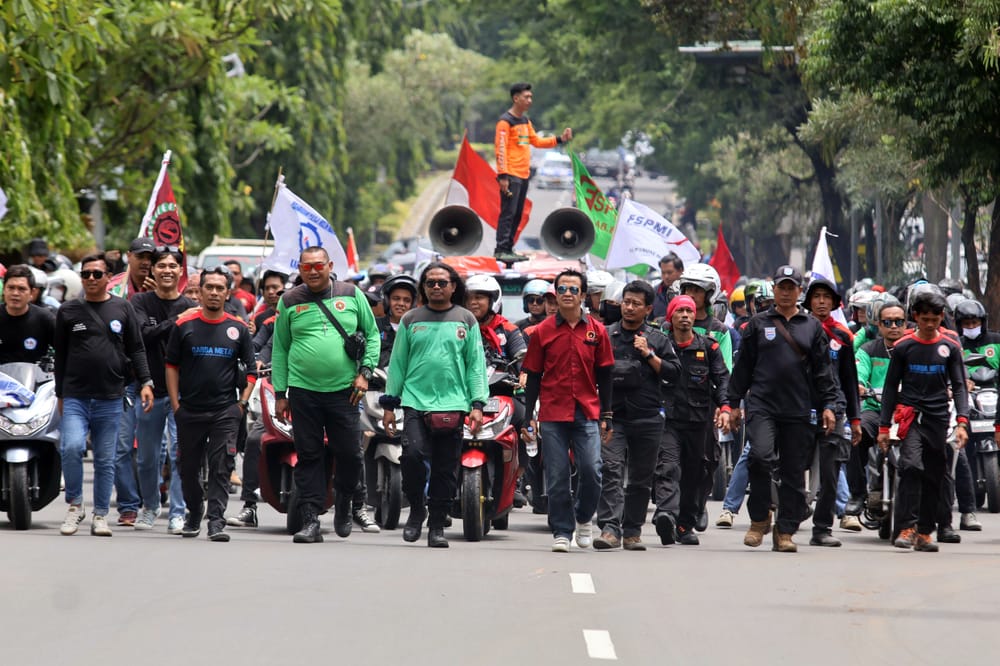

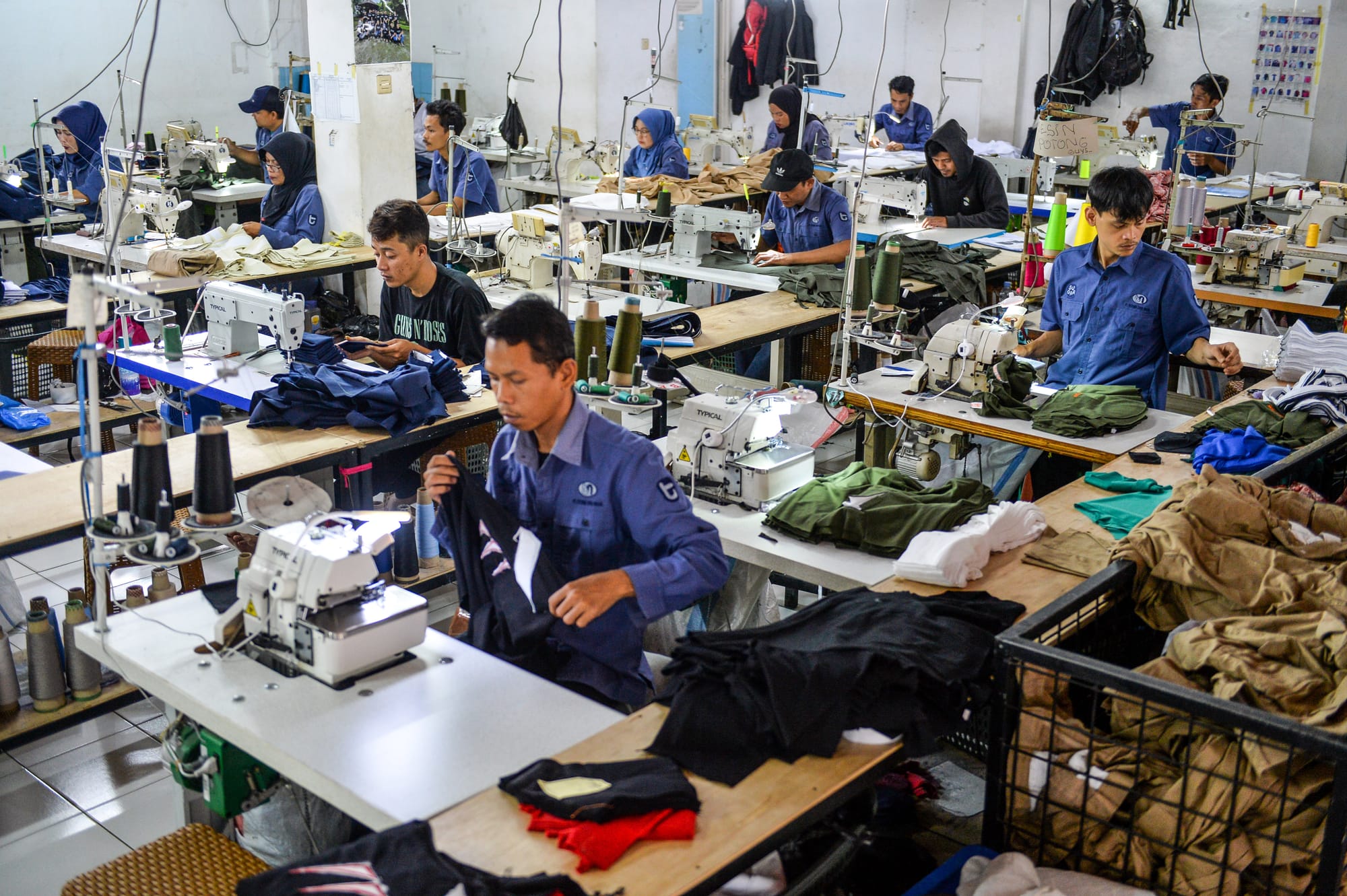
The Indonesian Employers Association (Apindo) emphasized its commitment to fully support the wage policy process that is currently underway with a note that wage calculations must be based on economic conditions and the real business world in the field.
Recommendations from the National Wage Council (Depenas) have been submitted to the government, and Apindo looks forward to how these recommendations will be formulated into objective regulations that are in line with current conditions. In this process, Apindo has expressed its views based on data and the real conditions of the business world in the field.
Chairperson of Apindo, Shinta Kamdani revealed that the business world supports the use of the wage formula as stipulated in Government Regulation Number 36 of 2021 in conjunction with Government Regulation Number 51 of 2023 concerning Wages which has been strengthened by the Constitutional Court Decision Number 168/PUU-XXI/2023.
Within this framework, Apindo emphasizes several important principles. First, the alpha value (α) must be kept proportional and based on economic conditions, regional productivity, and the level of the Decent Living Needs (KHL).
Secondly, the establishment of sectoral minimum wages must be carried out strictly and only in sectors that meet the criteria as stipulated in the Constitutional Court Decision. The implementation of this policy must be careful not to burden unprepared sectors and still maintain a balance between the interests of workers and business resilience.
Third, all calculation elements in wage policy, including the calculation of KHL, must refer to objective and valid data, such as BPS Susenas data, to ensure policy transparency and accuracy. Within the framework of job creation policy, Apindo emphasizes that wage policy has a direct influence on investment sustainability and the expansion of employment opportunities.
"The 2026 UMP formula and alpha value that will be set by the government must be able to maintain a balance between worker protection and industrial sustainability. A moderate wage increase, based on an objective formula and in line with productivity is the key so that the industry survives, workers are protected, and the economy continues to grow," he said at the Apindo Press Conference on Wages in Jakarta (25/11).
Proportional and Equitable Alpha Value-Based Wage Formula
Vice Chairman of Apindo's Labor Division, Darwoto emphasized that the business world emphasizes the importance of applying the α value (alpha) wisely so that the minimum wage policy can be in line with regional economic conditions, productivity levels, and business capacity in each sector.
Adaptive policies are needed so that business sustainability and labor absorption are maintained. In the context of determining alpha, it should be understood that alpha is an index of labor contribution to the economic growth of a region.
The amount of alpha must be set proportionally, because economic growth depends not only on the labor factor, but also on other factors of production such as investment/capital, technology, and total factor productivity (TFP) which reflects efficiency, innovation, and increased production capacity.
As such, the alpha cannot be applied uniformly across regions. In addition, the calculation of the alpha amount in a region should ideally consider the condition of the ratio of the Minimum Wage to the Decent Living Needs (UM/KHL), especially whether the ratio is above or below the national average.
"This data-based approach will result in a more objective and equitable wage policy. The business world believes that the government will consider these aspects wisely in determining the alpha value in the regulations that will soon be issued, so as to create a balance between worker protection and business sustainability," he said.
Darwoto added that the determination of a proportional α value will maintain a balance between improving workers' welfare and business sustainability, especially creating stability and competitiveness in the industrial sector and labor-intensive sectors that are sensitive to increases in labor costs. In addition, the business world emphasized the importance of including economic and productivity indicators as the main variables in determining the α value.
This approach is in line with the Constitutional Court Decision No. 168/PUU-XXI/2023, which emphasizes the balance between improving workers' welfare and business sustainability.
Structural Challenges of the Job Market
Chairman of Apindo's Labor Division Bob Azam emphasized the importance of understanding the structural challenges of the Indonesian labor market in formulating future wage policies. He mentioned that national productivity in the last five years has only grown 1.5-2%, while the pressure to increase the minimum wage is in the range of 6.5-10%.
"This unsynchronization creates structural tensions for the business world, especially the labor-intensive sector which is very sensitive to rising labor costs," Bob said.
Read also:
 Mukhlison Widodo
This condition, he continued, has encouraged industry players to carry out excessive efficiency, reduce labor, reduce production capacity, and relocate to more competitive regions or countries.
Bob also highlighted the huge labor market pressure, where around 60% of Indonesia's workforce is in the informal sector, the wave of layoffs is still a challenge, and 67% of the unemployed in 2024 are Gen-Z aged 16-29 years.
Apindo emphasized that workers' welfare cannot depend on the minimum wage alone that a comprehensive wage ecosystem must be the foundation, as applied by countries with strong labor market structures. He encouraged the strengthening of bipartite dialogue in companies so that wage adjustments reflect real business conditions, as well as the optimization of tripartite dialogue at the national and regional levels to ensure that wage policies are more consistent, proportional, and responsive to economic dynamics.
The government will announce the formula for determining the 2026 provincial minimum wage (UMP) in the near future.
Director General of Industrial Relations and Labor Social Security (PHI-JSK) of the Ministry of Manpower, Indah Anggoro Putri, confirmed that this year's wage calculation formula is still the same as Government Regulation (PP) No. 51 of 2023, which considers inflation and economic growth.
The only difference is that the alpha determination will be expanded in accordance with the mandate of the Constitutional Court (MK).
Indah ensures that the new alpha provision will be higher than the previous provision in PP No. 51 of 2023. However, Indah still does not want to divulge how much the new alpha is.
"This alpha provision will consider the Decent Living Needs (KHL) which is currently being calculated in the regional wage boards," he said in Jakarta (25/11).
Unlike the previous rule, alpha only takes into account the contribution of employment to one economic growth in a region.