
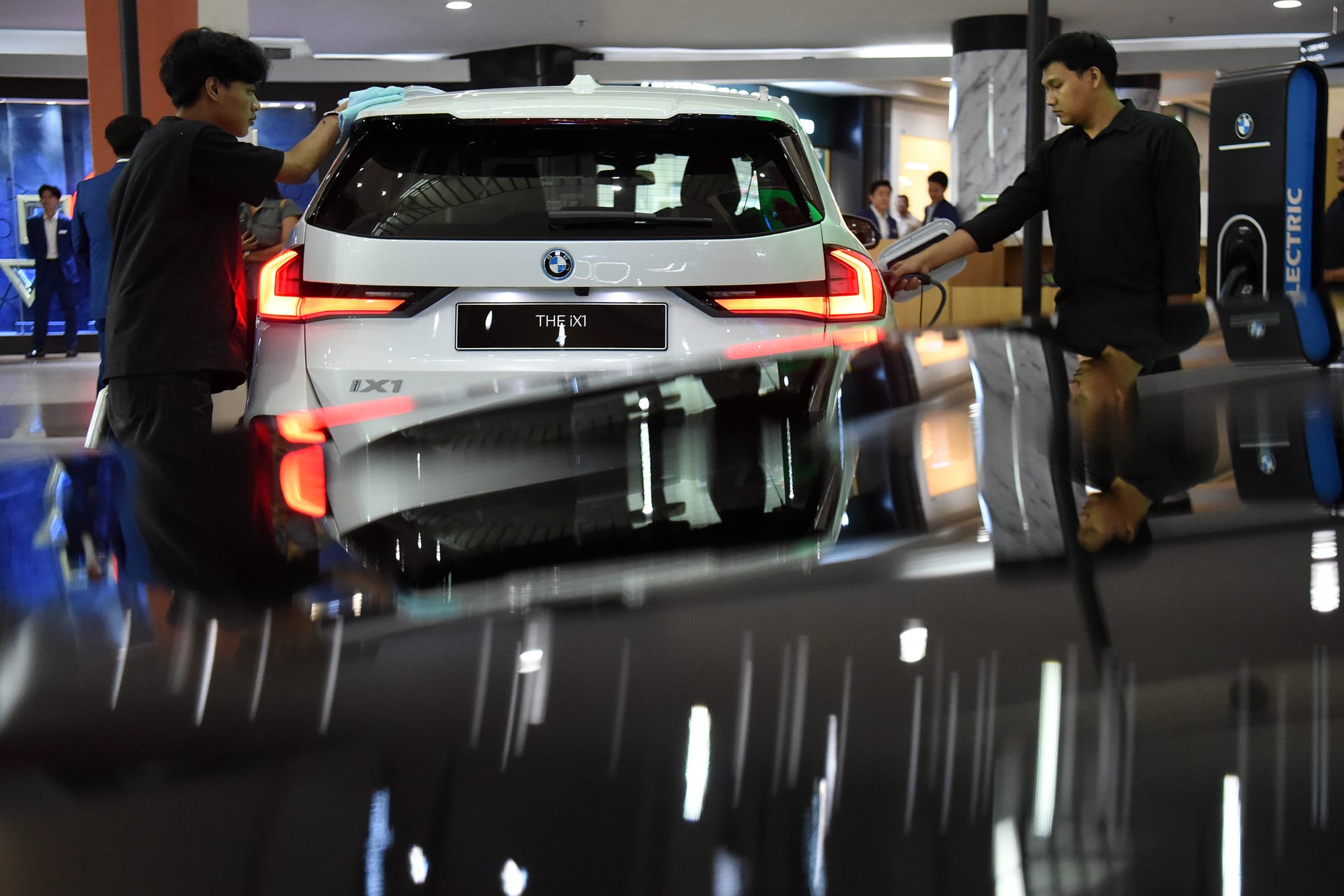
Don't expect to get cheap prices for imported electric cars. Earlier this week, the government officially stopped the 0% import duty incentive for electric cars (BEVs) that enter Indonesia in a completely built up (CBU) form as of December 31, 2025.
With this decision, the government hopes that the competitiveness of the national automotive industry can increase, thus ensuring an independent electric vehicle ecosystem.
Industry Minister Agus Gumiwang Kartasasmita said the decision to revoke incentives for electric cars was based on Minister of Finance Regulation (PMK) Number 62 of 2025 concerning the Second Amendment to Minister of Finance Regulation Number 26 / PMK.010 / 2022 concerning Determination of the Goods Classification System and Imposition of Import Duty Tariffs on Imported Goods.
The current rules of the game, the government provides incentives for CBU importation of electric cars until the end of December 2025 in the form of import duty exemptions as well as PPnBM and VAT relief. The condition is that the company receiving this incentive must carry out domestic production 1:1 of the number of CBU vehicles entering the domestic market.
"God willing, we will no longer issue CBU licenses, CBU licenses in the context of investment schemes with benefits (incentives)," Agus said in a press conference in Jakarta (17/9).
There are currently six companies that benefit from BEV import incentives. Namely, PT National Assemblers (Citroen, AION, and Maxus), PT BYD Auto Indonesia, PT Geely Motor Indonesia, PT VinFast Automobile Indonesia, PT Era Indusri Otomotif (Xpeng), and PT Inchape Indomobil Energi Baru (GWM Ora).
The six companies plan to invest IDR 15.52 trillion in Indonesia with a production capacity of up to 305,000 units. That's the return from joining this program.
Previously, the Ministry of Industry's Director of Maritime Industry, Transportation Equipment and Defense Equipment (IMATAP) Mahardi Tunggul Wicaksono asked automotive manufacturers that have enjoyed incentives to import battery-based electric cars in whole form to fulfill their production obligations with domestic content levels (TKDN) starting in 2026.
From January 1, 2026 to December 31, 2027, manufacturers are required to produce electric cars in Indonesia with an amount equivalent to the CBU import quota. This production must comply with the TKDN rules that have been set.
"Along the way, companies must also pay attention to the value, the amount of TKDN value. From 40%, it must gradually increase to 60% of the TKDN value," he said again.
Golden opportunity
Chairman of the Automobile and Motorcycle Equipment Industry Association (GIAMM) Hamdhani Dzulkarnaen Salim said that the performance of the local component industry is very depressed because of the large number of imported electric car products.
"This is the right policy. This is a new opportunity for the local industry to grow and be competitive again," Hamdhani told SUAR when met at the Automechanika Jakarta 2026 event, at the Fairmont Hotel, Jakarta (17/9).
According to him, the lack of absorption of local components has an impact on termination of employment (PHK).
Starting in 2026, electric car importers must produce vehicles locally to fulfill investment commitments and increase the level of domestic components (TKDN), instead of importing them whole.
"The golden opportunity is in sight. It's time for us to take advantage of this situation by improving our performance," Hamdhani said.
Hamdhani said, in every opportunity there must be a challenge. That is, how the local component industry must adapt and be able to produce electric vehicle components in the future.
It has encouraged members to learn the latest technological developments and understand about electrification technology in the automotive industry.
Keep in mind, there are at least 250 companies listed as members of GIAMM. They come from various business scales, ranging from small to semi-labor-intensive, which are divided into tier 1, tier 2, and tier 3 categories. This sector absorbs more than 500,000 workers in the national component industry.
Secretary General of the Indonesian Automotive Industry Association (Gaikindo) Kukuh Kumara stated that several electric car manufacturers knew about the revocation of incentives long before the government announced it. They have also prepared new calculations.
Manufacturers already have a price calculation so that they can continue to drive sales.
"Manufacturers already have a new strategy. So the revocation of this incentive is not too big a problem for them," Kukuh told SUAR in Jakarta (17/9).
Currently, the electric car market is still dominated in big cities. This is a challenge for manufacturers on how to develop them in other regions.
According to data from the Indonesian Automotive Industry Association (Gaikindo), from January to August 2025, the number of cars shipped from factories to dealers(wholesales) was 500,951 units.
This figure is down 10.6% compared to the same period in 2024, which was 560,552 units. Direct-to-consumer (retail) car sales also declined by 10.7% to 522,162 units, compared to 584,847 units in the same period in 2024.
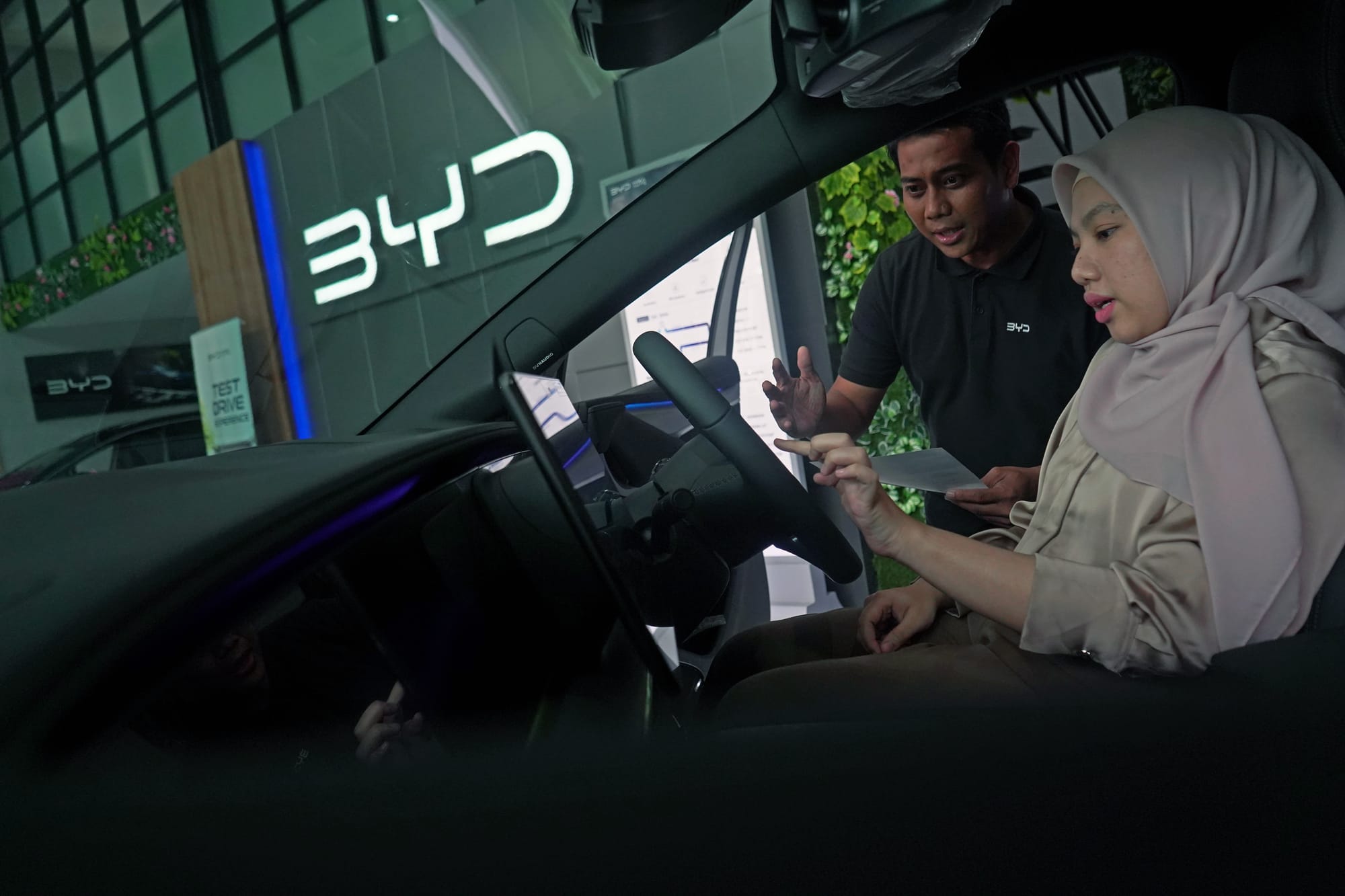
Responding to this, Head of Marketing PR and Government Relations BYD Indonesia Luther Panjaitan said that his party will follow the new rules from the government. The purpose of stopping incentives for electric cars is to encourage the domestic industry.
"We are still studying the future business calculations," Luther told SUAR in Jakarta (17/9).
Capitalizing on Southeast Asian Market, GIAMM-Messe Frankfurt Holds Automechanika Jakarta 2026
Messe Frankfurt (HK) Ltd and the Automobile and Motorcycle Equipment Industry Association (GIAMM) officially announced the launch of the Automechanika Jakarta 2026 exhibition.
The inaugural exhibition was held at the Nusantara International Convention Exhibition (NICE), Pantai Indah Kapuk (PIK) 2, Jakarta, on September 24-27, 2026. The exhibition comes in response to the rapid growth of the automotive industry in Southeast Asia, with Indonesia as the main market.
Messe Frankfurt Group Board of Management member Stephan Buurma said Messe Frankfurt's presence in Southeast Asia continues to grow in an effort to support new trade routes developing in the region.
He mentioned that Automechanika Jakarta is an important event in the company's mobility and logistics portfolio.
"Indonesia has strong potential, especially in the automotive supply chain. The shift of investment to the country's manufacturing and logistics sectors demonstrates its significance in the global supply chain," Stephan said in Jakarta (17/9).
The cooperation was marked by the signing of a letter of intent between Messe Frankfurt and GIAMM. The aim is to combine local and international expertise and networks to foster the development of the automotive sector.
Automechanika Jakarta 2026 is expected to attract 350 exhibitors, occupying an area of 15,000 square meters.
The event will showcase a wide array of solutions along the automotive supply chain. From parts, components, electronics, digital services, to manufacturing and modification technologies.